Catedral de Metz
O apelido da catedral, "A Lanterna de Deus", sugere sua característica mais deslumbrante. Mas o que a torna verdadeiramente única entre as catedrais francesas?
História completa desbloqueada no tour
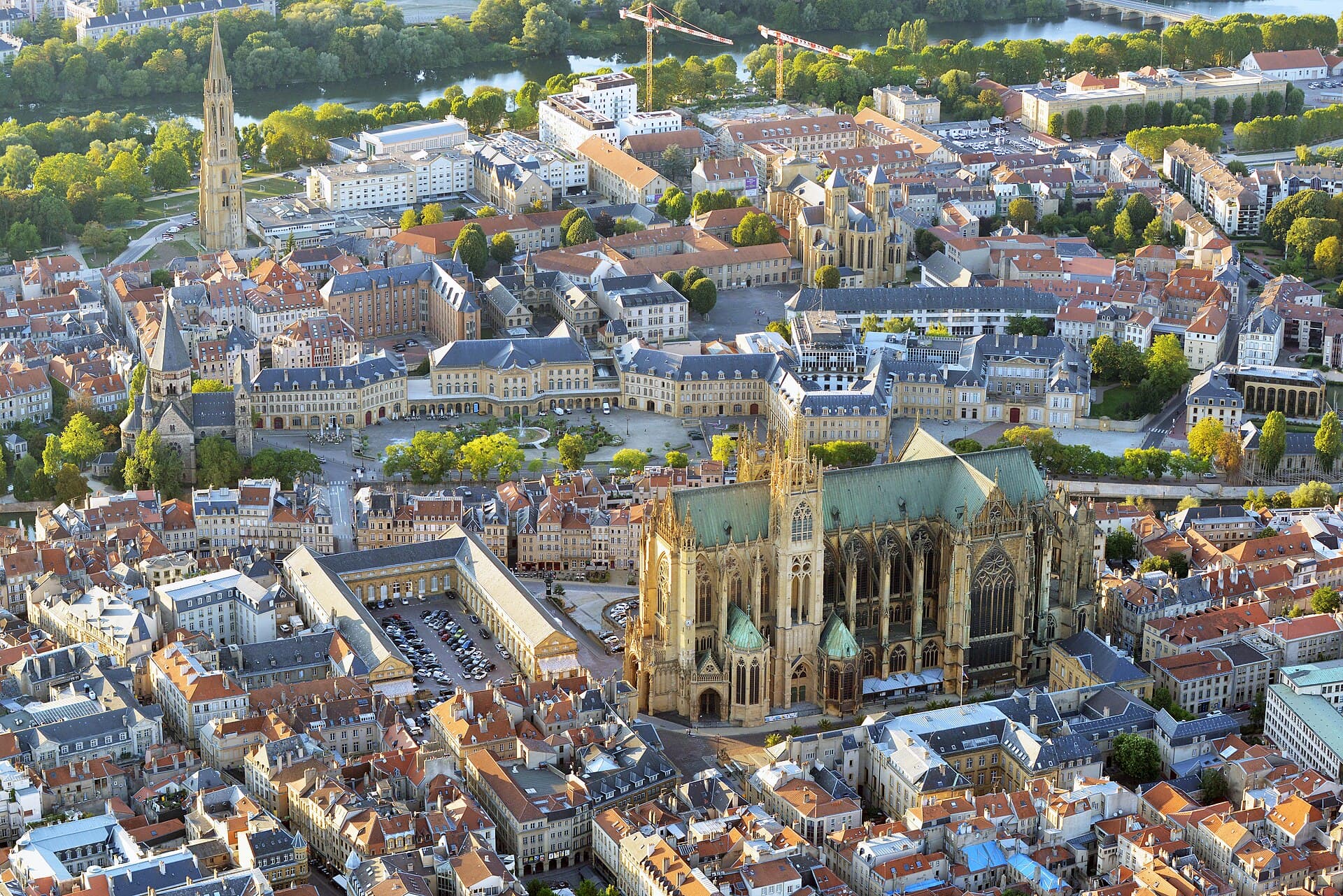 Philippe Gisselbrecht/ Ville de Metz / CC BY-SA 4.0, via Wikimedia Commons
Tour de áudio autoguiado por Metz — rota GPS a pé, reprodução offline, narração envolvente em 32 idiomas.
“Onde pedras antigas encontram arte moderna, e a história brilha em vitrais.”
Não os postais. As histórias que nem os locais conhecem — sussurradas ao seu ouvido, exatamente onde aconteceram.
O apelido da catedral, "A Lanterna de Deus", sugere sua característica mais deslumbrante. Mas o que a torna verdadeiramente única entre as catedrais francesas?
Esta ponte fortificada medieval é um testemunho do passado estratégico de Metz. Mas não é apenas uma relíquia; ela guarda um segredo que revela seu propósito duradouro.
O impressionante telhado ondulado deste museu de arte moderna diz-se ser inspirado por um objeto cotidiano surpreendente. Você consegue adivinhar o que é?
Descubra cada segredo de Metz
Cada endereço, cada revelação na íntegra — no seu ouvido, exatamente onde aconteceu.
Você escolhe as suas paragens. Você caminha. A voz revela o que os outros perdem.


O seu tour áudio autoguiado de Metz está pronto — escolha os seus pontos de interesse, selecione o seu idioma e comece no momento em que chegar.
ComprarA Lume inclui um guia de realidade aumentada. Levante o telemóvel: a câmara mostra a rua à sua frente, com uma seta luminosa sobreposta à imagem real que aponta sempre para a sua próxima paragem — sem mapa para decifrar, sem voltas erradas. Como tudo na Lume, funciona totalmente offline.
Metz, uma cidade no nordeste da França, oferece uma cativante mistura de mais de 3.000 anos de história, arquitetura diversificada e uma cena cultural florescente. Situada onde os rios Mosela e Seille convergem, perto das fronteiras de Luxemburgo e Alemanha, Metz tem sido um cruzamento de culturas, evidente em suas estruturas romanas, medievais, clássicas e contemporâneas.
Frequentemente descrita como uma "Cidade Verde" devido aos seus muitos parques e jardins públicos, Metz convida à exploração sem pressa. Seu centro histórico é uma área amigável para pedestres, tornando fácil passear por ruas convidativas e descobrir sua atmosfera particular. De grandiosas catedrais góticas a museus de arte moderna, Metz oferece uma experiência que é ao mesmo tempo historicamente profunda e refrescantemente contemporânea.
O caráter distinto da cidade, influenciado por seu passado franco-alemão, oferece uma perspectiva diferente dos maiores centros turísticos da França. Metz também é conhecida por ser mais acessível, com muitos locais históricos e parques oferecendo entrada gratuita.
A história registrada de Metz abrange mais de dois milênios, começando como um oppidum celta para a tribo Mediomatrici. Após a conquista romana em 52 a.C., tornou-se Divodurum Mediomatricum, uma importante cidade galo-romana com uma população de 40.000 habitantes. A cidade evoluiu para uma sede episcopal no século IV.
Após a queda do Império Romano, Metz ficou sob domínio franco e serviu como capital merovíngia do reino da Austrásia entre os séculos VI e VIII. Foi também o berço da dinastia carolíngia e um berço do canto gregoriano. Em 843, com o Tratado de Verdun, Metz tornou-se a capital do Reino da Lotaríngia, um importante centro cultural e artístico na Europa. No século XII, Metz obteve status semi-independente dentro do Sacro Império Romano-Germânico, tornando-se uma das repúblicas mais antigas da Europa.
A importância estratégica da cidade levou a ser um ponto de discórdia entre a França e a Alemanha por séculos. Em 1552, Metz foi anexada pelo Reino da França. Sob o domínio francês, particularmente durante os reinados de Luís XIV e Luís XV, Metz viu a construção de novas fortificações, praças e edifícios públicos, incluindo a Opéra-Théâtre. Após a Guerra Franco-Prussiana de 1870-71, Metz foi cedida ao Império Alemão e serviu como capital do Reichsland da Alsácia-Lorena até 1919, quando retornou à França. Foi brevemente reanexada pela Alemanha Nazista durante a Segunda Guerra Mundial antes de sua libertação em 1944. Esta história profunda e muitas vezes turbulenta deixou Metz com um tecido arquitetônico e cultural único, refletindo influências francesas e alemãs.
Comece sua exploração na Catedral de Saint-Étienne de Metz, frequentemente chamada de "A Lanterna de Deus" devido aos seus imensos vitrais, a maior extensão do mundo, alguns de Marc Chagall. Sua arquitetura gótica, com uma nave atingindo 41 metros de altura, a torna uma das catedrais mais altas da França.
Passeie pela Place d'Armes, uma grande praça cercada por edifícios significativos como a prefeitura e o tribunal. Do outro lado do rio Mosela, você encontrará a Opéra-Théâtre, o teatro de ópera mais antigo da França. Explore o apelo medieval da Place Saint-Louis, com suas arcadas e casas em tons pastel, um local ideal para observar a cidade.
A Porte des Allemands (Portão Alemão) é uma ponte medieval fortificada e um dos últimos portões da cidade remanescentes, oferecendo insights sobre o passado defensivo de Metz e passeios cênicos ao longo do rio Seille. Para entusiastas de arte moderna, o Centre Pompidou-Metz exibe arte contemporânea em um edifício marcante projetado por Shigeru Ban, conhecido por seu telhado único. Não perca o Musée de la Cour d'Or, que abriga uma coleção diversificada que abrange desde banhos romanos a esculturas medievais.
Metz também é celebrada por seus abundantes espaços verdes. Desfrute de um passeio pelo Jardim da Esplanada, oferecendo vistas do Vale do Mosela, ou explore os Jardins Jean-Marie Pelt – Parc de la Seille com suas diversas atividades ao ar livre. O Temple Neuf, uma igreja protestante neo-românica, ergue-se graciosamente em uma ilha no rio Mosela, cercada por jardins.
As melhores épocas para visitar Metz são durante a primavera (abril a junho) e o início do outono (setembro a outubro) para um clima agradavelmente ameno, ideal para caminhadas e atividades ao ar livre. As temperaturas durante esses períodos variam de 10°C a 25°C. O verão (junho a agosto) traz temperaturas mais quentes (22-24°C) e festivais animados como Constellations Metz, um festival gratuito de luz e arte. Dezembro é mágico para o Mercado de Natal de Metz, um dos mais atmosféricos da França.
Metz é facilmente acessível, localizada a cerca de 90 minutos de Paris por trem de alta velocidade. O Aeroporto de Estrasburgo é o mais próximo, com um trajeto de trem de 45 minutos até Metz, ou uma viagem de carro de 1 hora e 50 minutos. Alternativamente, você pode voar para o Aeroporto Paris Charles de Gaulle e pegar um trem TGV. O centro da cidade é compacto e muito fácil de caminhar, tornando fácil explorar a pé. Embora o transporte público esteja disponível, incluindo ônibus, muitos locais importantes estão a uma curta distância a pé. Alugar uma bicicleta também é uma opção para explorar a cidade e suas trilhas ribeirinhas. Metz é geralmente mais acessível do que as principais cidades turísticas francesas. O francês é a língua principal, embora influências alemãs sejam perceptíveis em alguns nomes.
Metz — coreano, chinês, hebraico e mais 29 idiomas, cada parada narrada por uma voz nativa. A maior variedade de idiomas entre os passeios de áudio autoguiados.
Disponível em: