Tacuba Street
Before it was a bustling modern thoroughfare, Tacuba Street held a different, more ancient distinction.
Full story unlocks in the tour
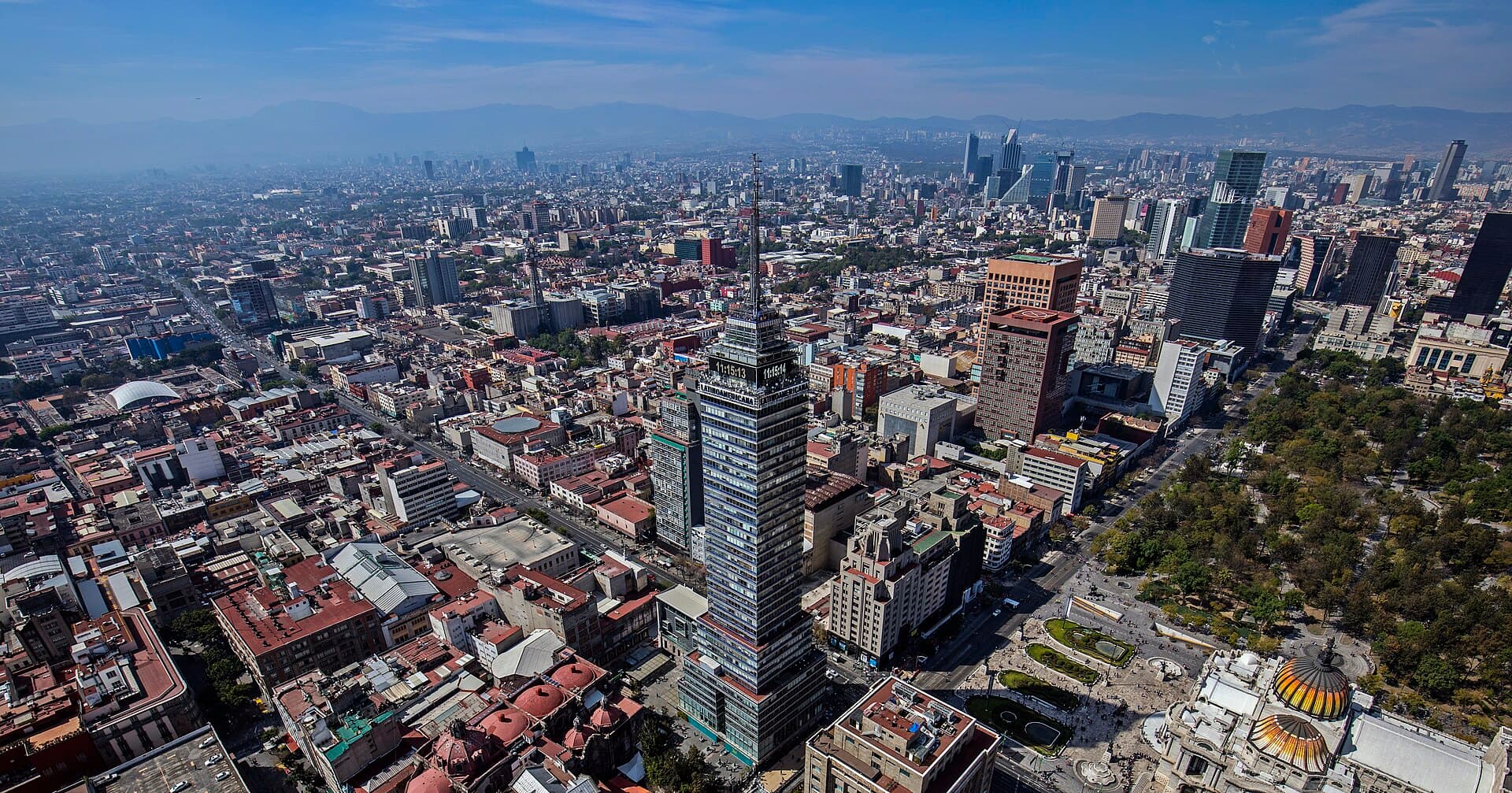 Gobierno CDMX / CC0, via Wikimedia Commons
“Where ancient roots meet a modern beat.”
Not the postcards. The stories even locals don't know — whispered in your ear, right where they happened.
Before it was a bustling modern thoroughfare, Tacuba Street held a different, more ancient distinction.
Beneath the grandeur of the Metropolitan Cathedral and the National Palace lies a secret that speaks to the city's layered past.
This imposing castle, atop a hill in the city's largest park, holds a unique claim to royalty in the Americas.
Discover every secret of Mexico City
Every address, every reveal in full — in your ear, right where it happened.
You pick your stops. You walk. The voice reveals what the others miss.
No tours available yet. Check back soon — we're preparing them.
Mexico City, or CDMX, is a sprawling metropolis that pulses with an energy born from centuries of intertwined history and contemporary life. It is the capital and most populous city in Mexico, and also the most populous city in North America. Situated in the Valley of Mexico on the high Mexican Central Plateau, the city sits at an altitude of 2,240 meters (7,350 feet).
Founded in 1325 as Tenochtitlán by the Mexica people, Mexico City is the oldest capital city in the Americas and one of only two founded by indigenous peoples. Today, it stands as a leading global cultural and financial center, offering an unparalleled blend of ancient ruins, colonial architecture, and modern innovation. The city's layered past is visible everywhere, from its sinking historic center built atop an ancient lakebed to its diverse neighborhoods, each with its own distinct character.
With a population of over 9 million people in the city proper and a greater metropolitan area housing over 22 million, Mexico City is a dynamic hub where pre-Hispanic, colonial, and modern influences converge. It's a city that invites exploration, promising a wealth of experiences for every visitor.
## From Tenochtitlán to Ciudad de México Mexico City's history begins long before the arrival of the Spanish. In 1325 CE, the Mexica people established their capital, Tenochtitlán, on an island in Lake Texcoco. Legend says they built it where they saw an eagle on a prickly pear cactus devouring a serpent, an image that remains central to the Mexican flag today.
By 1519, Tenochtitlán was a flourishing city with an estimated population of 100,000 to 200,000 inhabitants, making it one of the largest cities in the world at the time. It was an engineering marvel, featuring canals, dikes, and chinampas (artificial islands used for agriculture). The city was divided into four quadrants, a traditional Mesoamerican organizational structure.
### The Spanish Conquest and Colonial Era The Spanish conquest, led by Hernán Cortés, culminated in the siege and fall of Tenochtitlán in 1521. The Spanish systematically dismantled Aztec temples and buildings, then rebuilt their colonial capital, Mexico City, directly on the ruins of the indigenous city. Stones from the demolished Aztec structures were repurposed for new churches and government buildings. Lake Texcoco was drained to facilitate urban expansion, profoundly altering the region's ecology.
For three centuries, Mexico City served as the capital of the Viceroyalty of New Spain, becoming the political, administrative, and financial center for Spanish territories stretching from California to Panama. This period saw the construction of many colonial-era buildings, some of which still stand today, repurposed as museums and government offices. The city earned the nickname "The City of Palaces" from Baron Alexander von Humboldt in the 19th century, who noted its grandeur rivaled major European cities.
### Independence and Modern Growth After Mexico gained independence from Spain in 1821, Mexico City became the capital of the new sovereign nation. The 19th century was marked by political instability, including the Mexican-American War, during which U.S. forces occupied the city for nearly a year. The city also briefly served as the imperial capital under Emperor Maximilian I.
The mid-20th century brought explosive growth during the "Mexican Miracle" economic boom. The population surged from 1.6 million in 1940 to over 8 million by 1980, leading to the development of vast informal settlements. The 1968 Summer Olympics showcased Mexico City internationally, though they were preceded by the tragic Tlatelolco Massacre. In 1985, a devastating earthquake highlighted issues with building standards and spurred civic activism. In 2016, the city officially ceased to be the Distrito Federal and became known as Ciudad de México (CDMX). Today, Mexico City continues to evolve, grappling with environmental challenges like air pollution and water scarcity, while remaining a cultural and economic powerhouse.
Mexico City offers a wealth of sights, blending ancient history with modern life. Begin your exploration in the Historic Center, a UNESCO World Heritage site. Here, the Zócalo (Plaza de la Constitución) is a central point, surrounded by the Metropolitan Cathedral and the National Palace. Nearby, delve into Aztec history at the Templo Mayor ruins and museum, once the main temple of Tenochtitlán.
Art and culture abound. The Palacio de Bellas Artes is an architectural marvel housing murals and cultural events. For a deeper dive into Mexico's pre-Hispanic past, the National Museum of Anthropology in Chapultepec Park is world-class. Do not miss the iconic Frida Kahlo Museum, also known as Casa Azul, in the charming Coyoacán neighborhood.
Beyond the city center, Chapultepec Park is a vast urban oasis, home to the aforementioned anthropology museum, as well as Chapultepec Castle, offering expansive city views. For a unique experience, take a traditional trajinera boat ride through the ancient canals of Xochimilco, a remnant of the Aztec waterway system and another UNESCO site.
Consider a day trip to the impressive Teotihuacán Pyramids, an ancient city with the massive Pyramid of the Sun and Pyramid of the Moon, located just an hour outside of Mexico City. Back in the city, explore the neighborhoods of Roma Norte and La Condesa for their cafes, boutiques, and parks. For souvenirs and local crafts, the Ciudadela Market is a great stop.
Mexico City enjoys a temperate climate year-round due to its high altitude, with mild days and cool evenings.
The best time to visit is during spring (March to May) and fall (September to November). Spring offers consistently pleasant weather, with daytime temperatures in the low to mid-70s°F, and the city is adorned with thousands of blooming purple jacaranda trees from late March through May. Fall brings beautiful weather, clear skies, and cultural highlights like the Day of the Dead celebrations in October and November.
June to August marks the rainy season, with afternoon downpours that typically last a couple of hours, but these rains can clear the air pollution. December to February are cooler and drier, with fewer crowds, making it a good option for budget travelers.
The local currency is the Mexican Peso (MXN), symbolized by '$'. While major establishments accept credit cards, cash is essential for street vendors, smaller eateries, markets, and public transportation. ATMs are widely available for withdrawing pesos.
Spanish is the official language and the primary language spoken. While English is understood in tourist areas and business districts, knowing basic Spanish phrases will enhance your experience.
Mexico City has an extensive public transportation system. The Metro is affordable and efficient, with 12 lines and 195 stations, though it can be crowded during peak hours. The Metrobús (Bus Rapid Transit) offers dedicated lanes, and the Integrated Transit Card (Tarjeta de Movilidad Integrada) allows seamless travel across subways, buses, and cable cars. Ride-sharing apps like Uber and Didi are also widely used and considered safer than hailing street taxis.
Tipping is customary. For sit-down restaurants, 10-15% is standard. For street food, a few coins in the tip jar or rounding up the bill is appreciated. Baggers at grocery stores often work for tips, with 5-10 pesos being typical.