Sanctuaire d'Itsukushima
Le grand portail torii vermillon de Miyajima symbolise le passage, mais son secret à marée basse reste moins connu.
L'histoire complète se débloque dans le tour
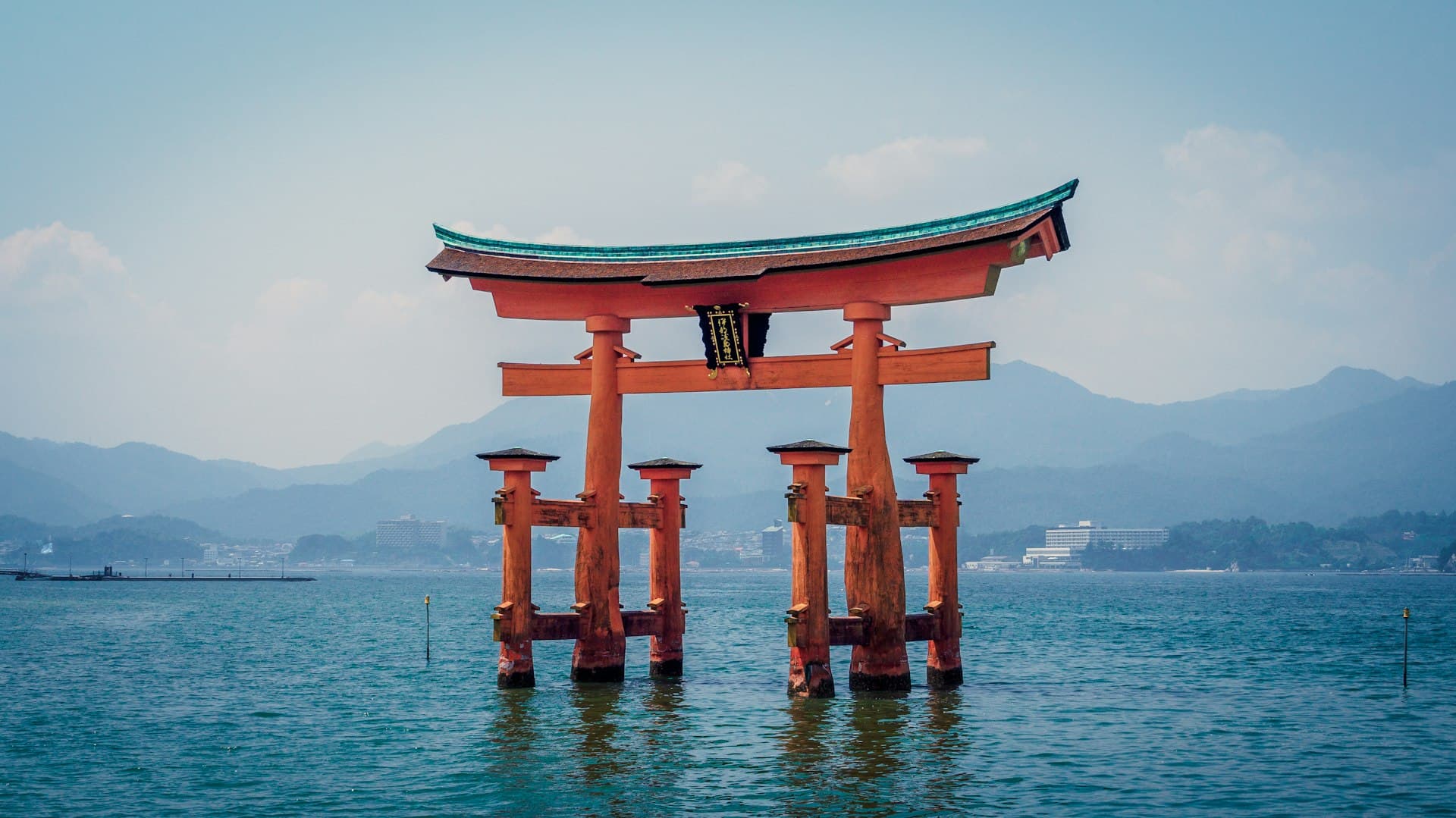 Photo: Nicki Eliza Schinow / Unsplash
Visite audio autoguidée de Miyajima — parcours GPS à pied, lecture hors ligne, narration en 32 langues.
“Là où un portail vermillon s'élève de la mer, Miyajima invite à la contemplation sereine et à la découverte joyeuse.”
Pas les cartes postales. Les histoires que même les habitants ignorent — soufflées à l'oreille, là où elles se sont passées.
Le grand portail torii vermillon de Miyajima symbolise le passage, mais son secret à marée basse reste moins connu.
Au-delà du hall principal du temple Daisho-in, un passage profondément sombre murmure qu'il exauce les vœux.
Sur le point culminant de Miyajima, une flamme brûle depuis plus d'un millénaire, avec un lien inattendu avec un emblème moderne de paix.
Découvrez tous les secrets de Miyajima
Chaque adresse, chaque révélation en entier — dans ton oreille, là où elle s'est passée.
Tu choisis tes lieux. Tu marches. La voix te révèle ce que les autres ignorent.


Votre visite audioguidée de Miyajima vous attend — choisissez vos lieux, votre langue, et lancez-vous dès votre arrivée.
AcheterLume intègre un guide en réalité augmentée. Levez votre téléphone : sa caméra montre la rue devant vous, avec une flèche lumineuse posée sur l'image réelle qui pointe toujours vers votre prochain arrêt — aucune carte à déchiffrer, aucun mauvais virage. Comme tout dans Lume, ça fonctionne entièrement hors-ligne.
Miyajima, officiellement connue sous le nom d'Itsukushima, est une petite île de la baie d'Hiroshima, célébrée comme l'une des trois vues les plus pittoresques du Japon. L'île est vénérée comme un lieu sacré, son nom "Miyajima" signifiant "l'île du sanctuaire". Son monument le plus célèbre est le sanctuaire d'Itsukushima, un site du patrimoine mondial de l'UNESCO, avec son spectaculaire portail torii vermillon qui semble flotter sur l'eau à marée haute.
Au-delà du célèbre portail, Miyajima offre un mélange de splendeur naturelle et de profondeur spirituelle. Des cerfs sika sauvages se promènent librement, considérés comme des messagers sacrés des dieux dans la tradition shintoïste. Les visiteurs peuvent explorer d'anciens temples, gravir le mont Misen pour des vues imprenables sur la mer intérieure de Seto, et flâner dans des avenues accueillantes bordées de boutiques traditionnelles. L'île se transforme après le départ des excursionnistes, offrant une atmosphère sereine à ceux qui choisissent d'y passer la nuit.
L'histoire de Miyajima remonte à des temps anciens, précédant les archives écrites, profondément enracinée dans la mythologie japonaise. Selon le Kojiki et le Nihon Shoki, les plus anciennes chroniques du Japon, les trois déesses vénérées de l'île sont nées d'un serment sacré entre la déesse du soleil Amaterasu et le dieu de la tempête Susanoo. Ces divinités — Ichikishimahime, Tagirihime et Tagitsuhime — ont été vénérées depuis l'Antiquité comme protectrices de la sécurité maritime et du bon voyage. L'île elle-même était révérée comme un corps sacré, un lieu où les dieux étaient censés vivre en harmonie avec les mortels.
Le premier sanctuaire de Miyajima aurait été établi en 593 de notre ère par Saeki no Kuramoto, un gouverneur local, sous le règne de l'impératrice Suiko. Pendant longtemps, le statut sacré de l'île signifiait que les roturiers n'étaient pas autorisés à y poser le pied. Cette croyance a influencé le style architectural unique du sanctuaire d'Itsukushima, qui a été construit sur l'eau pour rester séparé de la terre.
La période Heian (794–1185) a marqué une transformation significative pour Miyajima. En 806 de notre ère, le moine Kobo Daishi, fondateur du bouddhisme Shingon, a visité l'île et, reconnaissant son pouvoir spirituel, a établi le temple Daisho-in et d'autres retraites sur le mont Misen. Cette période a vu le mélange des traditions shintoïstes et bouddhistes, connu sous le nom de shinbutsu-shugo, approfondissant la signification religieuse de Miyajima.
La figure la plus éminente dans le développement du sanctuaire fut Taira no Kiyomori, un puissant chef militaire de la période Heian. En 1168, il choisit Itsukushima comme sanctuaire ancestral pour le clan Taira et initia une grande reconstruction, créant le majestueux complexe sur pilotis au-dessus de l'eau qui ressemble en grande partie à ce que l'on voit aujourd'hui. Son patronage éleva le statut du sanctuaire, en faisant un site de pèlerinage pour la Cour Impériale de Kyoto.
Bien que l'influence du sanctuaire ait reculé pendant les périodes d'instabilité politique, elle a connu des renouveaux. En 1587, Toyotomi Hideyoshi, qui unifia le Japon, commanda la construction du pavillon Senjokaku (Salle des 1 000 tatamis) pour y tenir un service commémoratif pour les morts de guerre, bien qu'il soit resté inachevé en raison de son décès. L'actuel Grand Portail Torii, emblème de Miyajima, a été construit en 1875 en bois de camphre.
L'artisanat traditionnel des cuillères à riz en bois de Miyajima est également lié à son histoire spirituelle. Un moine, inspiré par un rêve de la déesse Benzaiten tenant un luth, a enseigné aux insulaires à fabriquer ces cuillères, qui sont maintenant considérées comme des porte-bonheur. En 1996, le sanctuaire d'Itsukushima et son portail torii ont été désignés site du patrimoine mondial de l'UNESCO, consolidant la place de Miyajima en tant que merveille culturelle et naturelle mondialement reconnue.
L'attraction principale est le Sanctuaire d'Itsukushima, avec son emblématique portail torii "flottant". Le complexe du sanctuaire, construit sur des piliers au-dessus de la mer intérieure de Seto, offre différentes perspectives à marée haute et basse. À marée haute, le sanctuaire et le portail semblent flotter, tandis qu'à marée basse, les visiteurs peuvent marcher jusqu'à la base du torii. Le sanctuaire comprend un hall principal, une salle de prière et une scène de théâtre Nô.
Le Mont Misen, le plus haut sommet de l'île, offre des vues panoramiques sur la mer intérieure de Seto. Vous pouvez atteindre le sommet en empruntant l'un des trois sentiers de randonnée ou en prenant le téléphérique de Miyajima. Sur la montagne, découvrez d'anciens temples bouddhistes et le hall Reikado, abritant la Flamme Éternelle.
Au pied du Mont Misen se trouve le Temple Daisho-in, considéré comme l'un des temples bouddhistes Shingon les plus importants de l'ouest du Japon. Il abrite de nombreuses statues bouddhistes, des moulins à prières et une atmosphère sereine. À proximité, le Pavillon Senjokaku (Salle des 1 000 tatamis) est un hall inachevé du XVIe siècle offrant une expérience architecturale unique.
Le Parc Momijidani est particulièrement beau en automne avec ses superbes feuilles d'érable et au printemps pour ses cerisiers en fleurs. Partout sur l'île, vous rencontrerez de doux cerfs sika sauvages.
Miyajima bénéficie d'un climat tempéré, ce qui la rend agréable toute l'année. Les périodes les plus favorables pour visiter sont généralement de fin mars à début avril pour les cerisiers en fleurs et d'octobre à novembre pour le magnifique feuillage d'automne, en particulier dans le parc Momijidani et sur le mont Misen. Ces saisons de pointe peuvent cependant attirer des foules, il est donc conseillé de réserver votre hébergement à l'avance. Mai et septembre offrent des températures agréables et moins de visiteurs. Pour le portail torii "flottant" emblématique, consultez l'horaire des marées et visez la marée haute.
Miyajima est facilement accessible par un court trajet en ferry depuis le port de Miyajimaguchi sur le continent. Depuis la gare d'Hiroshima, prenez la ligne JR Sanyo jusqu'à la gare de Miyajimaguchi (environ 20-30 minutes), puis marchez un peu jusqu'au terminal de ferry. Les détenteurs du Japan Rail Pass peuvent prendre le ferry JR gratuitement. Des bateaux directs sont également disponibles depuis le Parc de la Paix d'Hiroshima, bien que ceux-ci ne soient pas couverts par le JR Pass.
Une fois sur l'île, la plupart des attractions sont accessibles à pied depuis le terminal de ferry. Une petite taxe touristique de 100 yens est incluse dans les billets de ferry pour soutenir la conservation de l'environnement et l'entretien des sites historiques. Bien qu'il soit possible d'apporter une voiture par ferry, il est généralement recommandé de la laisser à la gare de Miyajimaguchi en raison des restrictions de circulation sur l'île. Envisagez de passer la nuit pour découvrir l'atmosphère plus calme de l'île après le départ des excursionnistes.
Miyajima en coréen, en chinois ou en hébreu — et dans 29 autres langues, chaque étape narrée par une voix native. La plus large gamme de langues de tous les audioguides autoguidés.
Disponible en :