IT

Monteriggioni

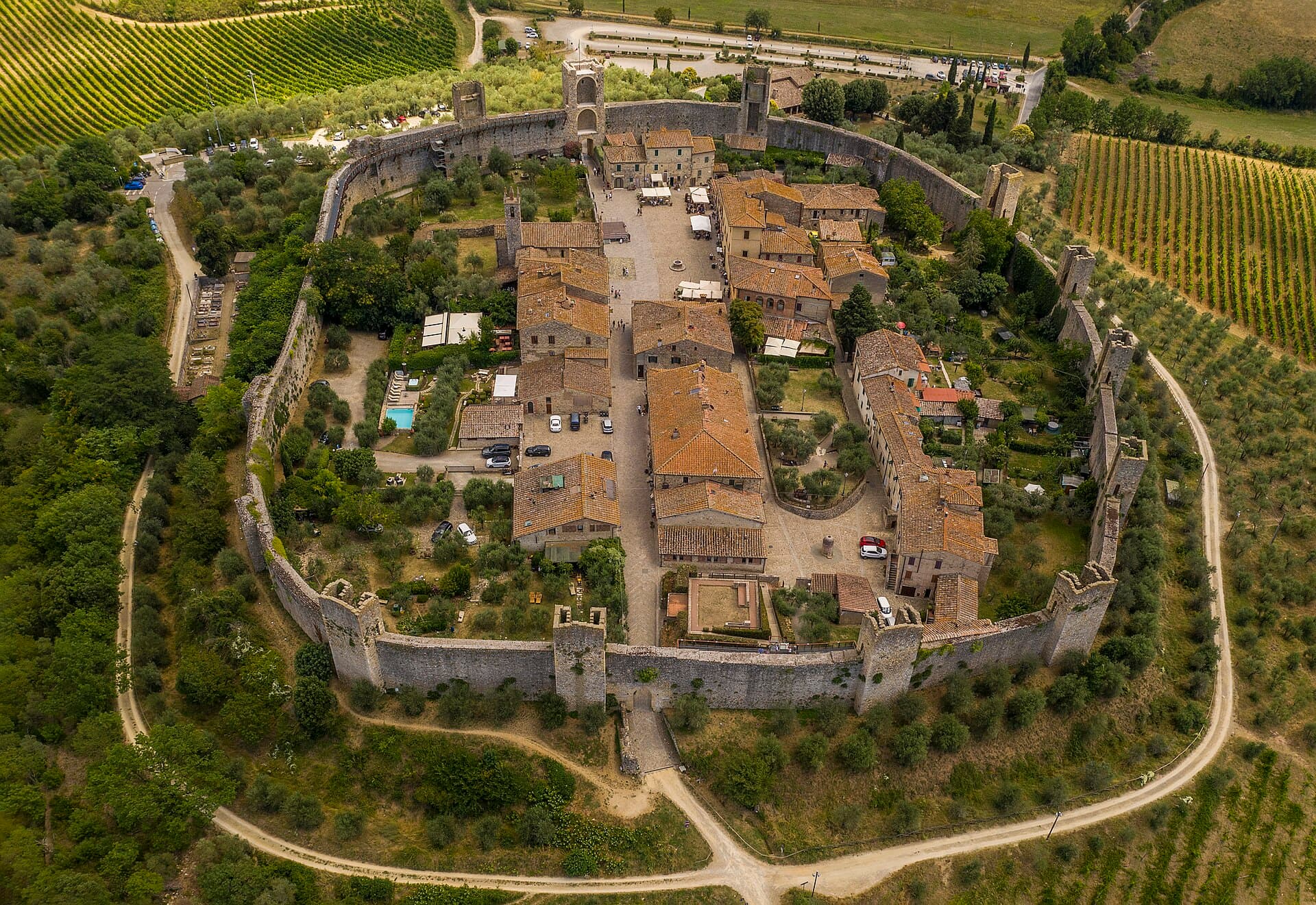
A crown of stone, a whisper of ages.

The secrets of Monteriggioni

Monteriggioni, as no one tells it.

Not the postcards. The stories even locals don't know — whispered in your ear, right where they happened.

3 secrets below. Many more wait inside the tour.
The town walls

Dante Alighieri, in his 'Inferno,' compared something truly monstrous to the walls of Monteriggioni.

Full story unlocks in the tour
Piazza Roma

This central square, now lined with cafes, once served a vital, life-sustaining purpose during times of siege.

Full story unlocks in the tour
Porta Franca

One of Monteriggioni's main gates holds a secret about the town's very beginning.

Full story unlocks in the tour
The full tour

Discover every secret of Monteriggioni

Every address, every reveal in full — in your ear, right where it happened.

Get the key to Monteriggioni

You pick your stops. You walk. The voice reveals what the others miss.

Choose your time

How long do you have in Monteriggioni?

No tours available yet. Check back soon — we're preparing them.

About Monteriggioni

The story of Monteriggioni

Monteriggioni, a remarkably preserved medieval walled town in Tuscany, Italy, appears almost as a perfect stone crown on a natural hill. Constructed by the Sienese in the early 13th century, its formidable walls and fourteen towers formed a strategic defensive outpost against rival Florence. This small hilltop town, with its intact fortifications, offers a tangible glimpse into the Middle Ages, making it a compelling stop for those interested in history and travelers seeking a tranquil escape.

Frequently described as a portal to the Middle Ages, Monteriggioni's allure lies in its authenticity and the sense that time has paused within its circular walls. Beyond its historical significance, the town is encircled by the quintessential Tuscan landscape of olive groves, vineyards, and rolling hills, which transform with the seasons. While compact enough to explore in a couple of hours, its evocative atmosphere encourages a more leisurely pace, inviting visitors to envision life within its ancient confines.

History

## A Sienese Stronghold Against Florence Monteriggioni's origins trace back to 1213, when the Republic of Siena began its construction. Its primary purpose was to serve as a crucial defensive fortification against the expansionist ambitions of its enduring rival, Florence. Strategically situated on a natural hill overlooking the Via Cassia, a vital road, Monteriggioni was designed to guard Siena's northern borders.

For over three centuries, this citadel withstood numerous assaults and sieges from both Florentine forces and the Bishop of Volterra. The town's formidable defenses included its roughly circular walls, spanning approximately 570 meters, and its fourteen square-based towers. These walls, constructed between 1213 and 1219, followed the natural contours of the hill. During the 15th century, the walls were further reinforced and their foundations deepened to resist artillery attacks. Beyond its impressive stone structures, Monteriggioni also employed 'carbonaie'—ditches filled with coal and set alight around the walls—to repel attackers.

Despite its resilience, Monteriggioni's fate turned in 1554. During a battle, a Florentine cannon severely damaged the town's central well, and a significant betrayal by Giovannino Zeti, a Florentine exile who commanded Monteriggioni's military forces, led to the town's capture by Florentine hands. This event foreshadowed the final loss of the Republic of Siena to Florence in 1555, after which Monteriggioni's military significance diminished. For much of its history, Monteriggioni also flourished as a strategic stop along the Via Francigena, an important pilgrimage route from Canterbury to Rome, contributing to its economic and strategic importance.

What to see

Upon entering Monteriggioni, likely through the Porta Franca (also known as Porta Romea), you step directly into the heart of the village. The main street, Via I° Maggio, connects this gate to the Porta Fiorentina, the town's northern entrance facing Florence. The central Piazza Roma is a delightful square, free of cars, and home to the simple Romanesque Church of Santa Maria Assunta, constructed in 1213, the same year as the town itself.

Walking along sections of the ancient walls offers expansive views of the surrounding Chianti vineyards, olive groves, and the distant towers of San Gimignano. The 'Monteriggioni in Arme' Museum (Museum of Arms) provides an educational experience with reproductions of medieval and Renaissance armor and weaponry, and even models of siege engines. Exploring the town's tiny side streets reveals local decorations and small shops. For those interested in the broader history of the area, the MaM – Monteriggioni Archaeological Museum, housed in the former monastery of Abbadia Isola a few kilometers away, offers a journey through Monteriggioni's history from the Middle Ages to prehistory.

When to visit

Monteriggioni welcomes visitors year-round, with its walls, museum, and eateries consistently open. The most popular time to visit is between May and September, when the weather is warm. However, for a more relaxed experience with fewer people, consider the shoulder seasons of April to June and September to October. During these months, temperatures are mild, the countryside is verdant, and harvest season is underway in the surrounding vineyards. July brings the lively Medieval Festival, Monteriggioni di Torri si Corona, a historically accurate event with re-enactments, medieval markets, and performances, though it is also the busiest time.

Practical

Monteriggioni is easily accessible by car, located approximately 14 km from Siena and 54 km from Florence. Take the Monteriggioni exit from the Florence-Siena dual-carriageway. Parking is available just outside the walled town. The Castello car park is a convenient paid option, while the Cipressino car park is a short walk away. There's also a free parking lot further down the hill. Be aware that a ZTL (Limited Traffic Zone) operates in the historic center, meaning non-residents cannot drive inside the walls.

While there's no direct train connection, the nearest station is Castellina Scalo, about 3 km from Monteriggioni, on the Empoli-Siena line. Buses connect Monteriggioni with Siena, Florence, and nearby towns like Colle Val d'Elsa. The town itself is small and easily explored on foot in 1-2 hours, including a walk along the walls and a visit to the museum. Public toilets are located outside the town walls, near the upper parking lot.

Good to know
How long should I spend in Monteriggioni?
You can explore Monteriggioni in 1 to 2 hours, which allows enough time to walk the walls, visit the museum, and enjoy the main square.
Are there any fees to enter Monteriggioni?
Entering the town itself is free. There is a small fee to walk along the medieval walls and to visit the 'Monteriggioni in Arme' Museum, often available as a combined ticket.
Can I drive inside the walls of Monteriggioni?
No, cars are not allowed inside the walled town. Monteriggioni operates a ZTL (Limited Traffic Zone), so visitors should park in the designated lots outside the walls.
Is Monteriggioni suitable for families with children?
Yes, Monteriggioni can be enjoyable for families. Children often appreciate the medieval atmosphere, the chance to walk the walls, and the interactive elements at the 'Monteriggioni in Arme' Museum, where they can try on armor.
What kind of food can I expect in Monteriggioni?
Monteriggioni offers traditional Tuscan cuisine, with restaurants serving fresh pasta, grilled meats, ribollita soups, and local wines, particularly Chianti Colli Senesi. Many eateries are family-run.
Are there good hiking or cycling opportunities near Monteriggioni?
Yes, Monteriggioni is a great base for hiking and cycling, with routes connecting to nearby towns and stretches of the Via Francigena pilgrimage route, offering views of vineyards and olive groves.
Monteriggioni
From€9.00
No booking · activate anytime · 12h to walk it
Get the key to Monteriggioni