During the First Carlist War, a crucial entry point into the formidable Morella Castle was not a grand gate or a secret passage, but something far more ordinary.
Kriegerkalle / Public domain, via Wikimedia CommonsMorella
“Behind formidable walls, a medieval Spanish city guards ancient secrets and enduring traditions.”
Morella, as no one tells it.
Not the postcards. The stories even locals don't know — whispered in your ear, right where they happened.
Morella hosts a major festival only once every six years, a tradition that began with a devastating event.
The winding, seemingly illogical layout of Morella's streets offers a singular glimpse into the town's ancient past.
Discover every secret of Morella
Every address, every reveal in full — in your ear, right where it happened.
You pick your stops. You walk. The voice reveals what the others miss.
How long do you have in Morella?
No tours available yet. Check back soon — we're preparing them.
The story of Morella
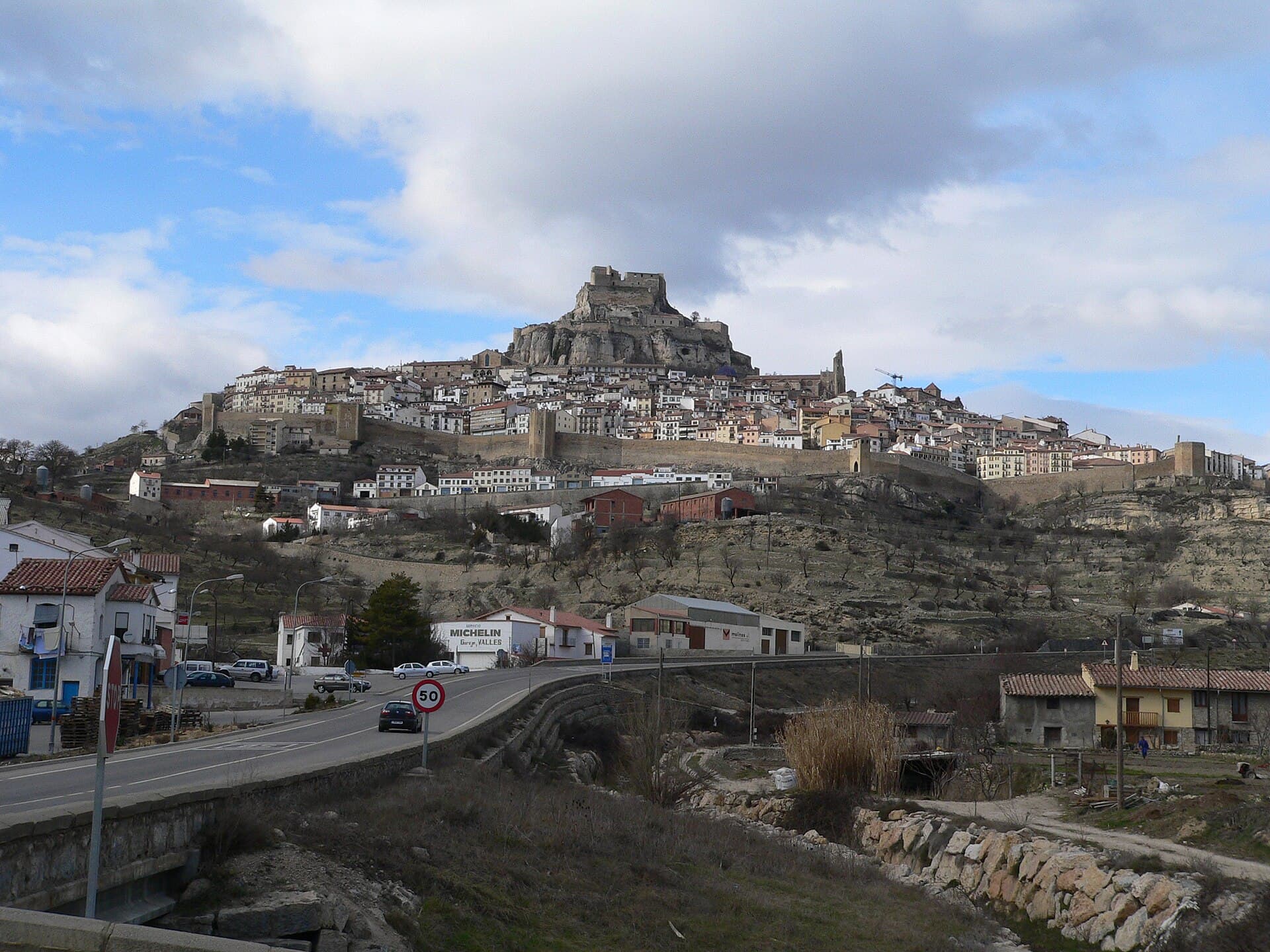
Situated on a hilltop in Spain's Castellón province, Morella is an ancient walled city that stands as a testament to centuries of human endeavor. Its commanding castle and extensive medieval walls, some dating back to the 14th century, shape the landscape and offer sweeping views of the surrounding countryside. Recognized as an Asset of Cultural Interest and listed among Spain's most beautiful towns, Morella captivates visitors with its architectural grandeur and cultural depth.
The town's strategic location, between the Ebro Valley and the Mediterranean, has made it a coveted stronghold throughout history, influencing its distinct character. Beyond its fortifications, Morella's allure extends to its labyrinthine streets, lined with stone houses, arcades, and shops that offer local artisan products. Whether you are a history enthusiast, a culinary explorer, or an outdoor adventurer, Morella offers a memorable experience.
## Traces of Ancient Civilizations Morella's origins stretch back to the Bronze Age, with evidence of Iberian settlements. The Greeks established a treasury here, followed by the Romans, who called the settlement Morviedro and incorporated it into the province of Tarragona. Visigoths later inhabited the area, and in 714, the Moors conquered the town, renaming it Maurela.
## Medieval Stronghold and Royal Significance The castle, a dominant feature of Morella, has served as a military stronghold and royal residence for centuries. El Cid is reputed to have rebuilt the castle in the 11th century. In 1232, King James I of Aragon conquered Morella from the Moors, incorporating it into his kingdom. He declared that Morella was a place "not for any man in the world, but for a king," reserving ownership of the castle for himself. During the centuries that followed, Morella prospered as a center of agriculture and trade, becoming an important political hub, second only to Valencia and Xativa in influence.
## Wars and Resilience Morella's strategic position made it a frequent battleground. It saw fierce fighting during the War of the Spanish Succession in the early 18th century and the Napoleonic Wars, when citizens rose against invading forces. The 19th century brought the Carlist Wars, with Morella serving as the headquarters for Carlist forces under Ramón Cabrera, known as the 'Tiger of Maestrazgo'. The town was captured by Franco's forces in April 1938 during the Spanish Civil War, with Republican guerrillas remaining active in the surrounding mountains until 1956. Despite these conflicts, the resilient population rebuilt the city after periods of destruction.
## Modern Revitalization In the 20th century, Morella experienced depopulation as residents sought work in larger cities. However, a slow revitalization has occurred since Spain's transition to democracy, with tourism and agriculture playing important roles in the local economy. The town is actively pursuing a UNESCO World Heritage site nomination.
Begin your exploration at the Morella Castle, an impressive fortification atop a hill, offering expansive views of the Els Ports region. Access to the castle is through the Convent of San Francisco, a 14th-century Gothic structure where you can observe the 'Dance of Death' fresco.
Descend into the walled city through one of its seven gates, such as the Portal de Sant Miquel, the principal entrance. Wander the narrow streets, including the Blasco de Alagón street, known for its arcades and traditional shops selling local produce. Visit the Archpriest's Church of Santa María la Mayor, a Gothic masterpiece from the 13th and 14th centuries, notable for its two doors, carved wooden staircase, and monumental organ.
Explore the Jewish Quarter with its distinctive narrow alleys. Do not miss the Morella Aqueduct (Aqueduct of Santa Llúcia), a Gothic structure from 1318 just outside the town walls, which provides interesting views. For a deeper dive into the region's ancient past, visit the Temps de Dinosaures Museum to see archaeological pieces and dinosaur fossils. Just six kilometers away, the Morella la Vella cave paintings offer a glimpse into prehistoric art, with some of the oldest known depictions of archery combat.
The most pleasant times to visit Morella are during spring (April to June) and autumn (September to October). These seasons offer mild weather, ideal for exploring the town's historic streets and scenic landscapes. While summers are warm with average highs around 29°C (84°F) in July, the town's elevation provides refreshing breezes. Winters are cool, with January lows around 1°C (34°F) and occasional snowfall, offering a quieter experience.
Morella is most easily accessed by road; it lies on regional motorway N-232. While parking within the town walls is limited, public car parks are available just outside, notably near the Porta de Sant Miquel and below the castle. The town is compact and best explored on foot, though some streets are steep. The local cuisine is a highlight, with traditional dishes like 'olla morellana' (a hearty stew), lamb, homemade sausages, and the prized black truffles during winter. Be sure to try 'flaons', a typical sweet pastry. Morella also has a long tradition of wool textile production, with colorful Morella blankets making unique souvenirs.
- What is Morella known for?
- Morella is known for its impressive medieval walls and castle, its long history spanning from prehistoric times, and its unique Sexenni festival, celebrated every six years. It is also recognized for its traditional cuisine and artisan products.
- How long should I spend in Morella?
- Morella can be explored in a day trip, but spending a night or longer allows for a more in-depth experience, including leisurely walks through its historic center and enjoying local gastronomy.
- Is Morella easily accessible?
- Morella is most easily reached by car, located on regional motorway N-232. Public parking is available outside the city walls.
- What local products should I try in Morella?
- Indulge in traditional dishes like 'olla morellana', lamb, homemade sausages, and local cheeses. During winter, black truffles are a specialty, and 'flaons' are a popular sweet pastry. Morella blankets are also a notable local craft.
- Are there guided tours available in Morella?
- Yes, guided tours are available, including those for the Morella la Vella cave paintings, which are often free and led by archaeologists.
- What is the Sexenni festival?
- The Sexenni is a major festival celebrated every six years in Morella, commemorating the town's recovery from a 17th-century plague. It involves a procession with the Virgin of Vallivana and traditional dances.