Hofbräuhaus
Esta cervejaria mundialmente famosa já desempenhou um papel inesperado na salvação de Munique da destruição.
História completa desbloqueada no tour
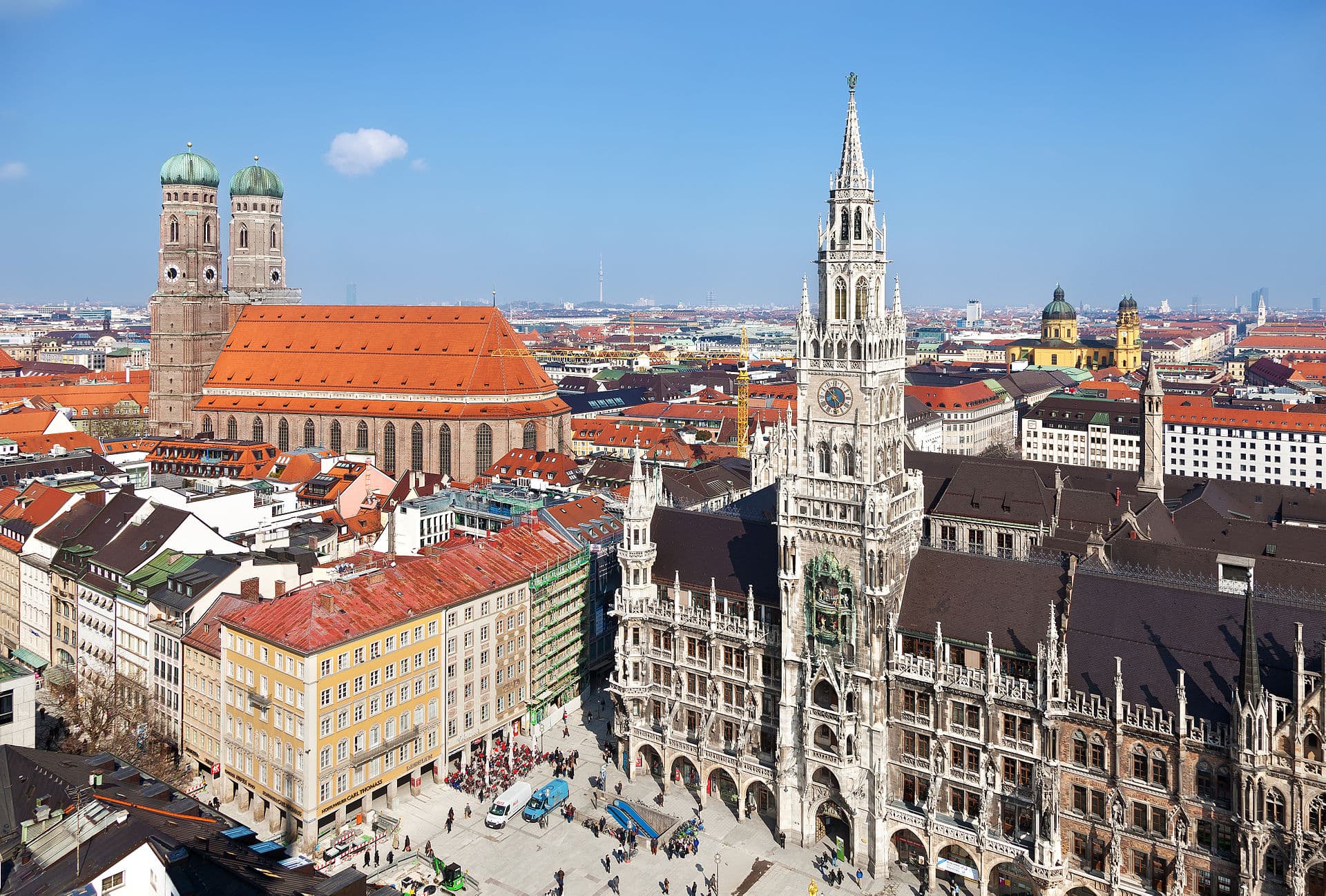 Thomas Wolf, www.foto-tw.de / CC BY-SA 3.0 de, via Wikimedia Commons
Tour de áudio autoguiado por Munique — rota GPS a pé, reprodução offline, narração envolvente em 32 idiomas.
“Onde tradições antigas encontram correntes modernas, Munique flui com um ritmo surpreendente.”
Não os postais. As histórias que nem os locais conhecem — sussurradas ao seu ouvido, exatamente onde aconteceram.
Esta cervejaria mundialmente famosa já desempenhou um papel inesperado na salvação de Munique da destruição.
Olhe atentamente para a entrada da icônica catedral de Munique, e você poderá avistar uma pegada peculiar atribuída a um visitante bastante travesso.
Longe de qualquer oceano, Munique oferece um local de surf único que atrai entusiastas durante todo o ano.
Descubra cada segredo de Munique
Cada endereço, cada revelação na íntegra — no seu ouvido, exatamente onde aconteceu.
Você escolhe as suas paragens. Você caminha. A voz revela o que os outros perdem.


A Lume inclui um guia de realidade aumentada. Levante o telemóvel: a câmara mostra a rua à sua frente, com uma seta luminosa sobreposta à imagem real que aponta sempre para a sua próxima paragem — sem mapa para decifrar, sem voltas erradas. Como tudo na Lume, funciona totalmente offline.
Munique, ou München, a capital e cidade mais populosa da Baviera, Alemanha, tem suas origens em um assentamento monástico do século X, do qual seu nome, que significa "aos monges", é derivado. Situada ao norte dos Alpes, às margens do rio Isar, Munique é a terceira maior cidade da Alemanha, com uma área metropolitana que abriga cerca de 3 milhões de habitantes.
Conhecida por sua mistura única de tradição e progresso, Munique é um importante centro de ciência, tecnologia, finanças, inovação, negócios e turismo. Consistentemente classificada entre as melhores cidades do mundo em pesquisas de qualidade de vida, é reconhecida por seu alto padrão de vida. Além de sua força econômica, Munique é celebrada por sua cena cultural, arquitetura histórica e vastos espaços verdes, oferecendo uma experiência bávara distinta.
## Do Assentamento Monástico à Capital Real A história de Munique começa em 1158, quando Henrique o Leão, Duque da Baviera, estabeleceu um mercado perto de uma ponte sobre o rio Isar. Este ato é geralmente aceito como a fundação da cidade, embora evidências de assentamentos na área datem do período Neolítico. O nome original da cidade, "München", que significa "aos monges", refere-se a um mosteiro beneditino em Tegernsee, provavelmente fundado em 750 d.C.
Em 1255, Munique tornou-se a residência da Casa de Wittelsbach, uma família que estaria intimamente ligada ao destino da cidade por mais de 700 anos. Sob seu domínio, especialmente durante o reinado de Luís IV (Luís, o Bávaro) no início do século XIV, a cidade expandiu-se significativamente. Munique floresceu como um centro da Contrarreforma alemã e das artes renascentistas a partir de 1506, quando foi nomeada capital da Baviera. No entanto, essa prosperidade foi interrompida pela Guerra dos Trinta Anos, durante a qual a cidade foi ocupada pelos suecos em 1632 e, posteriormente, sofreu uma epidemia de peste que dizimou um terço de sua população.
## A Ascensão da Munique Moderna Em 1806, Munique tornou-se a capital do novo Reino da Baviera sob uma aliança com a França Napoleônica, e desenvolveu-se como um centro de artes, arquitetura, cultura e ciência. O século XIX marcou um período de imenso crescimento e desenvolvimento, com o Rei Luís I da Baviera moldando grande parte da paisagem arquitetônica da Munique moderna. A população da cidade saltou de 100.000 em 1854 para 500.000 em 1900.
Após a Primeira Guerra Mundial, Munique vivenciou significativa agitação política, incluindo a efêmera República Soviética da Baviera. Também se tornou um ponto central para a ascensão do Partido Nazista na década de 1920, ganhando o apelido de "Capital do Movimento". Durante a Segunda Guerra Mundial, Munique foi intensamente bombardeada, levando à destruição generalizada. No entanto, a cidade foi meticulosamente reconstruída após a guerra, preservando seu traçado original e restaurando muitos edifícios históricos. Munique sediou os Jogos Olímpicos de Verão de 1972, um símbolo de uma nova Alemanha democrática, embora o evento tenha sido tragicamente marcado por um incidente terrorista. Hoje, Munique é uma cidade industrial e turística próspera, equilibrando seu legado histórico com uma identidade contemporânea.
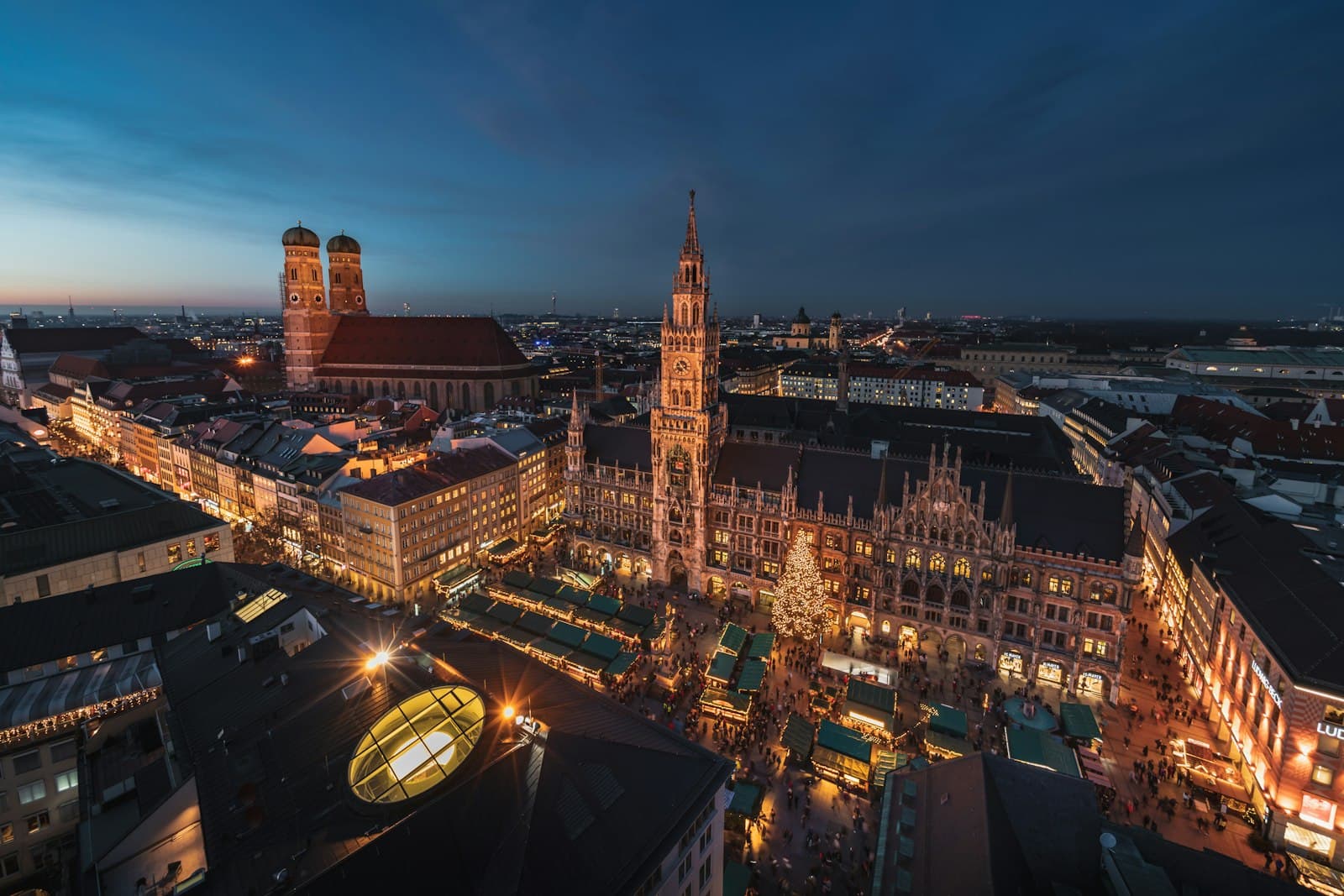
A Marienplatz, a praça central de Munique desde sua fundação em 1158, é um ponto de partida natural. Aqui, a Nova Prefeitura (Neues Rathaus) em estilo neogótico domina a praça, famosa por seu Glockenspiel, um carrilhão com 43 sinos e 16 figuras em tamanho real que reencenam eventos históricos diariamente. A Mariensäule, uma coluna mariana erguida em 1638, fica no centro, comemorando a sobrevivência de Munique à Guerra dos Trinta Anos. A uma curta caminhada dali fica o Viktualienmarkt, um renomado mercado de alimentos ao ar livre.
A Frauenkirche, ou Catedral de Nossa Senhora, com suas distintas torres em forma de cebola, é um dos marcos mais reconhecíveis de Munique. Construída em tijolo vermelho no século XV, sua torre sul é frequentemente aberta aos visitantes, oferecendo vistas panorâmicas da cidade. Para um vislumbre da vida real, a Residenz de Munique, o maior palácio em qualquer centro de cidade alemã, exibe séculos de estilos arquitetônicos e aposentos opulentos. O Palácio de Nymphenburg, uma grandiosa residência de verão barroca com extensos jardins, também oferece um olhar fascinante sobre a história bávara.
Visite o Hofbräuhaus am Platzl, uma cervejaria histórica fundada em 1589, que oferece uma atmosfera animada e cervejas bávaras tradicionais. Para uma experiência urbana única, vá até a Eisbach Wave no Englischer Garten, onde surfistas pegam uma onda parada durante todo o ano. O Deutsches Museum, um dos maiores museus de ciência e tecnologia do mundo, e os museus Pinakothek (Alte, Neue e der Moderne) oferecem extensas coleções de arte e cultura.
Munique é uma cidade que oferece algo em todas as estações. As épocas de transição, primavera (abril a maio) e outono (setembro a outubro), são frequentemente consideradas ideais para passeios turísticos, com temperaturas amenas e menos multidões do que nos meses de pico do verão. De maio a setembro geralmente é quente, sendo julho o mês mais quente, com uma média de cerca de 24°C. No entanto, junho e agosto também podem ter chuvas significativas. O final de setembro a início de outubro é a melhor época para vivenciar a Oktoberfest, embora o clima possa ser imprevisível. Os invernos (dezembro a fevereiro) são frios e frequentemente com neve, com temperaturas variando de -2°C a 4°C, oferecendo uma atmosfera festiva, especialmente perto do Natal.
O sistema de transporte público de Munique é eficiente e abrangente, composto pelo U-Bahn (metrô subterrâneo), S-Bahn (trens suburbanos), ônibus e bondes. O U-Bahn e o S-Bahn formam o núcleo, conectando os principais distritos da cidade e subúrbios. As passagens podem ser compradas em máquinas nas estações, online ou pelo aplicativo MVGO. Várias opções de bilhetes estão disponíveis, incluindo bilhetes únicos, bilhetes diários, bilhetes diários em grupo e o CityTourCard Munich, que oferece descontos em atrações. Do Aeroporto de Munique (MUC), você pode chegar facilmente ao centro da cidade usando as linhas S-Bahn S1 ou S8, com um bilhete Airport City Day Ticket disponível para esta rota. Munique é considerada uma das cidades mais seguras do mundo, com baixa taxa de criminalidade. Embora o alemão seja o idioma oficial, o inglês é amplamente falado em áreas turísticas. A moeda é o Euro (€). A maioria dos estabelecimentos aceita pagamentos com cartão, mas é sempre bom ter algum dinheiro para pequenas compras. Domingos são geralmente dias de descanso, com a maioria das lojas fechadas.
Munique — coreano, chinês, hebraico e mais 29 idiomas, cada parada narrada por uma voz nativa. A maior variedade de idiomas entre os passeios de áudio autoguiados.
Disponível em: