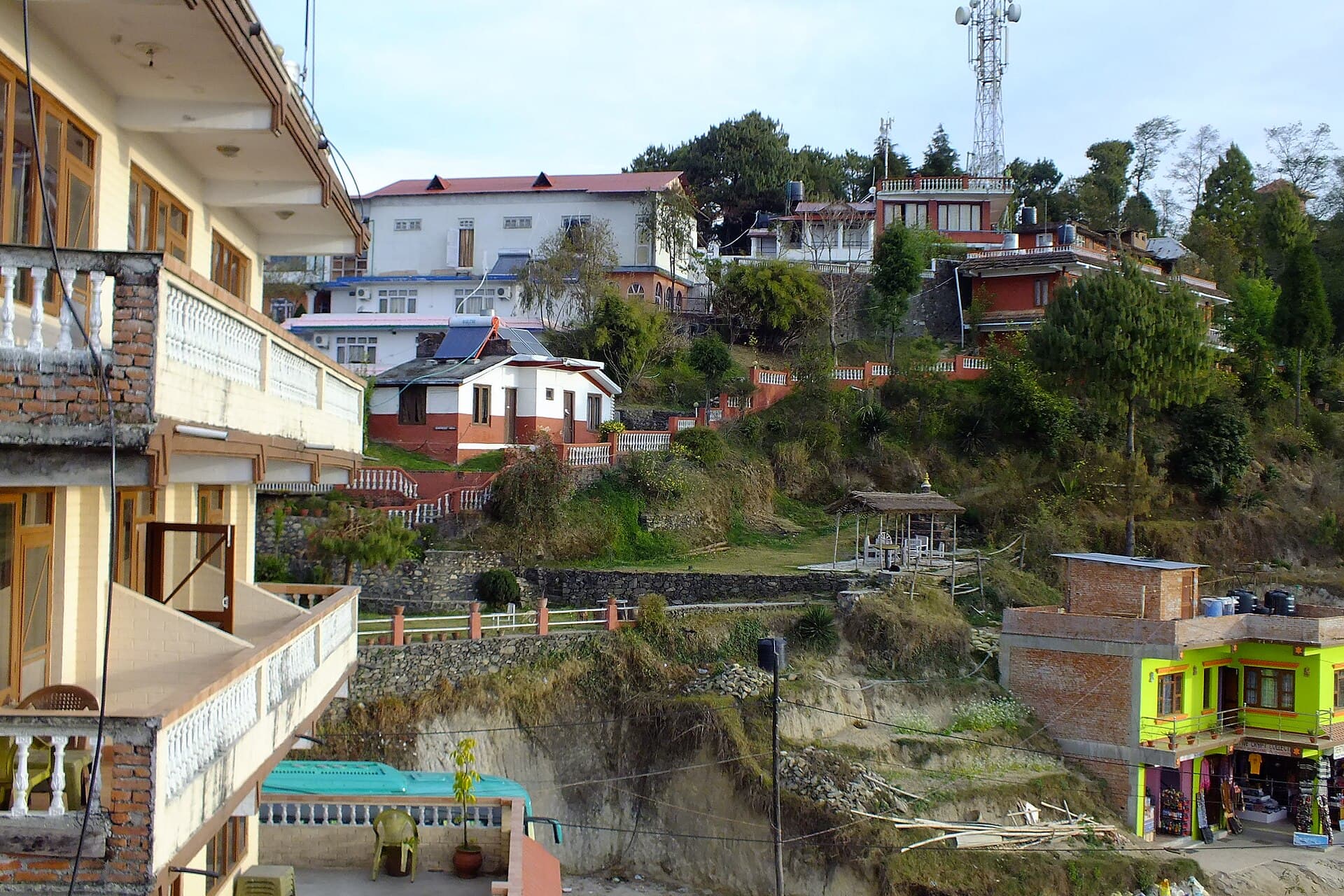
Nagarkot, Nepal松岡明芳 / CC BY-SA 4.0, via Wikimedia Commons
NP

Nagarkot

Where the world slows down, and the Himalayas awaken.

The secrets of Nagarkot

Nagarkot, as no one tells it.

Not the postcards. The stories even locals don't know — whispered in your ear, right where they happened.

3 secrets below. Many more wait inside the tour.
Nagarkot View Tower

The Nagarkot View Tower offers a sweeping panorama of the Himalayas, including Mount Everest on a clear day. Yet, its original purpose was far more grounded than scenic appreciation.

Full story unlocks in the tour
Ancient Trade Route

Before Nagarkot became a frequented hill station, it played a crucial role in connecting distant lands.

Full story unlocks in the tour
Bhangeri Durbar

Many journey to Nagarkot seeking respite from the heat, a tradition that dates back to royalty. However, one particular royal retreat has a surprising origin.

Full story unlocks in the tour
The full tour

Discover every secret of Nagarkot

Every address, every reveal in full — in your ear, right where it happened.

Get the key to Nagarkot

You pick your stops. You walk. The voice reveals what the others miss.

Choose your time

How long do you have in Nagarkot?

No tours available yet. Check back soon — we're preparing them.

About Nagarkot

The story of Nagarkot

Nagarkot is a serene hill station on the eastern rim of the Kathmandu Valley, approximately 32 kilometers (20 miles) east of Kathmandu. At an elevation of around 2,195 meters (7,200 feet) above sea level, it offers a peaceful retreat from the city's bustle. The village is known for its expansive views of the Himalayas, including glimpses of Mount Everest on clear days.

Beyond the famed sunrise and sunset vistas, Nagarkot provides a setting to slow down, breathe fresh mountain air, and explore forested trails. It serves as a popular destination for nature lovers, hikers, and those seeking a quieter side of Nepal. Its accessibility from Kathmandu makes it a favored spot for short escapes and day trips.

History

From Fort to Royal Retreat

Nagarkot's history is deeply intertwined with its strategic location overlooking the Kathmandu Valley. The name 'Nagarkot' itself hints at its past, with 'Nagar' meaning city and 'Kot' meaning fort in Nepali. Originally, it functioned as a vital fort for the rulers of Kathmandu Valley, serving as a lookout point to monitor external activities and guard against potential invasions.

During the 19th and 20th centuries, Nagarkot transformed into a popular summer retreat. The Shah royals and Rana nobles favored it as an escape from the summer heat and the demands of city life. One notable example is Rana Prime Minister Chandra Shumsher, who, on his physicians' advice, constructed the 'Bhangeri Durbar' as his summer palace in Nagarkot. Later, it became a hill station for British colonial residents.

A Place of Panoramic Significance

The area's significance extends beyond military and royal purposes. Ancient texts suggest that the Kathmandu Valley was once a lake. A sage predicted that a Bodhisattva would initiate human settlement there. Manjushree, upon arriving, stood on the ridge of Mahamandap (present-day Nagarkot) and first glimpsed the sacred lake. He then drained the water at Chobhar gorge, built the Swoyambhu stupa, planted trees, and began human settlement in the Kathmandu Valley, calling it 'Manjupatan'.

In the mid-20th century, Nagarkot transitioned into a popular tourist destination, primarily due to its expansive views of the Himalayan mountains, including Mount Everest. The road to Nagarkot was metalled in 1975 for the coronation of the late King Birendra, allowing royal guests from 100 nations to witness the spectacular sunsets and sunrises over the Himalayas from this vantage point.

What to see

The primary draw of Nagarkot is its unparalleled panoramic views of the Himalayas. On clear days, visitors can see eight of Nepal's thirteen Himalayan ranges, including Annapurna, Manaslu, Ganesh Himal, Langtang, Jugal, Rolwaling, Numbur, and the Mahalangur range, which encompasses Mount Everest.

For the most comprehensive vistas, journey to the Nagarkot View Tower. At an elevation of 2,175 meters (7,136 feet), it offers a 360-degree perspective of the mountains, the Kathmandu Valley, and Shivapuri National Park. The tower is particularly popular for witnessing the sunrise and sunset, when the peaks are bathed in golden light.

Beyond the views, Nagarkot offers several hiking opportunities. The Nagarkot Panoramic Hiking Trail is a 12-kilometer (7.5-mile) loop that typically takes 3 to 4.5 hours to complete. This trail winds through pine forests, terraced farmlands, and traditional Tamang villages, providing a blend of natural beauty and cultural immersion. Another popular option is the hike from Nagarkot to Changu Narayan Temple, a UNESCO World Heritage Site and Nepal's oldest standing temple, which takes about 3 to 4 hours. For those seeking more adventure, paragliding with Everest views is also available.

When to visit

The best time to visit Nagarkot for clear Himalayan views is during the drier months from October to April. Autumn (September to November) offers clear skies and comfortable daytime temperatures between 15°C and 25°C, making it ideal for trekking and photography. Spring (March to May) also brings mild and pleasant weather, with temperatures ranging from 15°C to 25°C, and the hills come alive with blooming rhododendrons and other flowers.

Winter (December to February) can be chilly, with daytime temperatures between 5°C and 15°C, and nighttime temperatures dropping below freezing. While snowfall is rare, it is possible, adding a serene charm. Summers (June to August) are warm and humid, with daytime highs from 20°C to 30°C, and the monsoon season brings frequent rainfall, which can obscure mountain views.

Practical

Nagarkot is approximately 32 kilometers (20 miles) east of Kathmandu. The most convenient way to reach Nagarkot from Kathmandu is by private vehicle (car, jeep, or taxi), which takes about 1 to 1.5 hours. Public bus options are available but require taking two different buses: one from Kathmandu to Bhaktapur, and then another from Bhaktapur to Nagarkot. This journey can take over two hours.

Accommodation in Nagarkot ranges from luxurious resorts to budget-friendly hotels, many offering balconies with mountain views. It's advisable to book accommodation in advance, especially during peak tourist seasons like autumn. For hiking, carrying a charged phone with an offline map is recommended, as signage can be limited on some trails. Small tea shops are available along popular hiking routes, particularly in villages like Kartike.

Good to know
Can you see Mount Everest from Nagarkot?
Yes, on clear days, especially during autumn and winter mornings, Mount Everest is visible from Nagarkot, appearing as a distant pyramid to the east.
What is the best way to get to Nagarkot from Kathmandu?
The most convenient way is by private vehicle (taxi, car, or jeep), taking approximately 1 to 1.5 hours. Public buses are an option but involve transfers and take longer.
Are there hiking trails in Nagarkot?
Yes, Nagarkot offers several hiking trails, including the popular Nagarkot Panoramic Hiking Trail (a 12km loop) and the trail to Changu Narayan Temple (3-4 hours).
What is the Nagarkot View Tower?
The Nagarkot View Tower is a popular observation deck at 2,175 meters (7,136 feet) offering 360-degree panoramic views of the Himalayas, including Mount Everest, and the Kathmandu Valley.
What is the weather like in Nagarkot?
Nagarkot has a cooler climate than Kathmandu. Spring and autumn offer mild temperatures (15-25°C) and clear skies. Winters are chilly (5-15°C), while summers are warm and humid with monsoon rains.
Is paragliding available in Nagarkot?
Yes, paragliding is available in Nagarkot, offering an adventurous way to experience the valley and mountain panoramas, sometimes with views of Everest.
Nagarkot
From€9.00
No booking · activate anytime · 12h to walk it
Get the key to Nagarkot