Lac Naini
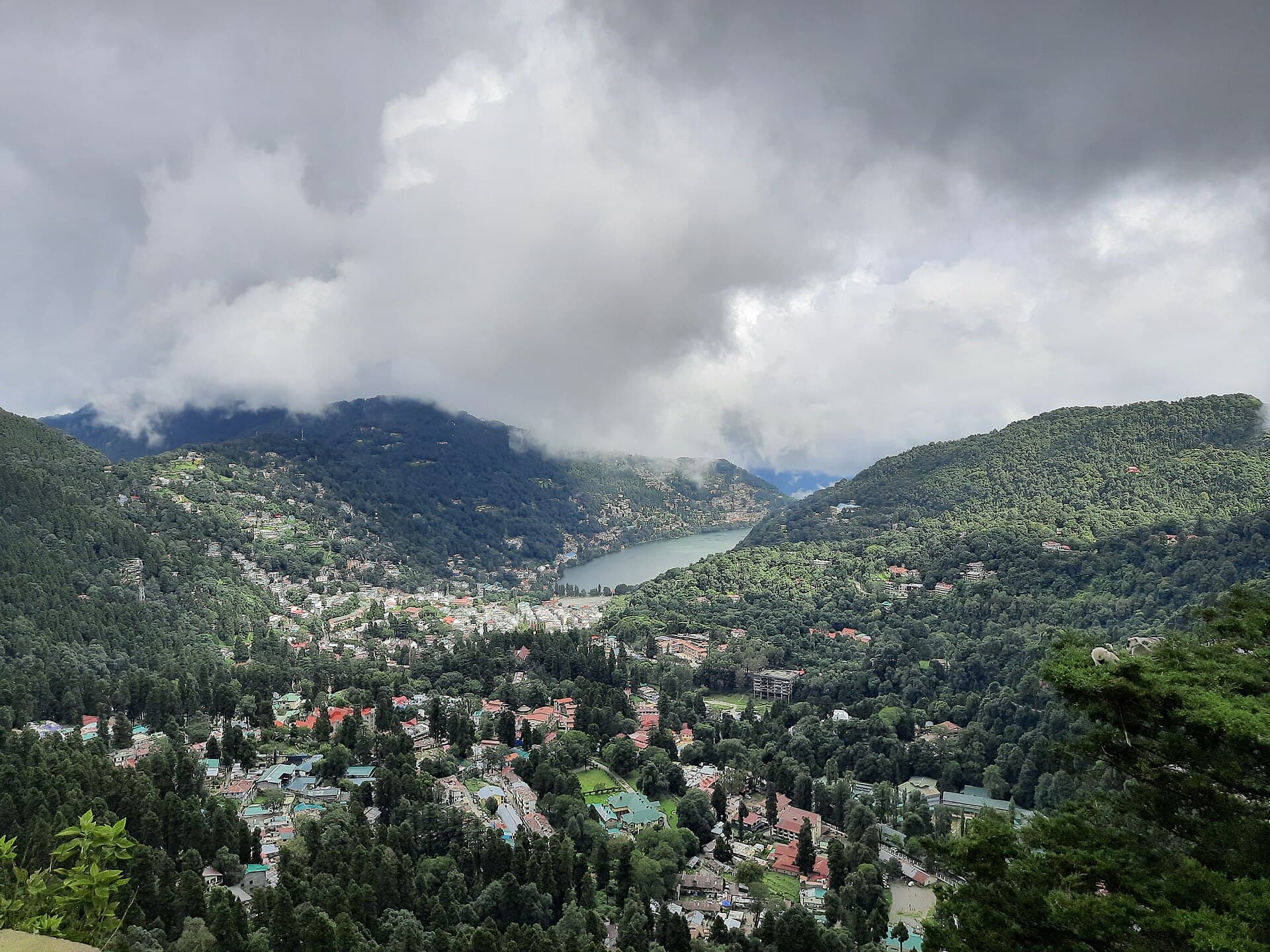
Le lac Naini, en forme d'œil, est au cœur de l'identité de Nainital, mais sa forme unique serait plus que géologique.
L'histoire complète se débloque dans le tour
 Skalvanov / CC BY-SA 4.0, via Wikimedia Commons
Visite audio autoguidée de Nainital — parcours GPS à pied, lecture hors ligne, narration en 32 langues.
“Là où les eaux émeraude reflètent les sommets himalayens et les légendes anciennes flottent dans l'air.”
Pas les cartes postales. Les histoires que même les habitants ignorent — soufflées à l'oreille, là où elles se sont passées.
Le lac Naini, en forme d'œil, est au cœur de l'identité de Nainital, mais sa forme unique serait plus que géologique.
Aujourd'hui, « The Flats » est une zone de loisirs populaire, mais elle avait autrefois un but différent, plus sombre.
Au-delà des pédalos et des barques colorés sur le lac Naini, il existe une occasion unique pour ceux qui souhaitent vraiment profiter de l'eau.
Découvrez tous les secrets de Nainital
Chaque adresse, chaque révélation en entier — dans ton oreille, là où elle s'est passée.
Tu choisis tes lieux. Tu marches. La voix te révèle ce que les autres ignorent.


Votre visite audioguidée de Nainital vous attend — choisissez vos lieux, votre langue, et lancez-vous dès votre arrivée.
AcheterLume intègre un guide en réalité augmentée. Levez votre téléphone : sa caméra montre la rue devant vous, avec une flèche lumineuse posée sur l'image réelle qui pointe toujours vers votre prochain arrêt — aucune carte à déchiffrer, aucun mauvais virage. Comme tout dans Lume, ça fonctionne entièrement hors-ligne.
Nainital, souvent appelée le « district des lacs de l'Inde », est une station de montagne pittoresque de l'Uttarakhand, située à une altitude d'environ 1 938 mètres (6 358 pieds) au-dessus du niveau de la mer. La ville est construite autour du lac Naini, distinctif et en forme d'œil, qui est encerclé par sept grandes collines. Ces collines, connues sous le nom de « Sapta-Shring », comprennent le pic Naina, Deopatha et Ayarpatha, offrant des vues imprenables sur les plaines en contrebas et la chaîne himalayenne enneigée.
Cette destination attrayante allie la splendeur naturelle à un caractère de l'époque coloniale, héritage de son temps en tant que capitale d'été des Provinces unies sous la domination britannique. Les visiteurs sont attirés par son lac calme, ses marchés animés et l'atmosphère paisible qui offre un répit de la chaleur des plaines. Nainital offre un mélange détendu de sérénité naturelle et de résonance historique, en faisant un lieu de contemplation, de romance et de reconnexion avec le monde naturel.
## Racines anciennes et signification mythologique L'histoire de Nainital s'étend bien au-delà de son passé colonial, avec des mentions dans d'anciennes écritures hindoues. Le « Manas Khand » du « Skanda Purana » fait référence à Nainital comme le « Tri-Rishi-Sarovar », signifiant « le lac des trois sages ». La légende raconte que les sages Atri, Pulastya et Pulaha, ne trouvant pas d'eau pendant leur pèlerinage, ont creusé un trou et l'ont rempli d'eau siphonée du lac sacré Mansarovar au Tibet. Cette connexion mythologique identifie également le lac Naini comme l'un des 64 « Shakti Peeths », des sites sacrés où des parties du corps calciné de la déesse Sati seraient tombées. On croit que l'œil gauche de Sati (Nain) est tombé ici, donnant au lac sa forme distinctive d'œil et à la ville son nom.
## Découverte et développement britanniques Les collines de Kumaon sont passées sous domination britannique après la guerre anglo-népalaise (1814-1816). Cependant, la fondation officielle de Nainital en tant que station de montagne est attribuée à P. Barron, un marchand de sucre de Shahjahanpur, qui a construit la première maison européenne, Pilgrim Lodge, en 1841. Barron, captivé par la beauté du lac, a abandonné son commerce de sucre pour établir une colonie européenne sur ses rives. En 1847, Nainital avait rapidement gagné en popularité en tant que station de montagne. En 1862, elle a été désignée capitale d'été des Provinces du Nord-Ouest, ce qui a conduit à une expansion significative avec la construction de bungalows, de marchés et d'installations administratives. La ville est également devenue un centre éducatif important pour les enfants britanniques.
## Le grand glissement de terrain de 1880 Les pentes abruptes de Nainital ont toujours été sujettes aux glissements de terrain. L'événement le plus catastrophique s'est produit le 18 septembre 1880, à la suite de fortes pluies et d'un tremblement de terre mineur. Ce « grand glissement » sur la colline d'Alma a entraîné 151 décès, dont 108 résidents indiens et 43 européens, et a détruit plusieurs bâtiments, y compris les Salles d'Assemblée et le Temple de Naina Devi. En réponse, des drains d'eaux pluviales ont été construits et les réglementations de construction ont été rendues plus strictes pour prévenir de futures catastrophes. La zone de loisirs connue sous le nom de « The Flats » a ensuite été construite sur le site du glissement de terrain, et un nouveau Temple de Naina Devi a été érigé.
Nainital offre un mélange de beauté naturelle et de sites culturels. Le lac Naini est au centre de la ville, où les visiteurs peuvent profiter de promenades en bateau tranquilles en pédalos ou en barques. Le temple de Naina Devi, situé sur la rive nord du lac, est un important point de repère spirituel. Pour des vues panoramiques sur la ville et les sommets himalayens environnants, le point de vue de Snow View est accessible via un téléphérique. Un autre point de vue populaire est Tiffin Top, également connu sous le nom de Dorothy's Seat, qui offre des vues imprenables et est un endroit prisé des peintres et des poètes.
La Mall Road longe le lac Naini et est un centre animé pour le shopping, la restauration et les promenades en soirée, avec ses bâtiments de l'époque coloniale ajoutant à son caractère. Pour les familles, les Eco Cave Gardens offrent une expérience interactive avec des grottes interconnectées en forme d'animaux et des fontaines musicales. Le zoo d'altitude de Nainital abrite diverses faunes himalayennes, y compris le léopard des neiges et l'ours noir de l'Himalaya. Au-delà de la ville principale, pensez à visiter Sattal, un groupe de sept lacs d'eau douce interconnectés, idéal pour l'observation des oiseaux et les promenades paisibles dans la nature. Bhimtal est un autre lac calme avec un café insulaire en son centre. Pour une expérience plus tranquille, Pangot est un paradis pour les ornithologues avec plus de 300 espèces d'oiseaux.
Nainital est une destination toute l'année, chaque saison offrant une expérience différente. La période la plus populaire pour visiter est pendant l'été (de mars à juin), lorsque le temps est agréablement frais, avec des températures allant de 10°C à 25°C, ce qui est idéal pour la navigation de plaisance, les visites touristiques et les activités de plein air. Cette période est également populaire auprès des familles fuyant la chaleur des plaines.
L'automne (d'octobre à novembre) est également fortement recommandé, offrant un ciel clair, un air vif et des vues imprenables sur les chaînes himalayennes après la mousson. La mousson (de juillet à septembre) apporte des paysages verdoyants et une atmosphère plus calme, attirant ceux qui aiment la solitude et le temps brumeux, bien que de fortes pluies puissent parfois provoquer des barrages routiers. L'hiver (de décembre à février) transforme Nainital en un pays des merveilles enneigé, avec des nuits froides et la possibilité de chutes de neige, attirant les visiteurs intéressés par les sports de neige ou une escapade montagnarde douillette.
Pour se rendre à Nainital, le plus pratique est de prendre un train jusqu'à Kathgodam, la gare la plus proche, située à environ 38 km. De Kathgodam, des taxis et des bus sont facilement disponibles pour le trajet d'environ 1h30 jusqu'à Nainital. L'aéroport de Pantnagar est l'aéroport le plus proche, situé à 62 km. Des services de bus directs sont également disponibles depuis les grandes villes comme New Delhi.
À Nainital même, des rickshaws électriques sont disponibles pour de courtes distances, notamment près de Mallital. Pour explorer les attractions voisines comme Bhimtal ou Naukuchiatal, il est conseillé de louer un taxi, avec des options de covoiturage pour réduire les coûts. La Mall Road est une zone sans stationnement pendant les soirées d'été, et les véhicules privés sont souvent restreints entre 18h et 20h. Il est essentiel de porter des gilets de sauvetage lors des promenades en bateau sur le lac Naini, et la baignade est interdite en raison des risques de sécurité. Nainital est généralement sûre pour les voyageurs solitaires et les familles, mais il est judicieux d'éviter les zones désertes la nuit et d'être prudent pendant la saison de la mousson en raison des éventuels glissements de terrain.
Nainital en coréen, en chinois ou en hébreu — et dans 29 autres langues, chaque étape narrée par une voix native. La plus large gamme de langues de tous les audioguides autoguidés.
Disponible en :