TH

Nakhon Ratchasima

Korat: Where ancient Khmer echoes meet the spirited pulse of Isan culture.

The secrets of Nakhon Ratchasima

Nakhon Ratchasima, as no one tells it.

Not the postcards. The stories even locals don't know — whispered in your ear, right where they happened.

3 secrets below. Many more wait inside the tour.
Phimai Historical Park

Before Angkor Wat captured the world's imagination, a significant Khmer temple complex in Thailand was already standing.

Full story unlocks in the tour
Thao Suranari Monument

A local heroine, revered with almost god-like status, is said to have single-handedly saved the city from an invading army.

Full story unlocks in the tour
Phon Lan Gate

Recent excavations for Ayutthaya-era city walls unexpectedly unearthed a much older secret.

Full story unlocks in the tour
The full tour

Discover every secret of Nakhon Ratchasima

Every address, every reveal in full — in your ear, right where it happened.

Get the key to Nakhon Ratchasima

You pick your stops. You walk. The voice reveals what the others miss.

Choose your time

How long do you have in Nakhon Ratchasima?

No tours available yet. Check back soon — we're preparing them.

About Nakhon Ratchasima

The story of Nakhon Ratchasima

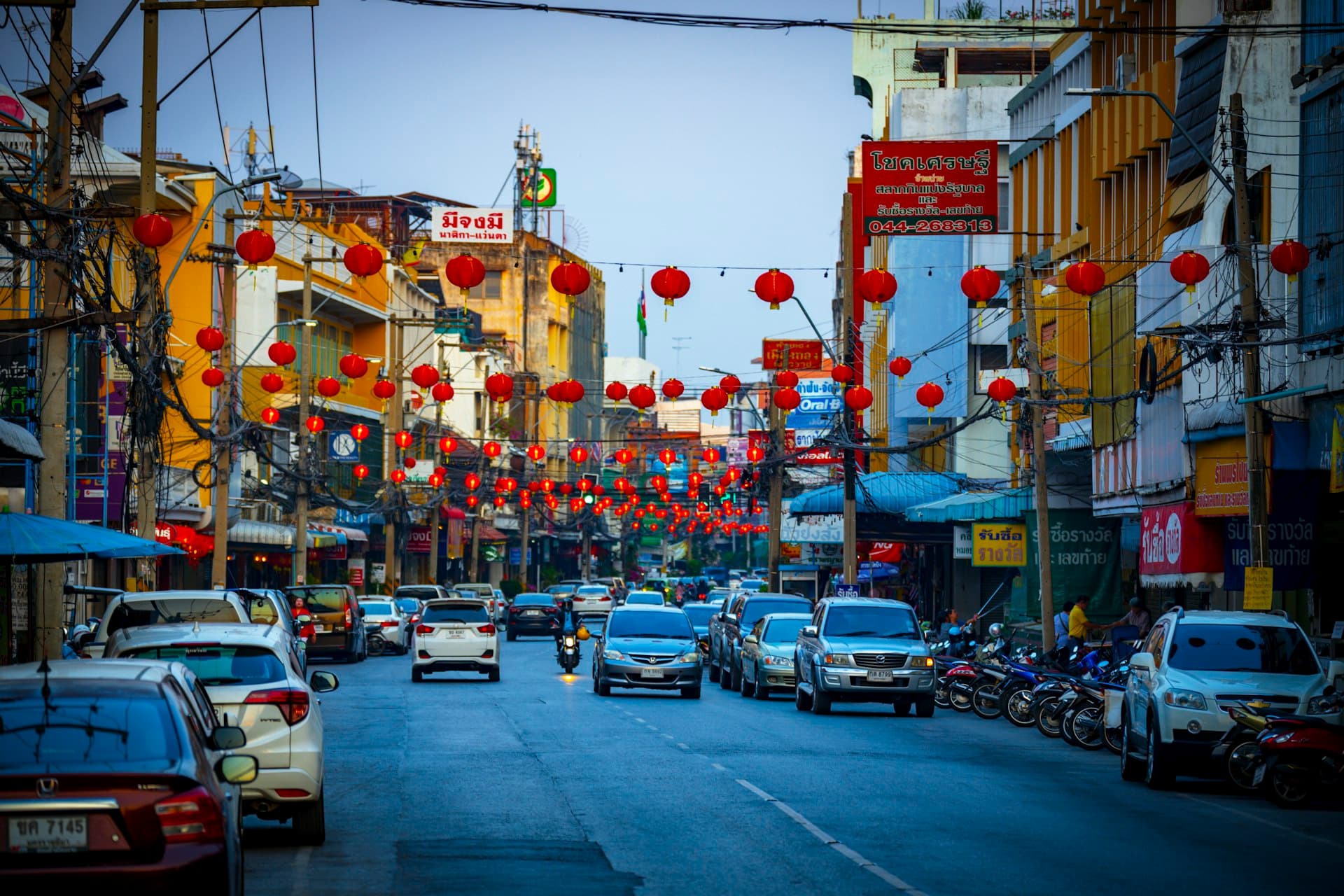
Nakhon Ratchasima, affectionately known as Korat, serves as the bustling entry point to Thailand's northeastern Isan region. This spirited city, the largest in Isan and the third-largest in Thailand, offers a compelling blend of ancient history, deep culture, and modern dynamism. Approximately 250-260 kilometers northeast of Bangkok, Korat is a significant administrative, economic, and cultural center, resting at the western edge of the Korat Plateau.

Often overlooked by travelers rushing to more famous destinations, Nakhon Ratchasima presents an authentic Thai experience, free from the typical tourist crowds. It's a place where the unique Isan dialect can be heard, and traditions, carefully preserved for centuries, come to life. From its historical sites that speak of Khmer and Ayutthaya influence to its lively markets and serene temples, Korat invites visitors to immerse themselves in a distinct cultural mosaic.

The city's strategic location historically marked the boundary between Lao and Siam territories and continues to be a crucial transportation nexus, connecting the central plains with the Lao-speaking northeast. Whether you're drawn to ancient ruins, local handicrafts, or the region's famously spicy cuisine, Nakhon Ratchasima offers a multifaceted journey into the heart of Isan.

History

## From Ancient Settlements to Royal Frontier Nakhon Ratchasima's origins stretch back long before the 14th century, when the area was under the suzerainty of the Khmer Empire and known by names such as Angkor raj, Nokor Reach Seyma, or Koreach. The nearby town of Phimai was likely a more prominent center during this period.

The modern city's official founding is attributed to the 17th century, during the reign of King Narai the Great (1656–1688) of the Ayutthaya Kingdom. King Narai ordered the construction of a new fortified city by merging two older settlements, Mueang Sema and Mueang Khorak. This strategic move was intended to establish a stronghold on Ayutthaya's northeastern frontier, protecting against external expansion and ensuring central control over remote provinces. The name Nakhon Ratchasima, meaning 'Royal Frontier City' or 'City of the Royal Boundary' (from Sanskrit 'Raja' for king and 'Sima' for boundary), underscored its vital defensive role.

Throughout the Ayutthaya Kingdom, Nakhon Ratchasima was recognized as an important "second-class" city, governed by a hereditary royal appointee. Its strategic importance was further highlighted in 1826 during the Laotian Rebellion, when King Anouvong of Vientiane attacked Korat. It was during this conflict that Lady Mo, or Thao Suranari, the wife of the deputy governor, earned legendary status for her role in freeing the city from the invading forces. Her bravery is commemorated with a prominent statue in the city center, a site of daily homage and annual festivals.

## Modern Development and Economic Hub Nakhon Ratchasima continued to grow as a significant political and economic center in the northeastern region. The late 19th century brought administrative reforms, and in 1900, the Royal State Railways of Siam initiated train operations from Bangkok to Korat, officially opened by King Chulalongkorn. This railway expansion, with subsequent lines connecting to Ubon Ratchathani and Khon Kaen, cemented Korat's role as a major transportation hub.

The city experienced rapid development in the 1960s and 70s, partly due to the establishment of its Royal Thai Air Force Base, which was utilized by American planes during the Vietnam War. Today, Nakhon Ratchasima is recognized as an industrial manufacturing hub, with a diverse economy that includes services, manufacturing, and agriculture. It is also known for local handicrafts such as Dan Kwian's earthenwares and Pak Thong Chai's silk textiles. Recent archaeological discoveries, including prehistoric human remains dating back thousands of years, further enrich the understanding of Korat's deep and layered history.

What to see

Korat offers a range of sights, blending ancient history with local life. The Thao Suranari Monument is a central landmark, honoring the revered heroine Lady Mo. Many locals visit daily to pay respects and offer prayers. Nearby, the Chumphon Gate is the city's only remaining original gate, dating to the mid-17th century. A local legend suggests walking through it once ensures your return, twice for love, and thrice to settle in the city.

For a journey into the past, the Phimai Historical Park is a significant destination. These magnificent Khmer temple ruins, dating from the 11th and 12th centuries, are among the largest in Thailand and are stylistically similar to Angkor Wat. The Khorat Fossil Museum (also known as the Fossil Museum, Petrified Wood Museum, and Natural Museum) showcases an extensive collection of fossils, including the largest elephant fossil found in Thailand, as well as mammoth and dinosaur remains, many discovered in the Isan region.

Within the city, Wat Sala Loi is notable for its modern, ship-like ordination hall, adorned with local Dan Kwian ceramic tiles depicting the life of Buddha. It also houses a small pagoda said to contain Thao Suranari's ashes. Another serene spot is Wat Phra Narai Maharat, a Buddhist sanctuary situated in the center of a pond, featuring a shrine with ancient Khmer-style Hindu images. For a taste of local life, the Save One Night Market is a massive market, offering a variety of food and goods. For nature enthusiasts, Khao Yai National Park, a UNESCO World Heritage site, is a short trip away, known for its waterfalls, diverse wildlife, and verdant forests.

When to visit

The most comfortable time to visit Nakhon Ratchasima is during the cool and dry season, which runs from November to February. During these months, temperatures are pleasant, ranging from daytime highs of 29-31°C to cooler overnight lows of 17-18°C. This period offers low humidity and clear days, ideal for exploring historical sites like Phimai and enjoying outdoor activities in Khao Yai National Park, where wildlife spotting is more predictable as animals gather around water sources.

The shoulder seasons of March and October also offer good value with fewer crowds and potentially better prices, though March can be very hot with highs around 37°C. The rainy season, from May to October, sees higher temperatures and increased rainfall, peaking in August and September. While waterfalls in Khao Yai are spectacular then, trails can be muddy, and flooding is a risk in low-lying areas.

Practical

Nakhon Ratchasima, or Korat, is approximately 250-260 kilometers northeast of Bangkok. It is well-connected by road and rail. You can reach the city by bus from Bangkok and various points in northern and northeastern Thailand, with the main bus terminal (Terminal 2) being the most active. Train services from Bangkok also connect to Nakhon Ratchasima, with journeys typically taking 4-5 hours.

Getting around the city is straightforward and affordable. Options include tuk-tuks for short distances, songthaews (red shared taxis with defined routes) for economical travel, and motorcycle taxis. Taxis are also available, and ride-hailing apps like Grab can be used. Renting a bicycle or motorbike offers flexibility for exploring at your own pace. When visiting temples, dress modestly and remember to remove your shoes before entering as a sign of respect. The tropical climate necessitates light, breathable clothing, comfortable walking shoes, sunscreen, a hat, and insect repellent, especially for nature excursions. While Thai is the primary language, some locals, especially in tourist-related services, may understand basic English.

Good to know
What is Nakhon Ratchasima also known as?
Nakhon Ratchasima is commonly known by its shorter, more familiar name, Korat (or Khorat), which is widely used by locals and travelers alike.
What is Nakhon Ratchasima famous for?
Nakhon Ratchasima is known for being the entry point to the Isan region, its deep Khmer cultural heritage, the legendary heroine Thao Suranari, local silk and pottery, and its spicy regional cuisine.
How far is Nakhon Ratchasima from Bangkok?
Nakhon Ratchasima is approximately 250-260 kilometers (155-161 miles) northeast of Bangkok.
What are the significant attractions in Nakhon Ratchasima?
Key attractions include Phimai Historical Park, the Thao Suranari Monument, Wat Sala Loi, the Khorat Fossil Museum, and the Save One Night Market. Khao Yai National Park is also a popular day trip.
What is the best way to get around Nakhon Ratchasima?
To get around Nakhon Ratchasima, you can use tuk-tuks, *songthaews* (shared red trucks), motorcycle taxis, or standard taxis. Renting a bicycle or motorbike is also an option for independent exploration.
What kind of food should I try in Nakhon Ratchasima?
Nakhon Ratchasima is renowned for its Isan cuisine, characterized by bright, hot, and spicy flavors. Be sure to try Pad Thai Korat, a local variation of the famous noodle dish, and other regional specialties like Som Tam and Tom Yum Goong.
Nakhon Ratchasima
From€9.00
No booking · activate anytime · 12h to walk it
Get the key to Nakhon Ratchasima