Passage Pommeraye
Cette élégante galerie marchande du XIXe siècle, célèbre pour son grand escalier et ses sculptures complexes, a failli sombrer dans l'oubli.
L'histoire complète se débloque dans le tour
 Eric Brosselin / CC BY-SA 3.0, via Wikimedia Commons
Visite audio autoguidée de Nantes — parcours GPS à pied, lecture hors ligne, narration en 32 langues.
“Là où les merveilles mécaniques s'animent et l'ingéniosité réinvente un paysage chargé d'histoire.”
Pas les cartes postales. Les histoires que même les habitants ignorent — soufflées à l'oreille, là où elles se sont passées.
Cette élégante galerie marchande du XIXe siècle, célèbre pour son grand escalier et ses sculptures complexes, a failli sombrer dans l'oubli.
Au-delà de ses formidables remparts et du musée d'histoire qu'il abrite, ce château ducal cache un détail sur sa véritable identité.
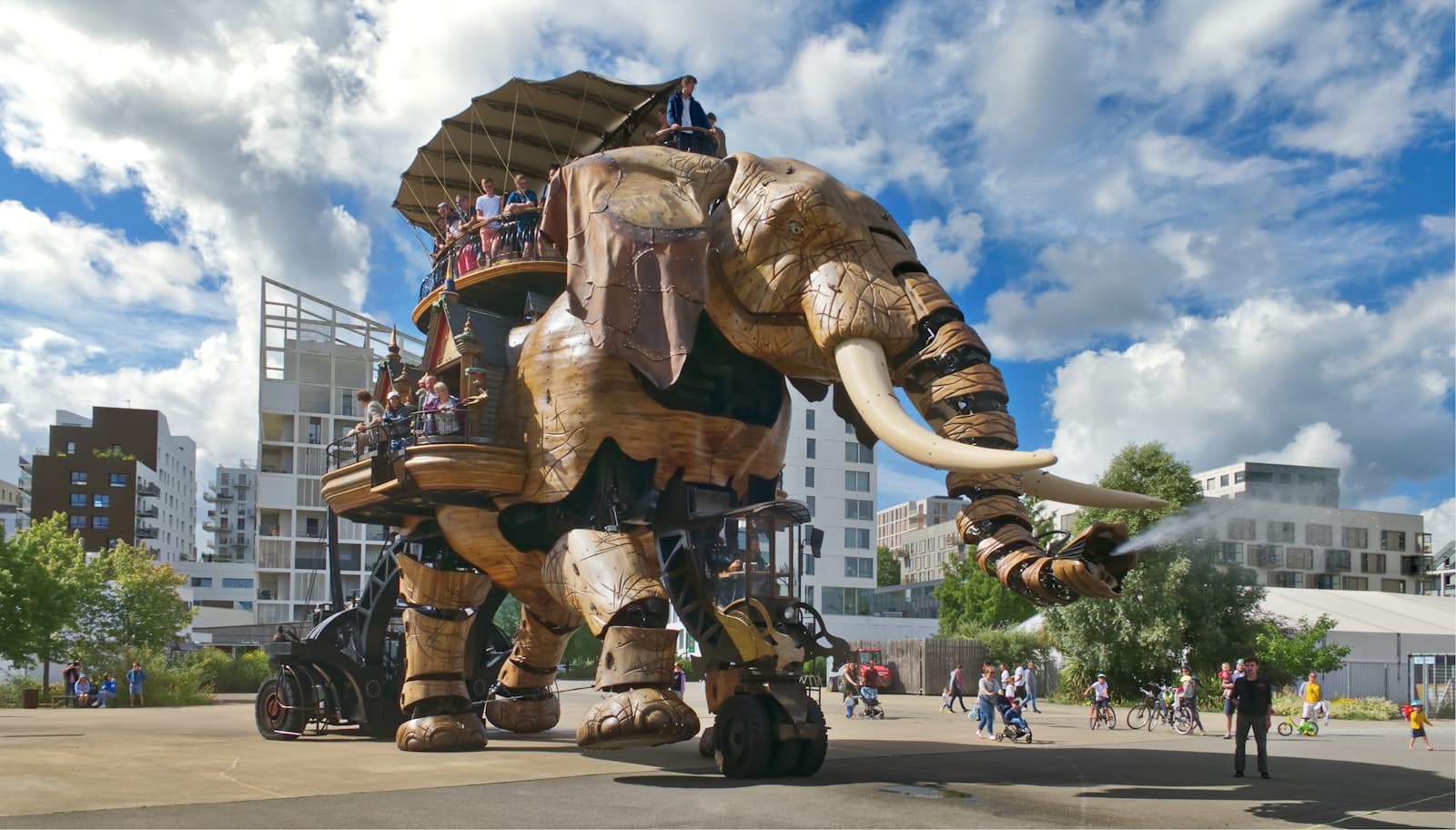
Les créatures mécaniques imaginatives de Nantes, comme l'imposant Grand Éléphant, sont plus que de simples œuvres d'art fantaisistes ; elles sont profondément enracinées dans le passé littéraire de la ville.
Découvrez tous les secrets de Nantes
Chaque adresse, chaque révélation en entier — dans ton oreille, là où elle s'est passée.
Tu choisis tes lieux. Tu marches. La voix te révèle ce que les autres ignorent.
Votre visite audioguidée de Nantes vous attend — choisissez vos lieux, votre langue, et lancez-vous dès votre arrivée.
AcheterLume intègre un guide en réalité augmentée. Levez votre téléphone : sa caméra montre la rue devant vous, avec une flèche lumineuse posée sur l'image réelle qui pointe toujours vers votre prochain arrêt — aucune carte à déchiffrer, aucun mauvais virage. Comme tout dans Lume, ça fonctionne entièrement hors-ligne.
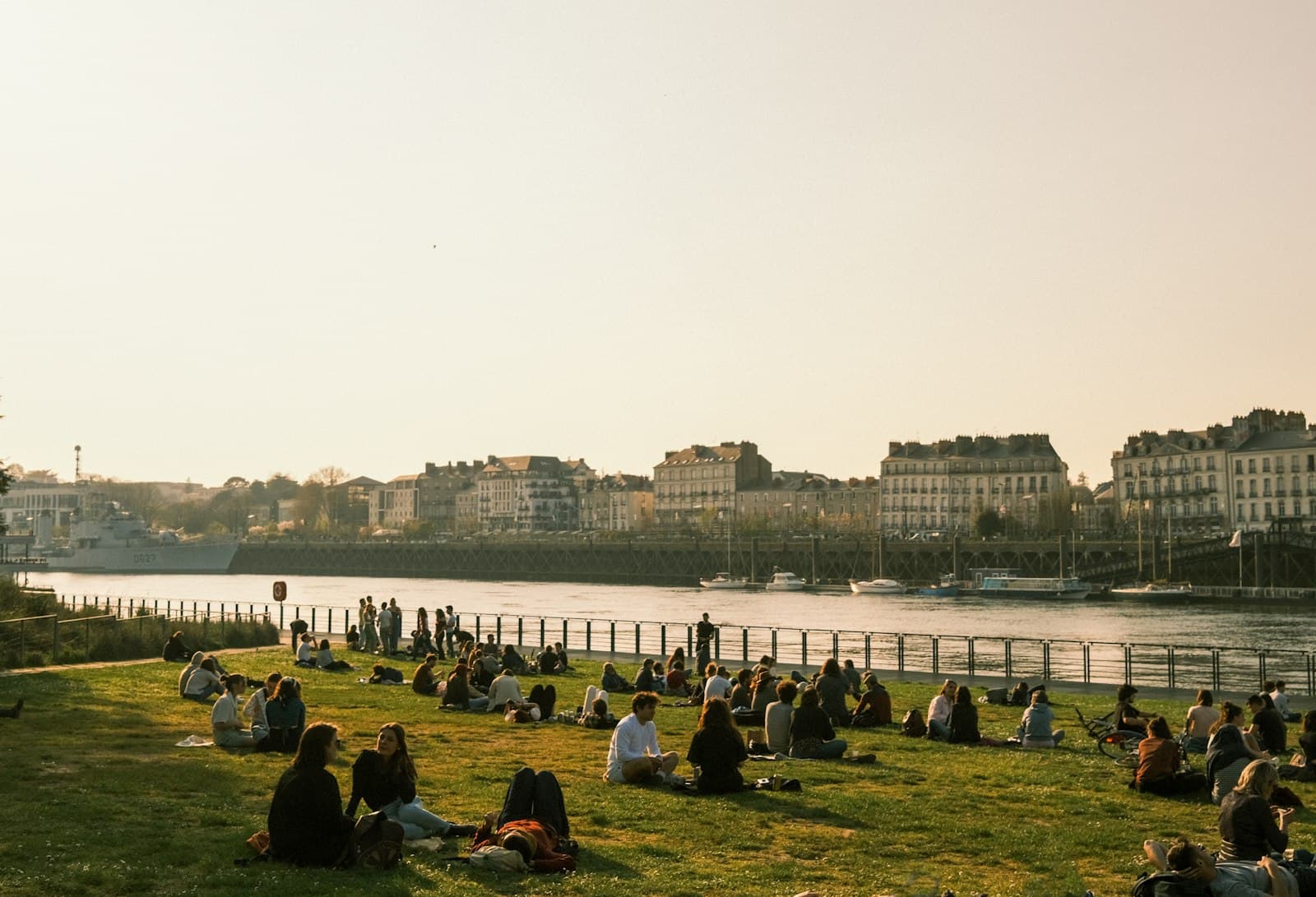
Nantes, ville de l'ouest de la France, est située à l'embouchure de l'estuaire de la Loire, où elle converge avec l'Erdre et la Sèvre, à environ 50 kilomètres de l'océan Atlantique. Cette position stratégique a façonné sa longue histoire, passant d'un port important dans l'Antiquité classique à un centre régional dynamique aujourd'hui. Autrefois capitale du Duché de Bretagne indépendant, Nantes conserve une forte identité bretonne, visible dans sa culture et même dans ses panneaux de rue.
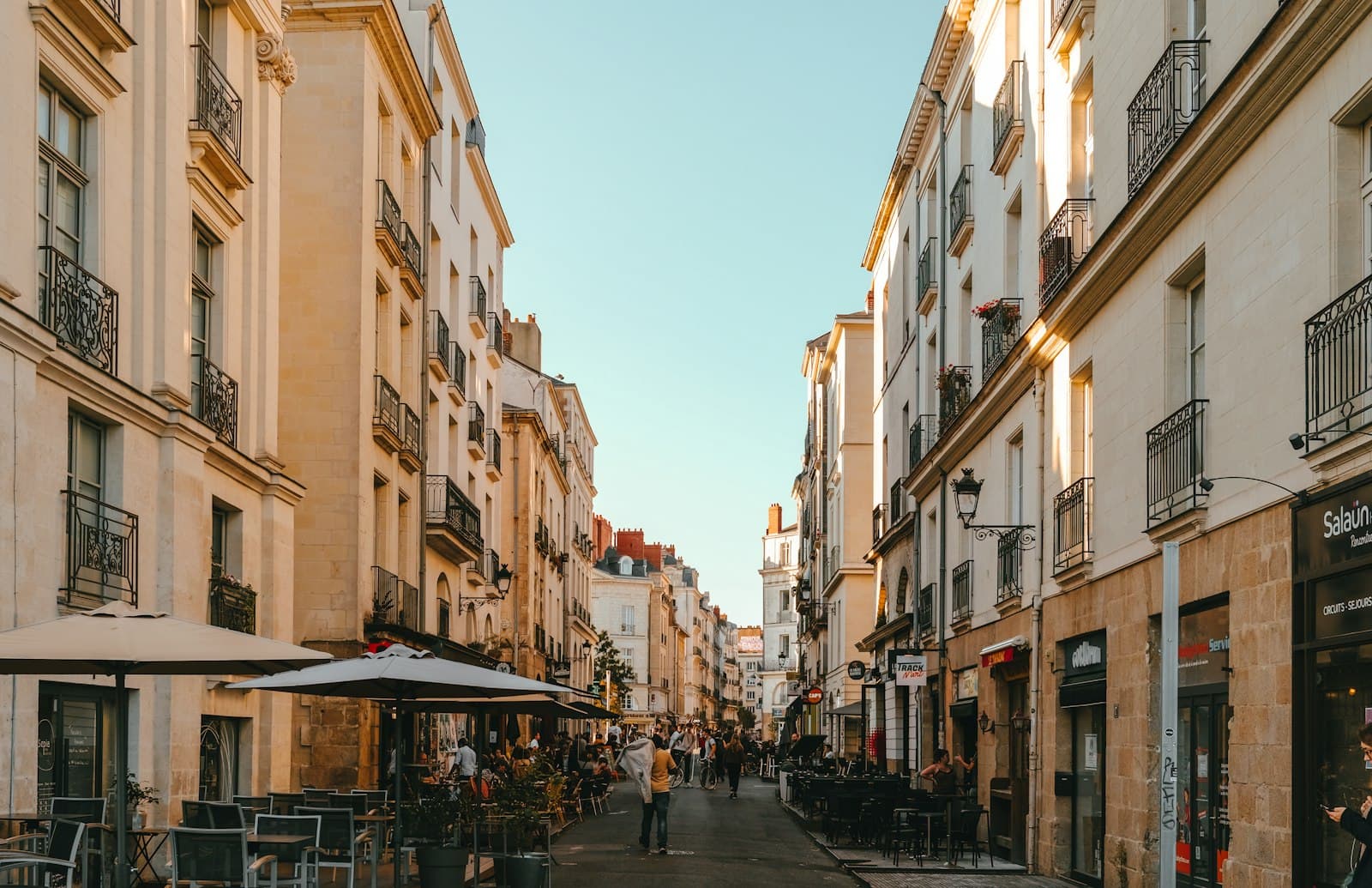
Nantes est une ville de contrastes intrigants, où les rues médiévales côtoient les installations d'art contemporain. C'est un lieu qui s'est réinventé, transformant son passé industriel en un centre animé de créativité et d'innovation. Avec une population jeune et une orientation vers l'art, la culture et la durabilité, Nantes offre une expérience française rafraîchissante et authentique qui échappe souvent au regard du tourisme de masse.
## Du port romain à la capitale ducale Les origines de Nantes remontent à la tribu gauloise des Namnètes, qui en firent leur capitale vers 70 av. J.-C. Sous la domination romaine, elle prospéra sous le nom de Portus Namnetum, une ville portuaire animée essentielle au commerce maritime. Après l'effondrement de l'Empire romain, Nantes fit partie du Royaume franc, servant de forteresse contre les Bretons. La ville fut ensuite capturée et occupée par les Normands de 834 à 936.
## Le Duché de Bretagne et une ère florissante Au Xe siècle, Nantes devint partie intégrante du Duché de Bretagne, évoluant en une puissance politique et économique. Le XVe siècle marqua le premier « âge d'or » de Nantes, au cours duquel d'importants projets architecturaux furent entrepris, notamment la construction de la grande Cathédrale Saint-Pierre-et-Saint-Paul, commencée en 1434, et du Château des Ducs de Bretagne. L'Université de Nantes, la première de Bretagne, fut fondée en 1460. Bien que Nantes ait servi de résidence principale aux Ducs de Bretagne, Rennes devint finalement la capitale provinciale après l'union de la Bretagne à la France en 1532.
## L'ère du commerce transatlantique et de l'industrialisation Au XVIIe siècle, Nantes était devenue le plus grand port de France, en grande partie grâce à l'établissement de l'empire colonial français. Cette période vit Nantes devenir un acteur central du commerce triangulaire, responsable de près de la moitié de la traite négrière atlantique française du XVIIIe siècle. La richesse générée par ce commerce remodela considérablement la ville, entraînant la construction de somptueuses demeures sur l'île Feydeau et dans le quartier Graslin. Le XIXe siècle apporta une industrialisation rapide, transformant Nantes en un centre majeur de construction navale et de fabrication. L'emblématique Passage Pommeraye, une magnifique galerie marchande à trois niveaux, ouvrit ses portes en 1843, présentant des structures innovantes en métal et en verre.
## Transformations modernes et renaissance artistique Nantes a subi d'importants bouleversements pendant la Révolution française, y compris la répression brutale de Jean-Baptiste Carrier. Elle fut également occupée par les forces allemandes pendant la Seconde Guerre mondiale et subit une destruction partielle, entraînant une reconstruction et un renouvellement urbain considérables après-guerre. Dans les années 1960, Nantes fut désignée comme l'un des contrepoids provinciaux de la France à Paris, favorisant sa croissance en tant que centre régional dynamique. Aujourd'hui, Nantes est célébrée pour son engagement envers l'art et la culture, illustré par des projets comme Les Machines de l'île et le festival annuel Le Voyage à Nantes, qui transforme la ville en une galerie d'art à ciel ouvert.
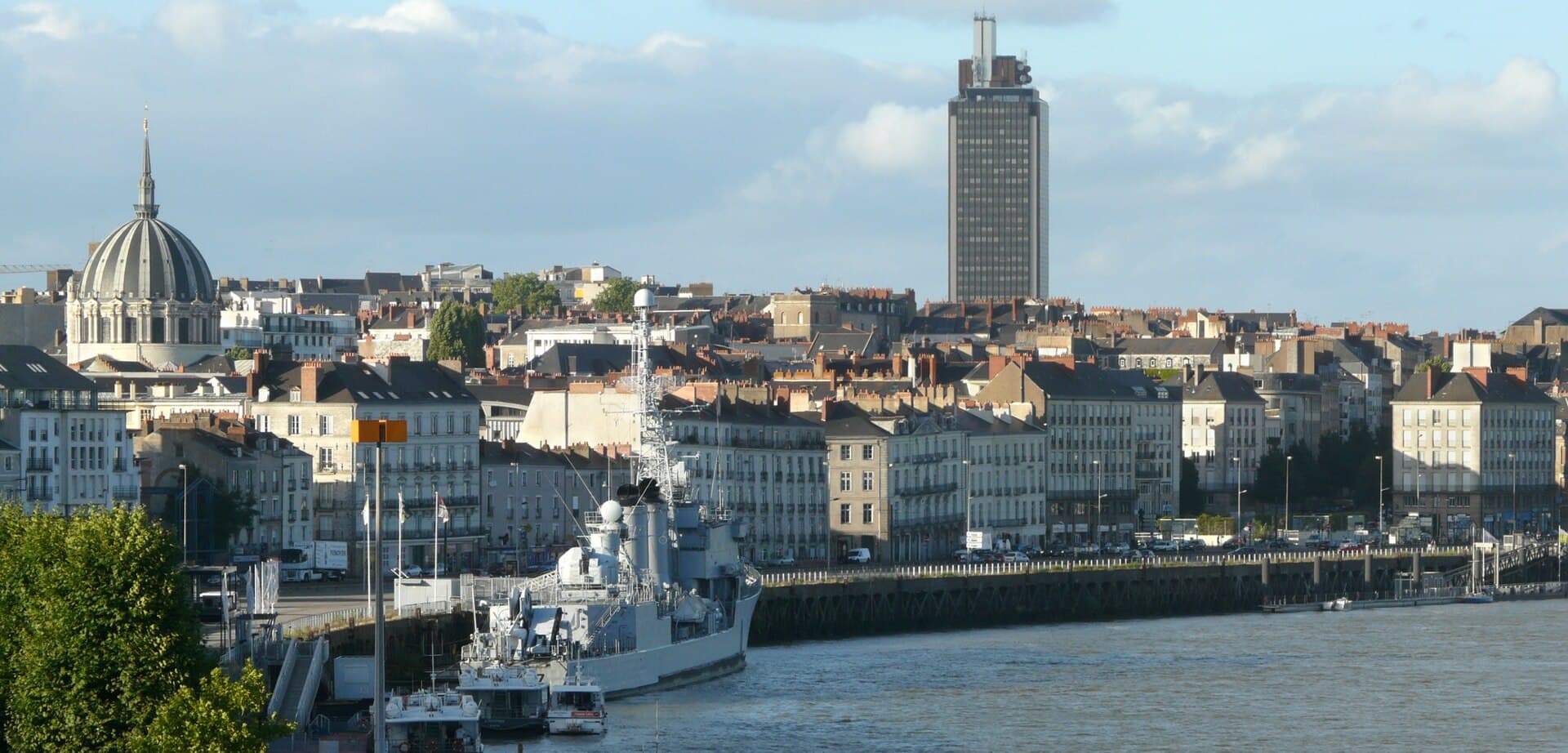
Commencez votre exploration en suivant la Ligne Verte, un chemin de 22 kilomètres peint sur les trottoirs qui vous guide vers les principales attractions de Nantes et les installations d'art contemporain. Une destination incontournable est Les Machines de l'île, un monde imaginatif de créatures mécaniques géantes, dont l'impressionnant Grand Éléphant et le Carrousel des Mondes Marins, inspirés de Jules Verne. Plongez dans l'histoire au Château des Ducs de Bretagne, une forteresse du XVe siècle abritant le Musée d'histoire de Nantes, offrant des promenades gratuites sur les remparts et de vastes vues sur la ville.
Promenez-vous dans l'élégant Passage Pommeraye, une galerie marchande du XIXe siècle à trois niveaux, reconnue pour sa verrière et son architecture complexe. Découvrez la tranquillité au Jardin des Plantes, l'un des jardins botaniques les plus distingués de France, ou le serein jardin japonais sur l'Île de Versailles le long de l'Erdre. Pour les amateurs d'art, le Musée d'Arts de Nantes présente une collection couvrant neuf siècles, tandis que Le Lieu Unique, une ancienne biscuiterie LU, sert désormais de centre culturel animé. Ne manquez pas le profond Mémorial à l'abolition de l'esclavage sur le Quai de la Fosse.
Nantes bénéficie d'un climat océanique tempéré, offrant des conditions douces toute l'année. La période idéale pour les activités de plein air, les festivals et l'exploration est de mi-juin à mi-septembre, lorsque les températures sont confortables et les précipitations minimales. Mai et octobre sont également des saisons intermédiaires agréables avec moins de visiteurs. Pour ceux qui s'intéressent à la musique classique, janvier accueille le festival La Folle Journée. Les attractions de la ville peuvent être appréciées toute l'année, mais les mois les plus chauds sont les meilleurs pour les activités de plein air.
Le centre-ville de Nantes se découvre facilement à pied, avec de nombreuses rues piétonnes. Pour les longues distances, le réseau de transports en commun comprend des bus et des trams, et il est notamment gratuit le week-end. Envisagez d'acheter un Nantes Pass pour des transports en commun illimités et une entrée gratuite à plus de 50 musées et activités ; des pass sont disponibles pour 24, 48 ou 72 heures, ou même 7 jours. L'aéroport Nantes Atlantique (NTE) est à environ 20 minutes du centre-ville en taxi, ou 25 minutes en navette aéroport. La gare de Nantes est idéalement située à 1 km à l'est du centre-ville, avec des liaisons TGV depuis Paris en environ 2,5 heures. Le français est la langue principale, et bien que l'anglais soit parlé dans les zones touristiques, quelques phrases en français seront utiles.
Nantes en coréen, en chinois ou en hébreu — et dans 29 autres langues, chaque étape narrée par une voix native. La plus large gamme de langues de tous les audioguides autoguidés.
Disponible en :