Castel dell'Ovo
The oldest castle in Naples holds a secret that, if broken, could bring disaster to the entire city.
Full story unlocks in the tour
 Richard Nevell / CC BY-SA 4.0, via Wikimedia Commons
“Naples: A city that wears its heart on its sleeve, loud and unapologetically real.”
Not the postcards. The stories even locals don't know — whispered in your ear, right where they happened.
The oldest castle in Naples holds a secret that, if broken, could bring disaster to the entire city.
Beneath the bustling streets of Naples lies a passage, built for a king's escape, that later became a refuge and a forgotten repository.
The iconic Pizza Margherita, a symbol of Italy, has a surprising origin story tied to a queen and a patriotic baker.
Discover every secret of Naples
Every address, every reveal in full — in your ear, right where it happened.
You pick your stops. You walk. The voice reveals what the others miss.
No tours available yet. Check back soon — we're preparing them.
Naples, or Napoli as it's known to Italians, is a city that vibrates with an undeniable energy. It's a place where history, art, and daily life collide in a captivating, often chaotic, symphony. From the ancient Greek settlements that founded the city in the 2nd millennium BC to its role as a major cultural center during the Baroque era, Naples has a layered past that is palpable in its streets and architecture.
Often seen as a gateway to the Amalfi Coast or Pompeii, Naples is a destination in its own right, offering an authentic Italian experience that is both raw and refined. The city's unpretentious charm, gregarious locals, and world-renowned culinary scene invite visitors to dive deep into its unique character. While it carries a reputation for being a bit gritty, violent crime is rare for tourists, and with common-sense precautions, it's a safe and rewarding place to explore.
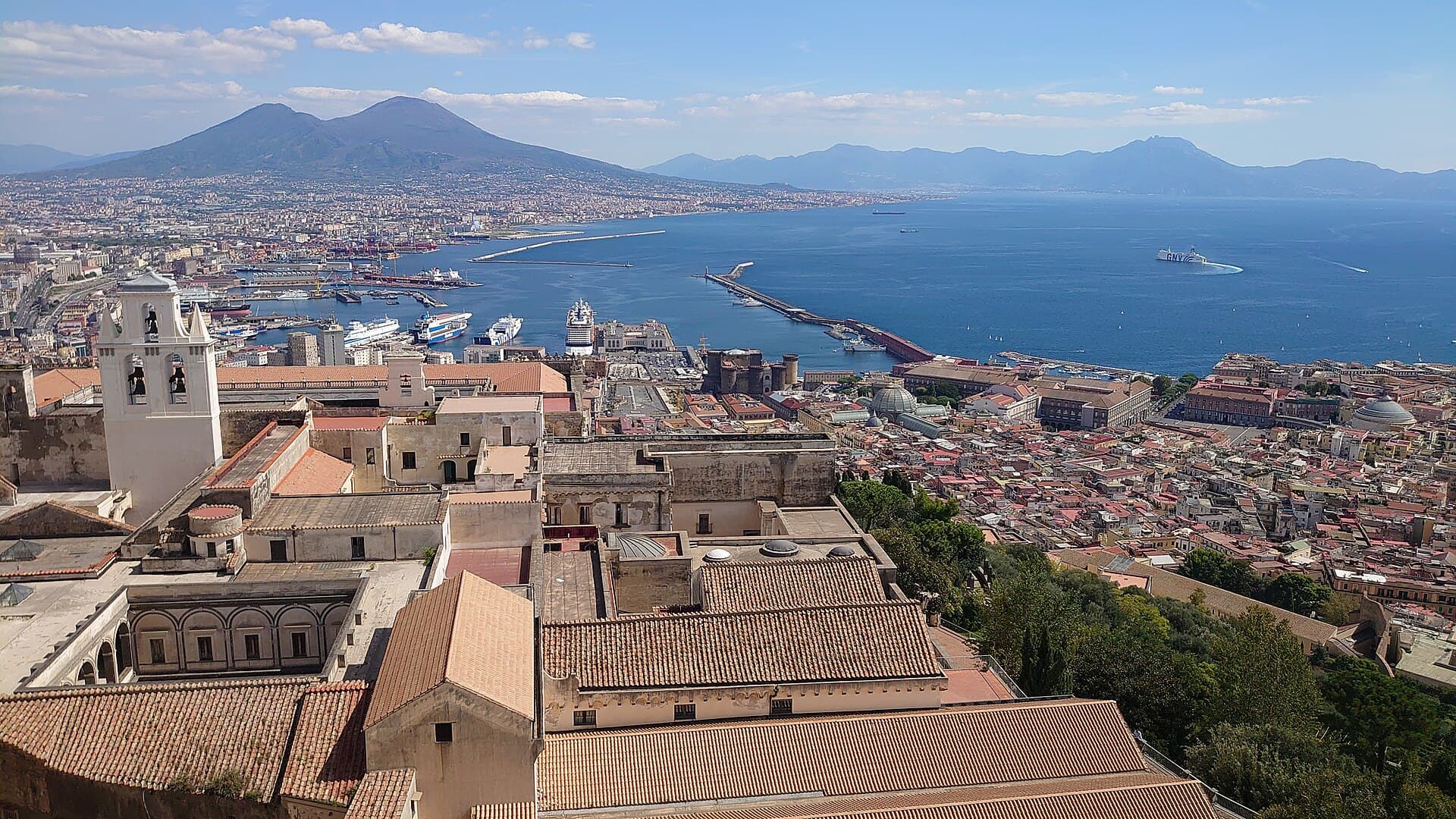
Naples is a city that doesn't just ask to be seen; it demands to be felt. Its lively street life, historic thoroughfares, and striking views of Mount Vesuvius and the Bay of Naples create an immersive experience unlike any other.
## From Greek Colony to European Capital Naples has a history stretching back some 4,000 years, making it one of the oldest continuously inhabited cities in the world. Greek settlers established a colony here around 2000 BC, and by the 6th century BC, the ancient city of Neapolis ("New City") was founded, becoming an important center in Magna Graecia. The city's Greek culture profoundly influenced later Roman society, even after it became part of the Roman Republic in 326 BC.
## Medieval and Renaissance Transformations Following the fall of the Western Roman Empire, Naples was ruled by a succession of Goths, Byzantines, Lombards, and Normans. In 1139, the Normans conquered Naples, making it part of the Kingdom of Sicily. The 13th century saw the French Angevins take control, during which time the majestic Castel Nuovo was built. The city flourished as a major cultural center during the Renaissance under Aragonese rule in the 15th century.
## A Baroque Metropolis and Bourbon Grandeur By the 17th century, Naples had become Europe's second-largest city, surpassed only by Paris, with a population of around 250,000 to 300,000 inhabitants. It was a significant cultural center during the Baroque era, attracting artists like Caravaggio and philosophers such as Giordano Bruno. In 1734, Sicily and Southern Italy, including Naples, became an independent kingdom once more under the Bourbons. Charles of Bourbon transformed the Royal Palace into a sumptuous work of art, attracting eminent figures like Goethe and Mozart. The Teatro di San Carlo, the oldest continuously active opera house in the world, was commissioned by King Charles VII of Naples and opened in 1737.
## Unification and Modern Challenges After Napoleon's defeat, Naples became the capital of the united Kingdom of the Two Sicilies in 1815, and in 1839, it saw the construction of the first railway on the Italian Peninsula. However, with the unification of Italy in 1861, Naples lost much of its former political importance. The city faced challenges in the 20th century, including heavy bombing during World War II. Notably, Naples was the first Italian city to rise up against Nazi military occupation in what became known as the "four days of Naples" in September 1943. In recent decades, Naples has undergone regeneration, embracing its enduring past while looking towards the future.
Begin your exploration in the Centro Storico, a UNESCO World Heritage Site and the historic heart of Naples. Wander through its ancient streets, past elegant palazzi, and historic churches.
Walk along Spaccanapoli, a long, narrow street that appears to divide the city in two when viewed from above. This lively thoroughfare follows the path of an ancient Roman decumanus inferior and is lined with historic buildings, churches, and everyday life. Along Spaccanapoli, you'll find significant sites like the Complesso Monumentale di Santa Chiara, San Lorenzo Maggiore Basilica, and the Sansevero Chapel.
Visit Piazza del Plebiscito, Naples' largest square, flanked by the impressive Royal Palace of Naples (Palazzo Reale) and the neoclassical Basilica di San Francesco di Paola. The Royal Palace, built from 1600 onwards, served as a residence for Spanish viceroys, Bourbon kings, and later the House of Savoy, and now houses a museum and the National Library.
Experience the grandeur of the Teatro di San Carlo, the oldest continuously active opera house in the world, located adjacent to the Royal Palace. Consider taking a guided tour to admire its opulent interiors.
Stroll along the Lungomare Caracciolo, the picturesque seafront promenade offering open views of the Bay of Naples, Mount Vesuvius, and the islands. Here, you'll find Castel dell'Ovo, the city's oldest castle, situated on the former island of Megaride.
The best times to visit Naples are late spring (before summer crowds) or early fall (after the busy tourist season), when the weather is warm and sunny. Winter offers fewer crowds and more opportunities to interact with locals, though you can expect some rainy weather. The Christmas season is bustling with festivities and holiday traditions, including elaborate presepe (nativity scenes), making it a lively time to visit despite the local crowds.
Naples is generally safe for tourists, with violent crime being rare. However, petty crime like pickpocketing can occur in crowded areas, around tourist landmarks, and on public transport. It's advisable to keep valuables secure in a cross-body bag or internal pockets. Avoid flaunting expensive jewelry or gadgets and be mindful of your surroundings.
For getting around, Naples is best explored on foot, especially the historic center. The city's metro system is efficient and easy to navigate, with Line 1 connecting the historic center to the waterfront and the central station. The funiculars offer a charming and practical way to connect the lower city to the hillside neighborhoods of Vomero and Posillipo, providing excellent views. For trips beyond the city, ferries are available to destinations like the Amalfi Coast, Capri, and Ischia.