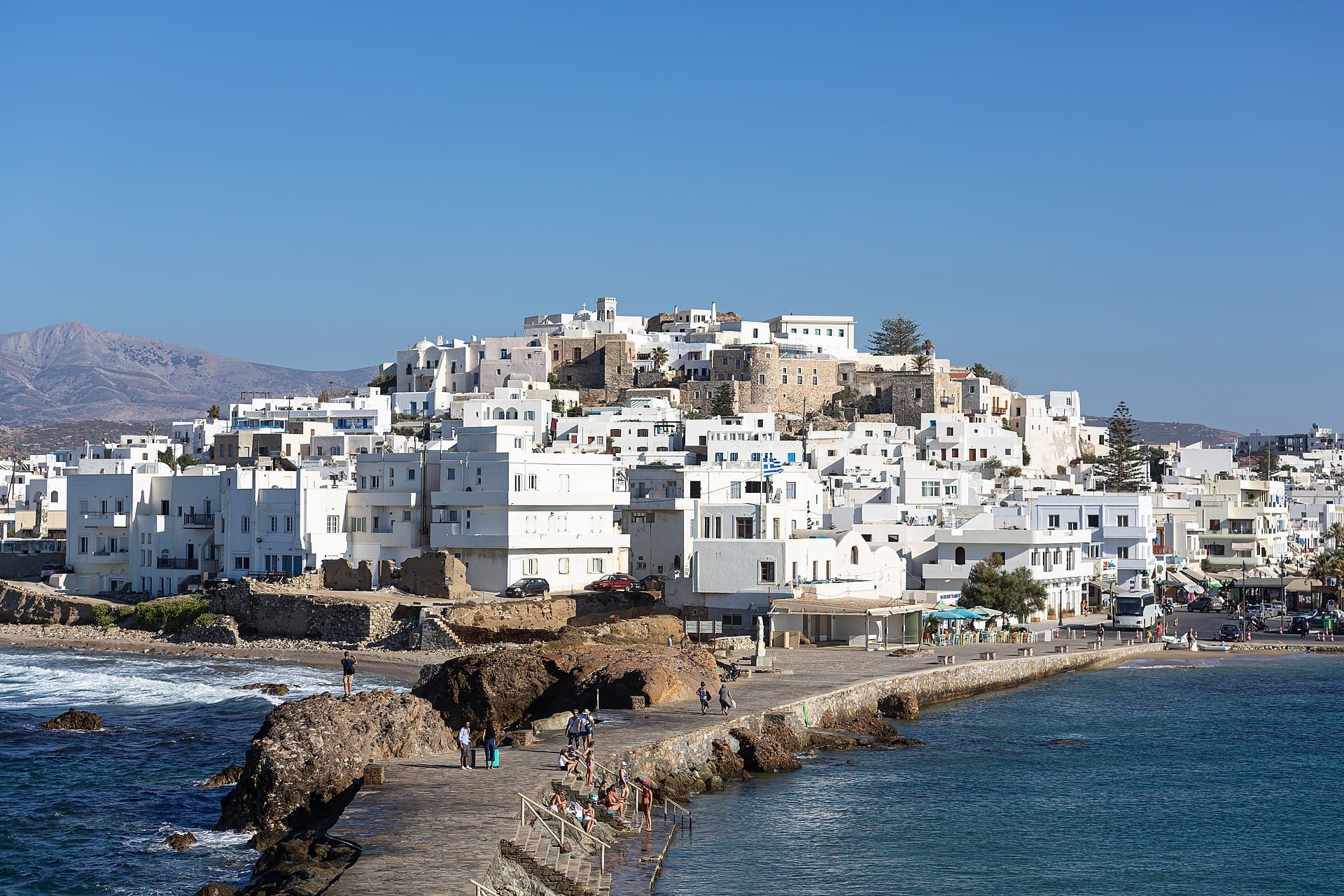
This grand marble gateway, a symbol of Naxos, was never actually part of a completed temple.
Manfred Werner (Tsui) / CC BY-SA 4.0, via Wikimedia CommonsNaxos
“Naxos: Where ancient echoes meet island charm.”
Naxos, as no one tells it.
Not the postcards. The stories even locals don't know — whispered in your ear, right where they happened.
Beneath the island's surface lies an ancient engineering marvel that kept the capital city hydrated for centuries.
This imposing 17th-century tower has transformed from a monastery and defensive outpost to a lively cultural hub.
Discover every secret of Naxos
Every address, every reveal in full — in your ear, right where it happened.
You pick your stops. You walk. The voice reveals what the others miss.
How long do you have in Naxos?
No tours available yet. Check back soon — we're preparing them.
The story of Naxos
Naxos, the largest and most fertile island in the Cyclades, offers a captivating blend of ancient history, Venetian influence, and quintessential Greek island character. From the moment you approach its main port, the imposing Portara, a grand marble gateway, signals a journey through millennia of human endeavor and natural splendor. This island is not merely a collection of shores but a living narrative woven with agricultural traditions, mountainous villages, and a local culture.
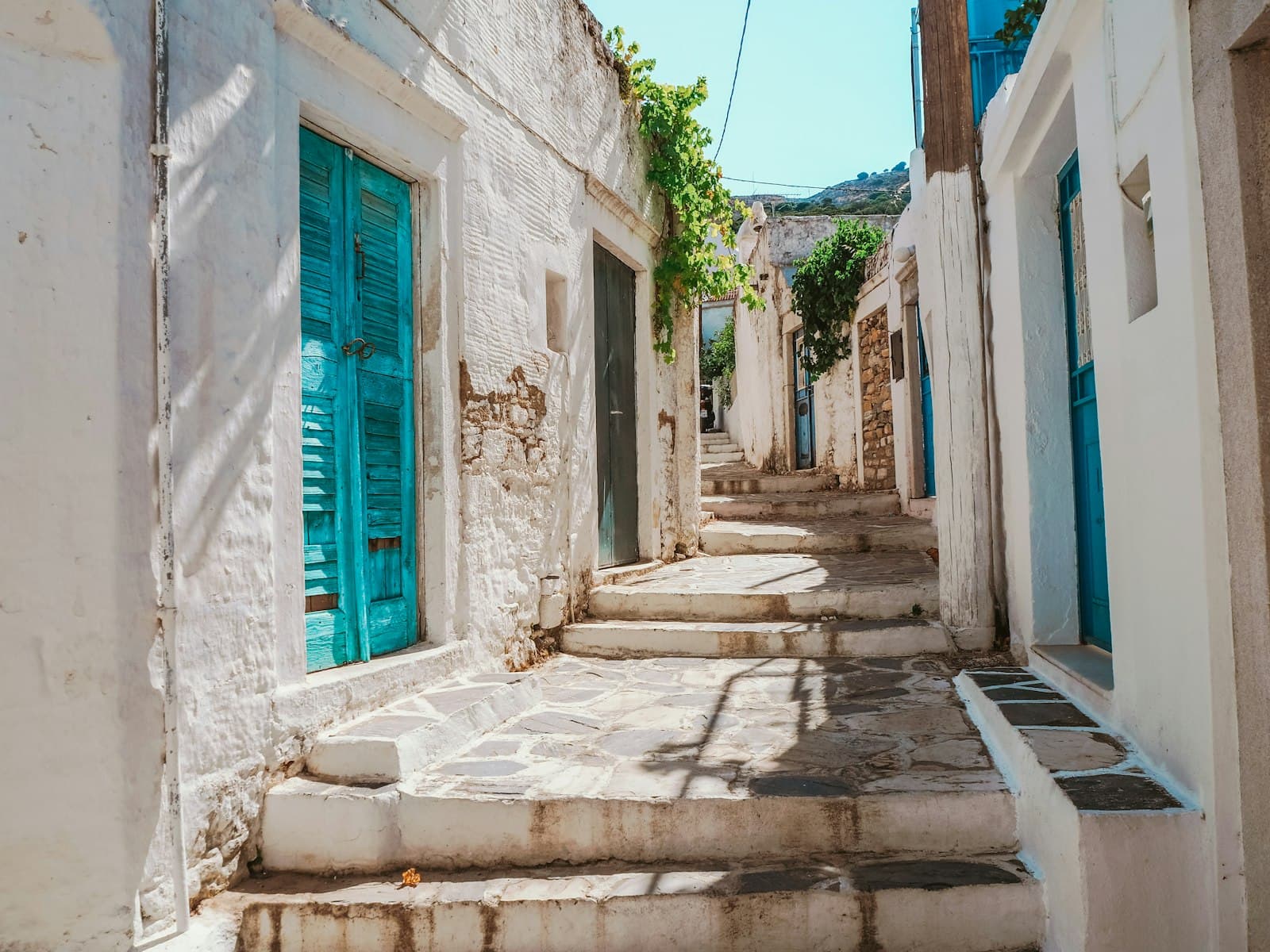
Beyond the bustling Chora (Naxos Town), with its intricate alleys and Venetian castle, lies a diverse landscape awaiting discovery. Naxos offers some of the Aegean's most celebrated beaches, alongside a rugged interior dotted with traditional villages where time seems to slow. Its fertile valleys have sustained islanders through various historical periods, fostering a unique culinary scene. Whether you seek ancient ruins, serene countryside, or lively coastal towns, Naxos presents an authentic Greek island experience that rewards both exploration and relaxation.
From Cycladic Civilization to Venetian Rule
Naxos holds a significant place in Greek history, with evidence of habitation dating back to the Neolithic period, around 4000 BC. It flourished as a central hub of the Cycladic civilization during the 3rd millennium BC, a period recognized for its distinct minimalist marble sculptures. The island's strategic location in the Aegean made it a bridge between the Greek mainland and the Ionian coast, contributing to its prosperity and influence.
By the 7th century BC, Naxos emerged as a dominant commercial power in the Cyclades, even establishing a colony in Sicily. This prosperity, however, also attracted conflict. The island played a crucial role in the Persian Wars, and later, after an unsuccessful attempt to leave the Athenian alliance, it fell under Athenian dominance. Subsequent centuries saw Naxos under the rule of the Macedonian Empire, the Ptolemies of Egypt, the Rhodians, and finally, the Roman Empire in 41 BC.
The Byzantine period, from 362 to 1204 AD, saw Naxos maintain its status as the head of the Cyclades, even becoming an administrative and commercial center for trade between Crete and Constantinople. However, frequent pirate raids during this era led the population to move from the coast to fortified mountain towns.
A pivotal moment arrived in 1207 AD when the Venetian Marco Sanudo conquered Naxos, establishing the Duchy of the Aegean with Naxos as its capital. This marked the beginning of a long period of Venetian rule, which left a lasting architectural and cultural imprint, particularly visible in Naxos Town's Kastro (castle) and its surrounding mansions. The Venetians divided the island into 56 provinces among various nobles and built a formidable castle. In 1566, Naxos came under Ottoman control, though Venetian influence in administration persisted, allowing many local traditions to remain. The island officially became part of modern Greece in 1832 following the Greek War of Independence.
Begin your exploration in Chora, Naxos Town, by wandering through its cobbled alleyways and whitewashed archways, which lead to the 13th-century Venetian Kastro. This castle area offers a maze-like atmosphere with hidden courtyards and expansive harbor views. Just a short walk from the port, the Portara, the massive marble gateway of an unfinished Temple of Apollo, stands as Naxos' most iconic site and offers memorable sunset views.
For a glimpse into ancient agricultural life, visit the Temple of Demeter near Sangri, a 6th-century BC marble temple dedicated to the goddess of harvest and fertility, considered a predecessor to the Parthenon. Explore the island's mountainous interior by driving to villages like Apiranthos and Halki. In Halki, you can visit the Vallindras Distillery to taste Kitron, a local liqueur. Do not miss the Bazeos Tower, a 17th-century fortified monastery that now hosts cultural events and the Naxos Festival. For those who love the sea, Naxos offers an abundance of options, including Plaka Beach, Agios Georgios Beach, Agios Prokopios Beach, and Alyko Beach, known for their soft sand and clear waters.
The ideal time to visit Naxos is from late May to early October. For a balance of warm weather, open facilities, and manageable crowds, consider June or September. July and August offer the hottest temperatures and a lively atmosphere, perfect for beach activities and nightlife, though they are also the busiest and most expensive months. For sightseeing, hiking, and lower hotel prices, May, early June, late September, and early October are excellent, with comfortable temperatures and fewer tourists. The sea is warmest from late July through September.
Naxos is accessible by ferry from Athens (Piraeus, Rafina, or Lavrio ports) and many other Cycladic islands. Ferry crossings are frequent, especially during summer, but booking in advance is recommended during peak season. Naxos Island National Airport (JNX) primarily handles domestic flights from Athens, with limited international capacity. The airport is located about 4 km from Naxos Town, with taxi and bus services available for transfer.
Within Naxos, public buses (KTEL) connect Naxos Town to various villages and beaches, though some routes are seasonal. Renting a car or scooter offers the most flexibility for exploring the island's diverse landscapes and reaching more remote sites. Many attractions in Naxos Town, including the Portara and the Old Town, are easily explored on foot.
- How do I get to Naxos?
- You can reach Naxos by ferry from Athens (Piraeus, Rafina, or Lavrio ports) and other Cycladic islands. Naxos also has a national airport (JNX) with daily flights from Athens.
- What is the Portara?
- The Portara is the iconic marble gateway of an unfinished ancient temple dedicated to Apollo, dating back to the 6th century BC. It's a prominent landmark at the entrance of Naxos' harbor.
- What is Naxos known for?
- Naxos is known for its extensive history, beautiful beaches, fertile agricultural land, traditional mountain villages, and a blend of ancient Greek and Venetian architecture.
- When is the best time to visit Naxos for good weather and fewer crowds?
- For a balance of warm weather and fewer crowds, consider visiting Naxos in June or September. May and early October are also good for sightseeing and hiking.
- Are there good beaches in Naxos?
- Yes, Naxos is renowned for its excellent beaches, including Plaka Beach, Agios Georgios Beach, Agios Prokopios Beach, and Alyko Beach, all known for their clear waters and soft sands.
- Can I explore Naxos Town on foot?
- Yes, Naxos Town (Chora) is very walkable, with many key attractions like the Old Town, the Kastro, and the Portara easily accessible on foot from the port.