The Windmill on the Isthmus
This distinctive wooden windmill, a symbol of Nessebar, stands prominently on the narrow strip connecting the old and new towns. Its purpose, however, was not always merely scenic.
Full story unlocks in the tour
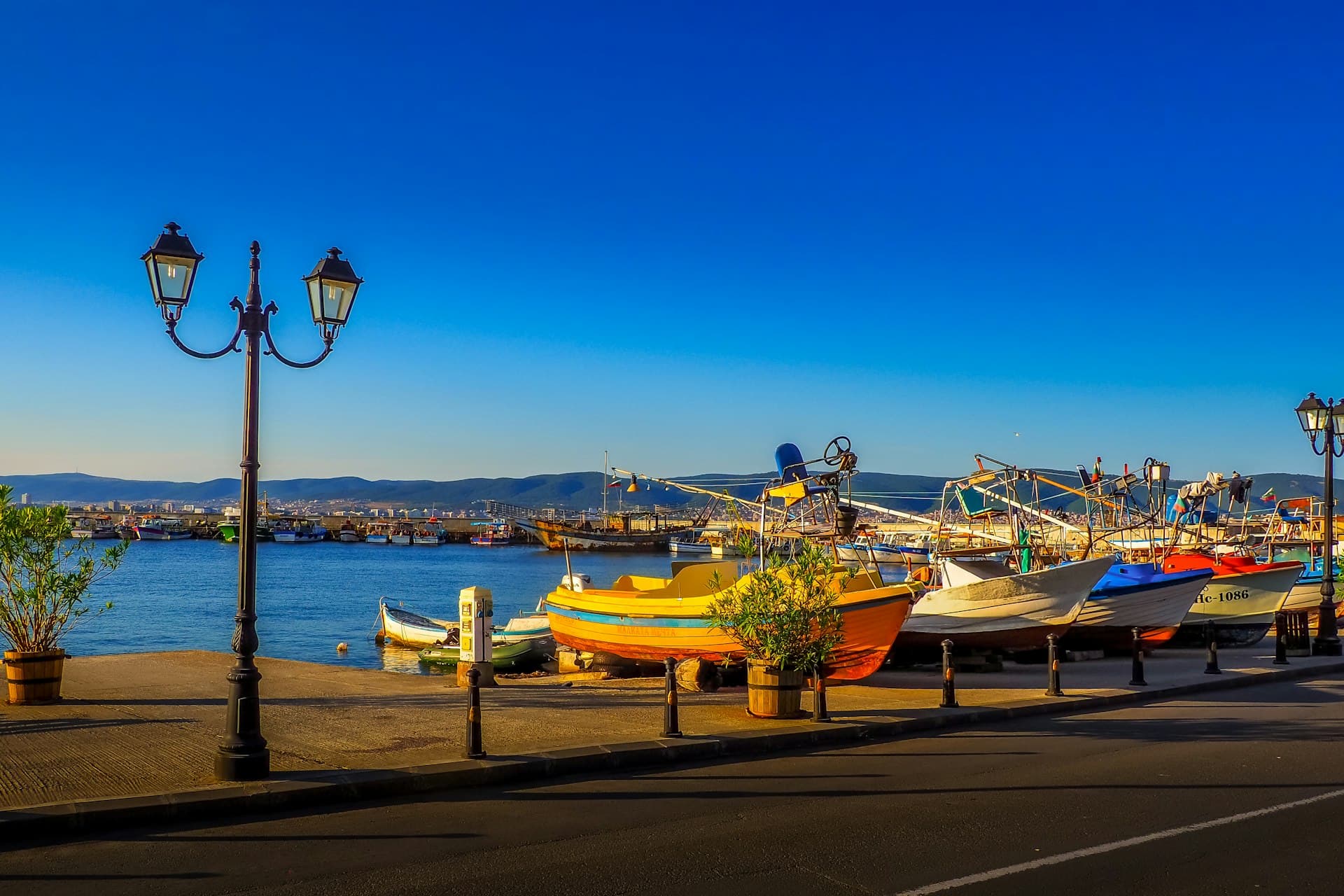 Photo: Lidia Stawinska / Unsplash
“Where ancient stones recount empires and the Black Sea guards its past.”
Not the postcards. The stories even locals don't know — whispered in your ear, right where they happened.
This distinctive wooden windmill, a symbol of Nessebar, stands prominently on the narrow strip connecting the old and new towns. Its purpose, however, was not always merely scenic.
The expressive, decorative exterior of this 13th-14th century church exemplifies Byzantine architecture. Still, a closer examination of its upper walls uncovers a symbol that might surprise modern visitors.
Walking the paved paths of Old Nessebar, you are surrounded by history. However, some of the most profound historical markers are not always immediately apparent, even to those who live here.
Discover every secret of Nessebar
Every address, every reveal in full — in your ear, right where it happened.
You pick your stops. You walk. The voice reveals what the others miss.
No tours available yet. Check back soon — we're preparing them.
Nessebar, often called the “Pearl of the Black Sea,” is an ancient city on Bulgaria's Black Sea Coast. This UNESCO World Heritage site is a living museum, defined by over three millennia of continuous human settlement and an ever-changing history. The small city is uniquely split into two parts: the ancient settlement on a rocky peninsula, and the more modern section on the mainland, connected by a narrow, man-made isthmus.
Walking through Nessebar's Old Town is like stepping back in time. Its narrow, paved streets wind past medieval churches, traditional wooden houses, and remnants of ancient fortress walls. The town's unique blend of historical significance and coastal allure draws visitors from around the world, making it a prominent destination.
## From Thracian Settlement to Byzantine City Nessebar's origins stretch back over 3,200 years, beginning as a Thracian settlement known as Menebria or Melsambria, named after its legendary founder, Melsa. Around the 6th century BC, it transformed into a Greek colony, renamed Mesambria, and quickly became a significant trading hub on the Black Sea due to its strategic location. During this Hellenistic period, an acropolis, a temple of Apollo, an agora, and monumental fortification walls were constructed, some of which are still visible today.
In 72 BC, Roman armies conquered Mesambria without resistance, incorporating it into the Roman Empire. The town preserved its fortifications and public buildings, continuing to mint its own bronze coins and remaining an important trade and cultural center. With the shift of the Roman capital to Constantinople and the adoption of Christianity, Mesembria flourished as a bastion of the new religion. New Christian temples, basilicas, and an improved water supply system were built, often mirroring the architectural styles of the capital.
## A Contested Frontier From the 5th century AD, Nessebar became an important stronghold of the Eastern Roman (Byzantine) Empire. Its history is marked by frequent changes of hands between the Byzantines and the Bulgarians. Khan Krum of the First Bulgarian Empire captured it in 812 after a two-week siege, and Slavs and Bulgarians settled there, renaming it Nesebar. It was later ceded back to Byzantium and then reconquered by Tsar Simeon the Great. The town experienced particular prosperity under Tsar Ivan Alexander in the 14th century, with many new churches being built and cultural and religious life flourishing.
## Ottoman Rule and Revival The capture of Nessebar by the Ottoman Empire in 1453 marked a period of decline. However, its architectural heritage endured and was further enriched in the 19th century with the construction of wooden houses characteristic of the Bulgarian Black Sea Coast. After Bulgaria's liberation from Ottoman rule in 1878, Nessebar became part of Eastern Rumelia and later united with the Principality of Bulgaria in 1885. It developed as a key Bulgarian seaside resort in the early 20th century, with a new town built and the historic Old Town restored after 1925.
In 1983, due to its abundance of historic buildings and multilayered cultural heritage, UNESCO included Nessebar in its list of World Heritage Sites, recognizing it as a 'city-museum' of international importance.
The Old Town of Nessebar, a UNESCO World Heritage site, offers a journey through millennia of history. Begin at the Archaeological Museum, located just beyond the western fortress wall, which houses artifacts from the Thracian civilization to the Ottoman age, including coins, jewelry, and pottery.
Walk through the narrow, paved streets, admiring the distinctive Bulgarian Revival houses from the 18th and 19th centuries, characterized by stone ground floors and wooden upper levels. The town is known for its many medieval churches, with over 15 preserved in various states. Be sure to see the 5th-century Church of Saint Sophia, also known as the Old Bishopric, an impressive basilica now in ruins, featuring three naves and arched windows. The 11th-century Church of Saint Stephen (New Bishopric) is celebrated for its well-preserved frescoes and mosaics, depicting over a thousand figures across 258 murals. The Church of Christ Pantocrator, dating from the 13th–14th century, stands out with its elaborate exterior decoration of colored bricks, glazed ceramics, and geometrical relief designs; it now serves as an art museum. The Church of Saint John the Baptist, a 10th-century domed cruciform church, is one of Nessebar's best-preserved Bulgarian Orthodox churches. Also, seek out the picturesque wooden windmill on the isthmus connecting the old and new towns, a symbol of Nessebar.
The best time to visit Nessebar is between May and September. During these months, temperatures are comfortable, ranging from 20°C to 30°C, and rainfall is low, providing ideal conditions for exploring the historic sites and enjoying the beaches. The sea temperatures are also pleasant, typically between 20°C and 25°C, perfect for swimming. July and August are characterized by dry weather and the most sunshine hours. For a quieter experience with milder temperatures, consider visiting in April or October, when the blooming flowers of spring or the lively autumn foliage offer a different appeal.
Nessebar is conveniently located about 36 km northeast of Burgas, with Burgas Airport offering international connections. Buses are a frequent and convenient way to travel to Nessebar from surrounding areas like Sunny Beach and Burgas. The Old Town is best explored on foot, with its narrow, paved streets. While ATMs are available, especially in New Nessebar, it's advisable to carry some Bulgarian Lev (BGN) as many smaller shops and restaurants in the Old Town prefer cash payments. A combined ticket can be purchased to access multiple museums and churches. The Day of Nessebar is celebrated on August 15th, featuring various events, concerts, and a religious procession.