Torres Cham de Po Nagar
Estas torres antigas, dedicadas a uma deusa reverenciada, mantêm um surpreendente uso contemporâneo.
História completa desbloqueada no tour
 Chris Lewis / CC BY 3.0, via Wikimedia Commons
Tour de áudio autoguiado por Nha Trang — rota GPS a pé, reprodução offline, narração envolvente em 32 idiomas.
“Onde os ecos antigos de Cham encontram o ritmo do Mar da China Meridional.”
Não os postais. As histórias que nem os locais conhecem — sussurradas ao seu ouvido, exatamente onde aconteceram.
Estas torres antigas, dedicadas a uma deusa reverenciada, mantêm um surpreendente uso contemporâneo.
A fundação desta grandiosa igreja em estilo gótico foi lançada com um método explosivo inesperado.
Uma rua em uma vila de pescadores se transforma em um túnel de cor intensa, embora não tenha sido concebida para visitantes.
Descubra cada segredo de Nha Trang
Cada endereço, cada revelação na íntegra — no seu ouvido, exatamente onde aconteceu.
Você escolhe as suas paragens. Você caminha. A voz revela o que os outros perdem.


O seu tour áudio autoguiado de Nha Trang está pronto — escolha os seus pontos de interesse, selecione o seu idioma e comece no momento em que chegar.
ComprarA Lume inclui um guia de realidade aumentada. Levante o telemóvel: a câmara mostra a rua à sua frente, com uma seta luminosa sobreposta à imagem real que aponta sempre para a sua próxima paragem — sem mapa para decifrar, sem voltas erradas. Como tudo na Lume, funciona totalmente offline.
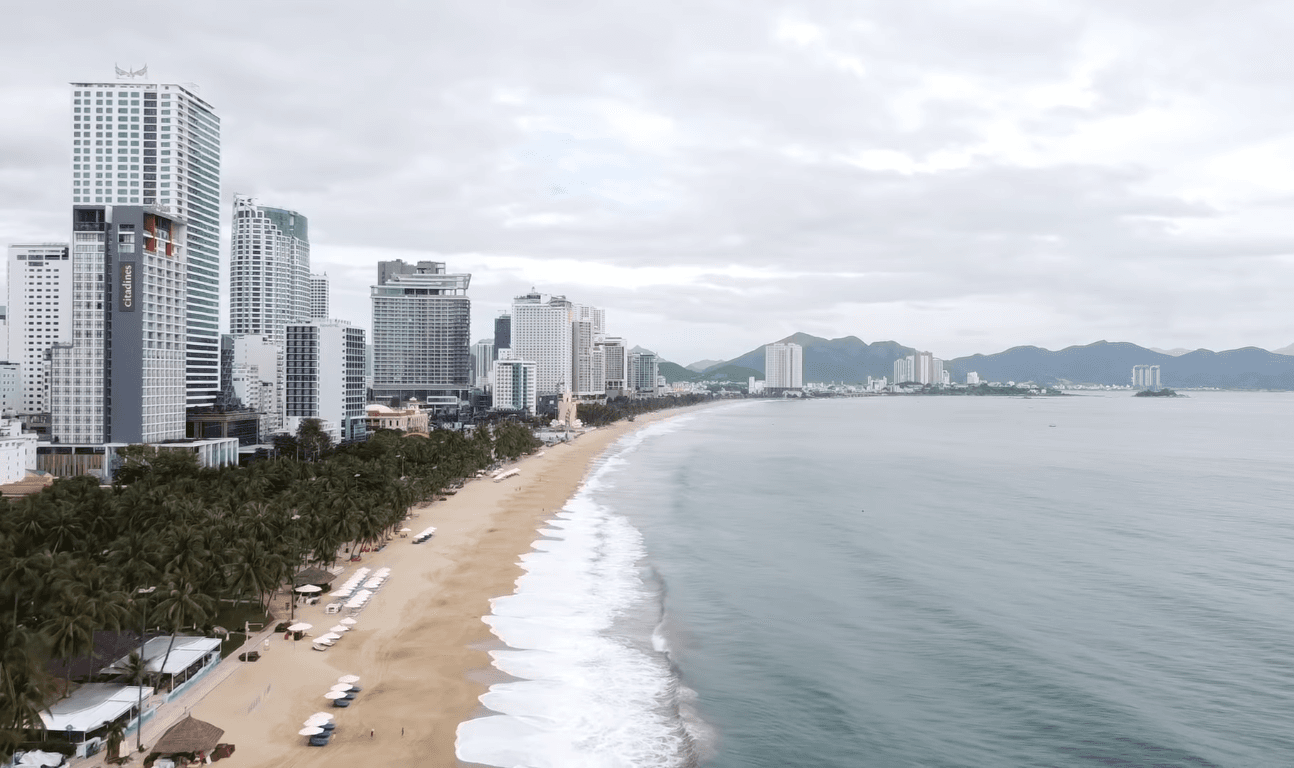
Nha Trang, uma cidade costeira na Costa Centro-Sul do Vietnã, oferece uma convergência onde o encanto de trechos de areia encontra uma rica paisagem cultural e histórica. A cidade é definida por sua extensa praia, que se estende por quilômetros e é ladeada por coqueiros, proporcionando amplo espaço para descanso. Além da costa, a Baía de Nha Trang é salpicada por 19 ilhas e ilhotas, convidando à exploração e a atividades aquáticas.
Embora frequentemente reconhecida como um local de férias de primeira linha, Nha Trang também serve como um portal para a compreensão da diversidade do patrimônio vietnamita. Os contornos da cidade misturam estruturas contemporâneas com arquitetura Cham antiga, influências coloniais francesas e tradições budistas vibrantes. Essa mistura distinta cria uma experiência multifacetada, desde dias ensolarados à beira-mar até momentos tranquilos de contemplação em locais históricos.
O apelo de Nha Trang se estende àqueles que buscam tranquilidade e aventura. É reconhecida como um local privilegiado para mergulho no Vietnã, com oportunidades de observar corais e vida marinha. As ofertas culinárias da cidade, particularmente seus frutos do mar frescos, enriquecem ainda mais a jornada do visitante.
A história de Nha Trang remonta ao século III d.C., quando foi identificada como Kauthara, um principado dentro do antigo reino de Champa. O povo Cham, influenciado pelas culturas malayo-polinésia e indiana, estabeleceu uma importante civilização marítima hindu-budista na região. O impacto duradouro dessa era é mais aparente nas Torres Cham de Po Nagar, um complexo construído entre os séculos VII e XII e dedicado à deusa Yan Po Nagar. Este local funcionou como um centro religioso e administrativo vital para o principado de Kauthara.
Em 1653, o território de Nha Trang foi incorporado ao domínio dos governantes Nguyen no sul do Vietnã, tornando-se eventualmente parte do reino vietnamita após 1802. Por um longo período, Nha Trang permaneceu uma pequena vila de pescadores. No entanto, sua transformação começou no final do século XIX e início do século XX sob o domínio da Indochina Francesa. A administração francesa reconheceu as praias atraentes e o clima favorável de Nha Trang, iniciando o desenvolvimento de infraestrutura de lazer e a construção de vilas. Em 1895, o distinto bacteriologista franco-suíço Alexandre Yersin estabeleceu uma filial do Instituto Pasteur em Nha Trang para pesquisa de doenças tropicais, sublinhando ainda mais a crescente importância da cidade.
Nha Trang foi oficialmente concedida o status de cidade em 1937, solidificando sua importância administrativa e econômica. Durante a Guerra do Vietnã (1965-1972), a cidade e seus arredores abrigaram uma importante base aérea dos EUA. Após o fim da guerra e a reunificação do Vietnã em 1975, Nha Trang embarcou em uma nova fase de desenvolvimento pacífico e reconstrução, evoluindo para o centro turístico que é hoje. O ambiente cultural da cidade também reflete essa fusão de influências, com templos budistas como o Pagode Long Son aparecendo no século XIX e a Catedral de Nha Trang em estilo gótico concluída em 1933, exibindo tradições locais e estilos arquitetônicos ocidentais.
Nha Trang apresenta uma variedade de atrações, misturando história antiga com atrações contemporâneas. As Torres Cham de Po Nagar são uma visita essencial, um impressionante complexo construído entre os séculos VII e XII pelo povo Cham. Essas torres, dedicadas à deusa Yan Po Nagar, exibem arquitetura Cham intrincada e permanecem um local ativo de adoração. Para um encontro espiritual distinto, o Pagode Long Son, fundado em 1886, apresenta uma grandiosa estátua de Buda branca que oferece vistas expansivas da cidade de sua posição elevada. O próprio complexo do pagode é um testemunho da arquitetura tradicional de templos vietnamitas.
Outro marco arquitetônico é a Catedral de Nha Trang, também conhecida como Catedral de Cristo Rei ou Igreja de Pedra. Esta estrutura em estilo Neogótico, concluída em 1933, fica no topo da Colina Hoang Lan e é notável por seus vitrais e torre sineira de 38 metros. Para uma pausa dos locais históricos, a Praia de Tran Phu é o principal atrativo da cidade, uma longa extensão de areia ideal para banhos de sol e esportes aquáticos. Além do continente, considere um passeio de ilha em ilha para locais como a Ilha Hon Mun, a única reserva marinha protegida do Vietnã, excelente para snorkeling e mergulho. Para diversão em família, o VinWonders Nha Trang na Ilha Hon Tre oferece um parque de diversões, parque aquático e aquário, acessível por teleférico.
O período ideal para conhecer Nha Trang é durante sua estação seca, que vai de janeiro a agosto. Durante esses meses, o clima é consistentemente quente e ensolarado, com céu limpo e chuva mínima, tornando-o perfeito para atividades de praia, esportes aquáticos e exploração das ilhas. De fevereiro a abril oferece temperaturas particularmente amenas e menor umidade, proporcionando um ambiente confortável para passeios turísticos. De maio a agosto é a alta temporada de praia com mares calmos, as temperaturas podem subir, com julho e agosto sendo os meses mais quentes, às vezes atingindo 34°C. A estação chuvosa ocorre de setembro a dezembro, trazendo chuvas mais fortes e a possibilidade de tempestades tropicais, que podem limitar as atividades ao ar livre.
Nha Trang é bem conectada e relativamente simples de navegar. O Aeroporto Internacional de Cam Ranh (CXR) é o aeroporto mais próximo, localizado a aproximadamente 30-35 km do centro da cidade, com táxis e ônibus do aeroporto disponíveis para a viagem de 30-45 minutos. A cidade também fica na principal linha ferroviária entre Hanói e Ho Chi Minh City, oferecendo um passeio de trem pitoresco. Ônibus de longa distância conectam Nha Trang a outras cidades vietnamitas importantes.
Dentro de Nha Trang, táxis de empresas respeitadas como Mai Linh ou Vinasun são confiáveis, e táxis de moto (xe om) oferecem uma opção rápida para distâncias mais curtas. Alugar uma moto é preferível para exploração independente, custando tipicamente cerca de 100.000-150.000 VND por dia. O centro da cidade e a área principal da praia são caminháveis, mas as motos são práticas para chegar a locais além do distrito central. As opções de acomodação atendem a todos os orçamentos, de albergues a resorts de luxo. A moeda local é o Dong Vietnamita (VND), e embora o inglês seja falado em áreas turísticas, conhecer algumas frases básicas em vietnamita pode ser benéfico.
Nha Trang — coreano, chinês, hebraico e mais 29 idiomas, cada parada narrada por uma voz nativa. A maior variedade de idiomas entre os passeios de áudio autoguiados.
Disponível em: