Niagara Parks Power Station
Abaixo das icônicas cataratas, um tipo diferente de energia foi aproveitado, com uma descoberta inesperada durante sua construção.
História completa desbloqueada no tour
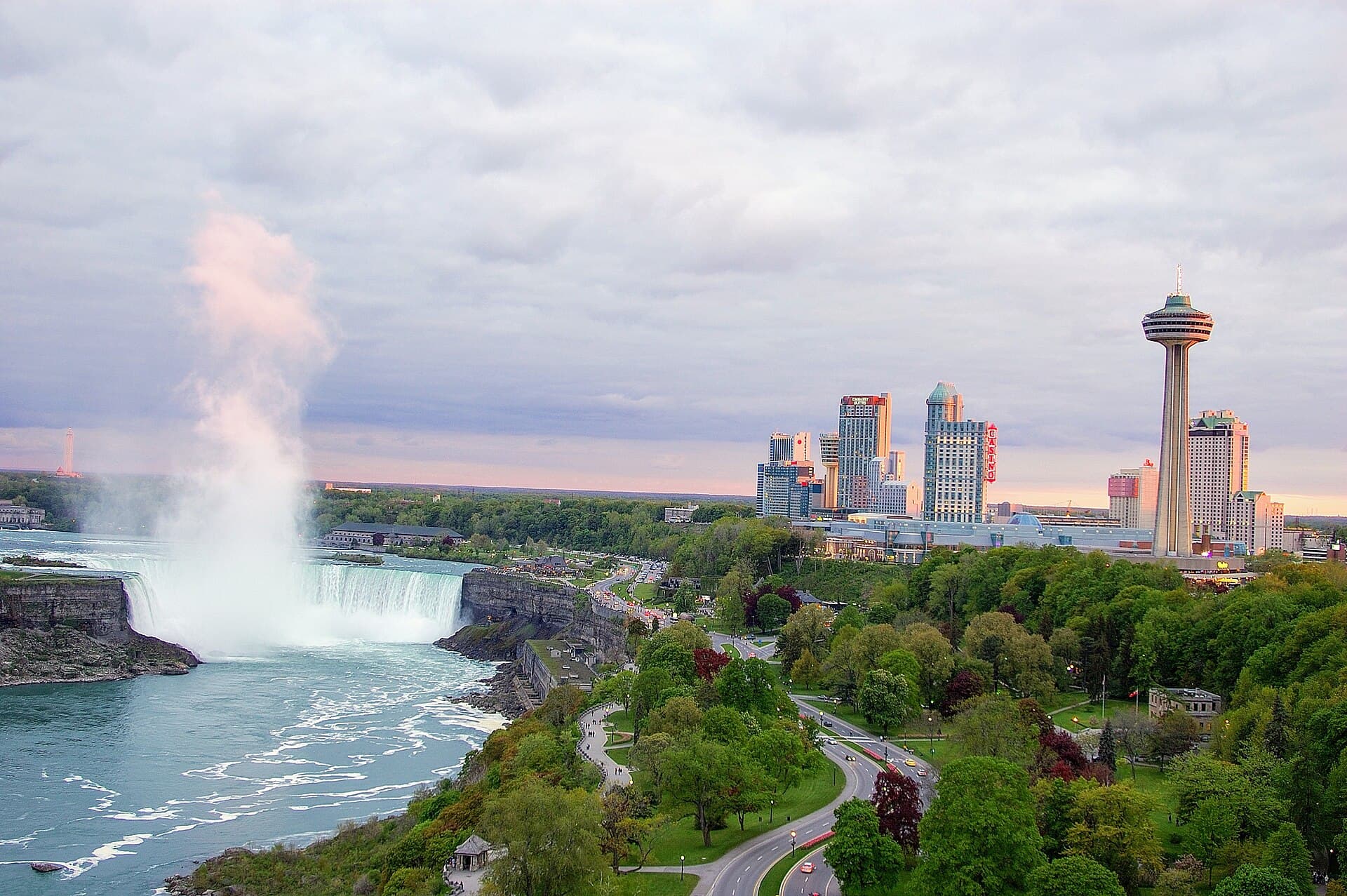 Salwa Farwaneh / CC0, via Wikimedia Commons
Tour de áudio autoguiado por Cataratas do Niágara — rota GPS a pé, reprodução offline, narração envolvente em 32 idiomas.
“Onde o abraço estrondoso da água encontra uma cidade de profundezas surpreendentes.”
Não os postais. As histórias que nem os locais conhecem — sussurradas ao seu ouvido, exatamente onde aconteceram.
Abaixo das icônicas cataratas, um tipo diferente de energia foi aproveitado, com uma descoberta inesperada durante sua construção.
As dramáticas falésias do Desfiladeiro do Niágara guardam um segredo muito mais antigo do que as próprias cataratas.
Por mais de um século, uma barcaça de ferro enferrujada ficou presa nas corredeiras acima das Cataratas Horseshoe, sua jornada terminando de forma inesperada.
Descubra cada segredo de Cataratas do Niágara
Cada endereço, cada revelação na íntegra — no seu ouvido, exatamente onde aconteceu.
Você escolhe as suas paragens. Você caminha. A voz revela o que os outros perdem.


A Lume inclui um guia de realidade aumentada. Levante o telemóvel: a câmara mostra a rua à sua frente, com uma seta luminosa sobreposta à imagem real que aponta sempre para a sua próxima paragem — sem mapa para decifrar, sem voltas erradas. Como tudo na Lume, funciona totalmente offline.
As Cataratas do Niágara, Canadá, é uma cidade definida pela colossal maravilha natural que compartilha com os Estados Unidos: as Cataratas do Niágara. Não se trata de uma única cachoeira, mas de três cascatas distintas — as Cataratas Americanas, as Cataratas Véu da Noiva e as poderosas Cataratas Horseshoe, a maior do trio, localizada principalmente no lado canadense. O volume de água, aproximadamente 85.000 pés cúbicos por segundo, cria uma névoa perpétua que pode ser vista a quilômetros de distância e muitas vezes dá origem a arco-íris cintilantes em dias ensolarados.
Além do rugido das cataratas, a cidade de Niagara Falls, Ontário, oferece uma experiência diversificada e envolvente. De atrações emocionantes e locais históricos a parques serenos e delícias culinárias, é um destino que atende a uma ampla gama de interesses. A área atrai visitantes há mais de 200 anos, evoluindo de um espetáculo natural para um movimentado centro turístico com um microclima único influenciado pelas próprias cataratas.
Explorar as Cataratas do Niágara significa encontrar uma paisagem moldada por poderosas forças geológicas e um rico passado humano. As próprias cataratas são relativamente jovens, formadas há cerca de 12.000 anos no final da última Era do Gelo, quando o derretimento das geleiras abriu caminho através do Escarpa do Niágara. Este poderoso fenômeno natural continua a erodir a paisagem, movendo-se lentamente rio acima ao longo do tempo.
A história das Cataratas do Niágara começa há cerca de 12.000 anos, no final da última Era do Gelo. Massivas camadas de gelo, com vários quilômetros de espessura, esculpiram as bacias dos Grandes Lagos. À medida que essas geleiras recuavam, elas liberaram torrentes de água derretida que esculpiram o Rio Niágara e, eventualmente, o Escarpa do Niágara, levando à formação das cataratas. Essa água é frequentemente referida como 'água fóssil', com menos de um por cento renovada anualmente, sendo o restante um remanescente dessas antigas camadas de gelo.
Muito antes da chegada dos europeus, povos indígenas, incluindo a Nação Neutra e os Iroqueses, habitavam a região do Niágara, venerando as cataratas por seu imenso poder e beleza. O próprio nome 'Niágara' acredita-se derivar de Onguiaahra, que significa 'Perto das Grandes Águas', 'O Estreito' ou 'O Pescoço'. O primeiro relato europeu documentado veio do explorador francês Samuel de Champlain em 1604, seguido pelo Padre Louis Hennepin, que testemunhou as cataratas em primeira mão em 1678 e publicou suas descrições maravilhadas, despertando grande interesse no mundo ocidental.
No início do século XIX, as Cataratas do Niágara haviam se tornado um destino em ascensão para viajantes. Jérôme Bonaparte, irmão de Napoleão, é creditado por iniciar a tradição de lua de mel nas cataratas após sua visita em 1804. O desenvolvimento do sistema ferroviário cimentou ainda mais seu status como um local de viagem de primeira linha. A área também desempenhou um papel significativo na Guerra de 1812, com a Batalha de Lundy's Lane, um dos combates mais sangrentos em solo canadense, travada nas proximidades em 1814.
O final do século XIX viu o aproveitamento do imenso poder das cataratas. A primeira estação geradora hidrelétrica em larga escala do mundo abriu em Niagara Falls em 1895. O desenvolvimento do sistema de corrente alternada por Nikola Tesla em 1896 revolucionou a transmissão de energia, permitindo que a eletricidade das Cataratas do Niágara chegasse a cidades distantes como Buffalo, um sistema ainda em uso globalmente hoje.
Hoje, as cataratas são iluminadas todas as noites com luzes coloridas em constante mudança, uma tradição desde 1925, e shows de fogos de artifício aumentam o espetáculo durante os meses mais quentes, continuando o legado das Cataratas do Niágara como um lugar de maravilha natural e engenhosidade humana.
O lado canadense das Cataratas do Niágara oferece uma variedade de maneiras de experimentar as cascatas e a área circundante. Um clássico é a Journey Behind the Falls, onde você desce por túneis até portais de observação e um deck na base das Cataratas Horseshoe, sentindo as vibrações estrondosas. Para uma perspectiva diferente, o Niagara City Cruises (anteriormente Hornblower Niagara Cruises) leva você diretamente para a névoa das Cataratas Horseshoe, navegando pelas Cataratas Americanas e Véu da Noiva.
Para vistas panorâmicas, a Skylon Tower oferece uma vista de 360 graus de mais de 230 metros de altura, e em dias claros, você pode até ver o horizonte de Toronto. Para aqueles que buscam emoções, experimente o WildPlay Zipline to the Falls, deslizando 670 metros pelo Desfiladeiro do Niágara em direção às Cataratas Horseshoe. Outra experiência aérea é o Whirlpool Aero Car, um teleférico antigo que voa 3.500 pés acima do Desfiladeiro do Niágara, oferecendo vistas do Redemoinho do Niágara e suas águas azul-esverdeadas.
Além das próprias cataratas, explore Clifton Hill, conhecida como a 'Rua da Diversão', com sua variedade de atrações, restaurantes e entretenimento. A Niagara Parks Power Station, uma atração recém-inaugurada, permite aos visitantes descobrir histórias fascinantes e desfrutar de vistas panorâmicas de 180 pés abaixo em sua nova experiência para visitantes, The Tunnel. Para uma experiência mais tranquila, os Niagara Parks Botanical Gardens oferecem um belo jardim gratuito para explorar.
As Cataratas do Niágara recebem visitantes durante todo o ano, com cada estação oferecendo uma experiência distinta. A temporada turística mais movimentada vai do final de junho até o Dia do Trabalho (início de setembro), proporcionando o clima mais quente, com média de cerca de 27°C, e todas as atrações em plena operação, incluindo exibições de luzes noturnas e fogos de artifício.
Para aqueles que buscam menos multidões e temperaturas mais amenas, as temporadas intermediárias de maio, setembro e outubro são ideais. A primavera traz temperaturas mais quentes e flores coloridas, enquanto o outono exibe folhagens brilhantes. Embora o inverno traga temperaturas mais frias e algumas atrações possam fechar, a paisagem coberta de neve e as cataratas iluminadas oferecem uma visita mágica e mais tranquila, com preços de hotel potencialmente mais baixos.
Para cruzar a fronteira para Niagara Falls, Canadá, cidadãos dos EUA precisam de um passaporte válido dos EUA, cartão de passaporte ou carteira de motorista aprimorada. Crianças menores de 16 anos podem precisar apenas de uma cópia original ou certificada de sua certidão de nascimento. Existem três pontes internacionais conectando os EUA e o Canadá perto das Cataratas do Niágara, incluindo a Rainbow Bridge, que oferece vistas espetaculares das cataratas e permite tráfego de pedestres, bicicletas e veículos. Os tempos de espera na fronteira podem variar, portanto, reserve tempo extra.
Embora a visualização das cataratas de parques públicos seja gratuita, atrações como passeios de barco ou decks de observação têm taxas associadas. O estacionamento está disponível perto da área da Falls Avenue, no lado canadense, com taxas que variam de acordo com a estação. Recomenda-se ficar perto das cataratas, pois o estacionamento pode ser limitado durante a alta temporada, e navegar a pé ou usar serviços de transporte é a melhor maneira de se locomover. A cidade também oferece várias opções de transporte, incluindo serviço de trem de Toronto.
Cataratas do Niágara — coreano, chinês, hebraico e mais 29 idiomas, cada parada narrada por uma voz nativa. A maior variedade de idiomas entre os passeios de áudio autoguiados.
Disponível em: