Lange Hezelstraat
Imagine a thoroughfare that has absorbed millennia of footsteps. This particular stretch of pavement holds a singular distinction.
Full story unlocks in the tour
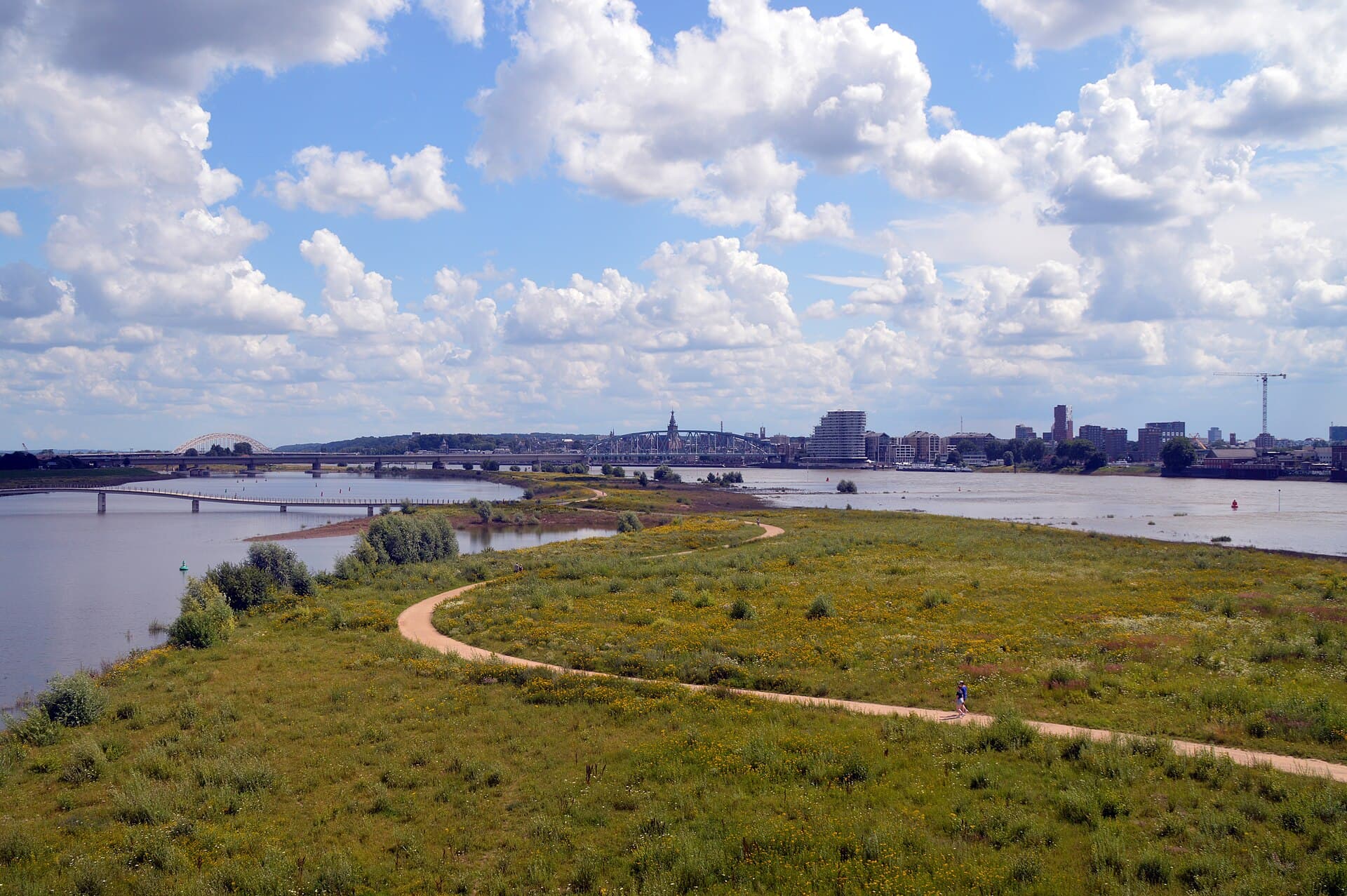 Roger Veringmeier / CC BY-SA 4.0, via Wikimedia Commons
“Where ancient Roman foundations meet the pulse of contemporary life.”
Not the postcards. The stories even locals don't know — whispered in your ear, right where they happened.
Imagine a thoroughfare that has absorbed millennia of footsteps. This particular stretch of pavement holds a singular distinction.
This bridge is more than a crossing; it serves as a daily remembrance of a crucial moment in wartime history.
Before it became a tranquil green space, this commanding hill was a favored dwelling for one of Europe's most renowned emperors.
Discover every secret of Nimègue
Every address, every reveal in full — in your ear, right where it happened.
You pick your stops. You walk. The voice reveals what the others miss.
No tours available yet. Check back soon — we're preparing them.
Nijmegen, pronounced "NY-may-guhn" (Dutch: [ˈnɛimeːɣə(n)]), lays claim to being the oldest city in the Netherlands, its story unfolding over 2,000 years. Situated on the Waal River, close to the German border, it first gained recognition as a city during Roman times. This deep heritage is woven into the very fabric of the urban landscape, from fragments of Roman settlements to structures from the medieval era, offering a compelling journey through the ages.
Despite its ancient roots, Nijmegen exudes a youthful and energetic atmosphere, largely shaped by its substantial student population. The city masterfully blends its historical past with a contemporary dynamism, evident in its animated cafes, varied shopping avenues, and a profound commitment to environmental care, having been named the European Green Capital in 2018. This singular combination renders Nijmegen a compelling destination for those seeking to explore centuries of human endeavor alongside a lively modern culture.
## Roman Origins and Imperial Grandeur Nijmegen's narrative begins in the 1st century BCE, when the Romans established a military encampment on a strategically valuable elevation overlooking the Waal River. By 98 AD, it was granted Roman city rights, making it one of the earliest settlements in what is now the Netherlands to achieve this status. Emperor Trajan renamed the town Ulpia Noviomagus Batavorum, or Noviomagus for short, which is the ultimate origin of its current name. The city prospered as an important military and trading nexus for the Romans, with a population estimated between 5,000 and 7,000 in the 2nd century AD.
As Roman power receded in the 4th century, Noviomagus became integrated into Francia. In the 8th century, Emperor Charlemagne established a significant palace on the Valkhof, cementing Nijmegen's importance within his empire. The city continued its expansion, becoming a free imperial city in 1230 and later joining the Hanseatic League in 1402, a testament to its flourishing commerce.
## Turbulent Eras and Wartime Scars Nijmegen's strategic position also made it a frequent flashpoint of conflicts throughout its existence. It endured multiple sieges during the Dutch Revolt and was captured by the French in 1672. The city hosted the negotiations that led to the Treaty of Nijmegen in 1678–79, an effort to quell persistent warfare in Europe. In 1794, it was taken by the French, who relocated the capital of Gelderland to Arnhem, and its fortifications were dismantled in 1878.
World War II brought immense destruction to Nijmegen. In 1940, it was the first Dutch city to fall to German forces. On February 22, 1944, American planes mistakenly bombed the city center, causing extensive damage and claiming the lives of over 800 civilians. Later that year, during Operation Market Garden in September 1944, Nijmegen became a critical battleground. Fierce fighting erupted to secure the Waal bridges, which were vital for the Allied advance. The city endured months as a front-line location, suffering further shelling until February 1945. The post-war reconstruction, while modernizing parts of the city, aimed to preserve the essence of its historic street patterns.
Begin your exploration at Valkhof Park, where you can find the remnants of Charlemagne's castle and the 12th-century Barbarossa ruins, including a 16-sided baptistry consecrated in 799. For a deeper understanding of the city's Roman past, visit Museum Het Valkhof, which houses a notable collection of Roman antiquities.
Walk through the Grote Markt, the historic market square, and observe the restored Renaissance Grote Kerk (St. Stephen's Church) and the 1554 town hall, both rebuilt after wartime damage. Explore Lange Hezelstraat, the Netherlands' oldest shopping street, where historic buildings now contain distinctive boutiques and welcoming cafes. For a contemporary contrast, explore Marikenstraat, a two-level shopping street featuring modern architecture.
To comprehend Nijmegen's crucial role in World War II, visit the Infocentre WW2 Nijmegen and consider following the Liberation Route, which illuminates key sites and narratives from the conflict. Do not miss the Sunset March across the De Oversteek bridge each evening, a moving tribute to fallen Allied soldiers.
Nijmegen experiences comfortable, partly cloudy summers and very cold, mostly cloudy, and windy winters. The warm season, from early June to early September, offers average daily high temperatures above 19°C (67°F), with July being the warmest month, averaging 23°C (73°F). This period, especially from late June to early September, is considered ideal for warm-weather activities. The annual International Four Days Marches Nijmegen, a globally recognized walking event and accompanying summer festival, occurs in July, attracting over a million visitors and making accommodations scarce.
Nijmegen is readily accessible by train, with direct services from Amsterdam-Schiphol Airport taking approximately 1.5 hours. The city center is compact and pleasant for walking, and Nijmegen is well-known for its extensive cycling paths. Public transportation within the city operates efficiently. For visitor information, the local VVV (Tourist Information Office) can provide maps and guides. While the city offers a range of accommodations, securing lodging during the Four Days Marches in July requires booking several months in advance, as the city's population swells considerably. The official language is Dutch, but English is widely spoken, particularly in areas frequented by visitors. The local currency is the Euro (EUR).