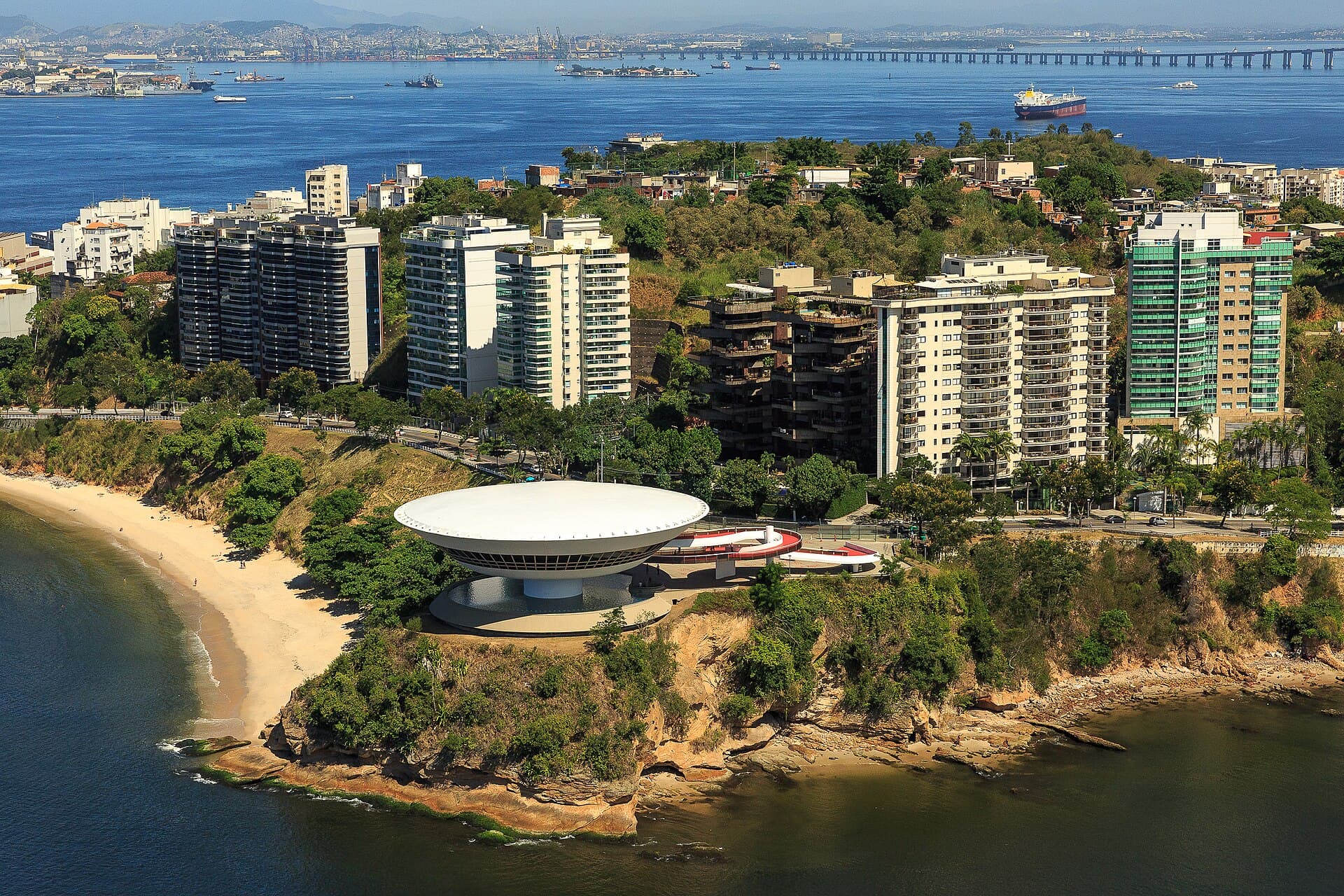
Niterói, BrazilDiego Baravelli / CC BY-SA 4.0, via Wikimedia Commons
BR

Niterói

Niterói: Where the horizon bends and the city smiles back.

The secrets of Niterói

Niterói, as no one tells it.

Not the postcards. The stories even locals don't know — whispered in your ear, right where they happened.

3 secrets below. Many more wait inside the tour.
Niterói Contemporary Art Museum (MAC)

Oscar Niemeyer's iconic saucer-shaped museum is a marvel of engineering, appearing to float above Guanabara Bay. Its gravity-defying design, however, presented a unique challenge for the art it was built to house.

Full story unlocks in the tour
Fortaleza de Santa Cruz da Barra

This historic fortress, guarding the entrance to Guanabara Bay for centuries, holds a secret within its ancient stone walls that speaks to a darker chapter of Brazilian history.

Full story unlocks in the tour
The red ramp of the MAC

The long, winding red ramp leading up to the Niterói Contemporary Art Museum is as much a part of the architectural experience as the museum itself. The lively color you see today, though, isn't quite what Niemeyer originally intended.

Full story unlocks in the tour
The full tour

Discover every secret of Niterói

Every address, every reveal in full — in your ear, right where it happened.

Get the key to Niterói

You pick your stops. You walk. The voice reveals what the others miss.

Choose your time

How long do you have in Niterói?

No tours available yet. Check back soon — we're preparing them.

About Niterói

The story of Niterói

Niterói offers a compelling counterpoint to its famous neighbor, Rio de Janeiro, just across Guanabara Bay. This modern city, home to approximately 515,000 people, presents one of Brazil's highest Human Development Index ratings, reflecting a high quality of life. While Rio pulses with dynamic energy, Niterói presents a more serene and well-maintained atmosphere, yet remains closely connected by the impressive 13-kilometer President Costa e Silva Bridge.

Niterói's unique geographical position provides unparalleled panoramic views of Rio's iconic landmarks, including Sugarloaf Mountain and the Christ the Redeemer statue. Beyond its scenic vistas, the city is a significant hub for architecture enthusiasts, housing the second-largest collection of works by the renowned Oscar Niemeyer outside of Brasília. From futuristic museums to historic forts and inviting beaches, Niterói offers a range of experiences that blend natural beauty with cultural depth, making it a destination worth exploring for those seeking a different perspective on the region.

History

## A City Born from Indigenous Roots Niterói holds a unique place in Brazilian history as the only city founded by a non-Christian, non-assimilated indigenous chief. On November 22, 1573, the Tupi chief Arariboia established the settlement, initially named São Lourenço dos Índios. Arariboia, later converted to Roman Catholicism and renamed Martim Afonso, received these lands from the Portuguese crown as a gesture of alliance.

## From Colonial Outpost to State Capital In the 19th century, Niterói's strategic location on the eastern shore of Guanabara Bay made it an important port and commercial center, particularly for the coffee and sugar cane industries. In 1819, the village was renamed Vila Real da Praia Grande, and on March 6, 1835, it officially became a city, adopting its modern name, Niterói, derived from the Tupi language meaning "hidden waters." That same year, Niterói was chosen as the capital of the province of Rio de Janeiro, a status it held for over a century, with a brief interruption between 1894 and 1903 when the capital temporarily moved to Petrópolis. This period as capital significantly spurred its growth, leading to the construction of administrative buildings and infrastructure that shaped its historic center.

## Modernization and Architectural Legacy The 20th century saw Niterói undergo rapid urbanization and modernization, with new highways, buildings, and parks. A pivotal moment in its modern development came in 1974 with the completion of the Rio-Niterói Bridge, a monumental engineering feat that drastically reduced travel time to Rio de Janeiro. In 1975, Niterói lost its capital status when the state of Guanabara merged with the state of Rio de Janeiro, making the city of Rio de Janeiro the unified capital. Despite this, Niterói continued to flourish, developing a distinct cultural identity. Today, it is particularly recognized for its collection of modernist architecture, most notably the works of Oscar Niemeyer, which contribute to its unique futuristic aesthetic.

What to see

Niterói offers a diverse range of attractions, blending architectural marvels with natural beauty and historical sites. The Niterói Contemporary Art Museum (MAC), designed by Oscar Niemeyer, is an iconic saucer-shaped structure that seems to float above Guanabara Bay. Its unique design provides 360-degree views of Rio's skyline, Sugarloaf Mountain, and the ocean. The MAC is the centerpiece of the Caminho Niemeyer, an architectural promenade featuring several other modernist buildings by the renowned architect, including the striking Teatro Popular.

For sweeping panoramic vistas, head to Parque da Cidade. From its elevated position on Viração Hill, you can capture views of Niterói's beaches, the Rio-Niterói Bridge, and the entire Guanabara Bay, with Rio de Janeiro's famous landmarks in the distance. History enthusiasts will appreciate the Fortaleza de Santa Cruz da Barra, one of Brazil's oldest and most significant fortifications. This colonial-era fortress, with its collection of 18th and 19th-century cannons and a chapel from 1612, offers guided tours and impressive views of the bay entrance.

Niterói also holds appealing beaches. Itacoatiara Beach, known locally as "Itacoa," is a popular spot with natural rock pools and hiking trails on nearby headlands, favored by surfers. For a more tranquil experience, explore the secluded Praia do Sossego or the charming Itaipu Beach, a former fishing colony. The Janete Costa Museum of Popular Art offers an immersive experience into Brazil's cultural heritage and local craftsmanship.

When to visit

Niterói enjoys a tropical Atlantic climate, meaning warmth and high humidity year-round, tempered by sea breezes from Guanabara Bay. The hottest and rainiest period is the Brazilian summer, from December to March, with average temperatures around 27°C, often reaching 31°C. This is ideal for beach activities, though be prepared for intense, short tropical downpours.

The milder, drier winter months, from June to August, offer pleasant daytime temperatures around 25°C and comfortable lows of 16°C. This period, from early May to late September, is generally considered the best time for warm-weather activities and sightseeing, with clearer skies and less humidity. Sea temperatures remain warm year-round, ranging from 20°C in cooler months to 25°C in summer.

Practical

Getting to Niterói from Rio de Janeiro is straightforward, with several scenic options. The most popular is the ferry service from Praça XV in Rio, offering a 20-30 minute ride with excellent views of both city skylines. Alternatively, you can drive or take a bus across the President Costa e Silva Bridge, a 13-kilometer marvel that also provides panoramic views.

Within Niterói, Uber is a convenient and affordable way to get around, especially for reaching attractions like Parque da Cidade, which can be a steep walk. Niterói is generally considered safer than Rio, particularly in areas like Icaraí and São Francisco. However, as with any city, it's wise to remain aware of your surroundings, avoid displaying valuables, and stick to well-lit, populated areas at night. Learning a few basic Portuguese phrases can also enhance your experience and ease communication.

For dining, the neighborhood of São Francisco is known for its excellent restaurants and lively nightlife.

Good to know
What does the name Niterói mean?
The name Niterói comes from the Tupi language, translating to "hidden waters" or "water that hides."
Is Niterói considered a safe city for tourists?
Niterói is generally considered safer than Rio de Janeiro, particularly in tourist areas like Icaraí and São Francisco. However, it's always advisable to be aware of your surroundings and take standard precautions.
What is Niterói known for?
Niterói is renowned for its modernist architecture, especially the works of Oscar Niemeyer, including the iconic MAC museum. It is also known for its appealing beaches and panoramic views of Rio de Janeiro.
How can I get to Niterói from Rio de Janeiro?
You can reach Niterói from Rio by taking a scenic ferry ride from Praça XV or by driving or taking a bus across the 13-kilometer Rio-Niterói Bridge.
What is the best time of year to visit Niterói?
The best time to visit Niterói for warm-weather activities and clearer skies is generally from early May to late September, during the milder and drier winter months. The summer (December to March) is hotter and wetter, but also good for beaches.
Is Niterói the capital of Rio de Janeiro state?
No, Niterói is not currently the capital of Rio de Janeiro state. It served as the state capital from 1834 to 1975, with a brief interruption, but the capital was then moved to the city of Rio de Janeiro.
Niterói
From€9.00
No booking · activate anytime · 12h to walk it
Get the key to Niterói