Imagine a road that vanishes twice a day, completely swallowed by the sea.
Yves LC / CC BY-SA 3.0, via Wikimedia CommonsNoirmoutier-en-l'Île
“Where tides dictate passage and salt is white gold.”
Noirmoutier-en-l'Île, as no one tells it.
Not the postcards. The stories even locals don't know — whispered in your ear, right where they happened.
Within the walls of the island's medieval castle, a bullet-riddled armchair tells a grim tale of the French Revolution.
This seemingly tranquil coastal forest holds a secret history of repeated destruction and artistic inspiration.
Discover every secret of Noirmoutier-en-l'Île
Every address, every reveal in full — in your ear, right where it happened.
You pick your stops. You walk. The voice reveals what the others miss.
How long do you have in Noirmoutier-en-l'Île?
No tours available yet. Check back soon — we're preparing them.
The story of Noirmoutier-en-l'Île
Noirmoutier-en-l'Île, often simply called Noirmoutier, is the main town on the Île de Noirmoutier, an island off the Atlantic coast of France in the Vendée department. This captivating island is revered for its distinctive landscapes, from wide sandy beaches and shimmering salt marshes to quaint villages with white houses and blue shutters. Its singular connection to the mainland via the Passage du Gois, a tidal causeway that submerges twice daily, adds an adventurous allure, making it a compelling destination for those seeking a blend of natural splendor, history, and a relaxed seaside rhythm.
The island's temperate climate contributes to its appeal, making it a pleasant place to visit for much of the year. Beyond its natural wonders, Noirmoutier-en-l'Île offers a deep cultural heritage, evident in its historic castle, ancient churches, and traditional salt production—a practice that has shaped the island's economy and landscape for centuries. Whether exploring its cobbled streets, savoring fresh seafood, or cycling along its extensive network of paths, Noirmoutier-en-l'Île promises an immersive and memorable French island experience.
From Monks to Fortresses: A Timeline of Noirmoutier-en-l'Île
The history of Noirmoutier-en-l'Île is deeply intertwined with its strategic island location and the ebb and flow of the Atlantic tides. The island's story begins as early as the 7th century when Saint Philbert founded a Benedictine abbey, laying the groundwork for the town and initiating the development of the island's renowned salt marshes. Salt, often referred to as 'white gold,' became a cornerstone of the island's economy, essential for food preservation and trade, flourishing from the 16th to the 18th centuries.
By the 9th century, the island faced repeated Viking raids, prompting the construction of early defensive structures, likely made of wood. These were later replaced by more durable stone fortifications. The most prominent of these is the Château de Noirmoutier, a formidable stone castle built in the late 12th century by Pierre V de la Garnache. This imposing keep, nearly 20 meters high, served as a symbol of feudal power, a residence, and a military stronghold. Throughout the centuries, the castle endured numerous attacks and sieges, including those by the English during the Hundred Years' War and by the Spanish in the 16th century. In 1675, it was even captured by the Dutch.
During the tumultuous French Revolution, the Château de Noirmoutier was repurposed as a military prison. A particularly poignant event from this period is the execution of Royalist General Maurice d'Elbée, who, too wounded to stand, was shot while seated in an armchair, a somber relic now housed within the castle museum. The 19th century saw the island's coastal areas, particularly the Bois de la Chaize, gain popularity as a seaside resort, with grand villas and charming beach huts emerging along the shore. In 1901, the town acquired the castle to preserve it, and a museum was established there, formally developing from 1934. The Passage du Gois, the unique tidal causeway, has also played a significant role in the island's history, first appearing on a map in 1701 and undergoing stabilization and paving in the 19th century, with refuge markers added for safety. Today, Noirmoutier-en-l'Île continues to honor its past, earning the 'Petite Cité de Caractère' label in 2022 for its charming historic center.
Begin your exploration in the historic heart of Noirmoutier-en-l'Île, a town recognized for its distinct character. Wander through the narrow, flower-lined streets of the Banzeau district, one of the oldest parts of the town, where white houses with colorful shutters create a picturesque setting. The imposing Château de Noirmoutier, a 12th-century medieval castle, stands prominently and houses a museum detailing the island's history, offering expansive views from its keep. Nearby, the Saint Philbert Church, a historic Romanesque building, also merits a visit.
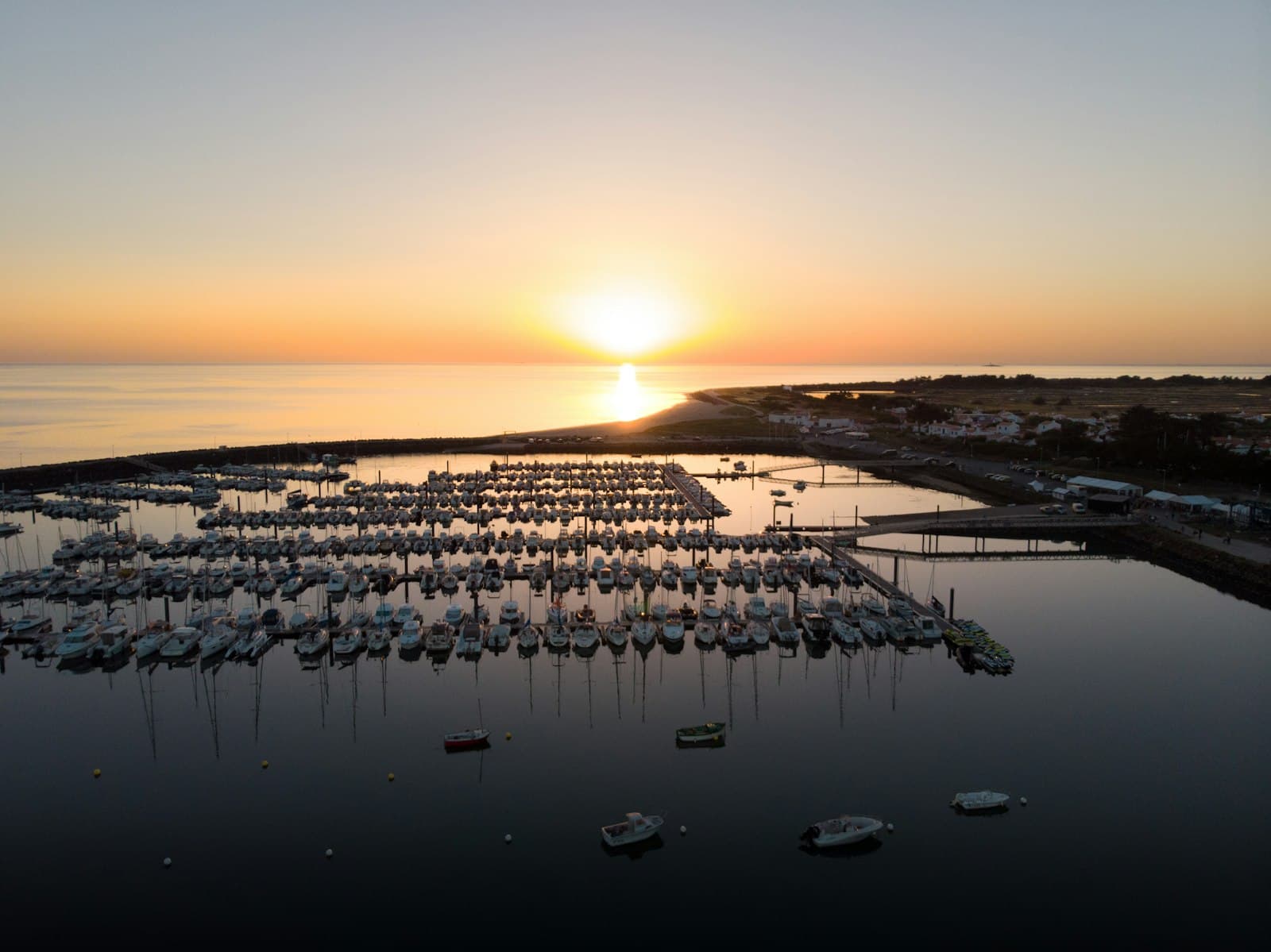
No visit is complete without experiencing the Passage du Gois, the legendary submersible road connecting the island to the mainland. Be sure to check tide times for safe crossing or to witness its dramatic disappearance. For nature lovers, the salt marshes, covering a third of the island, offer insights into traditional salt harvesting and provide colorful, photogenic landscapes. The Bois de la Chaize, a protected coastal forest, invites leisurely strolls among maritime pines and evergreen oaks, leading to scenic coves like Plage des Dames, known for its historic white bathing cabins and wooden pier. The port of L'Herbaudière, at the island's northern tip, is a lively spot for fishing and pleasure boats, with restaurants serving fresh seafood.
The ideal time to visit Noirmoutier-en-l'Île for warm weather activities extends from late June to mid-September. During this period, the weather is generally warm with comfortable temperatures, making it perfect for enjoying the beaches and outdoor pursuits. July and August are peak season, offering a lively atmosphere; for a quieter experience with pleasant temperatures, consider visiting in May, June, or September.
Noirmoutier-en-l'Île is accessible via a bridge from Fromentine, which remains open year-round, or by the singular Passage du Gois, a tidal causeway that can only be traversed at low tide. It is crucial to consult tide tables before attempting to cross the Passage du Gois, as the road becomes completely submerged. The island is approximately a 1.5-hour drive from Nantes, which hosts the nearest major airport, and bus services also connect Nantes to Noirmoutier.
Once on the island, exploring by bicycle is highly recommended, with over 80 kilometers of cycle paths winding through diverse landscapes. Car travel is also feasible, and the town center of Noirmoutier-en-l'Île is easily navigable on foot. Dining options abound, with fresh seafood, especially oysters and mussels, being a culinary highlight. Do not miss the local specialty, the bonnotte de Noirmoutier potato. Local markets in Noirmoutier-en-l'Île and L'Épine offer regional products, including the island's celebrated fleur de sel sea salt.
- What is the Passage du Gois?
- The Passage du Gois is a natural, 4.2-kilometer tidal causeway connecting Noirmoutier Island to the mainland. It is unique because it is completely submerged by the sea at high tide and only accessible for a few hours at low tide, creating a dynamic link to the continent.
- How do I get to Noirmoutier-en-l'Île?
- You can reach Noirmoutier-en-l'Île via a bridge from Fromentine, which is accessible year-round, or by the Passage du Gois at low tide. Nantes, with its major airport, is about a 1.5-hour drive away and offers bus connections to the island, providing multiple travel options.
- What are the main attractions in Noirmoutier-en-l'Île?
- Key attractions include the Château de Noirmoutier, the historic Banzeau district, the Saint Philbert Church, the Passage du Gois, the expansive salt marshes, and the Bois de la Chaize forest with its picturesque coves and beaches like Plage des Dames, all offering distinct experiences.
- What is the best time of year to visit?
- The best time to visit for warm weather activities is from late June to mid-September. May, June, and September offer pleasant temperatures with fewer crowds, allowing for a more serene exploration of the island's beauty.
- What local specialties should I try?
- Be sure to sample the fresh seafood, especially oysters and mussels, which are local delicacies. The island is also celebrated for its *bonnotte de Noirmoutier* potatoes and *fleur de sel* sea salt, offering a taste of the island's unique terroir.
- Are there cycling routes on the island?
- Yes, Noirmoutier Island offers over 80 kilometers of dedicated cycle paths, making it an excellent destination for exploring its diverse landscapes by bike. These paths wind through forests, along the coast, and past salt marshes, providing scenic routes for all skill levels.