De Daniel Tower
De roep van de wachter vanaf de Daniel Tower galmt al eeuwenlang over Nördlingen, een traditie die verbonden is met een verrassende redder.
Volledig verhaal ontgrendeld in de tour
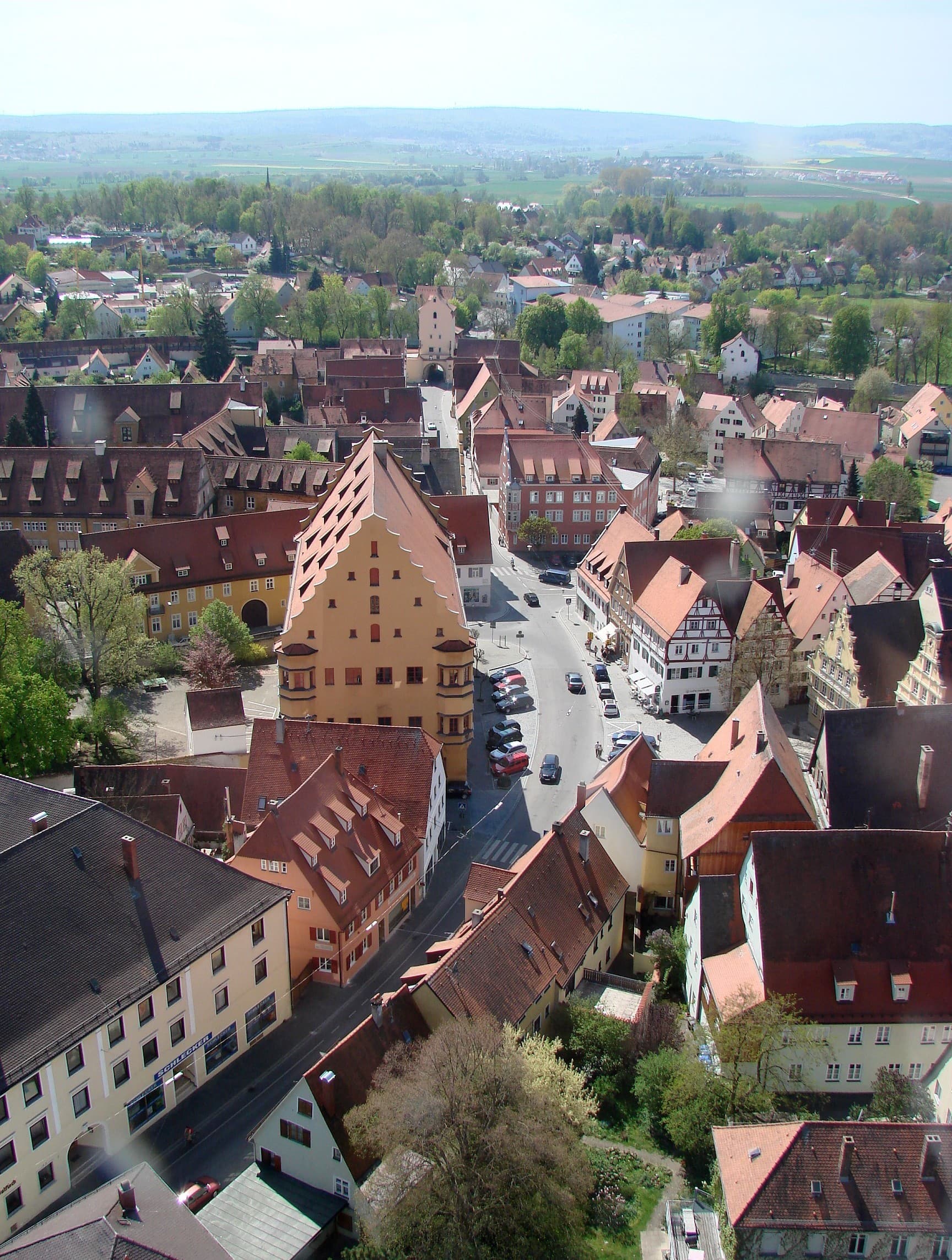 Mussklprozz / CC BY-SA 3.0, via Wikimedia Commons
Zelfgeleide audiowandeling door Nördlingen — GPS-route, offline afspelen, meeslepende vertelling in 32 talen.
“Een middeleeuwse stad, gevormd binnen een kosmische inslag.”
Niet de ansichtkaarten. De verhalen die zelfs locals niet kennen — gefluisterd in je oor, precies waar ze gebeurden.
De roep van de wachter vanaf de Daniel Tower galmt al eeuwenlang over Nördlingen, een traditie die verbonden is met een verrassende redder.
De stenen van Nördlingen zelf hebben een subtiele glans, een bewijs van zijn dramatische oorsprong.
Deze oude inslaglocatie speelde een onverwachte rol in de reis van de mensheid naar de maan.
Ontdek elk geheim van Nördlingen
Elk adres, elke onthulling volledig — in je oor, precies waar het gebeurde.
Jij kiest je stops. Jij wandelt. De stem onthult wat de anderen missen.


Je zelfgeleide audiotour van Nördlingen is klaar — kies je bezienswaardigheden, kies je taal en start zodra je aankomt.
KopenLume heeft een ingebouwde augmented-reality-gids. Houd je telefoon omhoog: de camera toont de straat voor je, met een oplichtende pijl over het echte beeld die altijd naar je volgende stop wijst — geen kaart om uit te puzzelen, geen verkeerde afslagen. Zoals alles in Lume werkt het volledig offline.
Nördlingen, een stad in Beieren, Duitsland, biedt een unieke mix van middeleeuwse sfeer en kosmische geschiedenis. Het is een van de slechts drie steden in Duitsland die een volledig bewaard gebleven middeleeuwse stadsmuur heeft, die bezoekers kunnen bewandelen. Wat Nördlingen werkelijk onderscheidt, is de buitengewone geologische basis: de hele stad ligt in de Nördlinger Ries, een opmerkelijk goed bewaard gebleven inslagkrater van een meteoriet, gevormd ongeveer 15 miljoen jaar geleden. Deze hemelse gebeurtenis heeft niet alleen het landschap gevormd, maar ook de bouwmaterialen van de stad, waarbij de structuren zijn ingebed met kleine diamantjes.
De cirkelvormige indeling van de stad, een direct gevolg van de ligging in de krater, zorgt voor een onderscheidend gevoel van beslotenheid en intimiteit. Vanaf de iconische Daniel Tower van de Sint-Georgiuskerk kan de zichtbare rand van de oude krater, bekend als de 'groene kroon', worden waargenomen, die de stad omlijst in een natuurlijk amfitheater. Nördlingen biedt een authentieke ervaring van het Duitse stadsleven, vaak minder druk dan andere populaire bestemmingen aan de Romantische Straße, waardoor een meer persoonlijke verkenning van de oude straten en kosmische geheimen mogelijk is.
De geschiedenis van het Nördlingen-gebied gaat terug tot de Steentijd, met archeologische vondsten in de Ofnethöhlen (grotten) die bewijs leveren van vroege menselijke bewoning. Alemannische nederzettingen volgden in de 6e en 7e eeuw. De stad werd voor het eerst officieel gedocumenteerd in 898 als 'Nordilinga', vermeld in de archieven van het Karolingische hof. Onder het bewind van de bisschoppen van Regensburg ontwikkelde Nördlingen zich tot een belangrijke marktstad.
In 1215 kreeg Nördlingen stadsrechten van keizer Frederik II, waarmee het een Vrije Rijksstad van het Heilige Roomse Rijk werd. De eerste stadsmuur werd in hetzelfde jaar gebouwd; hoewel de oorspronkelijke vorm niet meer bewaard is gebleven, is de plattegrond nog steeds zichtbaar. De strategische ligging van de stad op het kruispunt van twee belangrijke handelsroutes – die Frankfurt/Würzburg met Augsburg verbinden, en Neurenberg met Ulm – droeg bij aan de welvaart. Nördlingen werd een vitale handelshub voor goederen zoals graan, vee, textiel, bont en metaal. Deze middeleeuwse bloeiperiode is nog steeds zichtbaar in de goed bewaarde architectuur van de stad.
De bestaande stadsmuren, bijna 700 jaar oud, werden grotendeels gebouwd in 1327, waardoor de stad vier keer zo groot werd en door de eeuwen heen voortdurend werd versterkt. De 10 dagen durende Pinksterkermis, voor het eerst vermeld in 1219, was een cruciale supraregionale handelsbeurs in Zuid-Duitsland tijdens de Middeleeuwen en bestaat vandaag de dag nog steeds als volksfeest. Nördlingen speelde ook een rol in de Reformatie in de 16e eeuw. De stad kende echter een periode van economische neergang na het verlies van haar onafhankelijkheid en de integratie in Beieren in 1802/1803.
Begin uw verkenning met een wandeling over de stadsmuur van Nördlingen, een volledig bewaard gebleven lus van 2,7 kilometer die uitzicht biedt over de middeleeuwse oude stad. Dit is een van de slechts drie complete middeleeuwse muren in Duitsland. Beklim de 365 steile treden van de 90 meter hoge Daniel Tower, de spits van de Sint-Georgiuskerk, voor een weids uitzicht over de stad en de omliggende Rieskrater. Vanaf de top kunt u de cirkelvorm van de stad binnen de oude inslaglocatie echt waarderen.
Duik in de kosmische oorsprong van de stad in het Rieskratermuseum, gevestigd in een middeleeuwse schuur uit 1503. Het museum beschrijft de 15 miljoen jaar oude meteorietinslag en de geologische betekenis ervan, en toont zelfs een authentieke maansteen van Apollo 16. Wandel door de Leerlooierswijk (Lederergasse en Vordere Gerbergasse), gelegen aan de rivier de Eger, waar imposante leerlooiershuizen met hoge gevels een voorbijgaand ambacht illustreren. Het Beiers Spoorwegmuseum, met meer dan 100 originele voertuigen, waaronder 25 stoomlocomotieven, is een genot voor spoorwegliefhebbers. Mis het historische marktplein (Rübenmarkt) met zijn vakwerk- en patriciërshuizen, waaronder het 13e-eeuwse stadhuis, niet.
Nördlingen biedt het hele jaar door charme, maar de warmere maanden, van late lente tot vroege herfst (mei tot september), bieden het meest aangename weer om de stadsmuren te bewandelen en de Geopark Ries te verkennen. De stad organiseert historische festivals, zoals het tien dagen durende volksfeest "Nördlinger Mess" (beginnend op de eerste zaterdag na Sacramentsdag) en het "Historische Stadsmuur Festival" om de drie jaar in september. Deze evenementen zorgen voor een levendige sfeer en bieden een kijkje in de tradities van de stad.
Nördlingen ligt in de regio Zwaben in Beieren. Het is gemakkelijk bereikbaar met de trein, met directe verbindingen vanuit München in ongeveer twee uur, of met de auto via de Autobahn. Parkeergarages zijn beschikbaar in de oude stad, evenals parkeerplaatsen net buiten de stadsmuren. Het VVV-kantoor van Nördlingen bevindt zich op het centrale plein, achter het stadhuis, en biedt informatie en Duitstalige rondleidingen in de zomermaanden. Hoewel Duits de primaire taal is, zullen veel toeristische etablissementen Engelssprekenden hebben. De gebruikte valuta is de Euro. Overweeg comfortabele schoenen voor het bewandelen van de 2,7 km lange stadsmuur en het beklimmen van de Daniel Tower.
Nördlingen — Koreaans, Chinees, Hebreeuws en nog 29 talen, elke stop verteld door een moedertaalspreker. Het grootste taalaanbod van alle zelfgeleide audiotours.
Beschikbaar in: