Novara, ItalyAlessandro Vecchi / CC BY-SA 3.0, via Wikimedia Commons
IT

Novara

Where Roman roads meet soaring domes and enduring narratives.

The secrets of Novara

Novara, as no one tells it.

Not the postcards. The stories even locals don't know — whispered in your ear, right where they happened.

3 secrets below. Many more wait inside the tour.
Piazza delle Erbe

This seemingly ordinary square holds a particular stone, believed by locals to possess a potent, if sometimes unpredictable, energy.

Full story unlocks in the tour
Novara Cathedral

The grand neoclassical cathedral conceals a door so imposing, it is rumored to be the tallest in Europe, secured by a single key.

Full story unlocks in the tour
Basilica of San Gaudenzio

The iconic dome of Novara's basilica, a marvel of 19th-century engineering, once bore a different crowning figure.

Full story unlocks in the tour
The full tour

Discover every secret of Novara

Every address, every reveal in full — in your ear, right where it happened.

Get the key to Novara

You pick your stops. You walk. The voice reveals what the others miss.

Choose your time

How long do you have in Novara?

No tours available yet. Check back soon — we're preparing them.

About Novara

The story of Novara

Novara, the second-largest city in Piedmont, Italy, offers a compelling blend of ancient history and architectural grandeur. Situated between the Agogna and Terdoppio rivers, it has long served as a crucial crossroads for commercial traffic connecting Milan to Turin and Genoa to Switzerland. The city's strategic location has shaped its identity, leaving behind a legacy of impressive buildings and a lively cultural scene.

While often overshadowed by its larger neighbors, Novara possesses a discreet elegance and a deep historical heritage concentrated within its pedestrianized historic center. From its Roman origins to its role in the Italian unification movement, Novara invites exploration, revealing layers of history through its churches, palaces, and museums. It is a city that rewards those who take the time to discover its authentic Piedmontese character.

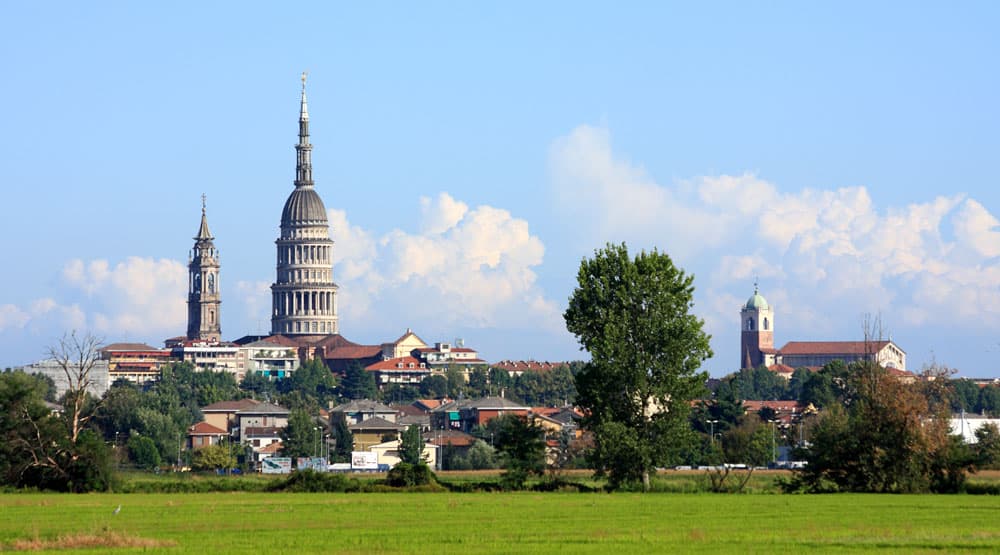
The city's skyline is famously dominated by the soaring dome of the Basilica of San Gaudenzio, a testament to 19th-century architectural ambition. Beyond this iconic landmark, Novara's historic core offers charming arcaded squares, a medieval castle, and a significant opera house, all contributing to its unique appeal.

History

From Roman Municipium to Modern Hub

Novara's roots stretch back to the 5th century BC, when it was likely a Ligurian settlement, later influenced by Gauls and Celts. It became the Roman municipium of Novaria around 89 BC, strategically positioned on the road between Vercellae (Vercelli) and Mediolanum (Milan). The city's rectangular street plan, still evident today, dates from this Roman period. After its destruction in 386 AD for supporting Valentinian II, Novara was rebuilt by Theodosius I, only to be sacked again by Radagaisus in 405 and Attila in 452.

During the early Middle Ages, Novara transitioned through Lombard duchy and Frankish countship. It gained the rights of a free imperial city, though it was conquered and destroyed by Henry V in 1110. Resilient, Novara joined the Lombard League in 1167. By the late 12th century, it fell under the protection of Milan, becoming a dominion of the powerful Visconti and later Sforza families.

The city witnessed significant conflicts, including the Battle of Novara in 1513, where Swiss mercenaries routed French troops, ending the French invasion of Italy in the War of the League of Cambrai. Ownership shifted through the Spanish, French, and Austrian Habsburgs, before passing to the House of Savoy in 1738. Following Napoleon's Italian campaign, Novara briefly became the capital of the Department of the Agogna before returning to Savoyard rule in 1814. The city played a role in the Risorgimento, the movement for Italian unification, notably as the site of the Battle of Novara in 1849, a defeat for the Sardinian army that ultimately spurred the unification process.

The 19th and 20th centuries brought dynamic industrial development, marked by railway connections and the establishment of a university. Novara's population grew significantly, reaching over 100,000 by 1981, solidifying its status as a major regional center.

What to see

Novara's historic center is a compact area, ideal for walking, where many of its key sights are found. The city's most recognizable landmark is the Basilica of San Gaudenzio, with its soaring 121-meter dome designed by Alessandro Antonelli, visible from across the plains. Do not miss the 18th-century bell tower by Benedetto Alfieri.

Adjacent to the basilica is the Novara Cathedral (Cattedrale di Santa Maria Assunta), a neoclassical edifice built over the remains of a Romanesque cathedral and a former temple to Jupiter. Inside, you will find Byzantine mosaics and rose-hued marble columns. Next door, the hexagonal Baptistery, dating from the 4th to 5th centuries, is the oldest building in Novara.

The Broletto, a complex of medieval buildings opposite the cathedral, was once the center of civil power. It now houses civic museums and art galleries. A short stroll leads to the Visconti-Sforza Castle, a partially restored 13th-century fortress that now hosts exhibitions and performances, surrounded by public gardens. The Teatro Coccia, a significant opera house, is another architectural highlight, known for its richly decorated interiors and excellent acoustics.

For a taste of local life, visit Piazza delle Erbe, a charming square with arcades that has hosted the city's vegetable market for centuries.

When to visit

The best times to visit Novara are spring and early summer, specifically from mid-April to mid-June, and also September. During these periods, the weather is mild and pleasant, ideal for exploring the city's historical sites and enjoying outdoor activities. While summer can be warm, with average daily highs above 76°F from June to September, it is also a good time for outdoor events. Be prepared for potential afternoon or evening thunderstorms in May and summer. Winters are generally cold, damp, and gray, with temperatures often around freezing.

Practical

Novara is well-connected and easily accessible. It has its own train station with frequent services to major cities like Milan, Turin, and Lake Maggiore. The city is also close to the A4 motorway, making it convenient to reach by car. Within the city, Novara is quite walkable, especially its historic center. Public transportation and bike rentals are also available for convenience.

The main tourist information office is located at Piazza Martiri della Libertà, 3. The local currency is the Euro. Italy uses Type C, F, and L electrical outlets, with a standard voltage of 230V and a frequency of 50Hz. Tipping is not mandatory but appreciated for good service. Many establishments accept credit cards, but it is always useful to carry some cash for smaller purchases.

Good to know
What is Novara known for?
Novara is known for the dome of the Basilica of San Gaudenzio, its surrounding rice fields, and its role as a significant transport hub in northwestern Italy.
How far is Novara from Milan and Turin?
Novara is approximately 50 kilometers (31 miles) from Milan and 95 kilometers (59 miles) from Turin.
What is the most important church in Novara?
The Basilica of San Gaudenzio is considered the most important church in Novara, famous for its impressive dome.
Is Novara a walkable city?
Yes, Novara is a walkable city, particularly its historic center, making it easy to explore on foot.
What local foods should I try in Novara?
When in Novara, consider trying local specialties such as Paniscia, a regional risotto, and Gorgonzola cheese.
When was the Novara Cathedral rebuilt?
The present neoclassical Novara Cathedral was designed by Alessandro Antonelli and built between 1863 and 1869.
Novara
From€9.00
No booking · activate anytime · 12h to walk it
Get the key to Novara