Koninklijk Paleis
Het Koninklijk Paleis, met zijn kenmerkende lichtroze façade, is meer dan alleen een koninklijke residentie. Het draagt een geheim in de taal die wordt gebruikt om het te beschrijven.
Volledig verhaal ontgrendeld in de tour
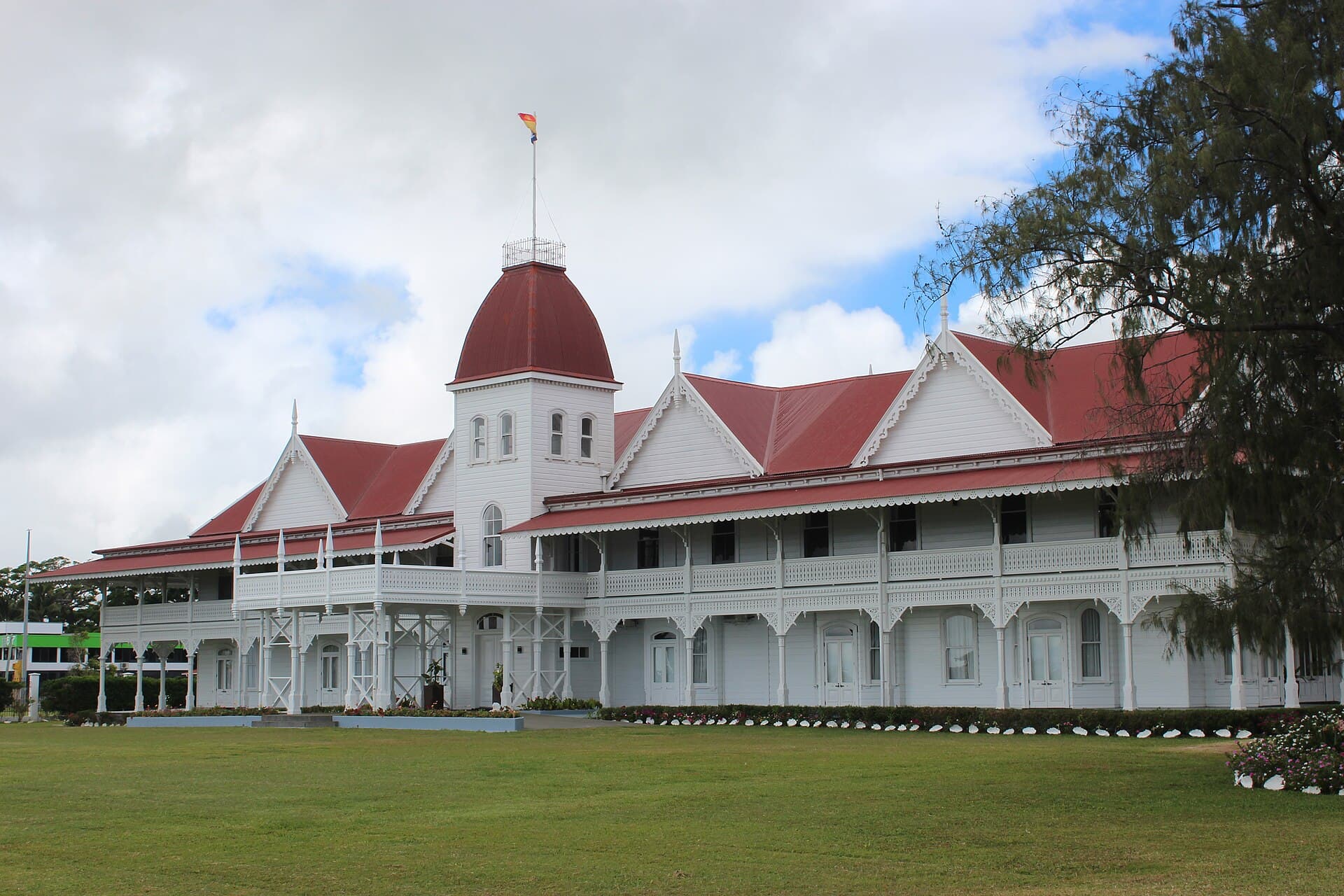 Uhooep / CC BY-SA 4.0, via Wikimedia Commons
Zelfgeleide audiowandeling door Nuku'alofa — GPS-route, offline afspelen, meeslepende vertelling in 32 talen.
“Waar oud Polynesisch erfgoed het levende erfgoed van een Pacifische monarchie ontmoet.”
Niet de ansichtkaarten. De verhalen die zelfs locals niet kennen — gefluisterd in je oor, precies waar ze gebeurden.
Het Koninklijk Paleis, met zijn kenmerkende lichtroze façade, is meer dan alleen een koninklijke residentie. Het draagt een geheim in de taal die wordt gebruikt om het te beschrijven.
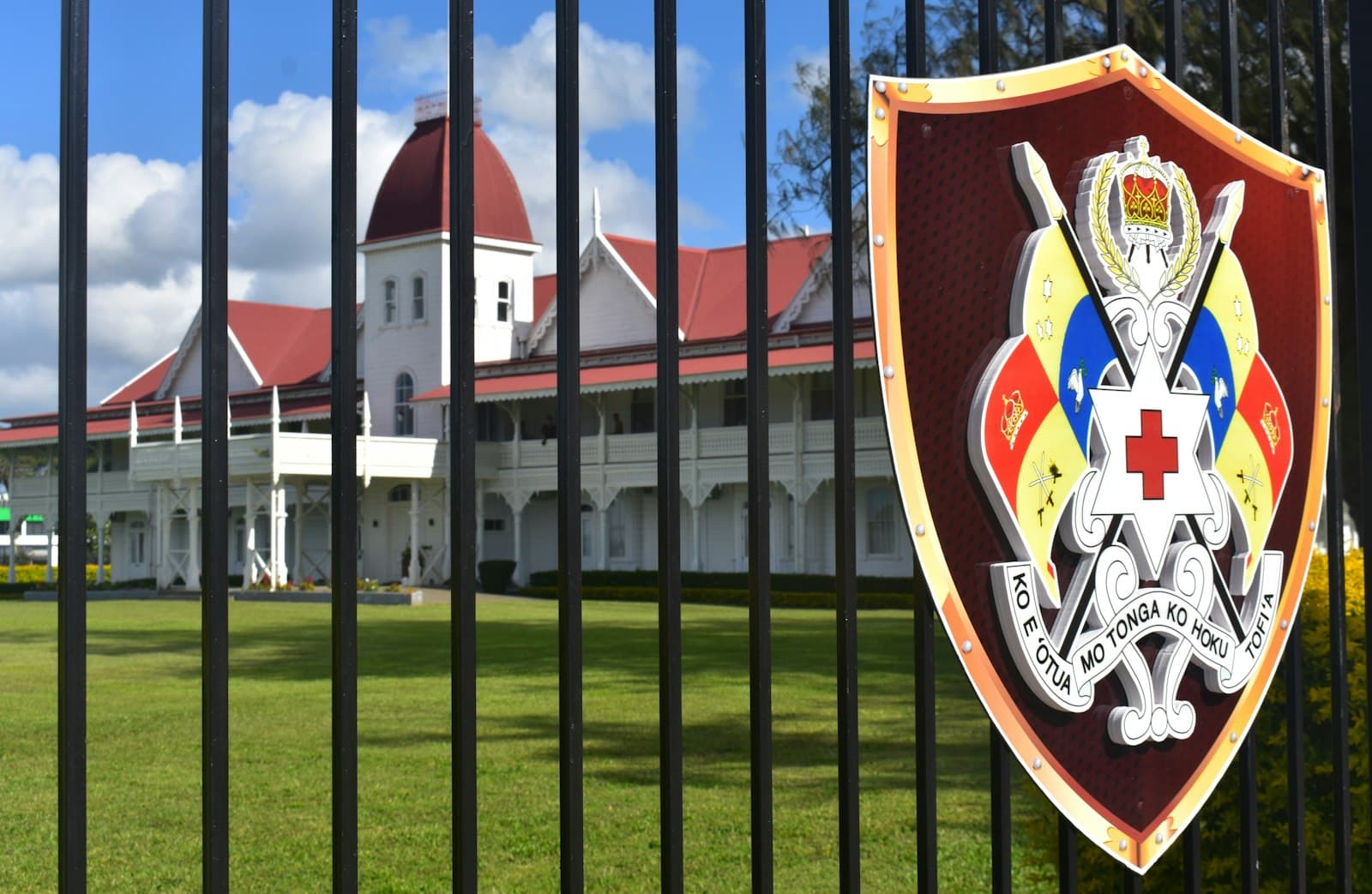
De omheining rond het Koninklijk Paleis was niet altijd het imposante hekwerk van nu. De oorspronkelijke vorm droeg een gewicht van traditie dat weinigen durfden te trotseren.
De naam 'Nuku'alofa' zelf draagt een poëtische betekenis die spreekt tot het hart van de Tonganse cultuur.
Ontdek elk geheim van Nuku'alofa
Elk adres, elke onthulling volledig — in je oor, precies waar het gebeurde.
Jij kiest je stops. Jij wandelt. De stem onthult wat de anderen missen.
Lume heeft een ingebouwde augmented-reality-gids. Houd je telefoon omhoog: de camera toont de straat voor je, met een oplichtende pijl over het echte beeld die altijd naar je volgende stop wijst — geen kaart om uit te puzzelen, geen verkeerde afslagen. Zoals alles in Lume werkt het volledig offline.
Nuku'alofa, de hoofdstad van het Koninkrijk Tonga, is een stad waar de zachte ritmes van de Zuidelijke Stille Oceaan samenkomen met de blijvende erfenis van Polynesië's laatst overgebleven constitutionele monarchie. Gelegen aan de noordkust van Tongatapu, het grootste eiland van de archipel, biedt Nuku'alofa een boeiende mix van traditionele Tonganse cultuur en een ontspannen, rustig tempo van leven. De naam, die poëtisch vertaald 'Woonplaats van Liefde' betekent, hint naar de warme gastvrijheid die bezoekers begroet.
Als het politieke, culturele en economische hart van de natie, dient Nuku'alofa als een actief centrum, maar behoudt het de charme van een grote stad in plaats van een bruisende metropool. De waterkant van de stad, met uitzicht op de koraaleilanden in de verte, biedt een schilderachtige achtergrond voor het dagelijks leven. Hier zijn oude tradities verweven met het weefsel van het moderne bestaan, wat een uniek inzicht biedt in een cultuur die met trots zijn onafhankelijkheid door de geschiedenis heen heeft behouden.
De geschiedenis van Tongatapu, het eiland waarop Nuku'alofa ligt, gaat terug tot minstens 900 voor Christus, met archeologisch bewijs dat wijst op vroege Polynesische nederzettingen door bekwame zeevaarders. Voordat Nuku'alofa prominent werd, verschoof de zetel van de Tonganse macht over het eiland. De eerste hoofdstad was in Toloa, gesticht door de legendarische eerste Tu'i Tonga, 'Aho'eitu. Later verhuisde de macht naar Heketa, nabij de Ha'amonga 'a Maui trilithon, en vervolgens, in de 13e eeuw, naar Lapaha in Mu'a. Mu'a bloeide eeuwenlang als de permanente thuisbasis en het centrum van de hoofse macht voor de Tu'i Tonga dynastie, bekend om zijn monumentale koninklijke tombes, of 'langi'.
Europees contact met Tongatapu begon in 1643 met de aankomst van de Nederlandse navigator Abel Tasman. Regelmatig contact met Europeanen vond echter pas een eeuw later plaats. Kapitein James Cook ankerde in 1777 in de baai van Nuku'alofa, hoewel hij de naam van de stad niet noteerde. De eerste schriftelijke vermelding van 'Noogollefa' (een vroege spelling van Nuku'alofa) verscheen in 1810 in een boek van een missionaris.
In de 19e eeuw vonden er aanzienlijke veranderingen plaats in Tonga met de komst van missionarissen en de eenwording van de eilanden onder Koning George Taufaʻahau Tupou I. Hij maakte Nuku'alofa in 1845 zijn machtscentrum, en de status ervan als hoofdstad werd formeel vastgelegd in de Grondwet van Tonga in 1875. De strategische ligging van Nuku'alofa met zijn beschutte haven maakte het tot een ideaal centrum voor administratie, handel en contact met de buitenwereld.
Vandaag de dag blijft Nuku'alofa het hart van Tonga's constitutionele monarchie, een zeldzaam onderscheid in de Stille Oceaan. Het Koninklijk Paleis, een opvallend houten gebouw met een rood dak, gebouwd tussen 1865 en 1867 (hoewel sommige bronnen aangeven dat het huidige paleis in 1918 werd gebouwd), staat als een centraal herkenningspunt en de officiële residentie van de Koning van Tonga. De stad heeft veel van zijn traditionele Polynesische cultuur behouden en vertoont tegelijkertijd tekenen van westerse invloed, een bewijs van zijn unieke geschiedenis van het handhaven van onafhankelijkheid.
Begin uw verkenning bij het Koninklijk Paleis, een sierlijk, lichtroze houten gebouw aan de waterkant. Hoewel het interieur niet open is voor het publiek, bieden de architectuur uit het koloniale tijdperk en de schilderachtige locatie een boeiende fotomoment en een glimp van Tonga's levende monarchie.
Een klein eindje verderop liggen de Koninklijke Tomben (Mala'ekula), de heilige rustplaats van de Tonganse monarchen, die een verbinding bieden met de lange koninklijke lijn van het koninkrijk.
Dompel u onder in het lokale leven op de Talamahu Markt, een levendig centrum voor verse producten, traditionele ambachten en lokale gerechten. Het is vooral levendig op zaterdagochtend.
Bezoek voor een diepere culturele ervaring de Centenary Church (Free Wesleyan Church of Tonga), een belangrijk religieus en architectonisch monument, waar vaak kooroefeningen en evenementen plaatsvinden. Buiten de stad kunt u de oude Ha'amonga 'a Maui Trilithon verkennen, vaak de 'Stonehenge van Tonga' genoemd, een mysterieuze stenen boog gebouwd rond 1200 na Christus.
Overweeg een culturele tour om traditionele demonstraties bij te wonen, zoals het maken van tapadoek, het weven van matten en een kava-ceremonie. Voor natuurwonderen bieden de Mapu'a Vaea Blowholes aan de kust een krachtig schouwspel van oceaankracht.
De beste tijd om Nuku'alofa te bezoeken voor activiteiten in warm weer is van eind mei tot eind oktober. Gedurende deze maanden zijn de temperaturen aangenaam, variërend van een gemiddelde lage temperatuur van 19°C in juli tot een gemiddelde hoge temperatuur van 29°C in februari, met koelere watertemperaturen van juli tot oktober. Augustus is bijzonder helder en minder benauwd. De regenachtigste maanden zijn doorgaans april, januari en februari, dus het vermijden hiervan kan zorgen voor zonnigere dagen.
De lokale valuta in Tonga is de Pa'anga (TOP). Hoewel grote valuta's zoals USD, AUD of NZD bij banken kunnen worden ingewisseld, is het raadzaam om wat lokale valuta te hebben voor kleinere aankopen, aangezien veel kleine winkels alleen contant geld accepteren. Tongan en Engels zijn de officiële talen. Fua'amotu International Airport (TBU) ligt op ongeveer 22 kilometer van Nuku'alofa. Taxi's zijn beschikbaar voor transport, en sommige lokale diensten kunnen helpen met luchthaventransfers en andere behoeften.
Bij het verkennen van Nuku'alofa, onthoud dat bescheidenheid in kleding wordt gewaardeerd, vooral bij het bezoeken van religieuze plaatsen; het bedekken van schouders en knieën is een teken van respect. Op zondagen zijn openbare activiteiten beperkt vanwege de constitutionele naleving van de Sabbat.
Nuku'alofa — Koreaans, Chinees, Hebreeuws en nog 29 talen, elke stop verteld door een moedertaalspreker. Het grootste taalaanbod van alle zelfgeleide audiotours.
Beschikbaar in: