Schloss Nyon
Die imposanten weißen Türme des Schlosses Nyon bergen ein überraschendes Geheimnis in ihren Mauern.
Die ganze Geschichte wird in der Tour freigeschaltet
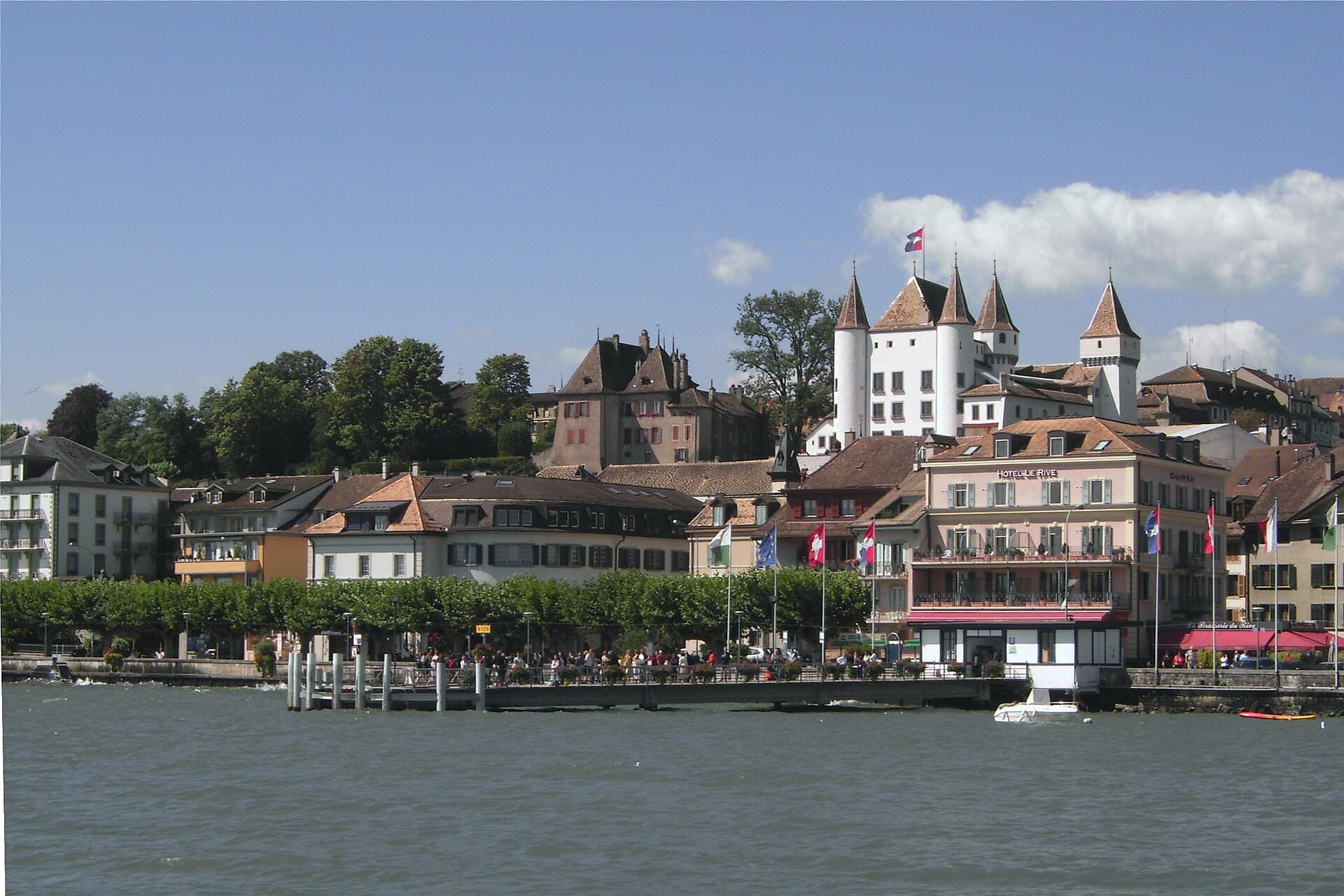 Chin tin tin / Public domain, via Wikimedia Commons
Selbstgeführte Audio-Walking-Tour durch Nyon — GPS-Route, Offline-Wiedergabe, erzählerische Narration in 32 Sprachen.
“Wo römische Echos auf die Gelassenheit des Sees treffen.”
Nicht die Postkarten. Die Geschichten, die selbst Einheimische nicht kennen – dir ins Ohr geflüstert, genau dort, wo sie geschahen.
Die imposanten weißen Türme des Schlosses Nyon bergen ein überraschendes Geheimnis in ihren Mauern.
Unter den modernen Straßen von Nyon liegt ein römisches Spektakel, das jahrhundertelang unentdeckt blieb.
Ein Spaziergang durch das Römische Museum von Nyon enthüllt mehr als nur antike Artefakte; er deckt eine Stadt auf, die auf Zeitschichten gebaut ist.
Entdecke jedes Geheimnis von Nyon
Jede Adresse, jede Enthüllung vollständig – in deinem Ohr, genau dort, wo es geschah.
Du wählst deine Stationen. Du gehst. Die Stimme enthüllt, was andere übersehen.


Deine selbstgeführte Audio-Tour durch Nyon ist bereit – wähle deine Sehenswürdigkeiten, deine Sprache und starte, sobald du ankommst.
KaufenLume enthält einen integrierten Augmented-Reality-Guide. Halten Sie Ihr Handy hoch: Die Kamera zeigt die Straße vor Ihnen, mit einem leuchtenden Pfeil über dem echten Bild, der immer auf Ihren nächsten Stopp zeigt — keine Karte zum Rätseln, keine falschen Abzweigungen. Wie alles bei Lume funktioniert es komplett offline.
Nyon, eine Stadt am Ufer des Genfersees im Kanton Waadt, Schweiz, bietet eine fesselnde Mischung aus römischer Geschichte, mittelalterlichem Charme und beeindruckender Naturschönheit. Nyon liegt etwa 25 Kilometer nordöstlich von Genf und gehört seit den 1970er Jahren zum größeren Metropolraum Genf. Seine strategische Lage zwischen den Jurabergen und dem Genfersee hat seine Identität geprägt und es zu einem bedeutenden historischen Zentrum der Region gemacht.
Der alte Stadtkern ist in eine Oberstadt, die auf römischen Ruinen auf einem Hügel erbaut wurde, und eine Unterstadt entlang des Sees unterteilt. Nyon lädt Besucher ein, durch seine steingepflasterten Straßen zu schlendern, historische Gebäude zu erkunden und den Blick auf den Genfersee und die fernen Alpen, einschließlich des Mont Blanc, zu genießen. Es ist ein Ort, an dem alte Geschichte noch immer freigelegt wird und wo die Vergangenheit nahtlos mit dem modernen Schweizer Leben verschmilzt.
Nyon ist auch als Hauptsitz der Union Europäischer Fußballverbände (UEFA) und der European Club Association (ECA) bekannt, was ihm eine bemerkenswerte Präsenz in der Sportwelt verleiht.
## Von der römischen Kolonie zur mittelalterlichen Festung Nyons Geschichte beginnt vor über 2.000 Jahren mit den Römern. Zwischen 50 und 44 v. Chr. gründete Julius Cäsar hier eine Veteranenkolonie und nannte sie Colonia Iulia Equestris. Das städtische Zentrum war als Noviodunum bekannt und wurde schnell zu einer der wichtigsten römischen Siedlungen in der heutigen Schweiz. Die Stadt wurde in einem schachbrettartigen Muster angelegt und verfügte über monumentale Bauwerke wie ein Forum, eine Basilika und ein Amphitheater.
Nach dem Niedergang der römischen Herrschaft um 400 n. Chr. ließ Nyons Bedeutung nach, da sich die regionale Aktivität nach Genf verlagerte. Römische Baumaterialien wurden für Neubauten wiederverwendet, darunter Teile des Tour César und der Porte Sainte-Marie in Nyon sowie Fundamente für die Kathedrale von Lausanne. Während der Karolingerzeit gehörte Nyon zur Grafschaft Genf. Mitte des 12. Jahrhunderts wurde von der Familie Cossonay-Prangins ein befestigtes Haus, der Vorläufer des Schlosses Nyon, erbaut.
## Unter savoyischer und bernischer Herrschaft 1293 übernahmen die Grafen von Savoyen die Kontrolle über Nyon und verwandelten das Schloss ab 1360 erheblich, indem sie zwei Türme am Seeufer und einen Innenhof hinzufügten. Jahrhundertelang diente Nyon als strategisch wichtiges Verwaltungszentrum für die Herzöge von Savoyen und kontrollierte Handelsrouten entlang des Genfersees. Seine Bedeutung war jedoch zweitrangig gegenüber größeren savoyischen Besitztümern.
Die Reformation brachte 1536 eine bedeutende Veränderung, als die Berner das Haus Savoyen aus Nyon vertrieben. Nyon ergab sich ohne Widerstand Bern und wurde ein Verwaltungszentrum für die Berner. Zwischen 1574 und 1583 gaben umfangreiche Bauarbeiten der bernischen Obervögte dem Schloss sein heutiges Aussehen. 1568 wurde ein Jahrmarkt eingerichtet, und Nyon blieb ein profitabler Zollposten für den Handel entlang des Genfersees sowie mit Frankreich und Italien.
## Modernes Nyon Nach der Waadtländer Revolution von 1798 wurde Nyon Teil des Kantons Léman in der Helvetischen Republik. Die Stadt kaufte das Schloss 1804 vom neu geschaffenen Kanton Waadt. Das Schloss beherbergte anschließend Gerichte, Stadtratssitzungen und Gefängnisse und nach 1888 das Stadtmuseum. 1781 wurde in Nyon eine Porzellanfabrik gegründet, die für ihre hochwertigen Produkte europäische Berühmtheit erlangte. Die Anbindung an das Eisenbahnnetz im Jahr 1858 kurbelte Handel und Entwicklung weiter an und verwandelte Nyon in ein beliebtes Wohngebiet. Heute lebt Nyon weiterhin seine vielschichtige Geschichte, während es eine lebendige Stadt am Genfersee ist.
Beginnen Sie Ihre Erkundung im Château de Nyon, einem beeindruckenden weißen Schloss mit fünf Türmen, das einen weiten Blick auf den Genfersee und die Juraberge bietet. Im Inneren entdecken Sie das Heimatmuseum und eine Sammlung von Nyon-Porzellan, das seit dem späten 18. Jahrhundert für seine Qualität bekannt ist.
Nur einen kurzen Spaziergang entfernt steht das Römische Museum (Musée Romain) auf den Fundamenten einer römischen Basilika aus dem ersten Jahrhundert. Hier können Sie in Nyons Vergangenheit als römische Kolonie Noviodunum eintauchen und Artefakte, Mosaike und Modelle betrachten, die das tägliche römische Leben veranschaulichen. Eine Kopie einer Julius-Cäsar-Statue steht ebenfalls in der Nähe.
Erkunden Sie das Römische Amphitheater, das 1996 entdeckt wurde und eines von nur acht solchen Monumenten in der Schweiz ist. Obwohl seine Außenmauern längst wiederverwendet wurden, ist die Arena selbst bemerkenswert gut erhalten.
Schlendern Sie durch die Altstadt von Nyon mit ihren steingepflasterten Straßen und Arkaden und entdecken Sie historische Gebäude und charmante Boutiquen. Steigen Sie hinunter zur Seepromenade, wo Sie sich entspannen und die Landschaft genießen können. Für eine einzigartige Perspektive sollten Sie eine Dampferfahrt auf dem Genfersee in Betracht ziehen, mit Stopps in Genf, Lausanne und Montreux.
Die beste Zeit für einen Besuch in Nyon für Aktivitäten bei warmem Wetter ist von Ende Juni bis Mitte September. In diesen Sommermonaten sind die Temperaturen angenehm und liegen im Durchschnitt bei 18–23 °C, was ideal für Entspannung am See und Festivals ist. Juli ist typischerweise der wärmste Monat mit einer Durchschnittstemperatur von 26 °C und dem klarsten Himmel. Frühling (März bis Mai) und Herbst (September bis November) bieten mildere Temperaturen, weniger Andrang und angenehme Bedingungen für Erkundungen, obwohl der Frühling regnerischer sein kann.
Nyon ist gut mit dem Zug erreichbar, mit regelmäßigen Verbindungen nach Genf und Lausanne. Der Bahnhof Nyon liegt zentral, etwa 0,3 Kilometer vom Stadtzentrum entfernt, und bietet Anschlüsse an lokale Busse. Die Transports publics de la région nyonnaise (TPN) betreibt ein Netzwerk von zehn Buslinien, darunter Stadtlinien innerhalb von Nyon und regionale Linien. Wenn Sie mit dem Auto anreisen, stehen am Bahnhof Nyon rund um die Uhr Parkplätze zur Verfügung.
Für diejenigen, die den Genfersee erkunden möchten, fahren häufig Fähren von Nyon ab und bieten malerische Fahrten zu anderen Städten wie Genf oder dem französischen Dorf Yvoire. Obwohl die Schweiz als teuer wahrgenommen werden kann, können Sie Kosten sparen, indem Sie eine Unterkunft mit Küche buchen und Lebensmittel in lokalen Supermärkten wie Migros kaufen.
Nyon — Koreanisch, Chinesisch, Hebräisch und 29 weitere Sprachen, jede Station von einer muttersprachlichen Stimme erzählt. Die größte Sprachauswahl aller selbstgeführten Audiotouren.
Verfügbar auf: