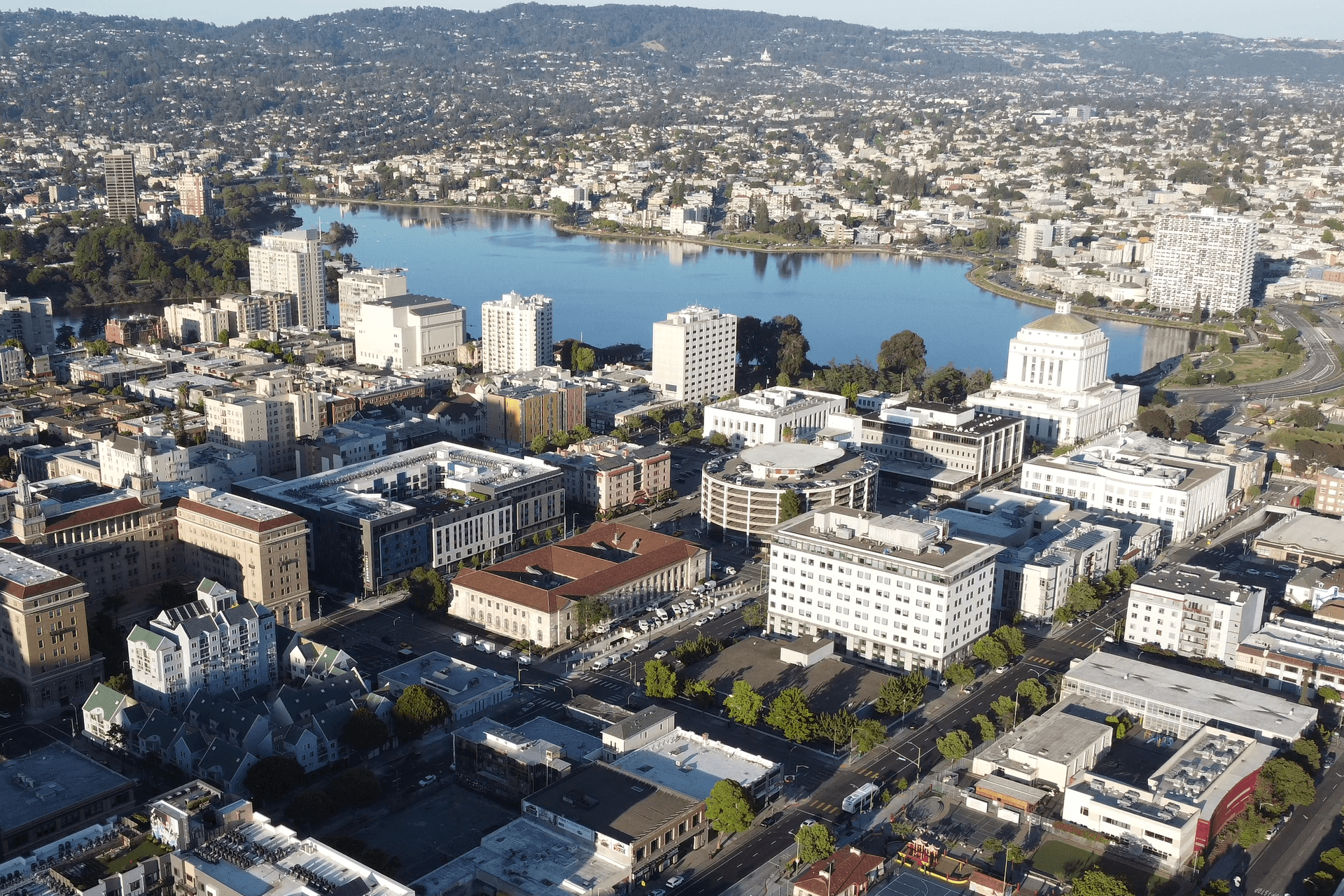
Oakland, United StatesRobert Hsiao / CC BY-SA 4.0, via Wikimedia Commons
US

Oakland

Across the bay, a city unfolds with unexpected narratives and creative energy.

The secrets of Oakland

Oakland, as no one tells it.

Not the postcards. The stories even locals don't know — whispered in your ear, right where they happened.

3 secrets below. Many more wait inside the tour.
Mountain View Cemetery

This expanse offers quiet reflection, striking architecture, and broad Bay Area vistas. Yet, for many locals, it serves another, less somber purpose.

Full story unlocks in the tour
Lake Merritt

This urban lake forms a central element of Oakland, a place for leisure and repose. Still, it holds a secret that might make you reconsider its calm surface.

Full story unlocks in the tour
Oakland's Street Art

Beyond the city's known murals and galleries, a more whimsical form of art can be discovered attached to surprising urban fixtures.

Full story unlocks in the tour
The full tour

Discover every secret of Oakland

Every address, every reveal in full — in your ear, right where it happened.

Get the key to Oakland

You pick your stops. You walk. The voice reveals what the others miss.

Choose your time

How long do you have in Oakland?

No tours available yet. Check back soon — we're preparing them.

About Oakland

The story of Oakland

Oakland, California, often viewed as a counterpoint to its more celebrated neighbor across the bay, possesses a distinct character, a rich array of cultures, and an inventive spirit. As the most populous city in the East Bay and the eighth largest in California, Oakland offers a compelling blend of urban dynamism and natural splendor. From its active port, one of the busiest on the West Coast, to its varied neighborhoods, Oakland provides an engaging experience for any traveler.

This dynamic city is a center of art, history, and natural sciences, with a mild Mediterranean climate that makes exploring its many facets enjoyable throughout the year. Whether you are drawn to its historic waterfront, its expansive redwood parks, or its thriving arts and food scenes, Oakland promises memorable experiences and a deeper understanding of California's diverse heritage.

History

From Ohlone Land to Gold Rush Expansion

The land that is now Oakland has been inhabited for millennia, with the Ohlone people dwelling in the coastal region of central and northern California as early as 2000 BCE. They were primarily hunter-gatherers who maintained a close connection to the natural environment. Spanish explorers first arrived in the East Bay in the 1770s, and by 1797, Spanish jurisdiction extended over the area.

Significant growth in the settlements that would become Oakland commenced with the Industrial Revolution and the California Gold Rush. In 1849, Oakland became a mainland staging point for those journeying between the Bay and the Sierra Foothills. The Town of Oakland was formally incorporated by the state legislature on May 4, 1852, though it was known as "Contra Costa" (meaning 'the other coast') before this. At the time, Oakland had a modest population of 75–100 inhabitants, two hotels, a wharf, and two warehouses, with mostly cattle trails for roads. Just two years later, on March 25, 1854, it re-incorporated as the City of Oakland.

The Railroad Era and Urban Development

The city's development accelerated with the arrival of the Transcontinental Railroad. In 1868, the Central Pacific Railroad constructed the Oakland Long Wharf, establishing Oakland as a major rail terminal and the western terminus of the Transcontinental Railroad in 1869. This brought prosperity and spurred the city's growth, with the commercial hub shifting northward along Broadway. By the late 1800s, Old Oakland, with its hotels, offices, shops, and restaurants, was a flourishing center.

In 1870, Lake Merritt was designated as the United States' first official wildlife refuge, a testament to the city's early appreciation for its natural resources. The early 1900s saw further expansion, including the digging of a shipping channel in 1902, which transformed the nearby town of Alameda into an island. The catastrophic 1906 San Francisco earthquake and fire led to a population surge in Oakland, as many displaced San Francisco residents relocated, doubling the city's population and improving its infrastructure. The 1920s brought another period of significant growth, with thousands of homes and many of the downtown's large office buildings constructed, reflecting the architectural styles of the era.

A Diverse and Evolving City

Oakland continued to grow throughout the 20th century, fueled by its port, shipyards, and manufacturing industries. During World War II, wartime industries and its role as a staging point for the war in the Pacific caused Oakland's population to increase by over 25% between 1940 and 1945. The city has evolved into a highly diverse metropolis, with nearly every ethnic group represented and over 125 languages spoken within its boundaries, making it one of the top five most diverse major cities in the U.S.

What to see

Oakland presents a varied collection of attractions, from natural landscapes to cultural institutions. Begin at Lake Merritt, a 155-acre natural saltwater lake and the nation's first official wildlife refuge, offering a 3.4-mile walking path and opportunities for recreation. Nearby, Children's Fairyland provides a whimsical experience that even inspired Walt Disney. For a measure of history and literature, explore Jack London Square, a waterfront area named after the celebrated author, featuring dining, shopping, and scenic views of the Oakland Estuary.

Immerse yourself in culture at the Oakland Museum of California (OMCA), which integrates art, history, and natural sciences, offering a comprehensive look at the state's heritage. For those captivated by the cosmos, the Chabot Space & Science Center provides an observatory, planetarium, and interactive exhibits. Nature enthusiasts can find solace in Redwood Regional Park and Joaquin Miller Park, home to some of the oldest redwoods in the Bay Area, with miles of trails. Do not overlook the Bonsai Garden at Lake Merritt, which houses the largest collection in California, including a daimyo oak cultivated since 1863. For a distinctive architectural experience, visit the Chapel of the Chimes, a Julia Morgan-designed columbarium with intricate stonework and secluded gardens.

When to visit

Oakland enjoys a mild, Mediterranean climate, making it a pleasant destination throughout the year. The warmest and driest period extends from June to September, with average high temperatures in the low to mid-70s Fahrenheit, making it suitable for outdoor activities. However, anticipate cooler temperatures in the evenings and mornings, and occasional fog. Spring (April, May) and October also offer favorable weather, often mild and sunny, though with a slightly higher chance of rain. For those seeking festivals and events, the summer months are particularly active. Winter months are cooler and wetter, but typically mild, and can offer lower rates on accommodations.

Practical

Oakland is well-connected and navigable with various transportation options. Oakland International Airport (OAK) is located on the east side of the San Francisco Bay and is easily accessible by car via I-880. Public transportation to and from OAK is convenient, with the Bay Area Rapid Transit (BART) offering a direct connector to the Coliseum Station, linking to the wider BART network across the Bay Area. BART trains connect OAK to downtown Oakland and downtown San Francisco. Within the city, AC Transit provides extensive bus service throughout Oakland and to neighboring communities like Berkeley, with connections to BART stations, Amtrak, and ferry terminals. The San Francisco Bay Ferry offers a scenic way to travel between Oakland, San Francisco, and Alameda. For those preferring to drive, Oakland is at the convergence of several major interstate highways. The city is also considered walkable, and options like biking and electric scooters are available.

Good to know
What is Oakland known for?
Oakland is recognized for its diverse culture, active arts and food scene, its port (one of the busiest on the West Coast), Lake Merritt (the nation's first wildlife refuge), and its redwood parks.
Is Oakland a walkable city?
Yes, Oakland was ranked the tenth most walkable city in the United States by Walk Score in 2011.
What is the best way to get around Oakland?
Oakland offers a variety of transportation options including BART (Bay Area Rapid Transit) for connections across the Bay Area and to the airport, AC Transit buses for local travel, and the San Francisco Bay Ferry for water crossings. The city is also walkable.
Are there redwoods in Oakland?
Yes, Oakland has two redwood parks, Redwood Regional Park and Joaquin Miller Park, which feature thousands of acres of redwood forest and miles of trails, with some trees dating back to the 1880s.
What unique natural feature does Oakland have?
Oakland is the only city in the world with a natural saltwater lake, Lake Merritt, entirely contained within its city boundaries.
Is Oakland International Airport (OAK) easy to access?
Yes, OAK is easily accessible by car via I-880 and by public transport using the BART connector from the Coliseum Station, which provides a direct link to the airport terminals.
Oakland
From€9.00
No booking · activate anytime · 12h to walk it
Get the key to Oakland