Basilica van Bom Jesus
Het wonderbaarlijk bewaarde lichaam van een vereerde heilige rust hier, maar een deel van hem ontbreekt, met een nogal ongebruikelijk verhaal achter het verdwijnen ervan.
Volledig verhaal ontgrendeld in de tour
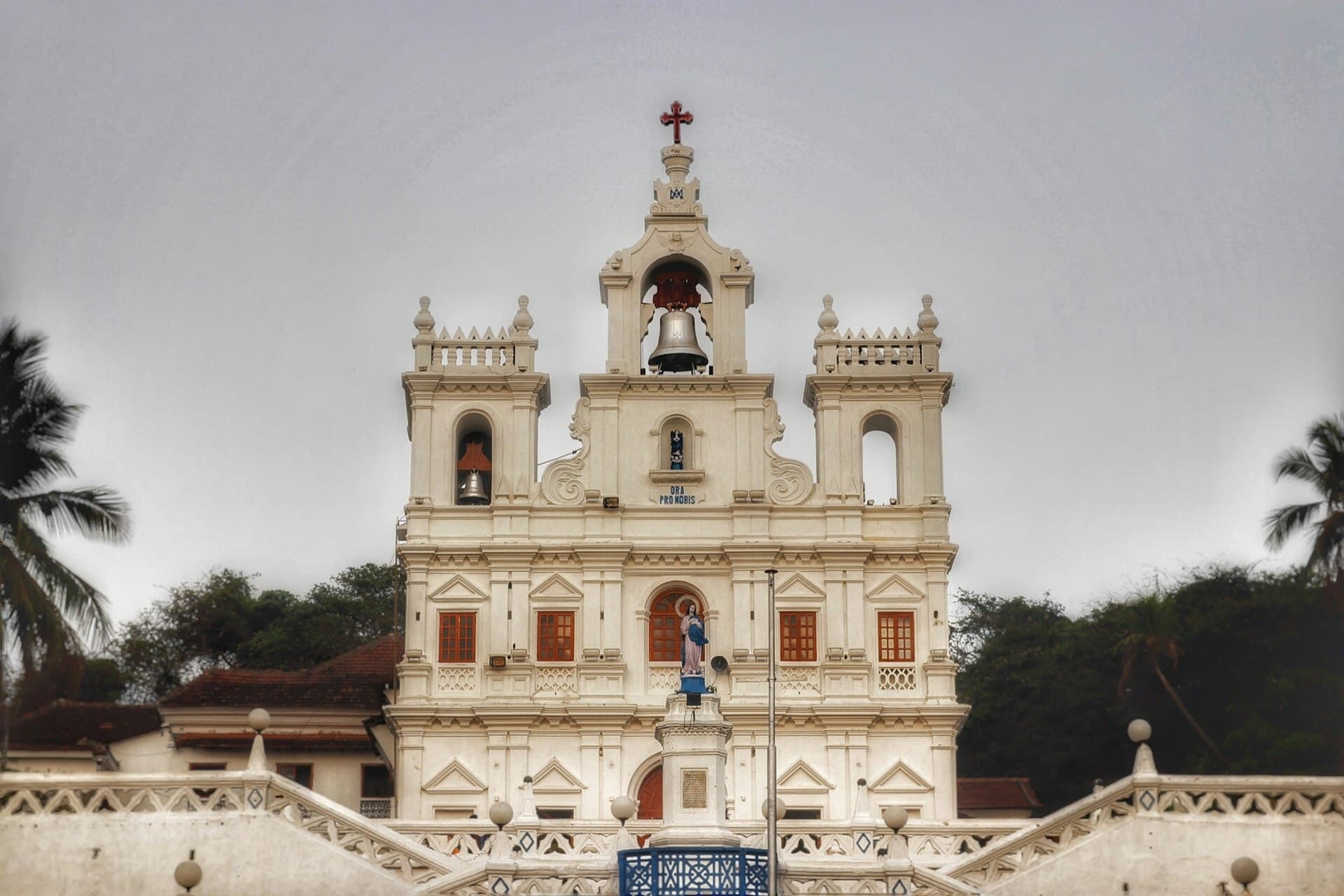 Photo: Anantha Krishna A / Unsplash
Zelfgeleide audiowandeling door Oud Goa — GPS-route, offline afspelen, meeslepende vertelling in 32 talen.
“Echo's van rijken, gefluister van geloof: de grandioze ruïnes van Oud Goa vertellen een vergeten verhaal.”
Niet de ansichtkaarten. De verhalen die zelfs locals niet kennen — gefluisterd in je oor, precies waar ze gebeurden.
Het wonderbaarlijk bewaarde lichaam van een vereerde heilige rust hier, maar een deel van hem ontbreekt, met een nogal ongebruikelijk verhaal achter het verdwijnen ervan.
Ooit onderdeel van een grootse kerk met vier torens, is slechts een fragment van één overgebleven, een dramatische silhouet tegen de hemel.
De naam 'Old Goa' zelf is een relatief recente uitvinding, bedacht om het te onderscheiden van een nieuwere hoofdstad.
Ontdek elk geheim van Oud Goa
Elk adres, elke onthulling volledig — in je oor, precies waar het gebeurde.
Jij kiest je stops. Jij wandelt. De stem onthult wat de anderen missen.


Je zelfgeleide audiotour van Oud Goa is klaar — kies je bezienswaardigheden, kies je taal en start zodra je aankomt.
KopenLume heeft een ingebouwde augmented-reality-gids. Houd je telefoon omhoog: de camera toont de straat voor je, met een oplichtende pijl over het echte beeld die altijd naar je volgende stop wijst — geen kaart om uit te puzzelen, geen verkeerde afslagen. Zoals alles in Lume werkt het volledig offline.
Old Goa, ook bekend als Velha Goa, is een historische plek aan de zuidelijke oevers van de Mandovi-rivier in Noord-Goa, India. Ooit de weelderige hoofdstad van Portugees-Indië, verdiende het bijnamen als 'Goa Dourada' (Gouden Goa) en zelfs 'Rome van het Oosten' vanwege zijn talrijke kerken en uitgestrekte pleinen. Tegenwoordig ontvouwt deze UNESCO Werelderfgoedsite zich als een boeiend openluchtmuseum, waar de blijvende overblijfselen van een machtig koloniaal verleden oprijzen te midden van tropische palmbomen.
Het verkennen van Old Goa biedt een fascinerende reis door eeuwen van verweven Indiase en Portugese geschiedenis. De stad, hoewel grotendeels verlaten in de 18e eeuw vanwege verwoestende plagen, blijft bezoekers trekken met zijn indrukwekkende barokke architectuur, ingewikkelde altaardecoraties en eeuwenoude schilderijen. Het dient als een aangrijpende herinnering aan een tijd waarin het een belangrijk mondiaal handelscentrum en een significant centrum voor christelijking in het Oosten was.
## Van het Sultanaat van Bijapur tot Portugese Pracht De oorsprong van Old Goa gaat terug tot de 15e eeuw, toen de heersers van het Sultanaat van Bijapur het vestigden als een haven aan de Mandovi-rivier. Het diende als de tweede hoofdstad van de Adil Shahi-dynastie en was versterkt met een gracht, met daarin het paleis van de shah, moskeeën en tempels.
In 1510 veroverden de Portugezen, onder leiding van Afonso de Albuquerque, de stad op de koningen van Bijapur en vestigden deze als het administratieve centrum van Portugees-Indië. Onder Portugees bewind bloeide Old Goa op en werd het in de 16e en 17e eeuw een van de rijkste steden van Azië, met een bevolking die naar verluidt opliep tot 200.000 mensen. Het functioneerde als een vitale hub voor de specerijenhandel, die de Portugese Oost-Indië verbond met de rest van de wereld.
In het midden van de 16e eeuw transformeerde Velha Goa tot een cruciaal centrum voor christelijking in het Oosten, met verschillende religieuze ordes die er hun hoofdkwartieren vestigden. Grote kerken, kloosters, scholen en ziekenhuizen werden gebouwd, waarvan vele Europese architectonische invloeden vertoonden. De architectonische pracht en commerciële macht van de stad konden wedijveren met grote Europese steden uit die tijd.
## Verval en Verlating Ondanks zijn welvaart kende Old Goa een tragisch verval. De stad, gebouwd op ingepolderd moerasland, was kwetsbaar voor epidemieën van malaria, cholera en tyfus. Herhaalde uitbraken, met name een verwoestende cholera-epidemie in 1535 en latere plagen in de 18e eeuw, reduceerden de bevolking drastisch. Tegen 1695 was de bevolking gedaald tot 20.000, en verder tot 1.600 in 1775.
Vanwege deze gezondheidscrises werd de residentie van de onderkoning in 1759 overgebracht naar Panjim (Nova Goa), en Old Goa werd in 1843 officieel verlaten als hoofdstad. De eens zo bloeiende stad transformeerde in de verzameling historische gebouwen die vandaag de dag te zien zijn, een getuigenis van zijn dramatische verleden.
Old Goa biedt een schat aan historische monumenten, voornamelijk zijn indrukwekkende kerken en kloosters, waarvan vele UNESCO Werelderfgoedsites zijn. Begin bij de Basilica van Bom Jesus, een groots barok bouwwerk uit de vroege jaren 1600 dat de vereerde resten van St. Franciscus Xaverius herbergt, wat het een belangrijk bedevaartsoord maakt. Aan de overkant van het plein staat de majestueuze Sé Kathedraal, een van de grootste kerken van Azië, gewijd aan St. Catharina van Alexandrië en de thuisbasis van de beroemde 'Gouden Klok'.
Verken de Kerk van St. Franciscus van Assisi, bekend om zijn ingewikkelde altaren en een verzameling wapenschilden. Mis de dramatische ruïnes van de St. Augustinus Toren niet, waarvan slechts de helft van een van de oorspronkelijke vier torens overeind staat, wat een glimp biedt van zijn vroegere grandeur. De Kerk van St. Cajetanus, gemodelleerd naar de Sint-Pietersbasiliek in Rome, heeft een kenmerkende koepel en indrukwekkende interieurs. Voor een panoramisch uitzicht over Old Goa en de Mandovi-rivier, bezoek de Kerk van Onze Lieve Vrouw van de Berg. Het Archeologisch Museum van Goa biedt verder inzicht in de geschiedenis van de regio met artefacten, schilderijen van onderkoningen en oude sculpturen.
De ideale tijd om Old Goa te bezoeken is tijdens het droge seizoen, van november tot maart. Gedurende deze maanden zijn de temperaturen comfortabel, variërend van 20°C tot 32°C, met een lage luchtvochtigheid en minimale regenval, waardoor het perfect is om de buitenlocaties te verkennen. Deze periode valt ook samen met diverse festivals en evenementen, waaronder het Feest van St. Franciscus Xaverius in december. Hoewel april en mei heter zijn, brengt het moessonseizoen van juni tot september weelderig groen en minder drukte, wat een andere, meer serene ervaring biedt voor natuurliefhebbers.
Old Goa ligt ongeveer 10 tot 11 kilometer ten oosten van Panaji, de huidige hoofdstad van de staat. U kunt Old Goa bereiken met openbare bussen vanuit Panaji of Ponda, auto-riksja's of taxi's. Bij een bezoek aan de religieuze locaties is het belangrijk om respectvol gekleed te gaan, waarbij uw knieën en schouders bedekt zijn. Veel locaties liggen op loopafstand van elkaar, waardoor het een ideale bestemming is voor een halve of hele dagtrip. Overweeg deel te nemen aan een begeleide erfgoedwandeling om meer te leren over de verhalen en geschiedenis achter de architectuur. Voor een unieke ervaring, verken het nabijgelegen eiland Divar via een veerboottocht.
Oud Goa — Koreaans, Chinees, Hebreeuws en nog 29 talen, elke stop verteld door een moedertaalspreker. Het grootste taalaanbod van alle zelfgeleide audiotours.
Beschikbaar in: