Le Mur des Six Monolithes
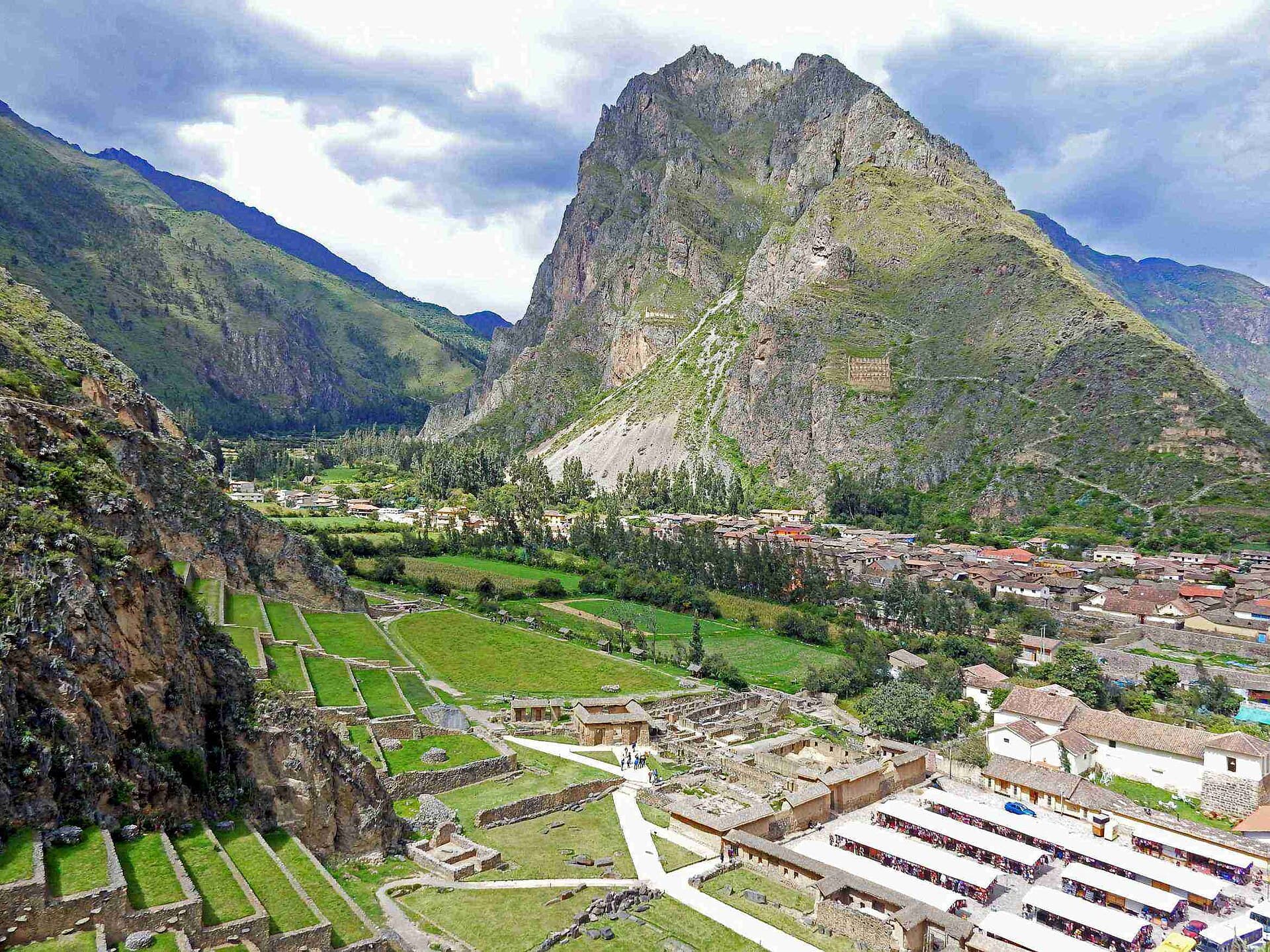
La caractéristique la plus frappante du Temple du Soleil d'Ollantaytambo est un mur de six pierres massives, taillées avec précision, pourtant le temple n'a jamais été achevé.
L'histoire complète se débloque dans le tour
 FLASHPACKER TRAVELGUIDE / CC BY-SA 2.0, via Wikimedia Commons
Visite audio autoguidée de Ollantaytambo — parcours GPS à pied, lecture hors ligne, narration en 32 langues.
“Là où les pierres ancestrales murmurent la grandeur de l'empire et la détermination de la résistance.”
Pas les cartes postales. Les histoires que même les habitants ignorent — soufflées à l'oreille, là où elles se sont passées.
La caractéristique la plus frappante du Temple du Soleil d'Ollantaytambo est un mur de six pierres massives, taillées avec précision, pourtant le temple n'a jamais été achevé.
En hauteur sur la montagne, face aux ruines principales d'Ollantaytambo, on peut apercevoir d'anciennes structures en pierre qui ressemblent à de petites maisons accrochées à la falaise.
Regardez attentivement le flanc de la montagne au-dessus d'Ollantaytambo, et vous pourriez discerner un colossal visage sculpté veillant sur la vallée.
Découvrez tous les secrets de Ollantaytambo
Chaque adresse, chaque révélation en entier — dans ton oreille, là où elle s'est passée.
Tu choisis tes lieux. Tu marches. La voix te révèle ce que les autres ignorent.


Lume intègre un guide en réalité augmentée. Levez votre téléphone : sa caméra montre la rue devant vous, avec une flèche lumineuse posée sur l'image réelle qui pointe toujours vers votre prochain arrêt — aucune carte à déchiffrer, aucun mauvais virage. Comme tout dans Lume, ça fonctionne entièrement hors-ligne.
Ollantaytambo, affectueusement surnommée « Ollanta » par ses habitants, est une ville et un site archéologique inca situé dans la Vallée Sacrée du Pérou. Nichée à une altitude de 2 792 mètres (9 160 pieds) au-dessus du niveau de la mer, elle sert de passage crucial entre Cusco et le Machu Picchu. Bien plus qu'un simple point de transit, Ollantaytambo est un témoignage vivant de la civilisation inca, où l'architecture ancienne et les rythmes de la vie quotidienne s'entremêlent.
Les rues étroites pavées de pierres de la ville et son plan urbain inca original offrent un aperçu unique d'une époque révolue. C'est un lieu où les sons du passé résonnent dans chaque pierre, et où les traditions continuent de façonner le présent. L'emplacement stratégique d'Ollantaytambo, au confluent des rivières Patakancha et Urubamba, en a fait un centre administratif, agricole, religieux et militaire important pour l'Empire inca.
Les origines d'Ollantaytambo remontent à 3 500 ans, avec des preuves de colonies de la civilisation Huari précédant les Incas. Cependant, c'est au milieu du XVe siècle qu'Ollantaytambo a véritablement prospéré sous l'empereur inca Pachacuti. Il a conquis la région, rasé une ville préexistante et l'a transformée en un domaine royal, avec un centre cérémoniel et une forteresse militaire. La position stratégique de la ville, au confluent de deux rivières, en faisait un point de contrôle vital pour l'accès à la Vallée Sacrée.
Pachacuti a entrepris de vastes projets de terrasses et d'irrigation dans la vallée de l'Urubamba, la ville offrant un logement à la noblesse inca et les terrasses étant cultivées par ses serviteurs. La connaissance hydraulique avancée des Incas est évidente dans le système complexe de canaux et de fontaines qui surprend encore les chercheurs aujourd'hui. Le site revêtait également une grande importance religieuse, la forteresse servant également de lieu de culte. Le Temple du Soleil inachevé, dédié à Inti, le dieu inca du soleil, est un excellent exemple de leur maîtrise de la taille de la pierre et de leur orientation cérémonielle.
Pendant la conquête espagnole au XVIe siècle, Ollantaytambo est devenue un symbole de la résistance inca. Manco Inca Yupanqui, chef de la résistance inca, a fortifié la ville et ses abords, utilisant stratégiquement ses terrasses et ses murs escarpés comme défense contre les Espagnols. En 1537, Manco Inca a remporté l'une des rares victoires incas contre les Espagnols à Ollantaytambo, en inondant la plaine sous la forteresse et en bloquant leur avancée. Malgré cette victoire, Manco Inca s'est finalement retiré plus profondément dans la jungle à Vilcabamba, et Ollantaytambo est tombée sous le contrôle espagnol, devenant une encomienda accordée à Hernando Pizarro. La ville est cependant restée habitée, ses habitations précolombiennes partageant désormais l'espace avec des structures coloniales et contemporaines, racontant une histoire superposée de son passé durable.
Ollantaytambo offre une multitude de sites à explorer, mêlant ruines antiques et ville vivante. L'attraction principale est le Site archéologique d'Ollantaytambo, une construction inca majeure dans la Vallée Sacrée. Ici, vous pouvez gravir des terrasses escarpées, vous émerveiller devant la précision de la maçonnerie du Temple du Soleil et observer des canaux d'eau complexes qui coulent encore dans la ville. Prévoyez 1,5 à 2 heures pour explorer les terrasses, les temples et les points de vue.
De l'autre côté de la rivière Patakancha, sur le versant opposé, se trouve le Site archéologique de Pinkuylluna, un complexe plus petit mais tout aussi intrigant de greniers incas. L'entrée de ce site est gratuite et offre des vues imprenables sur Ollantaytambo et son site archéologique principal. La randonnée est courte mais raide, prenant environ une heure aller-retour.
Au-delà des ruines majeures, prenez le temps de flâner dans la ville d'Ollantaytambo elle-même. Ses rues étroites pavées de pierres et ses maisons traditionnelles de style inca, dont beaucoup sont construites sur des fondations incas originales, sont encore habitées aujourd'hui. Vous trouverez d'anciens canaux d'eau coulant à travers les ruelles, témoignage de l'ingénierie inca. La Plaza de Armas est un point central, entourée de cafés et de boutiques. Pour un aperçu de la vie locale, visitez le Mercado de Abastos derrière la Plaza de Armas, où les habitants achètent des produits frais, des céréales et des plats préparés. Ollantaytambo est également un point de départ principal pour les trains vers le Machu Picchu, faisant du trajet en train panoramique une partie de l'expérience.
Le meilleur moment pour visiter Ollantaytambo est pendant la saison sèche, qui s'étend d'avril ou mai à octobre. Pendant ces mois, vous pouvez vous attendre à des journées ensoleillées et à un ciel dégagé, idéal pour explorer les sites archéologiques et profiter des vues imprenables. Bien que de juin à septembre soit la période la plus sèche, c'est aussi la plus fréquentée. Visiter en avril ou octobre offre un bon équilibre entre un temps agréable et moins de touristes. Même pendant la saison sèche, les matins et les soirs peuvent être frais, il est donc conseillé de prévoir des couches de vêtements. La saison des pluies, de novembre à mars, apporte des précipitations plus fréquentes, mais les paysages sont luxuriants et verts, et les foules de touristes sont considérablement plus petites.
Ollantaytambo est située à environ 72 km (45 miles) au nord-ouest de Cusco. Vous pouvez y accéder en bus, en taxi ou lors d'une visite guidée depuis Cusco, le trajet durant environ 1,5 à 2,5 heures. Pour ceux qui se dirigent vers le Machu Picchu, Ollantaytambo est un point de départ de train clé. Il est recommandé de prendre le train d'Ollantaytambo au Machu Picchu, en prévoyant du temps pour explorer la ville avant ou après votre visite. La ville se trouve à une altitude de 2 792 mètres (9 160 pieds), ce qui est plus bas que Cusco mais suffisamment élevé pour nécessiter une acclimatation. Passez au moins une journée complète, ou idéalement trois à cinq jours, à Ollantaytambo pour vous adapter à l'altitude et explorer les environs. L'entrée au site archéologique principal est incluse dans le Boleto Turístico del Cusco, un billet général qui couvre plusieurs sites de la Vallée Sacrée. Portez des chaussures solides avec une bonne adhérence, car les marches des ruines peuvent être raides et inégales. Apportez des soles péruviens (espèces) pour les frais d'entrée, les collations et les souvenirs, car l'argent liquide est souvent préféré.
Ollantaytambo en coréen, en chinois ou en hébreu — et dans 29 autres langues, chaque étape narrée par une voix native. La plus large gamme de langues de tous les audioguides autoguidés.
Disponible en :