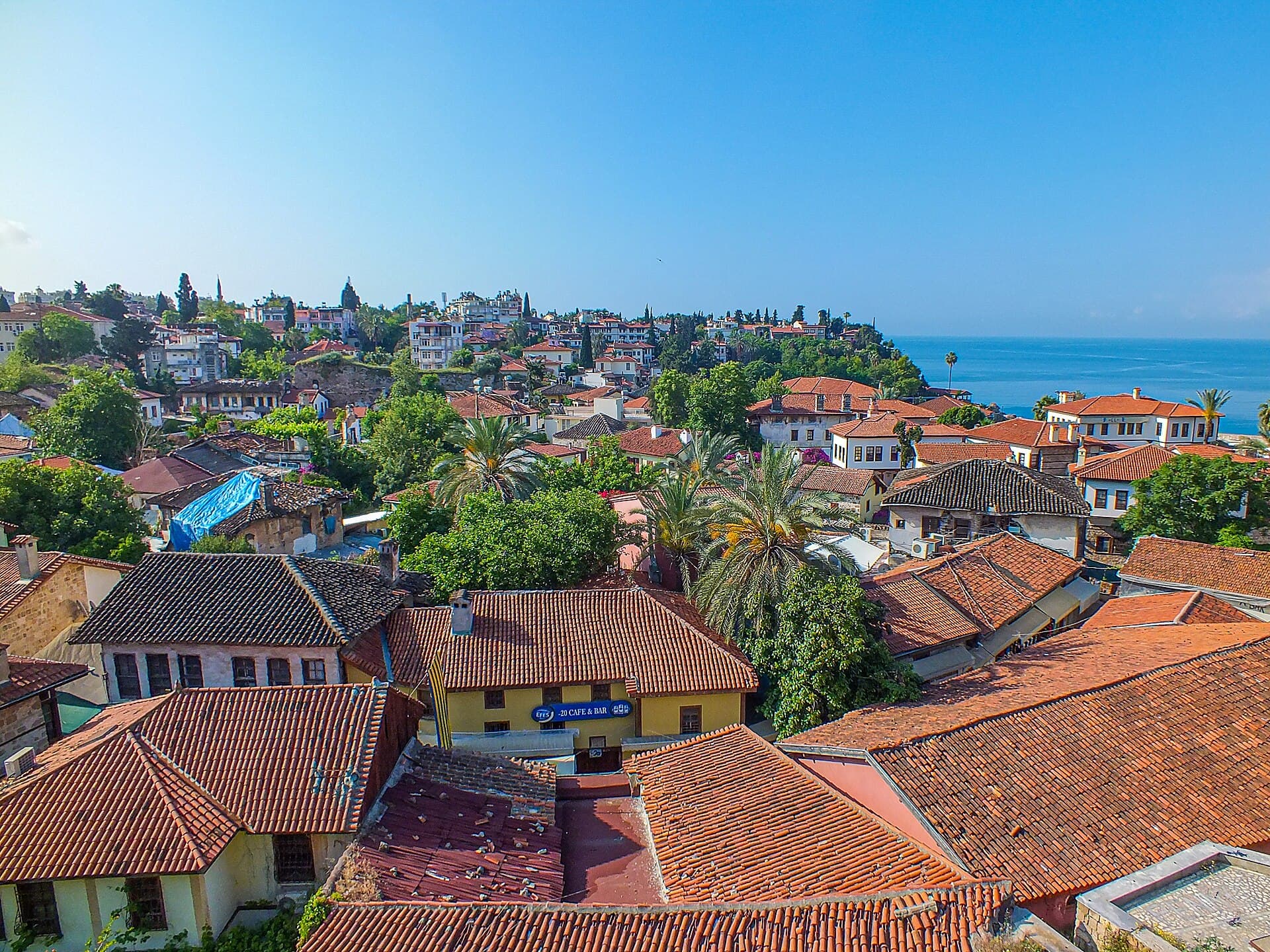
The main thoroughfare of Olympos isn't paved stone, but something far more fluid.
Cobija / cc0, via Wikimedia CommonsOlympos
Self-guided audio walking tour of Olympos — GPS route, offline playback, story-driven narration in 32 languages.
“Where ancient ruins meet bohemian dreams by the turquoise sea.”
Olympos, as no one tells it.
Not the postcards. The stories even locals don't know — whispered in your ear, right where they happened.
A prominent tomb in Olympos tells a story that's more intriguing than the inscription lets on.
The mountain above Olympos has been burning for millennia, inspiring myths of fire-breathing beasts.
Discover every secret of Olympos
Every address, every reveal in full — in your ear, right where it happened.
You pick your stops. You walk. The voice reveals what the others miss.


How long do you have in Olympos?
Your self-guided audio tour of Olympos is ready — pick your landmarks, choose your language, and start the moment you arrive.
BuyThe story of Olympos
Olympos, Turkey, offers a singular blend of ancient history, striking natural beauty, and a distinctly relaxed atmosphere. Situated on Turkey's Mediterranean coast in the Kumluca district of Antalya, it's a destination that invites you to slow down and explore. The ancient city's ruins are interwoven with lush vegetation, creating an immersive historical experience that feels both wild and serene.
Beyond the archaeological wonders, Olympos is celebrated for its untouched pebble beach, framed by cliffs and abundant flora, ideal for swimming and sunbathing in clear waters. The area is also a protected nesting ground for loggerhead sea turtles, adding to its ecological significance. With a bohemian spirit and a focus on nature and authentic experiences, Olympos stands apart from more bustling resorts, appealing to those who appreciate a quieter, more reflective escape.
## The Lycian Roots and Pirate Reign Olympos was founded in the 4th century BC by the Lycians, a powerful civilization that inhabited the southwestern coast of Anatolia. The name Olympos, meaning "city of the gods," was shared by several mountains across the ancient Aegean and Anatolian world. It quickly rose to prominence as one of the six major cities of the Lycian League, a confederation of independent city-states. The city's strategic location with three natural harbors made it an important hub for coastal trade.
By the 2nd century BC, Olympos reached its peak, but it also became a notorious haven for pirates. Led by the infamous Zenicetes, these Cilician pirates used Olympos as their base to raid Mediterranean ships and towns, even minting their own coins. This era of piracy came to an end in 78 BC when the Roman general Servilius Isauricus captured and executed Zenicetes, annexing Olympos to the Roman Empire.
## Roman Flourishing and Gradual Decline Under Roman rule, Olympos continued to thrive. The city became a center for the Mitras Cult, an Eastern-based religion worshipping the sun god Mitras, with a secret temple where rituals were performed. Emperor Hadrian even visited the city in 131 AD, a testament to its importance. Many of the ruins visible today, including a large Roman temple, a theater, and Roman bathhouses, date from this period. The city also served as the seat of an early bishopric in the Early Christian Period, maintaining its significance despite pirate attacks from the 4th century BC.
However, Olympos gradually declined after the 5th or 6th century AD, eventually being abandoned entirely by the 15th century. It was later rediscovered by archaeologists in the 19th century. Today, Olympos is a protected archaeological site, attracting thousands of visitors who come to admire its ancient ruins and natural beauty. The site is currently on the UNESCO Tentative List, recognized for its outstanding universal value.
The ancient city of Olympos offers a unique exploration where history is intertwined with nature. Wander through the atmospheric ruins, many partially reclaimed by lush greenery, giving the site a mysterious and immersive feel. You can discover remnants of an ancient theater, a Roman bathhouse, and a large necropolis with numerous tombs. A notable highlight is the huge stone entrance gate dedicated to the Roman Emperor Marcus Aurelius around 172 AD.
Beyond the ruins, Olympos Beach is a pebble expanse ideal for swimming and sunbathing in the clear Mediterranean waters. It's also a protected nesting area for loggerhead sea turtles (Caretta caretta), so visitors are encouraged to be mindful during nesting season. For a mystical experience, hike to Chimaera (Yanartaş), where eternal flames emerge from the rocky slopes, best visited after sunset for a mesmerizing show. The Lycian Way, a renowned long-distance hiking trail, also passes through Olympos, offering scenic routes for avid hikers. Sea kayaking, boat trips to secluded coves, and rock climbing are also popular activities.
The best times to visit Olympos are during the shoulder seasons of spring (April-May) and autumn (September-October). During these months, temperatures are pleasant for exploring the ancient city and hiking, and the crowds are thinner than in midsummer. Spring brings blooming wildflowers and fresh forests, while in autumn, the sea remains warm well into October, making swimming enjoyable.
Summer (June-August) is ideal for beach lovers, though it can be intensely hot and more crowded. Winter offers a peaceful retreat with mild temperatures, but it is the wettest season, and some accommodations may be closed.
Olympos is located in the Kumluca district of Antalya, on Turkey's southwestern coast. The most convenient way to reach Olympos is via Antalya. You can take a bus from Antalya's main terminal (Otogar) to the Olympos junction on the D400 highway, then transfer to shared minibuses (dolmuş) that continue to the beach and village area. If driving, take the D400 highway from Antalya towards Kumluca, following signs for Olympos. The journey from Antalya takes approximately 1.5 hours by car.
Accommodation in Olympos often features a bohemian spirit, with many visitors opting for treehouse bungalows or wooden houses in pine and orange groves. These eco-friendly options are typically located near the beach and ancient city. There are no large resorts or luxury hotels due to the area's protected status. The entrance fee for the ancient city is 35 Turkish Lira per person.
- How do I get to Olympos from Antalya?
- You can take a bus from Antalya's main bus terminal to the Olympos junction on the D400 highway. From there, shared minibuses (dolmuş) will take you down to the beach and village area.
- What kind of accommodation is available in Olympos?
- Olympos is known for its bohemian atmosphere and offers unique accommodations like treehouse bungalows and wooden houses, often situated in natural settings such as pine forests and orange groves.
- Is Olympos Beach suitable for swimming?
- Yes, Olympos Beach is a pebble beach with clear, turquoise waters, ideal for swimming and sunbathing. However, it's also a protected nesting ground for loggerhead sea turtles, so visitors should be mindful during nesting season.
- What are the Chimaera flames?
- The Chimaera (Yanartaş) refers to eternal flames that naturally emerge from the rocky slopes above Olympos, fueled by methane gas. They are a mystical sight, especially captivating after sunset.
- Can I hike in Olympos?
- Yes, Olympos is a popular destination for hikers. The famous Lycian Way, a long-distance trekking trail, passes through the area, offering various routes through forests and scenic viewpoints.
- Are there any restaurants in Olympos?
- Yes, Olympos has restaurants that focus on simple Turkish dishes, providing a relaxed and social dining experience.