Lungomare-Promenade
Der 12 Kilometer lange Küstenweg, offiziell Franz-Joseph-I.-Promenade genannt, birgt ein Geheimnis über seine Entstehung, das über öffentliche Arbeiten hinausgeht.
Die ganze Geschichte wird in der Tour freigeschaltet
 ChrisV / CC BY 3.0, via Wikimedia Commons
Selbstgeführte Audio-Walking-Tour durch Opatija — GPS-Route, Offline-Wiedergabe, erzählerische Narration in 32 Sprachen.
“Wo die Adria auf die österreichisch-ungarische Pracht trifft.”
Nicht die Postkarten. Die Geschichten, die selbst Einheimische nicht kennen – dir ins Ohr geflüstert, genau dort, wo sie geschahen.
Der 12 Kilometer lange Küstenweg, offiziell Franz-Joseph-I.-Promenade genannt, birgt ein Geheimnis über seine Entstehung, das über öffentliche Arbeiten hinausgeht.
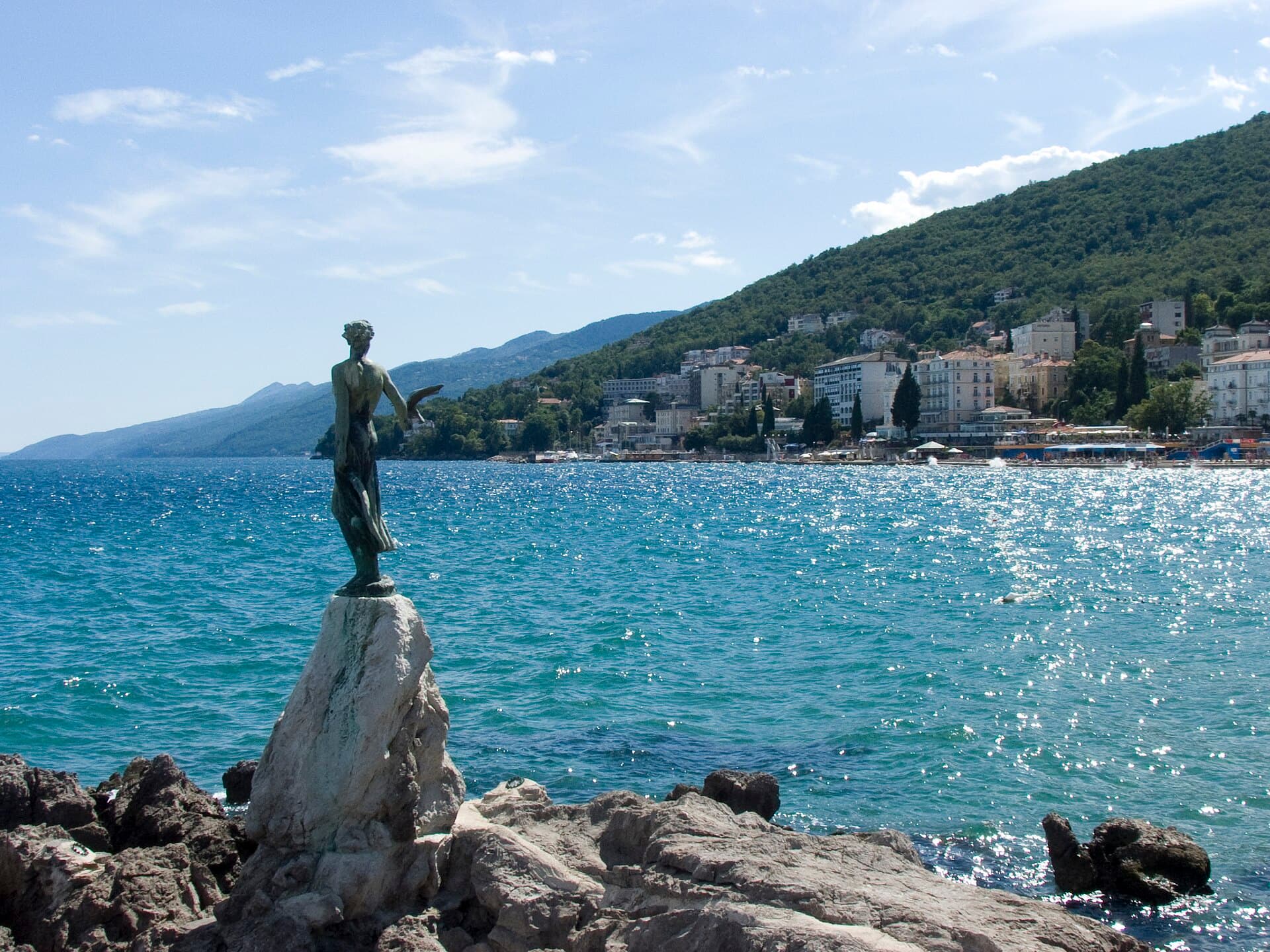
Dieses ikonische Wahrzeichen Opatijas, eine Frau, die nach einer Möwe greift, ersetzte eine frühere Statue mit einer tragischen Hintergrundgeschichte.
Dieser elegante Pavillon, heute ein Zentrum für Ausstellungen und Aufführungen, begann sein Leben mit einem viel süßeren Zweck.
Entdecke jedes Geheimnis von Opatija
Jede Adresse, jede Enthüllung vollständig – in deinem Ohr, genau dort, wo es geschah.
Du wählst deine Stationen. Du gehst. Die Stimme enthüllt, was andere übersehen.


Deine selbstgeführte Audio-Tour durch Opatija ist bereit – wähle deine Sehenswürdigkeiten, deine Sprache und starte, sobald du ankommst.
KaufenLume enthält einen integrierten Augmented-Reality-Guide. Halten Sie Ihr Handy hoch: Die Kamera zeigt die Straße vor Ihnen, mit einem leuchtenden Pfeil über dem echten Bild, der immer auf Ihren nächsten Stopp zeigt — keine Karte zum Rätseln, keine falschen Abzweigungen. Wie alles bei Lume funktioniert es komplett offline.
Opatija, eine kroatische Kurstadt, blickt auf eine traditionsreiche Vergangenheit zurück und verbindet die ruhige Schönheit der Kvarner Bucht mit der architektonischen Eleganz des österreichisch-ungarischen Reiches. Das milde mediterrane Klima, die üppigen Parks und die prächtigen Villen ziehen seit über einem Jahrhundert Besucher an und haben Opatija zur Wiege des kroatischen Tourismus gemacht.
Am Fuße des Učka-Gebirges bietet Opatija einen einzigartigen Kontrast zwischen Meer und Bergen und bildet eine malerische Kulisse für gemütliche Spaziergänge entlang der berühmten Lungomare-Promenade. Die Atmosphäre der Stadt ist geprägt von anspruchsvoller Ruhe und zieht diejenigen an, die Entspannung, Wellness und einen Hauch von Charme der alten Welt suchen.
## Von der Abtei zum aristokratischen Seebad Opatijas Geschichte beginnt nicht mit großen Hotels, sondern mit einer kleinen Benediktinerabtei, die dem Heiligen Jakob geweiht war und erstmals 1453 erwähnt wurde. Die Stadt selbst, deren Name 'Opatija' auf Kroatisch 'Abtei' bedeutet, wuchs um dieses Klosterzentrum.
Die moderne Ära Opatijas begann 1844, als Iginio Scarpa, ein wohlhabender Kaufmann aus Rijeka, die Villa Angiolina als Sommerresidenz erbaute. Dies war ein entscheidender Moment, der den Grundstein für den Tourismus in Kroatien legte. Die Villa und ihr weitläufiger Park mit vielfältigen Pflanzenarten wurden schnell zu einem Treffpunkt der politischen und gesellschaftlichen Elite, darunter Erzherzogin Maria Anna und Ban Josip Jelačić.
Die Ankunft der Eisenbahnlinie von Wien nach Matulji im Jahr 1873 erhöhte die Erreichbarkeit und Attraktivität Opatijas weiter. Die Österreichische Südbahn erkannte das Potenzial, erwarb 1882 die Villa Angiolina und begann mit der Entwicklung Opatijas zu einem erstklassigen Seebad. Das luxuriöse Hotel Kvarner, das erste Hotel an der Adriaküste, wurde 1884 eröffnet, gefolgt vom Hotel Imperial. 1889 erklärte die cisleithanische Regierung Opatija offiziell zum ersten klimatischen Seebad der österreichischen Riviera und festigte damit seinen Status als Gesundheits- und Wellnessziel. In dieser Zeit entstanden zahlreiche elegante Villen, Hotels, Sanatorien und die ikonische Lungomare-Promenade, die Opatija in ein bevorzugtes Refugium für den europäischen Adel und Persönlichkeiten wie Kaiser Franz Joseph und James Joyce verwandelten.
Nach dem Ersten Weltkrieg wurde Opatija Teil Italiens und nach dem Zweiten Weltkrieg Jugoslawiens, bevor es 1991 dem unabhängigen Kroatien beitrat. Trotz dieser politischen Veränderungen hat Opatija seinen Ruf als anspruchsvolles Touristenziel bewahrt und zieht Besucher weiterhin mit seinem zeitlosen Charme und seiner natürlichen Schönheit an.
Beginnen Sie Ihre Erkundung mit einem Spaziergang entlang der Lungomare, einer 12 Kilometer langen Küstenpromenade, die sich von Volosko bis Lovran erstreckt. Dieser malerische Weg bietet durchgehende Ausblicke auf die Adria, eingerahmt von opulenten Villen und üppigem Grün.
Entlang der Lungomare finden Sie die ikonische Statue 'Mädchen mit der Möwe', ein Symbol Opatijas, das anmutig auf einem Felsvorsprung mit Blick auf die Kvarner Bucht thront. In der Nähe befindet sich der Angiolina-Park, das 'grüne Herz' Opatijas, ein gartenbauliches Wunderwerk mit über 150 Pflanzenarten aus aller Welt, darunter das Symbol der Stadt, die japanische Kamelie.
Im Angiolina-Park besuchen Sie die Villa Angiolina, die Geburtsstätte des kroatischen Tourismus, in der sich heute das Kroatische Tourismusmuseum befindet. Verpassen Sie nicht die Kirche des Heiligen Jakob, die Benediktinerabtei, die Opatija seinen Namen gab, und den nahegelegenen Brunnen Helios und Selene. Für einen Einblick in das kulturelle Geschehen Opatijas beherbergt der Juraj Šporer Kunstpavillon verschiedene Ausstellungen und Aufführungen. Wenn Sie gerne wandern, sollten Sie eine Besteigung des Učka-Gebirges zum Gipfel Vojak für Panoramablicke in Erwägung ziehen.
Opatija genießt ein mildes mediterranes Klima, was es zu einem angenehmen Reiseziel das ganze Jahr über macht. Für warmes, sonniges Wetter, ideal für Strände und Outdoor-Aktivitäten, ist die Hauptsaison von Juni bis August mit Durchschnittstemperaturen zwischen 25°C und 30°C. Für mildere Temperaturen, weniger Menschenmassen und günstigere Unterkunftspreise sollten Sie jedoch die Zwischensaison im Frühling (April bis Mai) oder Herbst (September bis Oktober) in Betracht ziehen. Die Winter sind mild, mit Temperaturen, die selten unter 0°C fallen, und bieten eine ruhige und entspannende Auszeit.
Opatija ist leicht erreichbar; es ist etwa 2,5 Stunden Fahrt von Zagreb und ungefähr 20 Minuten von Rijeka entfernt. Lokale Busse (Linie 32) verbinden Opatija mit Rijeka, Lovran und anderen Städten der Riviera. Für längere Strecken gibt es Direktbusse zu Städten wie Zagreb und Pula. Bei der Erkundung von Opatija werden bequeme Wanderschuhe empfohlen, insbesondere für die Lungomare. Parkplätze im Stadtzentrum können während der Hauptsaison schwierig sein, planen Sie also entsprechend. Viele Cafés und Restaurants säumen die Uferpromenade und bieten frische Meeresfrüchte und mediterrane Küche. Britische Staatsbürger benötigen kein Visum für die Einreise nach Kroatien.
Opatija — Koreanisch, Chinesisch, Hebräisch und 29 weitere Sprachen, jede Station von einer muttersprachlichen Stimme erzählt. Die größte Sprachauswahl aller selbstgeführten Audiotouren.
Verfügbar auf: