Dojima Rice Exchange
Vor modernen Börsen leistete Osaka Pionierarbeit bei einem ausgeklügelten System für den Handel mit einem wichtigen Rohstoff.
Die ganze Geschichte wird in der Tour freigeschaltet
 663highland / CC BY 2.5, via Wikimedia Commons
Selbstgeführte Audio-Walking-Tour durch Osaka — GPS-Route, Offline-Wiedergabe, erzählerische Narration in 32 Sprachen.
“Osaka: Jede Mahlzeit ist ein Fest, jede Straßenecke enthüllt eine Geschichte.”
Nicht die Postkarten. Die Geschichten, die selbst Einheimische nicht kennen – dir ins Ohr geflüstert, genau dort, wo sie geschahen.
Vor modernen Börsen leistete Osaka Pionierarbeit bei einem ausgeklügelten System für den Handel mit einem wichtigen Rohstoff.
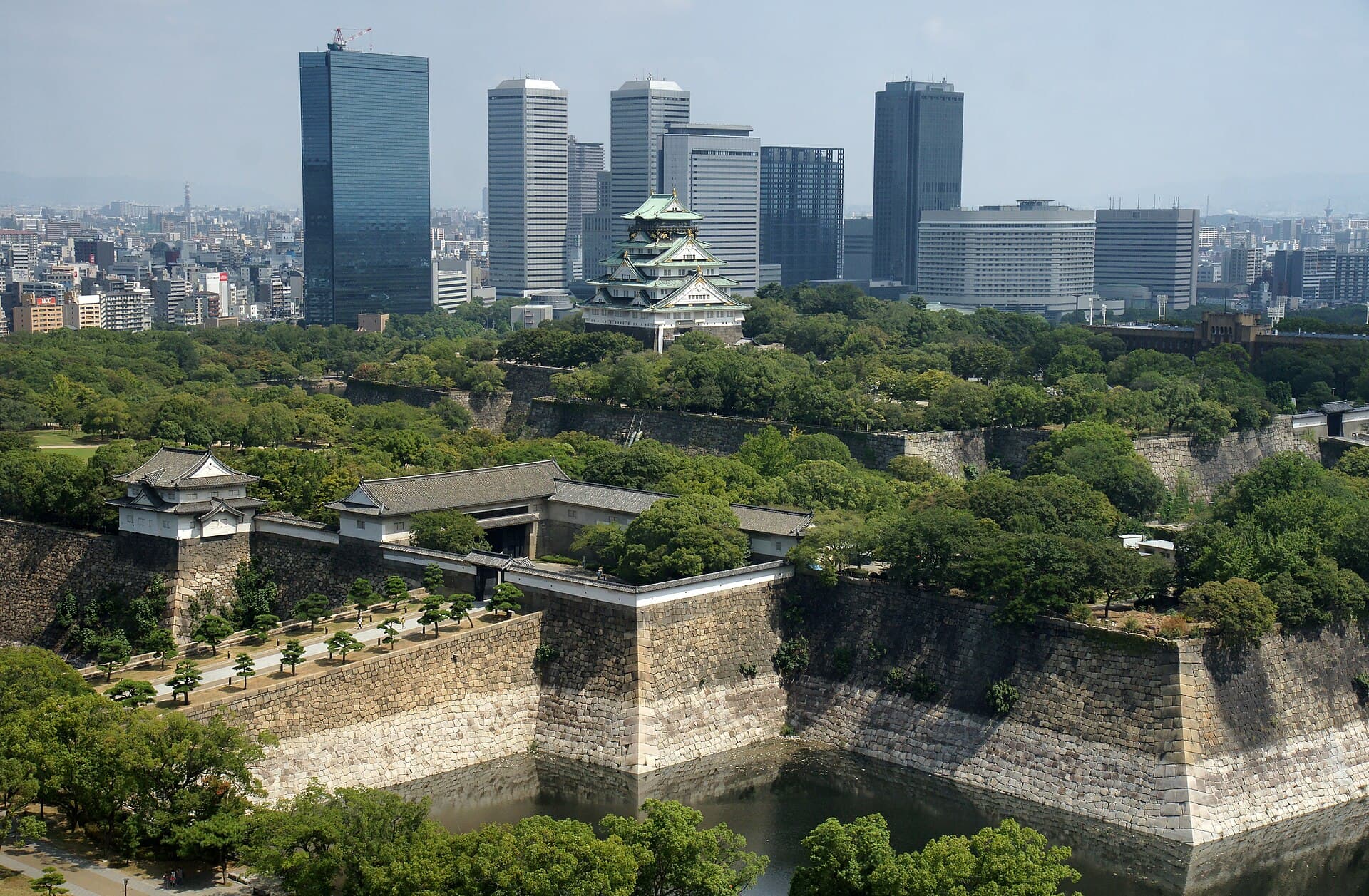
Diese zentrale Festung, die für die Einigung Japans entscheidend war, birgt ein überraschendes Geheimnis über ihren Bau.
Osakas kulinarische Obsession geht über den bloßen Genuss hinaus und verkörpert eine Philosophie, die für Außenstehende extrem klingen mag.
Entdecke jedes Geheimnis von Osaka
Jede Adresse, jede Enthüllung vollständig – in deinem Ohr, genau dort, wo es geschah.
Du wählst deine Stationen. Du gehst. Die Stimme enthüllt, was andere übersehen.

Deine selbstgeführte Audio-Tour durch Osaka ist bereit – wähle deine Sehenswürdigkeiten, deine Sprache und starte, sobald du ankommst.
KaufenLume enthält einen integrierten Augmented-Reality-Guide. Halten Sie Ihr Handy hoch: Die Kamera zeigt die Straße vor Ihnen, mit einem leuchtenden Pfeil über dem echten Bild, der immer auf Ihren nächsten Stopp zeigt — keine Karte zum Rätseln, keine falschen Abzweigungen. Wie alles bei Lume funktioniert es komplett offline.
Osaka, Japans drittgrößte Stadt, ist eine dynamische Metropole, bekannt für ihre lebendige Kultur, ihr kühnes Streetfood und ihre freundlichen Einwohner. Oft als „Küche der Nation“ (Tenka no Daidokoro) bezeichnet, reicht Osakas kulinarischer Ruf Jahrhunderte zurück und zieht Feinschmecker aus aller Welt an. Neben seinen gastronomischen Genüssen bietet die Stadt eine faszinierende Mischung aus historischen Wahrzeichen und modernen Attraktionen, von alten Tempeln bis hin zu hoch aufragenden Wolkenkratzern und lebhaften Unterhaltungsvierteln.
Mit einer ausgeprägten Persönlichkeit, die im Gegensatz zur formelleren Atmosphäre von Tokio und Kyoto steht, lädt Osaka Besucher ein, in ein lebendiges Stadterlebnis einzutauchen. Das gut vernetzte öffentliche Nahverkehrssystem erleichtert die Erkundung der Stadt und ihrer Umgebung und ermöglicht es Reisenden, bequem zwischen geschäftigen Märkten, ruhigen Schreinen und einem lebhaften Nachtleben zu pendeln. Egal, ob Sie historische Einblicke, kulinarische Abenteuer oder einfach nur einen Eindruck vom energiegeladenen Stadtleben Japans suchen, Osaka bietet eine unvergessliche Reise.
## Vom antiken Hafen zum Wirtschaftsmotor Osakas Geschichte reicht bis ins 5. Jahrhundert zurück, als es als Naniwa bekannt war und als wichtiger Hafen diente, der Japan mit Korea und China verband. Diese frühe Rolle als Tor für den internationalen Handel brachte nicht nur Waren, sondern auch fortschrittliche Techniken in Handwerk, Keramik und Schmiedekunst sowie die Einführung des Buddhismus in Japan. Im Jahr 645 n. Chr. machte Kaiser Kotoku Naniwa sogar zu seiner Hauptstadt und ließ den Naniwa-no-Miya-Palast, den ältesten Palast des Landes, errichten.
Während der Edo-Zeit (1603–1867) entwickelte sich Osaka zu Japans wichtigstem Wirtschaftszentrum und erwarb seinen bleibenden Spitznamen „Küche der Nation“. Während Edo (das heutige Tokio) die politische Hauptstadt war, war Osaka das kaufmännische Herz, wo Reis, Sake und andere Waren aus dem ganzen Land gesammelt, gelagert und gehandelt wurden. Die Kaufmannsklasse der Stadt entwickelte ausgeklügelte Finanzsysteme, darunter die Dojima Rice Exchange, die den Futures-Handel einführte. Diese Ära brachte auch die japanischen Theaterformen Kabuki und Bunraku-Puppentheater hervor.
Nach der Meiji-Restauration durchlief Osaka eine rasche Industrialisierung und wurde in den Meiji- und Taishō-Ären zu einem wichtigen Industriezentrum, das wegen seiner erfolgreichen Spinnstoffindustrie den Spitznamen „Manchester des Ostens“ erhielt. Ein Großteil der historischen Infrastruktur der Stadt wurde jedoch während der alliierten Bombenangriffe im Zweiten Weltkrieg zerstört. Nach dem Krieg begann Osaka mit sorgfältiger Stadtplanung und Sanierung und baute sich zu der modernen, energiegeladenen Metropole auf, die sie heute ist, einem internationalen Zentrum für Forschung, Entwicklung und Finanzen.
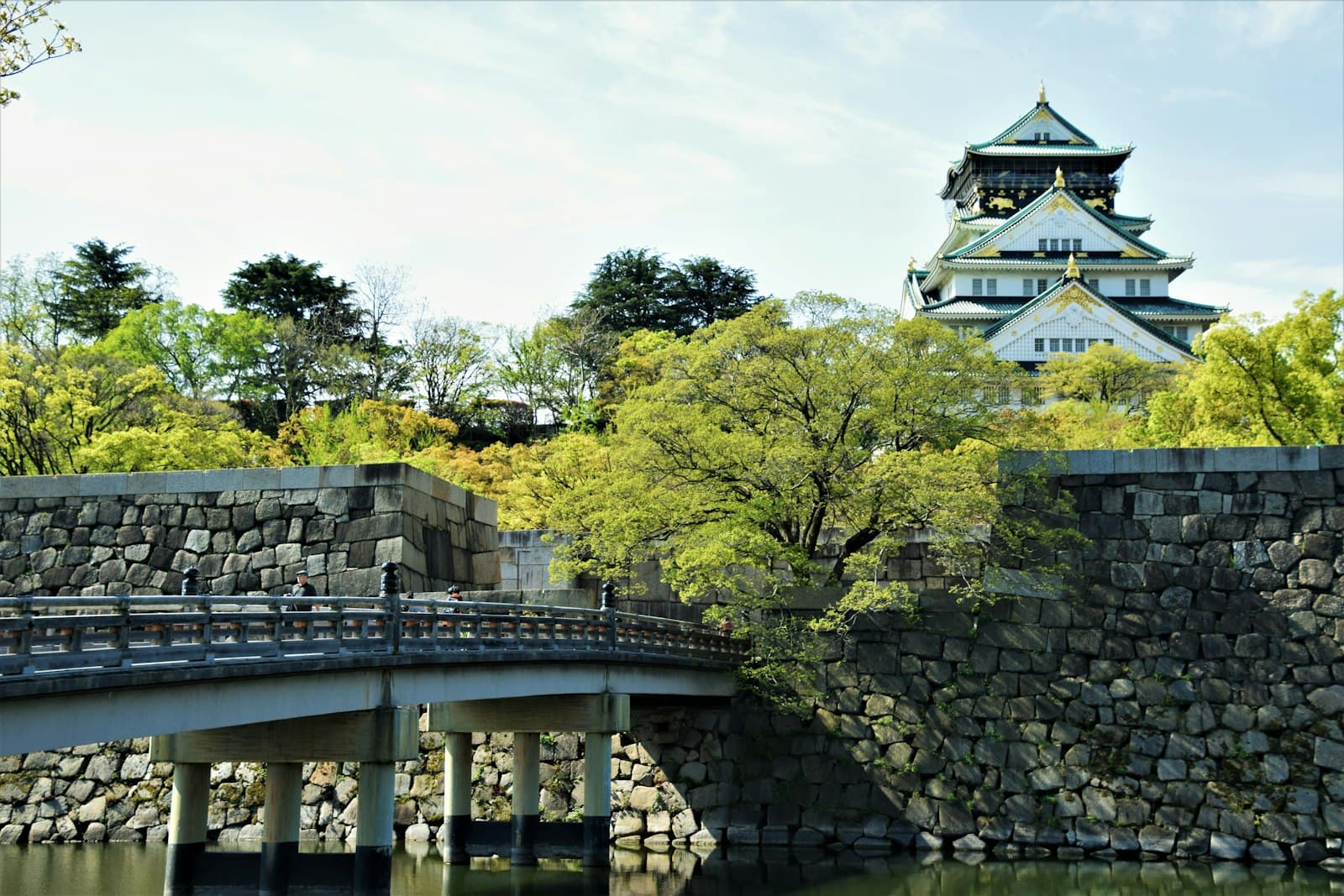
Osaka bietet eine vielfältige Auswahl an Attraktionen, die historische Bedeutung mit moderner Unterhaltung verbinden. Das Osaka Castle, eine prächtige Rekonstruktion aus dem Jahr 1931, ist ein zentrales Wahrzeichen mit einem Museum, das seine Geschichte detailliert beschreibt und von der Spitze aus Stadtblicke bietet. Rund um das Schloss erstreckt sich ein weitläufiger Park, der besonders zur Kirschblütenzeit wunderschön ist.
Das Viertel Dotonbori ist ein pulsierendes, neonbeleuchtetes Unterhaltungszentrum, das für sein lebhaftes Nachtleben, sein Streetfood und seine ikonischen beleuchteten Schilder, darunter der Glico Running Man, bekannt ist. In der Nähe befindet sich der Kuromon Ichiba Markt, oft als „Osakas Küche“ bezeichnet, ein überdachter Straßenmarkt, der eine Fülle von frischen Meeresfrüchten und lokalen Delikatessen anbietet.
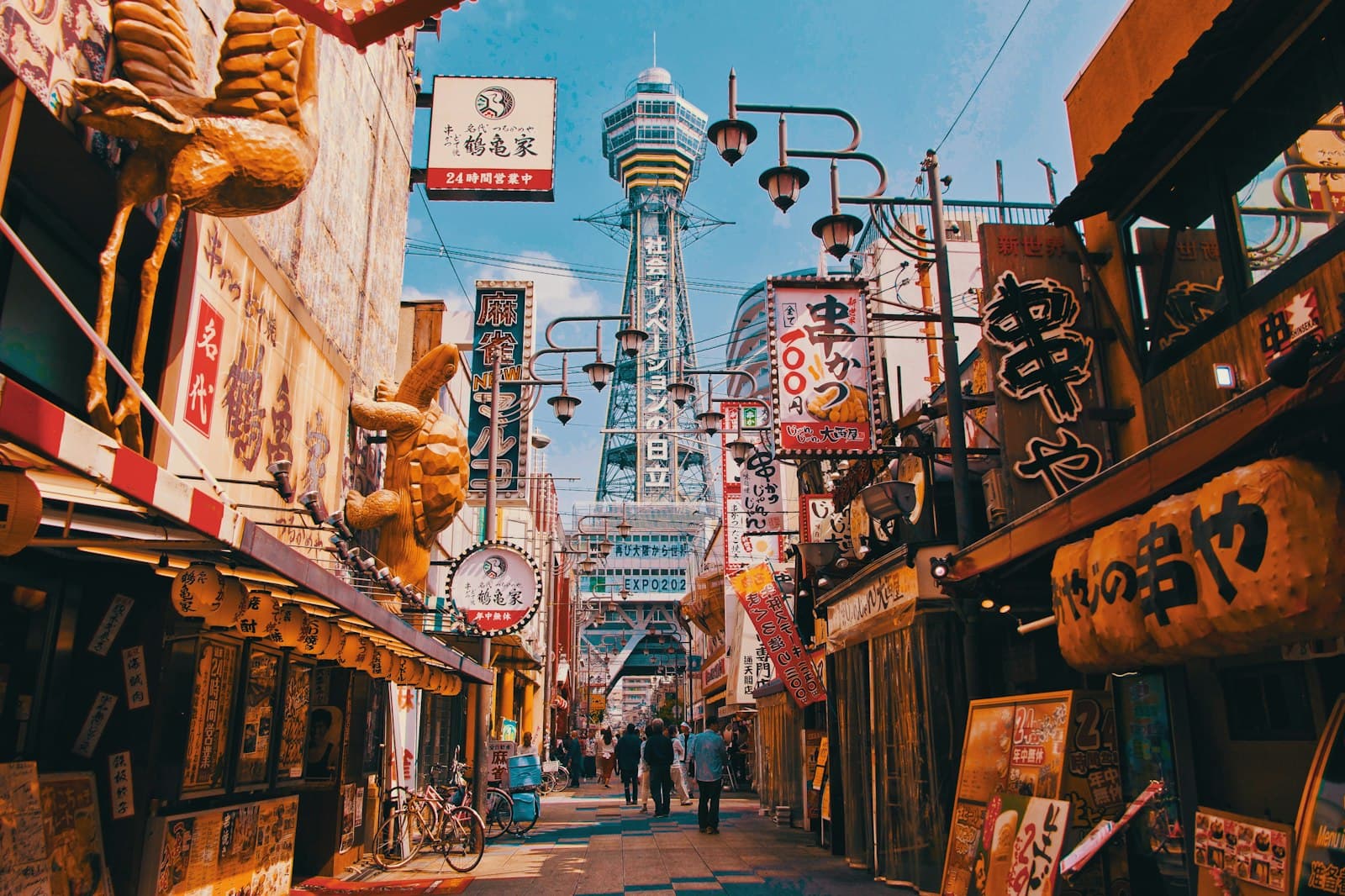
Für einen Einblick in das alte Japan besuchen Sie den Shitennō-ji Tempel, der 593 n. Chr. von Prinz Shōtoku gegründet wurde und damit einer der ältesten buddhistischen Tempel Japans ist. Das Viertel Shinsekai bietet eine nostalgische Retro-Atmosphäre mit seinem Tsutenkaku Tower und einer Vielzahl von Restaurants. Für einen weiten Blick über die Stadt sollten Sie das Umeda Sky Building mit seinem Floating Garden Observatory oder den Wolkenkratzer Abeno Harukas in Betracht ziehen. Das Osaka Aquarium Kaiyukan ist eines der größten Aquarien der Welt und präsentiert Meereslebewesen vom Pazifischen Rand.
Die angenehmsten Zeiten für einen Besuch in Osaka sind im Frühling (März bis Mai) und im Herbst (Oktober bis November). Der Frühling bringt milde Temperaturen und die spektakuläre Kirschblüte, die normalerweise von Ende März bis Anfang April in voller Blüte steht. Der Herbst bietet angenehmes Wetter, klaren Himmel und leuchtende Herbstfarben, besonders von Ende Oktober bis Mitte November. Obwohl dies die Hauptsaison mit größeren Menschenmengen und höheren Preisen ist, sind die wunderschönen Landschaften sehr lohnend. Der Sommer (Juni bis August) ist heiß und feucht, bietet aber lebhafte Festivals wie das Tenjin Matsuri. Der Winter (Dezember bis Februar) ist kälter, aber mit weniger Menschenmassen und festlichen Beleuchtungen.
Die Fortbewegung in Osaka ist effizient und bequem, hauptsächlich mit dem Zug und der U-Bahn. Die JR Osaka Loop Line ist nützlich, um die Stadt zu durchqueren und den Kansai International Airport (KIX) zu erreichen. Die U-Bahn-Linien von Osaka sind farblich gekennzeichnet und bieten englische Durchsagen. Eine ICOCA-IC-Karte wird für nahtlose Fahrten mit Zügen, U-Bahnen und Bussen empfohlen und kann auch in einigen Convenience Stores verwendet werden.
Obwohl bargeldlose Zahlungen immer üblicher werden, funktionieren viele kleinere Geschäfte, Streetfood-Verkäufer und einige Tempel und Schreine immer noch nur mit Bargeld. Es ist ratsam, täglich mindestens 10.000 bis 15.000 Yen in bar mitzuführen. Trinkgeld ist in Japan nicht üblich und wird möglicherweise sogar höflich abgelehnt. Für diejenigen, die umfangreiche Besichtigungen planen, bietet der Osaka Amazing Pass unbegrenzte Fahrten mit U-Bahn und Bus sowie freien Eintritt zu zahlreichen Attraktionen und bietet potenziell einen guten Wert. In Japan werden Steckertypen vom Typ A (zwei flache Stifte) mit 100 V verwendet.
Osaka — Koreanisch, Chinesisch, Hebräisch und 29 weitere Sprachen, jede Station von einer muttersprachlichen Stimme erzählt. Die größte Sprachauswahl aller selbstgeführten Audiotouren.
Verfügbar auf: