Radcliffe Camera
Deze iconische cirkelvormige bibliotheek bevat meer dan alleen boeken; het verbergt een uitgestrekte, onzichtbare wereld onder uw voeten.
Volledig verhaal ontgrendeld in de tour
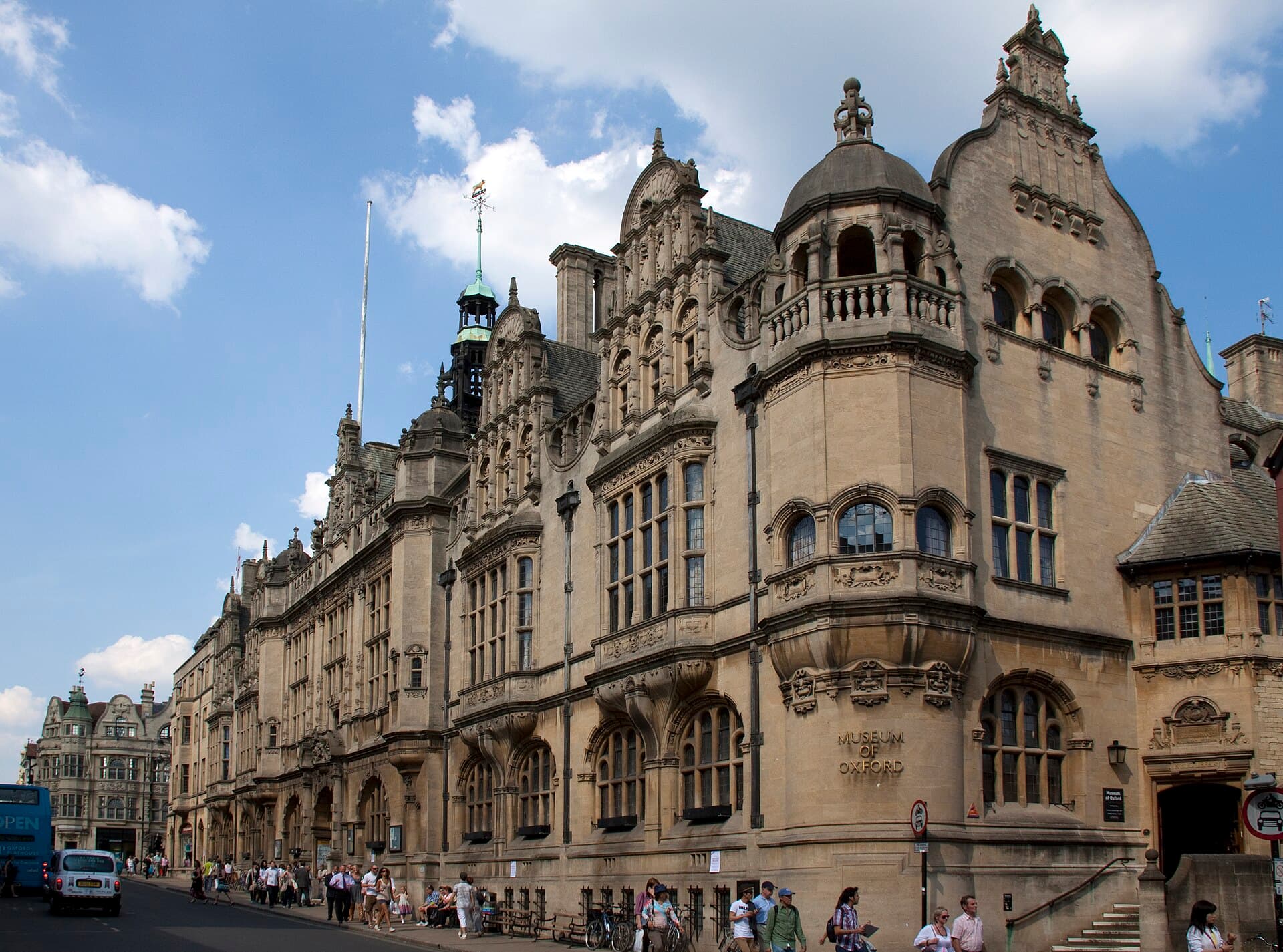 Tony Hisgett from Birmingham, UK / CC BY 2.0, via Wikimedia Commons
Zelfgeleide audiowandeling door Oxford — GPS-route, offline afspelen, meeslepende vertelling in 32 talen.
“Waar oude torenspitsen moderne geesten ontmoeten, en elke steen een verhaal vertelt.”
Niet de ansichtkaarten. De verhalen die zelfs locals niet kennen — gefluisterd in je oor, precies waar ze gebeurden.
Deze iconische cirkelvormige bibliotheek bevat meer dan alleen boeken; het verbergt een uitgestrekte, onzichtbare wereld onder uw voeten.
Wanneer de klokken worden verzet, passen studenten van Merton College niet alleen hun horloges aan; ze voeren een bijzonder ritueel uit om het universum te beschermen.
De historische vijandigheid tussen twee colleges wordt jaarlijks bijgelegd met een specifieke alcoholische drank.
Ontdek elk geheim van Oxford
Elk adres, elke onthulling volledig — in je oor, precies waar het gebeurde.
Jij kiest je stops. Jij wandelt. De stem onthult wat de anderen missen.

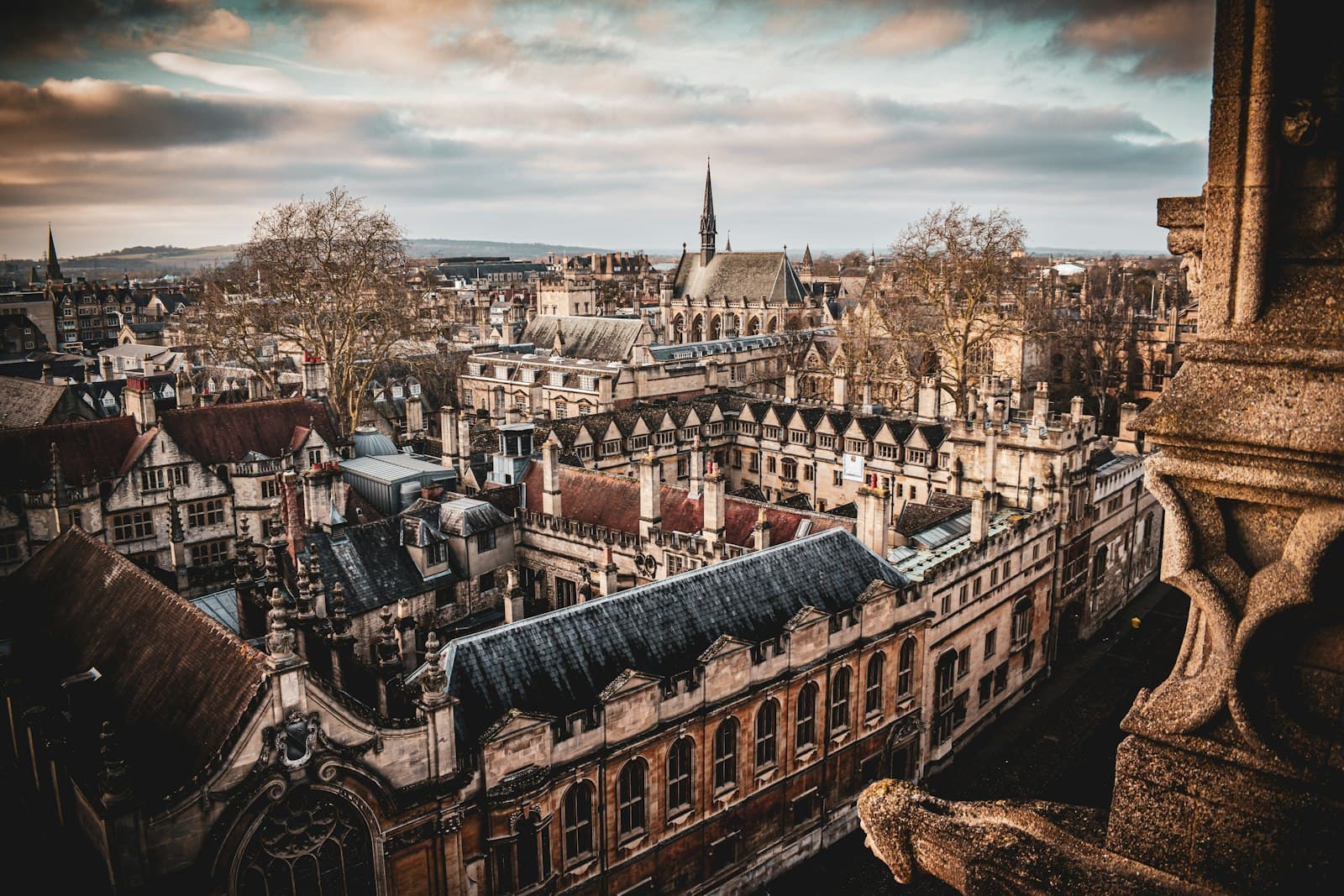
Je zelfgeleide audiotour van Oxford is klaar — kies je bezienswaardigheden, kies je taal en start zodra je aankomt.
KopenLume heeft een ingebouwde augmented-reality-gids. Houd je telefoon omhoog: de camera toont de straat voor je, met een oplichtende pijl over het echte beeld die altijd naar je volgende stop wijst — geen kaart om uit te puzzelen, geen verkeerde afslagen. Zoals alles in Lume werkt het volledig offline.
Oxford, vaak door de Victoriaanse dichter Matthew Arnold de "Stad van Dromende Torens" genoemd, is wereldwijd erkend voor zijn gerespecteerde universiteit, de oudste in de Engelssprekende wereld. Gelegen tussen de rivier de Theems (lokaal bekend als de Isis) en de rivier de Cherwell, is de naam van de stad afgeleid van "Oxenaforda," wat in het Oudengels "ford van de ossen" betekent, verwijzend naar een ondiepe oversteekplaats. Al meer dan 800 jaar is Oxford een centrum voor geleerden en royalty, geëvolueerd van een strategische Saksische nederzetting tot een bruisende kosmopolitische hub.
De Universiteit van Oxford, opgericht in 1096, is geen enkel campus maar een collegiale onderzoeksuniversiteit die bestaat uit 39 onafhankelijke colleges, elk met zijn eigen unieke identiteit en architectonische karakter. Deze colleges, waarvan vele zijn gesticht door middeleeuwse koningen, religieuze instellingen en weldoeners, dragen bij aan het kenmerkende academische en architectonische landschap van Oxford. Naast zijn academische faam is Oxford een stad met rijke literaire connecties, filmgeschiedenis en blijvende tradities die het dagelijkse ritme bepalen.
De oorsprong van Oxford gaat terug tot de Saksische periode, voor het eerst geregistreerd in de Anglo-Saxon Chronicle in 911 na Christus als een versterkte stad of "burh." De strategische ligging op de samenvloeiing van de rivier de Theems en de rivier de Cherwell maakte het een belangrijke grensstad tussen de koninkrijken Mercia en Wessex. Na de Normandische verovering in 1066 bouwde Robert D'Oyly in 1071 Oxford Castle om de controle over het gebied te consolideren.
Het onderwijs begon in Oxford in de 11e eeuw, en de universiteit groeide snel na 1167 toen Koning Hendrik II Engelse studenten verbood de Universiteit van Parijs bij te wonen. Deze toestroom van geleerden leidde tot de formele oprichting van de Universiteit van Oxford. De 13e eeuw zag de opkomst van de eerste colleges, aanvankelijk als begiftigde huizen of residenties, waarbij University, Balliol en Merton Colleges tot de oudste behoren, opgericht tussen 1249 en 1264. Echter, spanningen tussen de academische gemeenschap ("gown") en de stadsbewoners ("town") laaiden soms op, met name in 1209, toen een conflict ertoe leidde dat sommige academici vluchtten en de Universiteit van Cambridge stichtten.
Oxford speelde een belangrijke rol in de Engelse Burgeroorlog en diende als de facto hoofdstad en hoofdkwartier van Koning Karel I van 1642 tot 1646 nadat hij uit Londen was verdreven. De stad onderging meerdere belegeringen voordat hij in 1646 overgaf aan parlementaire troepen. De 19e en vroege 20e eeuw brachten industriële groei, met traditionele industrieën zoals brouwen en uitgeven die bloeiden. Oxford University Press werd een belangrijke werkgever, en in 1910 richtte William Morris (later Lord Nuffield) een autofabriek op, waardoor de economie van de stad verder werd gediversifieerd buiten de universiteit. Vandaag de dag blijft Oxford zijn oude academische erfgoed combineren met een groeiende hightech gemeenschap, een stad waar verleden en toekomst met elkaar verweven zijn.
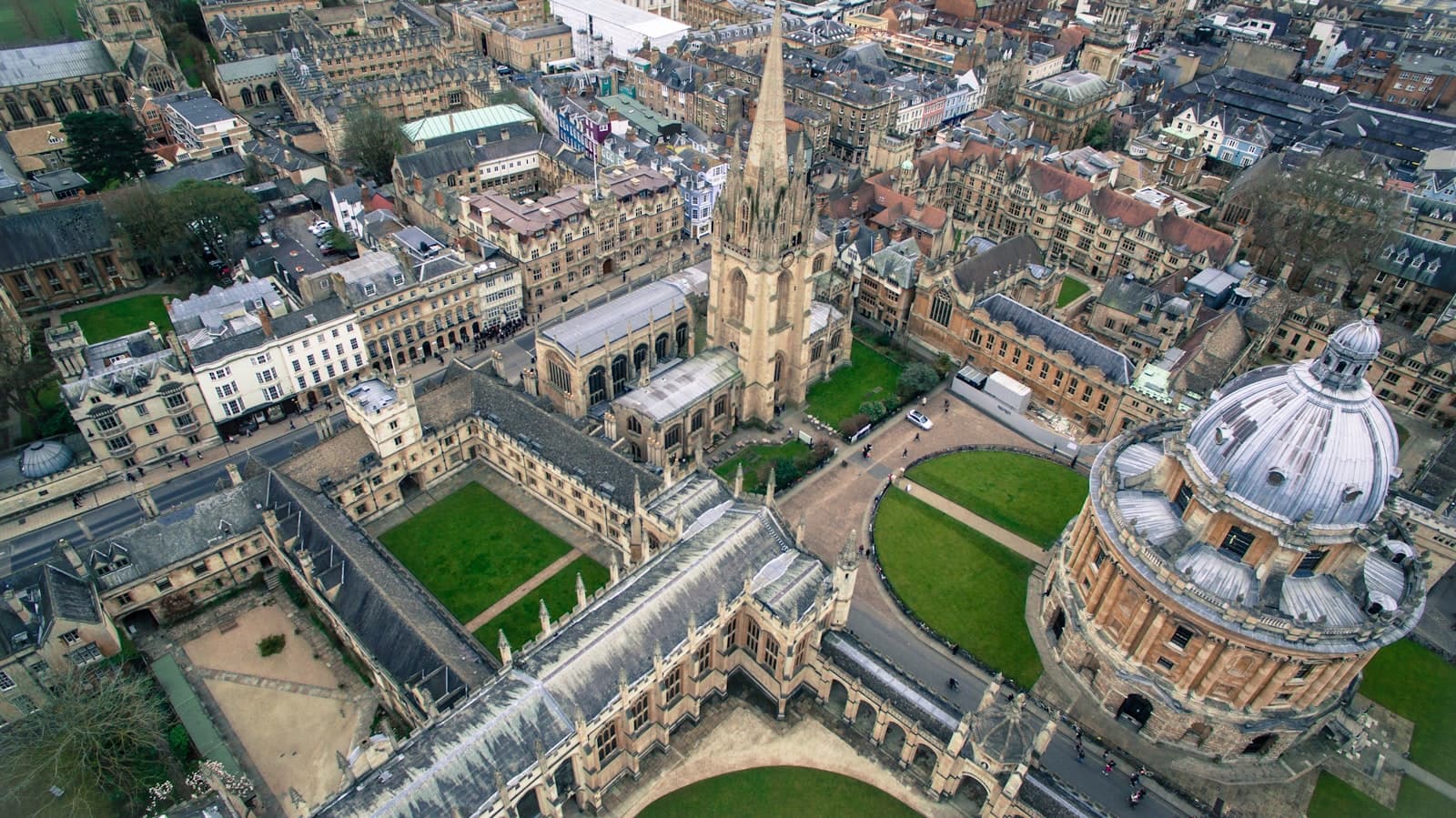
Een bezoek aan Oxford biedt een reis door eeuwen van academische en architectonische wonderen. De Radcliffe Camera, een cirkelvormig gebouw in barokstijl, ontworpen door James Gibbs en voltooid in 1749, is een iconisch symbool van de universiteit en dient als leeszaal voor de Bodleian Library. Hoewel openbare toegang tot de leeszalen beperkt is, is de buitenkant een middelpunt van Radcliffe Square.
Christ Church College is een van de beroemdste en grootste colleges van Oxford, dat op unieke wijze een college combineert met de kathedraal van het bisdom Oxford. De Grote Eetzaal diende als inspiratie voor de eetzaal van Zweinstein in de Harry Potter-films, en de Bodley Staircase was ook een filmlocatie. Bezoekers kunnen de kathedraal, Tom Quad (het grootste binnenplein van Oxford) en de uitgestrekte weiden die naar de rivier leiden, verkennen.
Magdalen College (uitgesproken als 'Maudlen') staat bekend om zijn prachtige gebouwen en uitgestrekte terreinen, waaronder een hertenpark en Addison's Walk langs de rivier de Cherwell. Deze idyllische omgeving was een favoriet van C.S. Lewis en J.R.R. Tolkien, beiden voormalige studenten van Magdalen.
Andere opmerkelijke bezienswaardigheden zijn de Bodleian Library, een van Europa's oudste bibliotheken, die rondleidingen biedt om de historische interieurs te onthullen, waaronder Duke Humfrey's Library en de Divinity School, ook te zien in Harry Potter. Het beklimmen van de toren van de University Church of St Mary the Virgin biedt een weids uitzicht over de torenspitsen van de stad. Voor museumliefhebbers herbergt het Ashmolean Museum, het eerste openbare museum van Groot-Brittannië, diverse kunst- en archeologische collecties, terwijl het Pitt Rivers Museum een unieke antropologische ervaring biedt.
Oxford verwelkomt bezoekers het hele jaar door, waarbij elk seizoen een aparte sfeer biedt. Het warmste weer is van eind juni tot begin september, met juli als heetste maand, gemiddeld 21°C. De zomer (juni-augustus) is een populaire tijd, met veel bezoekers en hogere accommodatieprijzen. De lente (maart-mei) is schilderachtig, met bloeiende college tuinen en langere dagen, hoewel de temperaturen koeler zijn, variërend van 9-19°C, met af en toe regen. De herfst (september-oktober) biedt een aangename combinatie van mild weer, minder drukte en de terugkeer van studenten, wat een levendige energie aan de stad geeft. De winter (december-februari) is rustiger, met koudere temperaturen (2-9°C) en kans op vorst of sneeuw, wat zorgt voor een magische, sfeervolle ervaring.
Oxford is gemakkelijk bereikbaar, gelegen op ongeveer 83 km ten noordwesten van Londen. Directe treinen vanaf London Paddington of London Marylebone duren ongeveer een uur. Het stadscentrum is compact en het beste te voet te verkennen, met veel belangrijke bezienswaardigheden dicht bij elkaar. Lokale bussen bieden transport verder weg. Hoewel rijden vanuit Londen ongeveer een uur duurt, wordt de trein vaak aanbevolen vanwege het gemak.
Voor accommodatie is vooraf boeken aan te raden, vooral tijdens de zomermaanden. Veel universiteitscolleges zijn open voor het publiek, maar bezoekers moeten de specifieke openingstijden controleren en privé studentenruimtes respecteren. Georganiseerde stadswandelingen zijn een uitstekende manier om een overzicht te krijgen van de stad en zijn universiteit. Punteren op de rivier de Cherwell is een populaire tijdverdrijf, vooral in de warmere maanden, en biedt een sereen perspectief op de waterwegen van de stad.
Oxford — Koreaans, Chinees, Hebreeuws en nog 29 talen, elke stop verteld door een moedertaalspreker. Het grootste taalaanbod van alle zelfgeleide audiotours.
Beschikbaar in: