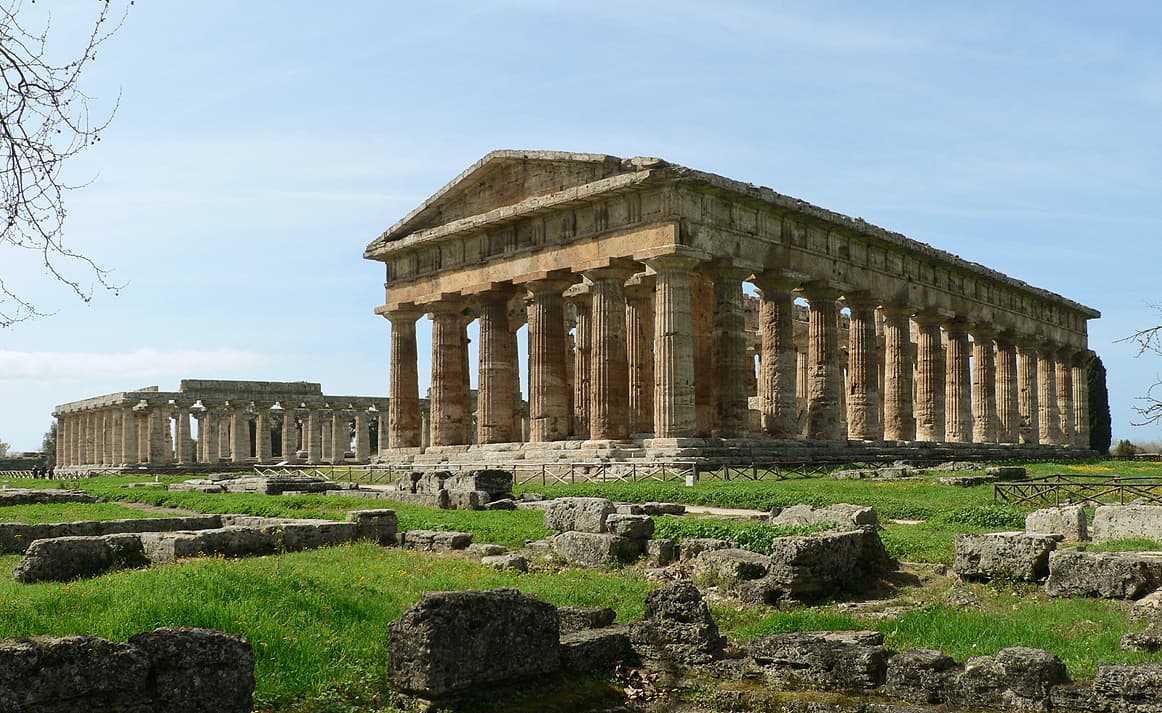
This commanding temple, regarded as one of the best-preserved Greek temples globally, bears a name archaeologists now believe to be a misunderstanding.
Oliver-Bonjoch / CC BY-SA 3.0, via Wikimedia CommonsPaestum
“Where ancient Greek grandeur meets Italian allure, suspended in time.”
Paestum, as no one tells it.
Not the postcards. The stories even locals don't know — whispered in your ear, right where they happened.
Among the countless ancient Greek tombs discovered, only one features a painted scene of a human plunging into water.
Amidst the millennia-old Greek temples, a striking contemporary sculpture of a horse, crafted from local sand, stands as a deliberate artistic intervention.
Discover every secret of Paestum
Every address, every reveal in full — in your ear, right where it happened.
You pick your stops. You walk. The voice reveals what the others miss.
How long do you have in Paestum?
No tours available yet. Check back soon — we're preparing them.
The story of Paestum
Paestum, an ancient Greco-Roman city in Italy's Campania region, offers a captivating journey through time. Its archaeological park is celebrated for three remarkably preserved Doric temples, considered among the finest examples of ancient Greek architecture in the world. Originally established as Poseidonia by Greek colonists from Sybaris around 600 BCE, the city was later conquered by the Lucanians and then by the Romans, who renamed it Paestum.
Beyond the monumental temples, the site encompasses extensive remnants of a Roman forum, an amphitheater, and ancient city walls, providing a comprehensive glimpse into daily life in antiquity. The adjacent National Archaeological Museum houses a wealth of artifacts, including intricate frescoes from painted tombs, offering deeper insights into the city's diverse cultural layers. Paestum's long period of abandonment, from the early medieval period until its rediscovery in the 18th century, played a crucial role in the exceptional preservation of its structures.
From Greek Colony to Roman City and Beyond
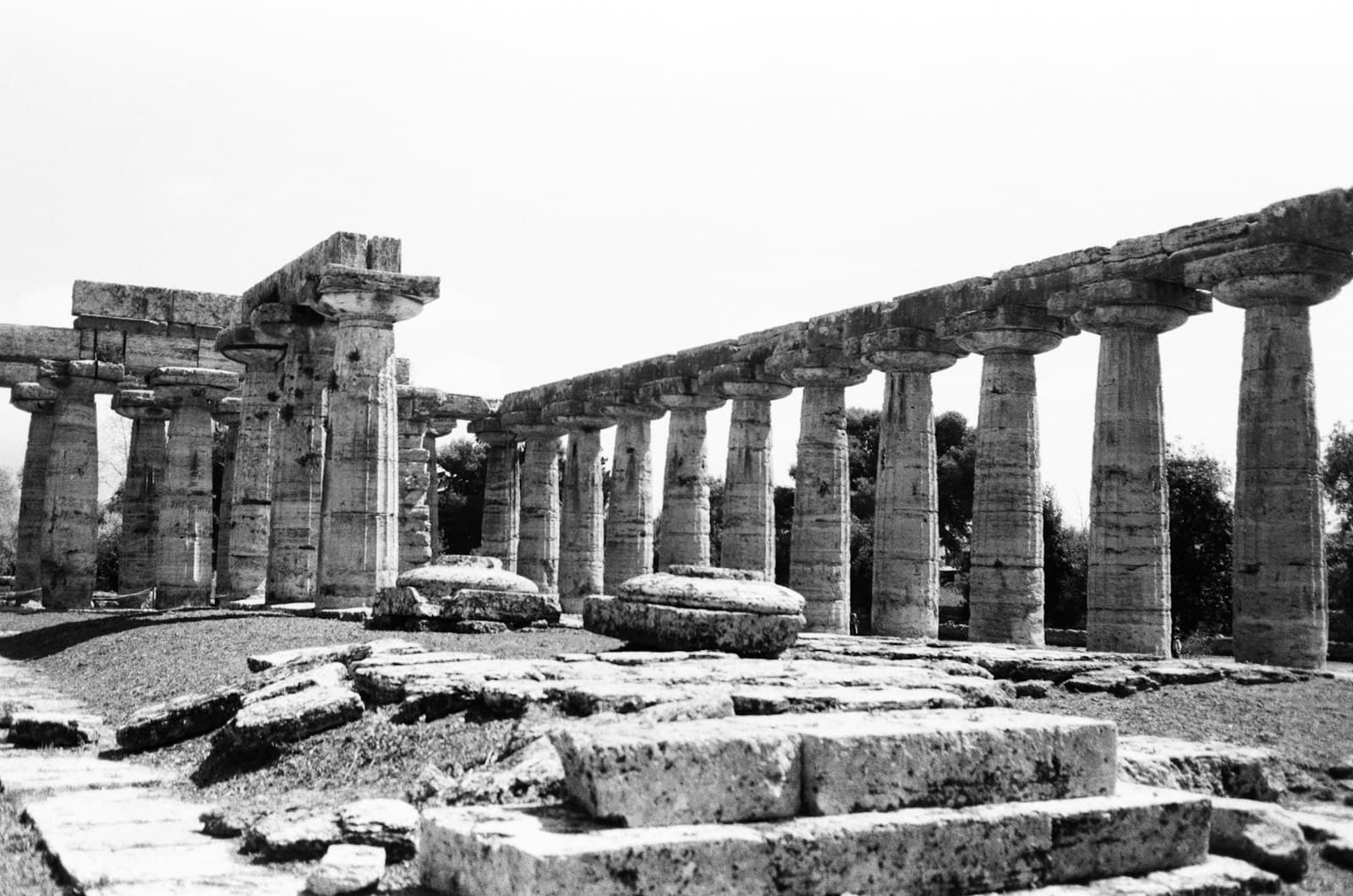
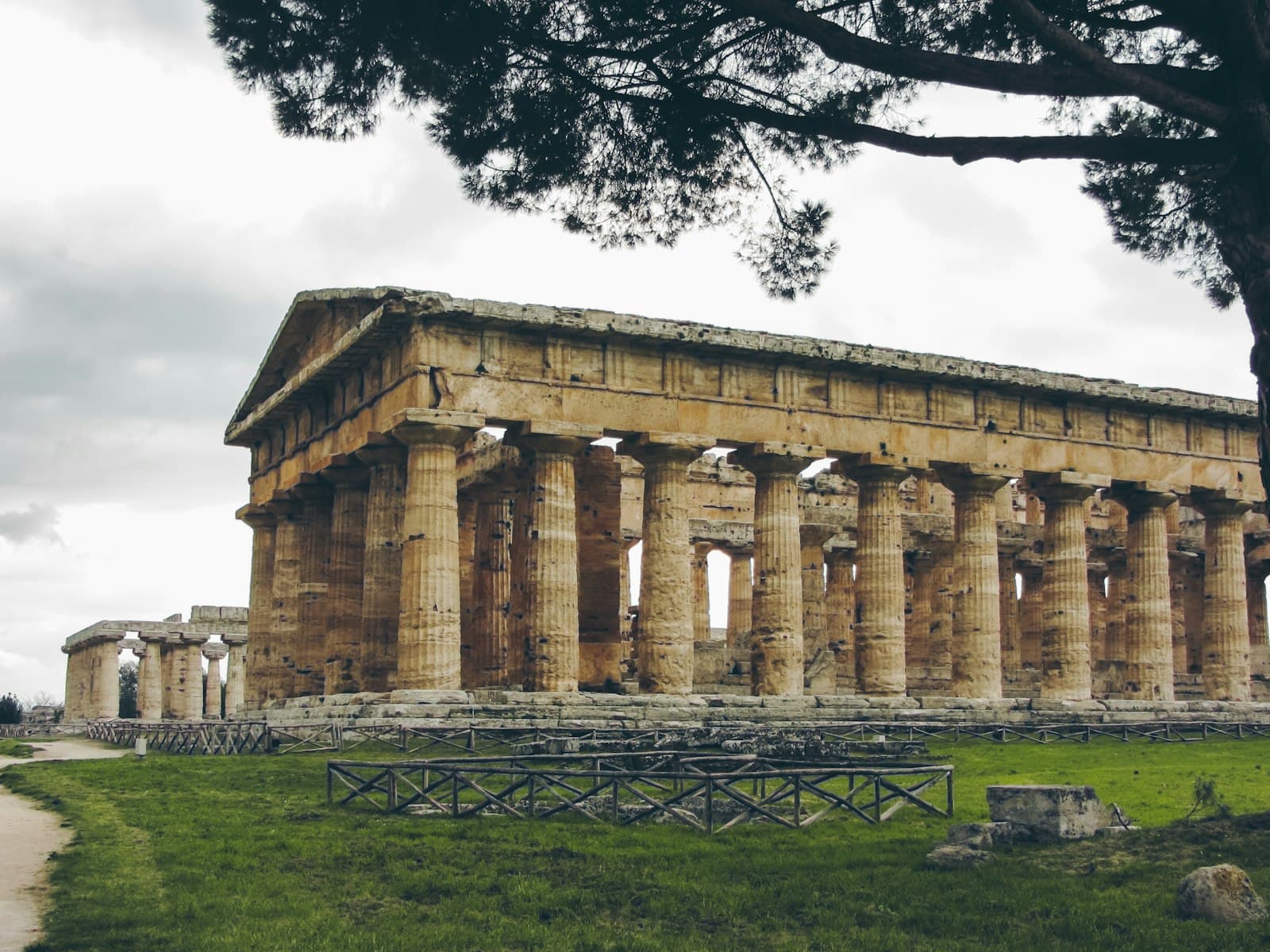
Paestum's story commences around 600 BCE when Greek colonists from Sybaris established the city of Poseidonia, honoring Poseidon, the Greek god of the sea. The city swiftly blossomed, developing roads, temples, and public spaces characteristic of a Greek polis. Evidence suggests close ties with Metaponto during its early centuries. The first of Paestum's grand temples, the Temple of Hera I (also known as the Basilica), was constructed around 560 BCE, followed by the Temple of Athena (originally thought to be dedicated to Ceres) around 500 BCE, and the Temple of Hera II (often called the Temple of Neptune) around 460 BCE. These structures stand as enduring testaments to the city's prosperity during its Greek period.
Around 400 BCE, the indigenous Italic people known as the Lucanians conquered Poseidonia, renaming it Paistom. Despite the shift in rule, archaeological findings indicate a period of multiculturalism where Greek and Oscan cultures coexisted. Many Lucanian tomb paintings from this era depict horses and equestrian sports, reflecting the passions of the Lucanian elite. The city remained under Lucanian control until 273 BCE, when it came under Roman rule and was established as a Latin colony, adopting its current name, Paestum. The Romans brought significant transformations, constructing a new forum, a basilica, and other civic and sacred monuments, which altered the city's appearance. Paestum supported Rome during the Second Punic War, earning it special status.
The city continued to flourish during the early Roman Empire, but its decline began in the early medieval period. Shifting trade routes, political upheavals, and the gradual silting of the Silarus River, which led to the formation of malarial swamps, contributed to its abandonment by the 9th century CE. Paestum remained largely forgotten and overgrown until its rediscovery in the 18th century, a fortuitous circumstance that preserved its ancient structures from being dismantled for building materials. It then became a crucial stop on the Grand Tour for European intellectuals and aristocrats.
The archaeological site of Paestum is dominated by its three remarkably preserved Greek temples. The Temple of Hera I, also known as the Basilica, is the oldest, dating back to around 560 BCE. Its archaic style features wider, more bulbous columns, giving it a distinctive character. Adjacent to it stands the Temple of Hera II, often referred to as the Temple of Neptune, the largest and most complete of the three, built around 460 BCE. Its harmonious proportions represent the zenith of Doric architecture. At the northern end of the site is the Temple of Athena, dating to approximately 500 BCE, which once commanded the ancient city from its elevated position. You can walk up close to these temples, though interior access is restricted.
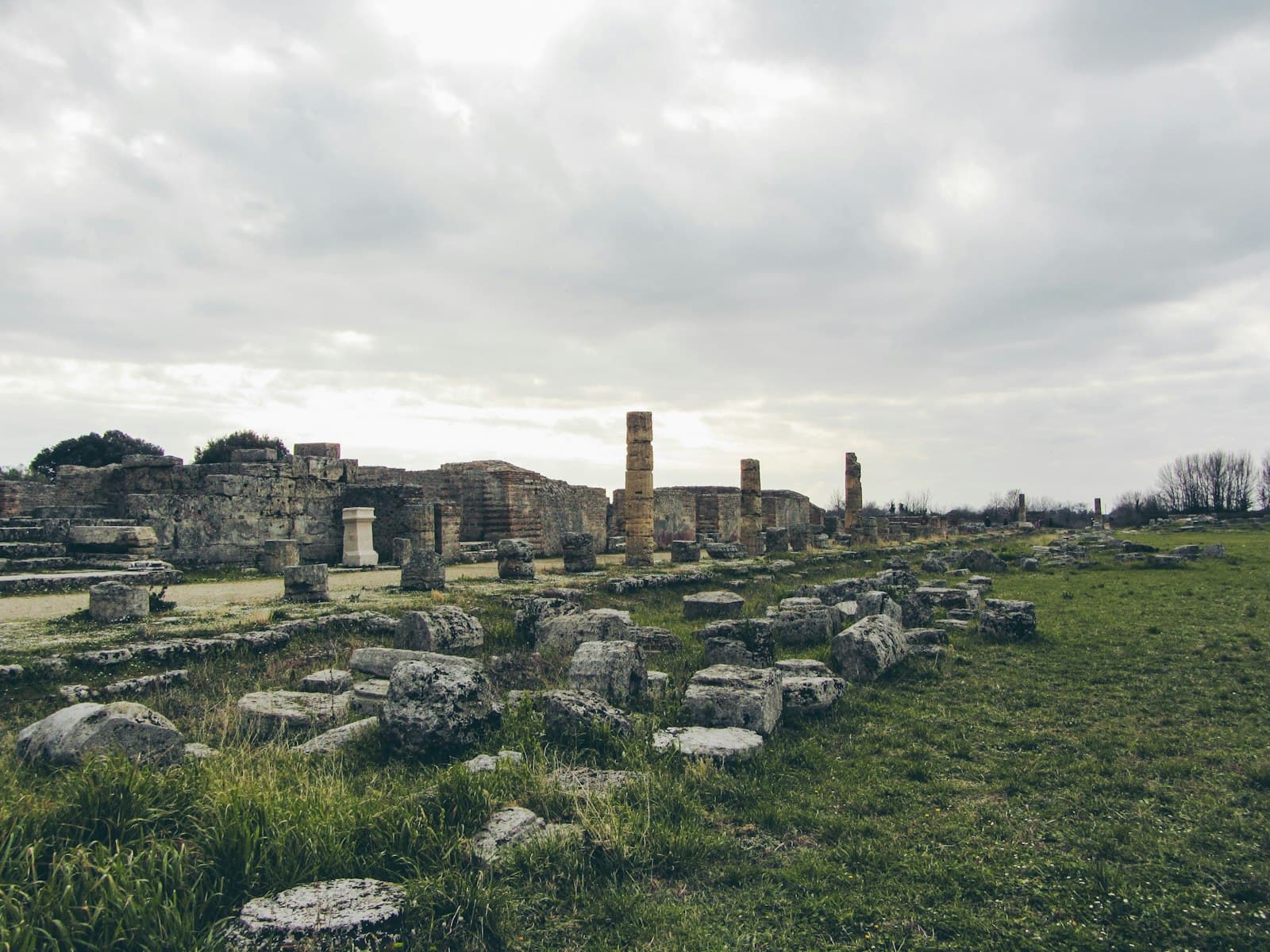
Beyond the temples, explore the remains of the Roman Forum, the central public space of the Roman city, and the basic outline of a Roman amphitheater. The ancient city walls, stretching over 5 km, are largely intact, with visible remains of four gates. Do not miss the National Archaeological Museum of Paestum, located within the park. It houses a significant collection of artifacts, including the exquisite frescoes from the Tomb of the Diver, a unique example of Greek wall painting from the 5th century BCE. The museum also displays metopes from the Sanctuary of Hera at Foce del Sele.
The ideal times to visit Paestum are during spring (April to June) and autumn (September to October). The weather during these shoulder seasons is pleasantly warm, avoiding the intense heat of summer, and wildflowers bloom across the archaeological park. Crowds are also typically smaller than during the peak summer months. Visiting in the late afternoon offers the added bonus of golden sunlight illuminating the temples, perfect for photography. While July and August are hot and busier, the site never feels as crowded as other major archaeological destinations. Evening visits are also possible during summer, providing a different, atmospheric experience with the temples softly lit.
Paestum is easily accessible, making it a viable day trip from Salerno or Naples. You can reach Paestum by train from Salerno (approximately 30 minutes) or Naples (around 1.5 hours), though train frequency can vary, so planning ahead is advisable. Alternatively, buses are available from Salerno. If driving, take the A3 highway and exit at Battipaglia, then follow signs to Paestum. Parking is available near the archaeological site.
The Archaeological Park of Paestum is generally open daily from 8:30 AM to 7:30 PM during summer months (April-June), with the last entry at 6:50 PM. Winter hours (November-March) are typically 8:30 AM to 5:00 PM, with last entry at 4:00 PM. The park is closed on December 25th and January 1st. The museum has slightly different hours, often closing earlier on the first and third Mondays of the month. A combined ticket for the archaeological park and museum is available, and it is valid for three days, also including admission to the Velia archaeological site. Wear comfortable walking shoes, as the terrain within the park is uneven with grassy and dirt paths.
- Is Paestum worth visiting?
- Yes, Paestum is highly recommended for its exceptionally well-preserved Greek temples, fascinating archaeological museum, and serene setting. It offers a unique glimpse into ancient Greek and Roman civilizations in Italy.
- How much time should I allocate for visiting Paestum?
- Plan for at least 2-4 hours to comfortably explore the archaeological site and the National Archaeological Museum.
- Are the temples in Paestum truly Greek?
- Yes, the three main temples in Paestum are indeed ancient Greek temples, built in the Doric order by Greek colonists between 560 BCE and 460 BCE.
- Is Paestum on the Amalfi Coast?
- No, Paestum is located south of the Amalfi Coast, in the Cilento region, approximately an hour's drive from Salerno. However, it can be easily combined with a trip to the Amalfi Coast.
- Can I visit Paestum with children?
- Yes, Paestum is considered a great archaeological site to visit with children due to its manageable size, open spaces for exploration, and clear information panels.
- What is the Tomb of the Diver?
- The Tomb of the Diver is a significant 5th-century BCE Greek tomb found in Paestum, famous for its unique frescoes depicting a young man diving into water, which is the only surviving example of Greek wall painting from the Archaic period.