Iglesia San José
The radiant Golden Altar of Iglesia San José holds a tale of pirate deception, yet the true account offers an even greater surprise.
Full story unlocks in the tour
 Garcia.dennis / CC BY-SA 4.0, via Wikimedia Commons
“Where centuries of stories echo through sun-drenched plazas.”
Not the postcards. The stories even locals don't know — whispered in your ear, right where they happened.
The radiant Golden Altar of Iglesia San José holds a tale of pirate deception, yet the true account offers an even greater surprise.
A delicate arch in Casco Viejo once served as a pivotal argument for constructing the Panama Canal in Panama, rather than Nicaragua.
Panama City hosts a cafe bearing a globally recognized name, and it holds a singular distinction.
Discover every secret of Panama (Casco Viejo)
Every address, every reveal in full — in your ear, right where it happened.
You pick your stops. You walk. The voice reveals what the others miss.
No tours available yet. Check back soon — we're preparing them.
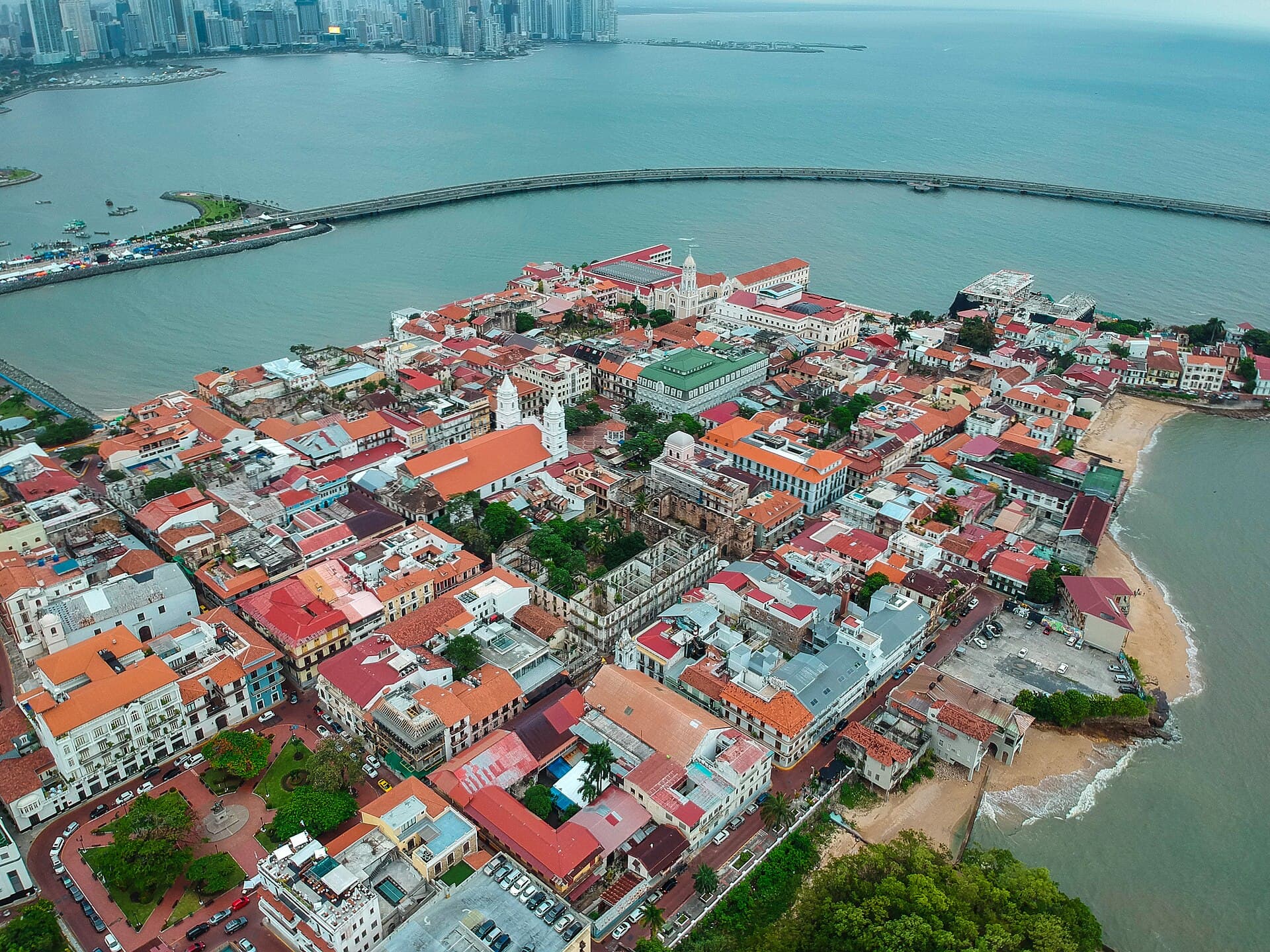
Casco Viejo, also known as Casco Antiguo or San Felipe, forms the historic heart of Panama City. This UNESCO World Heritage site presents a captivating blend of Spanish, French, and Afro-Caribbean influences, visible in its architecture, cuisine, and lively atmosphere. Established in 1673, Casco Viejo emerged from the ashes of the original Panama City, Panamá Viejo, which the infamous pirate Henry Morgan destroyed.
Today, Casco Viejo is a compact, walkable district where carefully restored colonial buildings stand beside structures still awaiting their revival, creating a dynamic interplay of old and new. Its stone-paved streets lead to grand plazas, venerable churches, and a thriving scene of boutique hotels, art galleries, and rooftop bars. The neighborhood's journey from a neglected area to a cultural focal point speaks to its enduring spirit and ongoing revitalization.
## From Ashes to a Walled City Panama City was initially founded on August 15, 1519, marking the first European settlement on the Pacific coast of the Americas. This early settlement, Panamá Viejo, prospered as a crucial transit point for Spanish gold and silver traveling from Peru to Spain. However, its affluence also drew unwelcome attention, and in January 1671, the city faced an attack and plunder by the Welsh privateer Henry Morgan. Before Morgan's forces could fully ransack it, the Spanish governor ordered the city set ablaze, leading to its near-total destruction.
In 1673, a new city, Casco Viejo, was established a few miles to the west on a more defensible peninsula. This new location, surrounded by water on three sides, was chosen with strategic foresight to protect against future pirate incursions. The city's layout followed a strict orthogonal grid, centered on the Plaza Mayor (now Plaza de la Independencia), reflecting Spanish order and Catholic hierarchy. Stout stone ramparts were constructed, encircling the peninsula and featuring bastions facing the sea.
## A Confluence of Influences Casco Viejo's architectural character is a rich fabric woven from various cultural threads. While its foundations are Spanish colonial, the city's role as a global crossroads brought diverse influences. Afro-Panamanian labor was instrumental in constructing its walls, and French and Italian artisans contributed to its distinctive balconies. The mid-19th century saw a significant shift as the Panama Railroad and subsequent French and American canal efforts ushered in a republican makeover. This era introduced neoclassical facades, Italian tiles, and French mansard roofs, visible in the elegant mansions around Plaza Bolívar.
By the mid-20th century, Casco Viejo experienced a period of decline as residents moved to more modern parts of the city. However, its designation as a UNESCO World Heritage site in 1997, and an expanded recognition in 2025 for its connection to the Colonial Transisthmian Route, spurred significant revitalization efforts. Today, Casco Viejo stands as a living testament to Panama's enduring history, where colonial foundations lie beneath republican balconies and 19th-century wrought-iron railings adorn 17th-century walls.
Exploring Casco Viejo is best undertaken on foot, allowing you to absorb its intricate details and evolving character. Wander the stone-paved streets, appreciating the blend of Spanish colonial, neoclassical, and Afro-Caribbean architecture.
Begin at the Plaza de la Independencia (Plaza Mayor), the historic core of the neighborhood, surrounded by the Metropolitan Cathedral and the Palacio Municipal. The Metropolitan Cathedral, with its mother-of-pearl inlaid bell towers, took over a century to complete. Visit Iglesia San José to see its celebrated Golden Altar.
Stroll along Paseo Las Bóvedas, a colonial-era promenade built atop the original sea wall, offering expansive views of the Pacific Ocean and Panama City's modern skyline. At one end, you will find Plaza de Francia, honoring the French efforts to construct the Panama Canal, marked by an obelisk crowned with a rooster. Do not miss the Panama Canal Museum, housed in the former headquarters of the French Canal Company.
For a glimpse into indigenous culture, visit the Museo de la Mola, displaying the colorful textile art of the Guna people. As evening draws near, make your way to one of Casco Viejo's many rooftop bars for sunset views across the city and ocean.
The ideal time to visit Casco Viejo and Panama City is during the dry season, which extends from late December to April. In these months, temperatures remain warm (around 30-32°C or 86-90°F) and humidity is lower, creating perfect conditions for walking and outdoor activities. January through April offers the driest weather and a lively cultural atmosphere. While the dry season sees more visitors and higher prices, the 'green season' from May to November brings fewer crowds and occasional afternoon showers, with mornings often clear and bright.
Casco Viejo is a compact district, approximately 40 acres, making it exceptionally walkable. Comfortable walking shoes are essential as the stone-paved streets can be uneven. Mornings (8-10 a.m.) and late afternoons (3-6 p.m.) are the most pleasant times for exploring on foot, as midday can be quite warm. During the warmest parts of the day, consider visiting museums or relaxing in a shaded cafe.
Casco Viejo is generally safe for travelers, particularly within the historic district, which receives regular patrols. When arriving from Tocumen International Airport, an Uber or taxi ride takes about 30 minutes. If driving, use the free parking lots at Cinta Costera 3 and walk into Casco Viejo, as parking within the district is limited. Public transportation is also an option, with the C982 bus line stopping at Plaza Herrera.