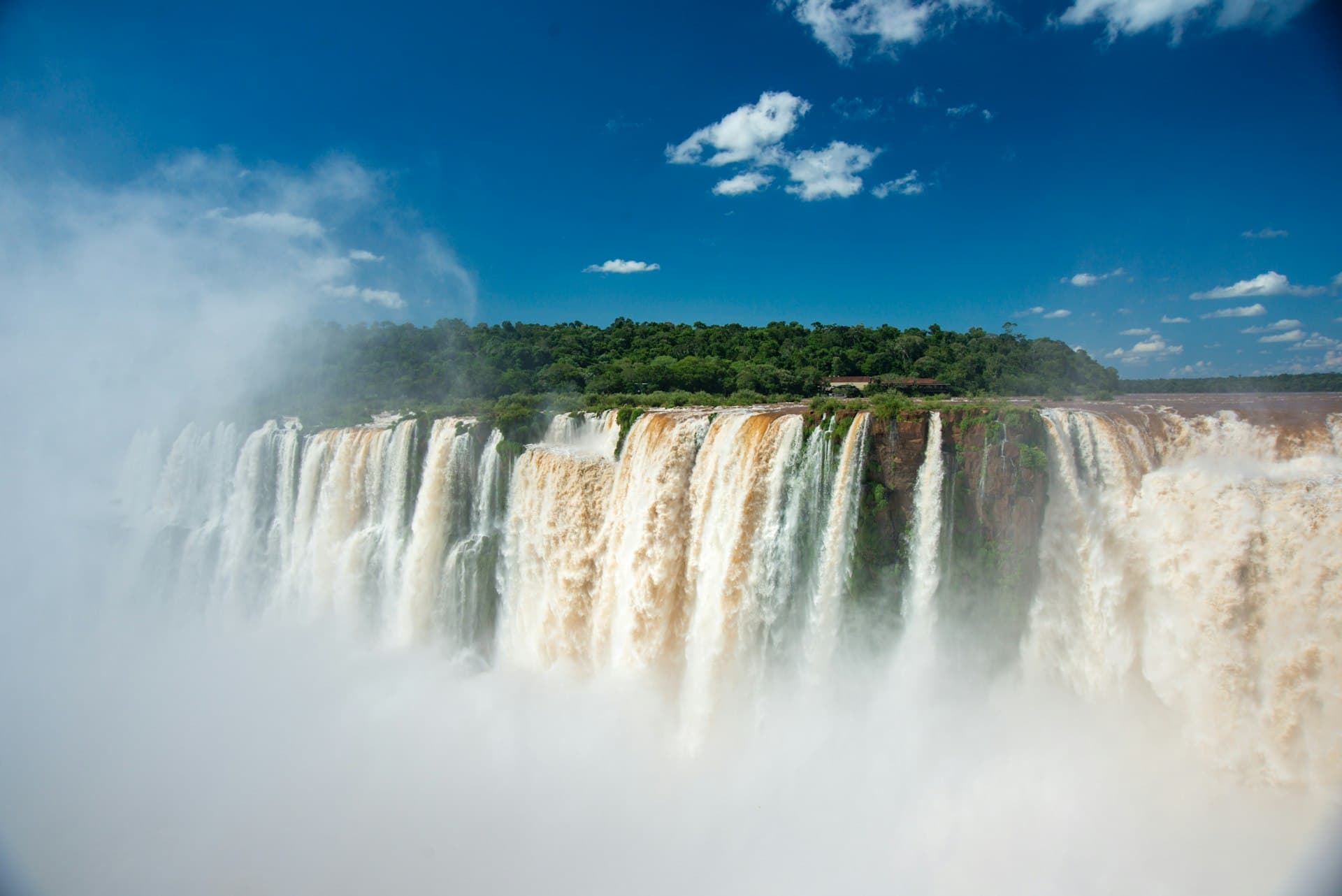
ParanáPhoto: Ondrej Bocek / Unsplash
AR

Paraná

Where the river carves its course, and bluffs recount the nation's unfolding.

The secrets of Paraná

Paraná, as no one tells it.

Not the postcards. The stories even locals don't know — whispered in your ear, right where they happened.

3 secrets below. Many more wait inside the tour.
Raúl Uranga – Carlos Sylvestre Begnis Subfluvial Tunnel

Connecting two provincial capitals beneath the Paraná River, this engineering marvel holds a unique distinction in South America.

Full story unlocks in the tour
Plaza 1° de Mayo

This central square, with its imposing architecture, once served as the political heart of a burgeoning nation.

Full story unlocks in the tour
Paraná's Barrancas

Unlike many riverside cities that rest at water level, Paraná is built upon a series of natural elevations, offering a distinct perspective.

Full story unlocks in the tour
The full tour

Discover every secret of Paraná

Every address, every reveal in full — in your ear, right where it happened.

Get the key to Paraná

You pick your stops. You walk. The voice reveals what the others miss.

Choose your time

How long do you have in Paraná?

No tours available yet. Check back soon — we're preparing them.

About Paraná

The story of Paraná

Paraná, the capital of Argentina's Entre Ríos province, is a city where the rhythm of daily life is orchestrated by the grand Paraná River. Situated on the river's eastern bank, the city presents a fusion of natural splendor and historical depth. Its elevated river bluffs afford expansive views of the water and the islands that dot the expansive landscape.

With a humid subtropical climate, Paraná is a place that extends a warm invitation to visitors with its balmy summers and gentle winters. The city's unhurried atmosphere encourages exploration, from its picturesque waterfront promenade, the Costanera, to its historic district adorned with colonial architecture. Paraná functions as an important urban center within Argentina's Mesopotamia region, recognized for its river-centric way of life and enduring cultural legacy.

History

From Settlement to Confederation Capital

The origins of Paraná can be traced back to the 16th century, when settlers from Santa Fe began to establish informal communities across the river in an area known as "de la otra Banda del Paraná" (the other side of the Paraná). The city's official founding date is recognized as October 23, 1730, when a local chapel was granted parish status, solidifying the settlement's administrative importance.

Paraná's development was significantly shaped by its strategic location on the navigable Paraná River, which established it as a natural port and a central point for agricultural trade from the Entre Ríos province. In 1813, the settlement achieved the status of a villa, or village, marking a step in its growth. By 1822, Paraná became the capital of the territory that would later become the province of Entre Ríos, and in 1826, it was granted city status.

The most formative period in Paraná's story was from 1853 to 1861, when it served as the temporary capital of the Argentine Confederation. This occurred during a time when Buenos Aires had temporarily separated from the rest of the country. This designation as national capital spurred rapid economic, cultural, and demographic growth, laying the groundwork for many of the city's significant public buildings and urban structure, particularly around May 1st Square. Following the Battle of Pavón in 1861, political influence shifted back to Buenos Aires, and Paraná relinquished its capital status. However, it was definitively re-established as the capital of the Entre Ríos province in 1883.

Major infrastructure projects further defined Paraná's character. The 3rd of February Theatre, a cultural symbol of the city, opened its doors in 1905. A significant engineering achievement, the Raúl Uranga – Carlos Sylvestre Begnis Subfluvial Tunnel, was completed in 1969, connecting Paraná directly with Santa Fe on the opposite side of the river. This tunnel was the first of its kind in South America. The city's historical evolution is reflected in its diverse architecture and carefully preserved landmarks, offering a tangible connection to its past as a political center and a vital river port.

What to see

Begin your exploration at Parque Urquiza, an expansive park on the river bluffs with walking paths and wide-ranging views of the Paraná River and its islands. The Costanera, a picturesque waterfront promenade, offers opportunities for unhurried walks, cycling, and enjoying the evening light.

In the city's historic district, visit the Cathedral of Paraná, an imposing neo-Gothic structure from 1883 that houses the image of Our Lady of the Rosary. Nearby, Plaza 1° de Mayo is a central square featuring the Monument to General San Martín and serves as a lively gathering place. The Historical Museum of Entre Ríos offers insight into the region's cultural evolution.

For a singular experience, explore the Raúl Uranga – Carlos Sylvestre Begnis Subfluvial Tunnel, an engineering marvel linking Paraná with Santa Fe. You can visit its museum and control room to learn about its construction. Other notable sites include the Entre Ríos Government House and the 3rd of February Theatre. Consider a visit to Puerto Sánchez, a traditional fishermen's neighborhood, or the Curupí Municipal Islet, a protected natural area.

When to visit

Paraná experiences a humid subtropical climate, making it suitable for visits almost year-round. The spring (early October to late December) and autumn (early February to late April) months offer the most pleasant weather for outdoor activities, with moderate temperatures ranging from 20°C to 25°C. Summers (December to February) are warm and humid, with average daily highs above 30°C, suitable for those who enjoy warmer weather and river activities, though be prepared for periodic rain. Winters (June to August) are mild, with daytime temperatures around 13-17°C and cooler nights, making it a good time for cultural explorations.

Practical

Paraná is accessible by air via Justo José de Urquiza International Airport. By land, bus services connect Paraná with many cities, with frequent routes to nearby Santa Fe via the subfluvial tunnel. The bus terminal is divided into sections for provincial and inter-provincial travel.

When preparing for your trip, consider the humid subtropical climate. Light, breathable clothing, a hat, and sunglasses are recommended for summer (December-February). For winter (June-August), bring layers including a jacket and sweater, as nights can be cool. In Paraná, many shops and institutions observe a siesta in the afternoon (approximately 1:00 PM to 4:30 PM), so plan your activities accordingly. Dining typically begins later, with restaurants filling up after 9:00 PM. Do not swim in the Paraná River outside of designated, lifeguarded beaches due to strong currents and muddy conditions.

Good to know
What is the origin of the name 'Paraná'?
The name "Paraná" comes from the Tupi language, meaning "like the sea" or "big river," reflecting the river's immense size.
Was Paraná ever the capital of Argentina?
Yes, Paraná served as the temporary capital of the Argentine Confederation from 1853 to 1861, during a period when Buenos Aires was separated from the confederation.
What is the Raúl Uranga – Carlos Sylvestre Begnis Subfluvial Tunnel?
The Raúl Uranga – Carlos Sylvestre Begnis Subfluvial Tunnel is an underwater tunnel completed in 1969 that connects Paraná with the city of Santa Fe, making it the first of its kind in South America.
What kind of climate does Paraná have?
Paraná has a humid subtropical climate, characterized by warm, humid summers and mild winters.
What local dishes should I try in Paraná?
The local gastronomy heavily features freshwater fish from the Paraná River, such as surubí, pacú, boga, and dorado, often prepared grilled, fried, or in a stew called *chupín*.
Are there any natural areas to explore near Paraná?
Yes, nearby natural areas include the Curupí Municipal Islet, a protected natural area, and the Pre-Delta National Park, which offers hiking trails through wetlands.
Paraná
From€9.00
No booking · activate anytime · 12h to walk it
Get the key to Paraná