Playa de Patara
Esta extensión de arena aparentemente interminable ofrece más que solo un lugar para tomar el sol.
La historia completa se desbloquea en el tour
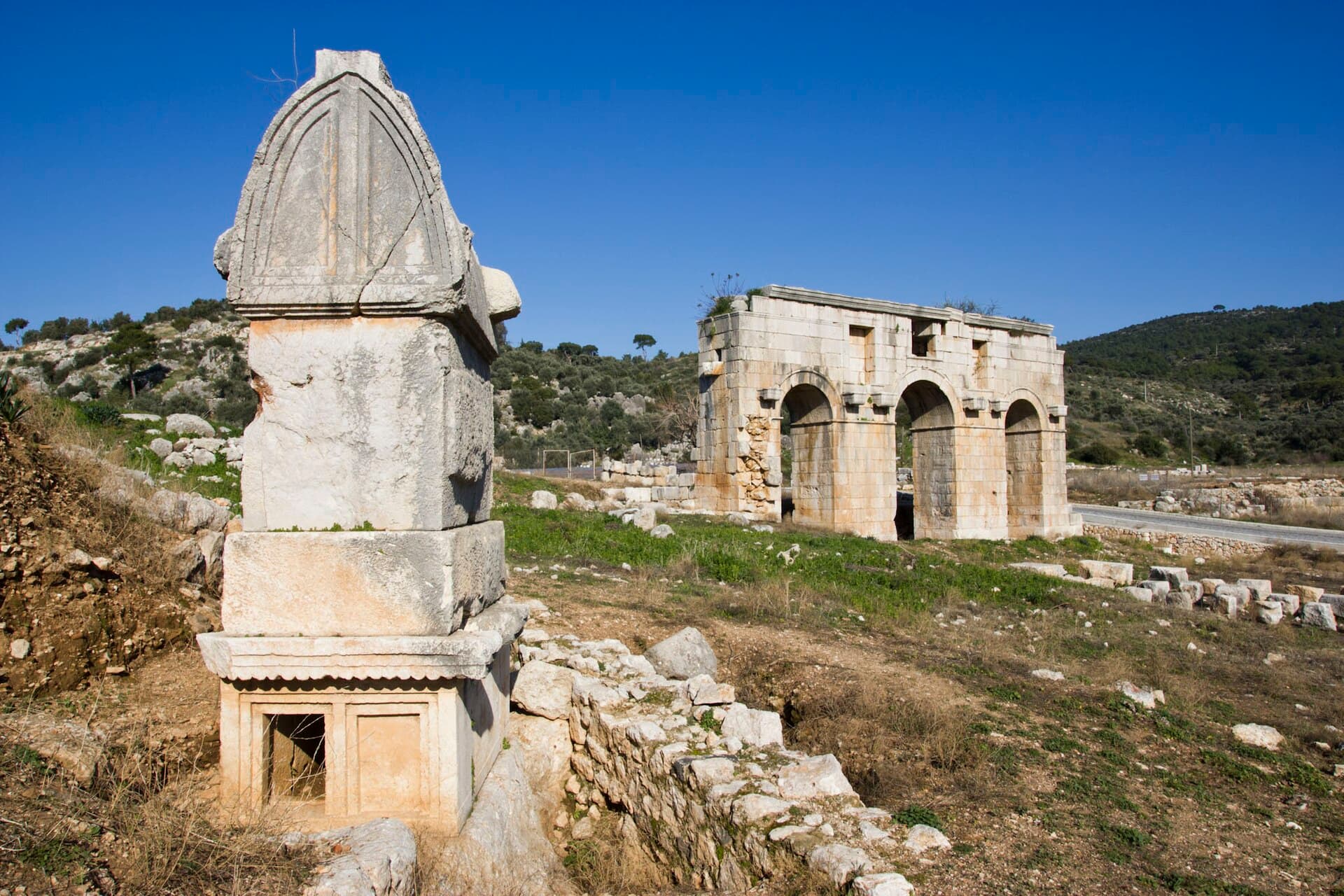 William Neuheisel from DC, US / CC BY 2.0, via Wikimedia Commons
Tour de audio autoguiado de Patara — ruta GPS a pie, reproducción offline, narración en 32 idiomas.
“Donde los ecos antiguos se encuentran con la extensión de arenas doradas.”
No las postales. Las historias que ni los locales conocen — al oído, justo donde ocurrieron.
Esta extensión de arena aparentemente interminable ofrece más que solo un lugar para tomar el sol.
Puedes estar en un espacio que inspiró un documento fundamental de la democracia moderna.
Uno de los faros más antiguos del mundo se encuentra aquí, aunque no exactamente como uno podría imaginar.
Descubre todos los secretos de Patara
Cada dirección, cada revelación al completo — a tu oído, justo donde ocurrió.
Eliges tus paradas. Caminas. La voz te revela lo que los demás ignoran.


Lume incluye una guía de realidad aumentada. Levanta el móvil y su cámara muestra la calle que tienes delante, con una flecha luminosa sobre la imagen real que siempre apunta a tu próxima parada — sin mapas que descifrar, sin giros equivocados. Como todo en Lume, funciona completamente sin conexión.
Patara, en la costa suroeste de Turquía, presenta una fusión singular de historia antigua y esplendor natural. Esta ciudad marítima que una vez fue próspera, capital de la Liga Licia, ahora revela extensas ruinas arqueológicas junto a una de las playas más largas e inmaculadas de Turquía. El sitio ofrece una rara oportunidad de explorar estructuras milenarias y luego relajarse en una vasta costa protegida.
Designada como parque nacional y área especialmente protegida, Patara es un santuario donde la historia, la naturaleza y la tranquilidad convergen. Sus arenas doradas y aguas poco profundas se extienden por aproximadamente 18-20 kilómetros, creando un refugio tranquilo de las áreas costeras más desarrolladas. La combinación de un sitio arqueológico de clase mundial y una playa virgen hace de Patara un destino atractivo para quienes buscan tanto enriquecimiento cultural como reposo.
## De Potencia Licia a Puerto Romano Los orígenes de Patara se remontan a más de 3.000 años, con su primera mención en textos hititas del siglo XIII a.C. como "Patar". La mitología sugiere su fundación por Pátaro, un hijo de Apolo, y evolucionó hasta convertirse en un importante centro religioso con un templo y un oráculo dedicados al dios sol, solo superado por Delfos en importancia.
A mediados del siglo I a.C., Patara ascendió a la prominencia como la primera capital de la Liga Licia, una federación de ciudades-estado reconocida por sus principios democráticos. Su posición estratégica como la única puerta de entrada desde el Valle de Xanthos al Mar Mediterráneo la convirtió en un puerto marítimo vital y un centro comercial líder. La influencia de la ciudad se expandió aún más después de su conquista por Alejandro Magno en el 333 a.C.
Bajo el dominio romano, que comenzó en el 43 d.C., Patara floreció como la capital de la provincia de Licia y un depósito principal para las reservas de grano de Roma. Esta era vio la construcción de impresionantes edificios, incluido el edificio del parlamento más antiguo del mundo y un faro encargado por el emperador Nerón. Sin embargo, el declive de la ciudad comenzó a medida que su puerto se llenaba gradualmente de arena del río Esen, volviéndose finalmente inaccesible al mar entre los siglos XIV y XV d.C. Este proceso natural llevó al abandono de la ciudad, dejando sus restos bien conservados bajo la arena, una cápsula del tiempo natural esperando ser redescubierta a través de las excavaciones en curso.
## El Lugar de Nacimiento de San Nicolás Patara ocupa una posición única en la historia cristiana como el lugar de nacimiento de San Nicolás en el 270 d.C. Nacido en una familia acomodada, Nicolás más tarde se convirtió en obispo en la cercana ciudad de Myra y es la figura histórica cuyo legado perdura hoy como Papá Noel, conocido por sus actos de generosidad discreta y benevolencia. El apóstol Pablo también transbordó barcos en Patara durante su viaje misionero a Jerusalén, afianzando aún más las conexiones cristianas tempranas de la ciudad.
Patara ofrece una cautivadora mezcla de maravillas arqueológicas y belleza natural. Comience su exploración en la Puerta de la Ciudad Romana (Arco del Triunfo), una estructura bien conservada de finales del siglo I d.C. que marcaba la entrada a la antigua ciudad. Cerca, la Casa del Consejo (Buleuterio), el edificio del parlamento reconstruido de la Liga Licia, se erige como un símbolo de la democracia antigua y ocasionalmente alberga conciertos.
El Gran Teatro, construido en la colina de Kursunlutepe, es una hazaña de la ingeniería romana que una vez albergó a 5.500-6.000 espectadores. Aunque dañado por un terremoto, su diámetro de 84 metros sigue siendo impresionante. No pase por alto los restos del Faro de Nerón, considerado uno de los más antiguos del mundo, que ofrece un vistazo al pasado marítimo de Patara. Otras ruinas notables incluyen el Granero de Adriano, una estructura sustancial que sirvió como depósito para el grano de Roma, y la Calle Columnata, que una vez conectó la ciudad interior con el puerto. También puede explorar el Complejo de Baños Romanos, que incluye el caldarium y el frigidarium, mostrando una avanzada fontanería antigua.
Más allá de las ruinas, la Playa de Patara se extiende por kilómetros, ofreciendo arenas doradas y aguas poco profundas. Las dunas de arena circundantes crean una extensión distintiva, casi desértica, proporcionando un telón de fondo espectacular para fotografías, especialmente al atardecer.
El momento ideal para visitar Patara es durante la primavera tardía (de abril a principios de junio) y principios de otoño (de septiembre a octubre). Durante estos meses, las temperaturas son agradables, oscilando entre los 20°C y los 30°C (68°F a 86°F), perfectas para explorar las ruinas y disfrutar de la playa. Las multitudes también son menores que en la temporada alta de verano, y los precios de los alojamientos pueden ser más bajos. Octubre, en particular, ofrece temperaturas más suaves y puestas de sol impresionantes. Si bien el verano es popular para la playa, los visitantes deben irse al atardecer debido a la anidación de tortugas.
Patara se encuentra en la costa suroeste de Turquía, en la provincia de Antalya, entre Fethiye y Kaş, cerca del pueblo de Gelemiş. El aeropuerto más cercano es Dalaman (DLM), aproximadamente a 1.5 a 2 horas en coche, mientras que el aeropuerto de Antalya (AYT) está a unas 3 a 3.5 horas. Alquilar un coche ofrece la mayor flexibilidad para explorar la costa licia.
Alternativamente, los minibuses locales (dolmuş) circulan regularmente desde Kaş y Kalkan hasta el pueblo de Gelemiş y la entrada a la playa. Hay una tarifa de entrada al sitio arqueológico de la Ciudad Antigua de Patara, que también da acceso a la playa. Los titulares del Turkish Museum Pass suelen tener entrada gratuita. Las instalaciones en la playa son mínimas, con duchas sencillas, baños y pequeños restaurantes cerca de la entrada principal. No se permite acampar directamente en la playa, ya que es un parque nacional protegido.
Patara en coreano, en chino o en hebreo — y 29 idiomas más, cada parada narrada por una voz nativa. La mayor variedad de idiomas de cualquier audioguía autoguiada.
Disponible en: