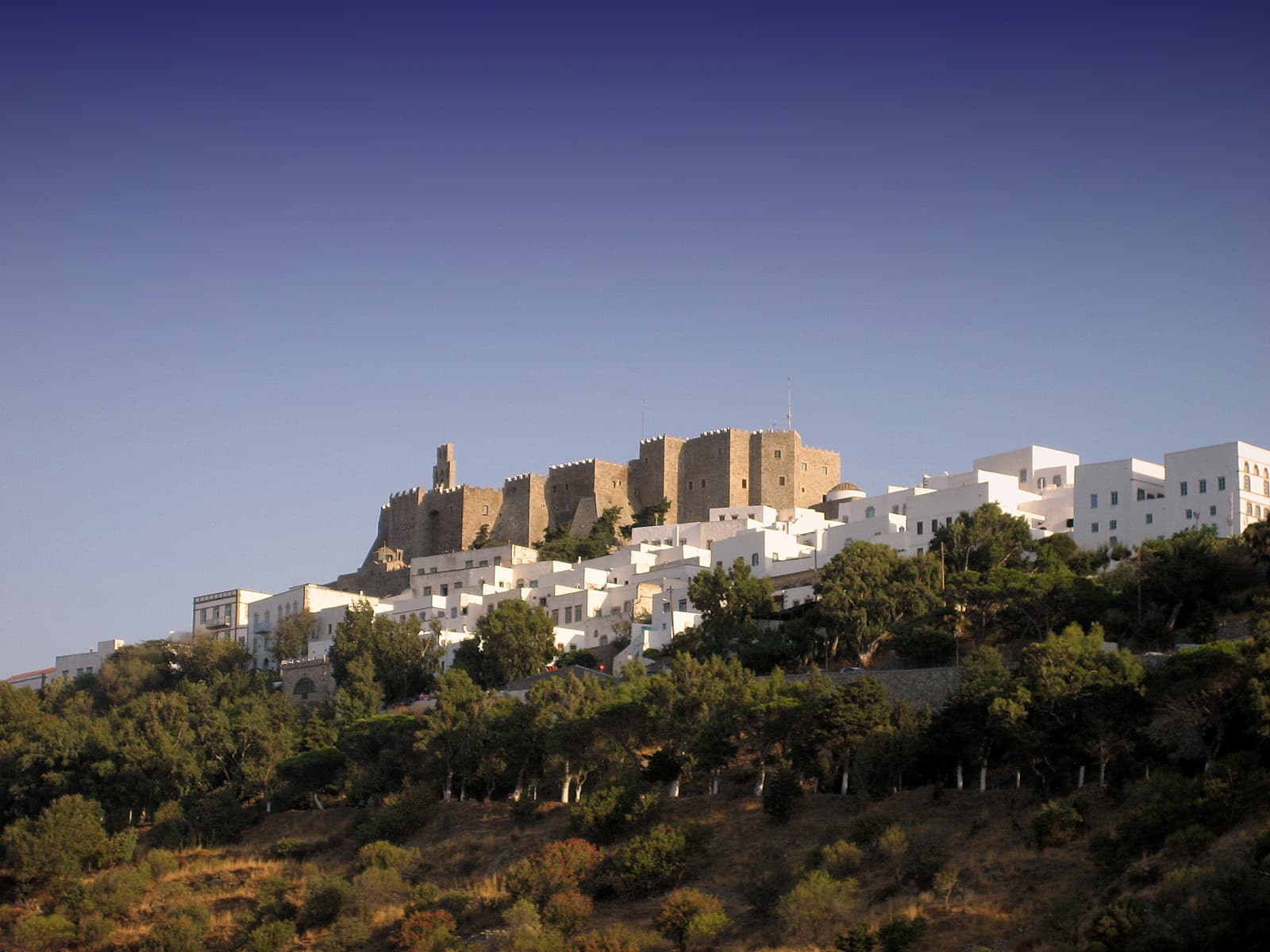
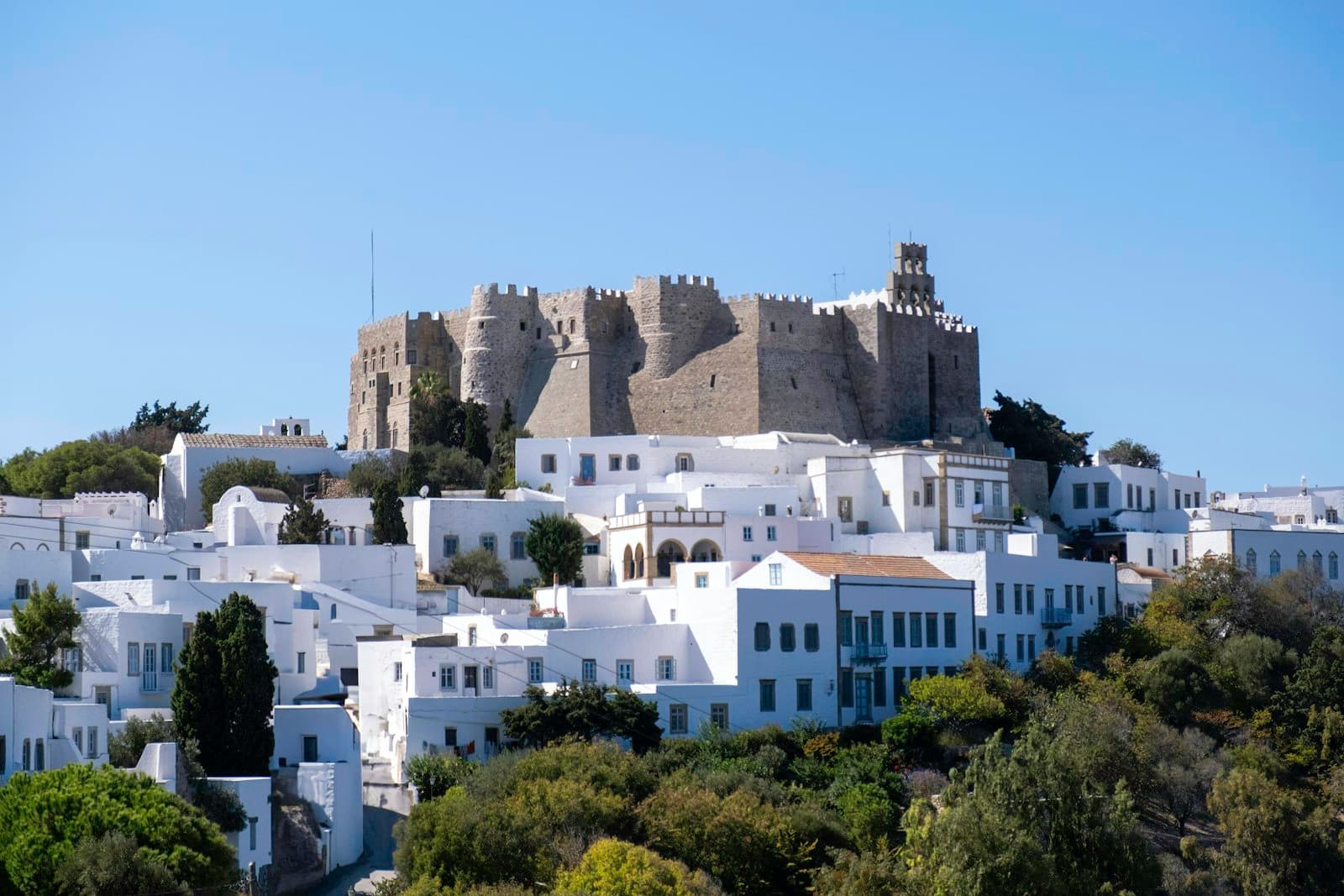
Patmos, GreeceChris Vlachos / CC BY 3.0, via Wikimedia Commons
GR

Patmos

Where the light of revelation meets the Aegean blue.

The secrets of Patmos

Patmos, as no one tells it.

Not the postcards. The stories even locals don't know — whispered in your ear, right where they happened.

3 secrets below. Many more wait inside the tour.
Cave of the Apocalypse

Beyond the sacred texts, a particular rock formation within the cave is said to bear a unique mark.

Full story unlocks in the tour
Chora, Patmos

The fortified monastery dominating Patmos's Chora holds a surprising, almost playful, secret within its formidable walls.

Full story unlocks in the tour
Skala Harbor

Even the main port of Patmos, Skala, has a connection to a specific, unusual maritime tradition.

Full story unlocks in the tour
The full tour

Discover every secret of Patmos

Every address, every reveal in full — in your ear, right where it happened.

Get the key to Patmos

You pick your stops. You walk. The voice reveals what the others miss.

Choose your time

How long do you have in Patmos?

No tours available yet. Check back soon — we're preparing them.

About Patmos

The story of Patmos

Patmos, a small island in the Dodecanese chain, rises from the Aegean Sea with a dramatic, sculptural presence. Its volcanic origins are evident in the rugged coastline and the stark, beautiful landscapes. The island is perhaps most widely known as the 'Jerusalem of the Aegean,' a designation earned from its profound spiritual significance as the place where St. John the Theologian received his visions and penned the Book of Revelation. This spiritual heritage permeates the island, from the hushed reverence of the Cave of the Apocalypse to the imposing Monastery of Saint John, a UNESCO World Heritage site that crowns the island's highest point.

Patmos is more than its sacred sites. It offers a captivating blend of spiritual pilgrimage and authentic island life. Whitewashed villages cling to hillsides, their narrow alleys inviting exploration. Fishing boats bob in the harbors, and the scent of wild herbs drifts on the sea breeze. Despite its fame, Patmos maintains a tranquil atmosphere, inviting visitors to slow down, reflect, and connect with its unique rhythm.

History

From Ancient Cults to Christian Revelation

Patmos's history stretches back to antiquity, long before its Christian renown. Archaeological evidence suggests human presence from the Middle Bronze Age. In ancient times, the island was associated with the goddess Artemis, with a temple dedicated to her reportedly standing on the site where the Monastery of Saint John now stands. This pre-Christian past, though less documented than its later history, hints at a long-standing sacred character of the island.

The Arrival of St. John and the Birth of Revelation

The pivotal moment in Patmos's history arrived in the 1st century AD when St. John the Theologian was exiled to the island by the Roman Emperor Domitian around 95 AD. It was during his time in a grotto, now known as the Cave of the Apocalypse, that he experienced the visions that would become the Book of Revelation, the final book of the New Testament. This event transformed Patmos into one of Christianity's most significant pilgrimage sites.

Byzantine Era and Monastic Power

Following St. John's exile, Patmos experienced periods of Roman and Byzantine rule. The island remained relatively sparsely populated until the 11th century when the Byzantine Emperor Alexios I Komnenos granted the island to Saint Christodoulos. In 1088, Christodoulos founded the Monastery of Saint John the Theologian. This monumental fortified monastery became the spiritual and administrative heart of the island, shaping its social, economic, and cultural life for centuries. Its formidable architecture was a necessity, protecting the island's inhabitants and treasures from pirate raids that plagued the Aegean.

Ottoman Rule and Modern Greece

Patmos, like many Greek islands, fell under Ottoman rule in the 16th century. However, due to its unique monastic status and strategic unimportance to the Ottomans, the island enjoyed a degree of autonomy, allowing the monastery to continue its spiritual and educational work. Patmos eventually joined the newly formed Greek state in 1948, following the Dodecanese islands' cession from Italy after World War II. Today, Patmos continues to balance its profound spiritual legacy with its identity as a Greek island, attracting both pilgrims and travelers seeking its unique blend of history, faith, and natural beauty.

What to see

Begin your exploration at the Cave of the Apocalypse, where St. John is said to have received his visions. The atmosphere here is one of quiet contemplation, with the rock formations themselves part of the sacred narrative. Ascend to the Monastery of Saint John the Theologian, a UNESCO World Heritage site that dominates the island's skyline. Explore its fortified walls, the main church (Katholikon) with its intricate frescoes, and the museum housing a remarkable collection of icons, manuscripts, and ecclesiastical treasures.

Below the monastery lies Chora, the island's capital, a labyrinthine village of whitewashed houses, archways, and bougainvillea-draped courtyards. Wander its narrow alleys, discover small shops, and enjoy panoramic views of the Aegean. For a different pace, head to Skala, the main port, offering waterfront tavernas, cafes, and a more contemporary feel. From Skala, you can arrange boat trips to nearby islets or explore some of Patmos's quieter beaches like Livadi Geranou or Psili Ammos, known for their clear waters and serene settings.

When to visit

The best times to visit Patmos are during the spring (April to June) and early autumn (September to October). During these months, the weather is pleasantly warm, ideal for exploring, and the crowds are smaller than in the peak summer months of July and August. The island's religious festivals, particularly Orthodox Easter, offer a unique cultural experience, though accommodation should be booked well in advance.

Practical

Patmos is accessible by ferry from Piraeus (Athens' port) and other Dodecanese islands. The journey from Piraeus can be long, so overnight ferries are a popular option. Once on the island, local buses connect Skala with Chora and some of the main beaches. Taxis are also available, and car or scooter rentals offer flexibility for exploring at your own pace. Accommodation ranges from boutique hotels in Chora to guesthouses and rooms to let in Skala and other villages. It's advisable to book accommodation in advance, especially during peak season and religious holidays.

Good to know
How do I get to Patmos?
Patmos is primarily reached by ferry. There are regular ferry services from Piraeus (the port of Athens) and from other islands in the Dodecanese and Cyclades island groups. The journey from Piraeus can take several hours, so overnight ferries are an option.
What is the main attraction in Patmos?
The two main attractions in Patmos are the Cave of the Apocalypse, where St. John is believed to have written the Book of Revelation, and the Monastery of Saint John the Theologian, a fortified Byzantine monastery that crowns the island's Chora.
Is Patmos a good island for beaches?
While Patmos is primarily known for its spiritual significance, it does offer several beautiful beaches with clear waters. Popular options include Psili Ammos, Livadi Geranou, and Grikos. Many are accessible by bus or boat.
Can I visit the Monastery of Saint John?
Yes, the Monastery of Saint John the Theologian is open to visitors. There is an entrance fee, and a dress code typically requires shoulders and knees to be covered as a sign of respect.
Is Patmos crowded?
Patmos can experience crowds, particularly during the peak summer months of July and August, and during major religious holidays like Orthodox Easter. However, outside of these times, the island maintains a more tranquil atmosphere.
What kind of food can I expect in Patmos?
Patmos offers traditional Greek island cuisine, with a strong emphasis on fresh seafood. You'll find tavernas serving grilled fish, octopus, and local specialties, along with classic Greek dishes like moussaka and souvlaki.
Patmos
From€9.00
No booking · activate anytime · 12h to walk it
Get the key to Patmos