This enduring lighthouse once served a surprising dual purpose beyond guiding ships.
Aconcagua / CC BY-SA 3.0, via Wikimedia CommonsPeggy's Cove
“Where granite meets the sea, stories unfold in the salt-laced air.”
Peggy's Cove, as no one tells it.
Not the postcards. The stories even locals don't know — whispered in your ear, right where they happened.
The origin of Peggy's Cove's name is veiled in more than one local tale.
The seemingly random scattering of massive boulders across the Peggy's Cove landscape is, in fact, a deliberate signature of ancient forces.
Discover every secret of Peggy's Cove
Every address, every reveal in full — in your ear, right where it happened.
You pick your stops. You walk. The voice reveals what the others miss.
How long do you have in Peggy's Cove?
No tours available yet. Check back soon — we're preparing them.
The story of Peggy's Cove
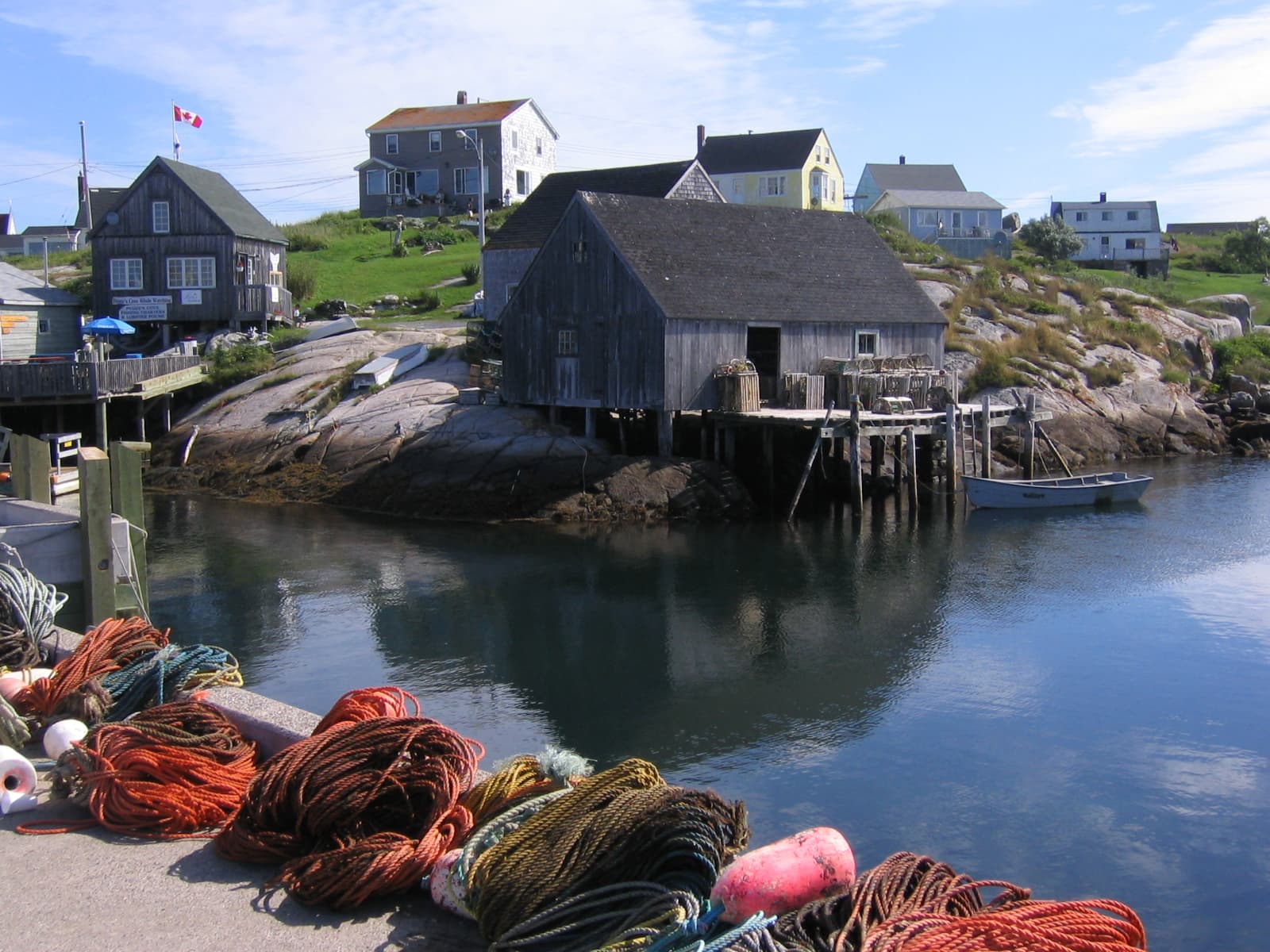
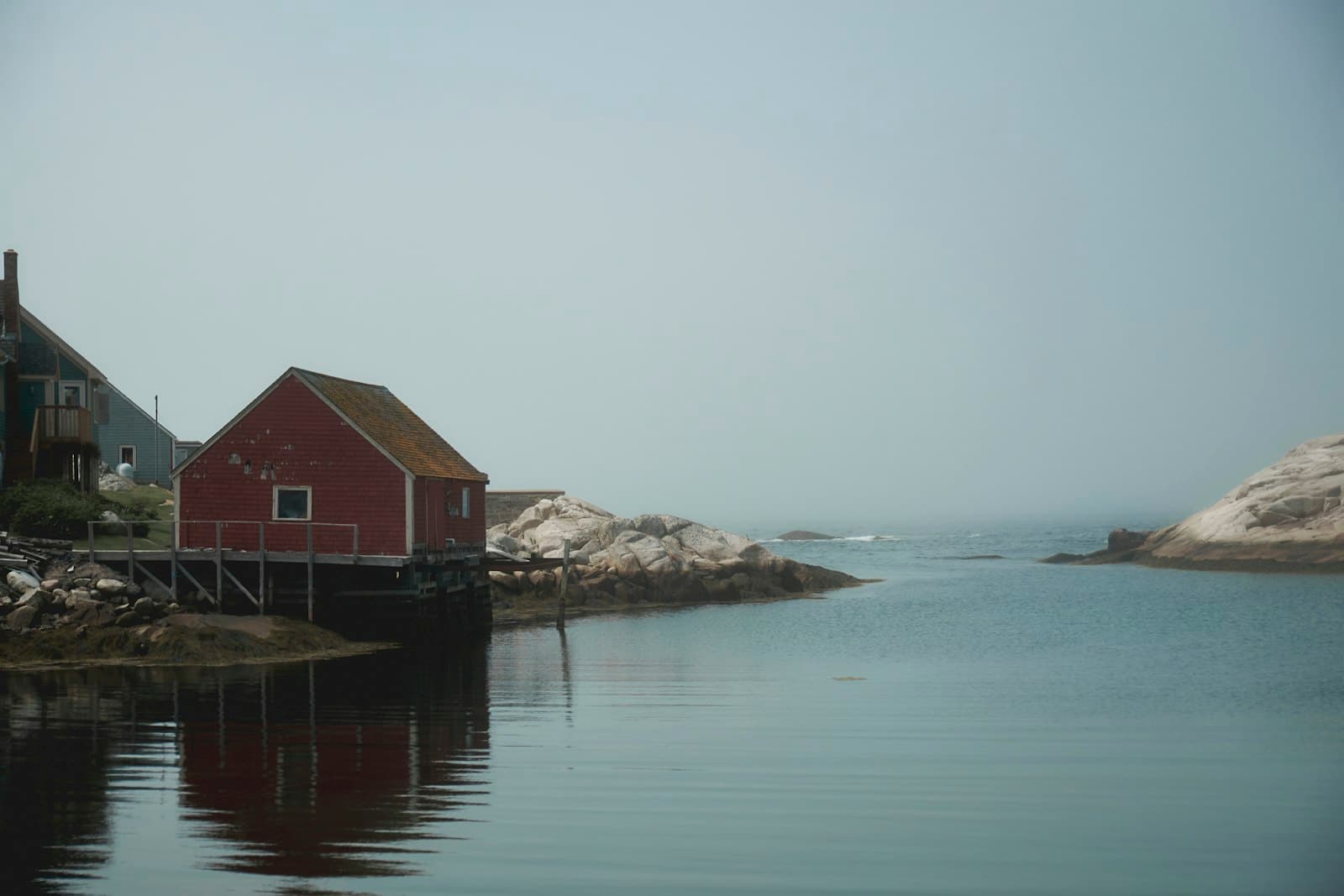
Peggy's Cove, a small fishing village on the eastern shore of St. Margarets Bay, Nova Scotia, is a place where the raw power of the Atlantic Ocean meets a landscape sculpted by ancient forces. Located about 43 kilometers southwest of downtown Halifax, it is a destination that draws nearly half a million visitors annually, captivated by its rugged beauty and maritime character. The village maintains its authentic feel, with colorful fishing boats in the harbor, weathered fishing shacks, and houses built upon granite outcrops.
More than just a picturesque scene, Peggy's Cove is a working community where many families have earned their living from the sea for generations. Its iconic lighthouse, standing upon a dramatic granite formation, has become a symbol of Atlantic Canada. The unique geology, shaped by millions of years of tectonic activity and glacial movement, creates a dramatic backdrop that has long inspired artists and photographers.
From Ancient Geology to Fishing Village
The geological story of Peggy's Cove began over 470 million years ago when mud and sand were deposited in a deep ocean basin near ancient Africa. Over time, these sediments compacted into shale and sandstone. Around 400 million years ago, the collision of ancient landmasses, specifically Africa (Gondwanaland) and North America, initiated a period of mountain building. The immense heat and pressure from this collision transformed the shale and sandstone into metamorphic rocks like slate and quartzite, and also caused molten material to rise and cool beneath the Earth's surface, forming the granite that defines the area today.
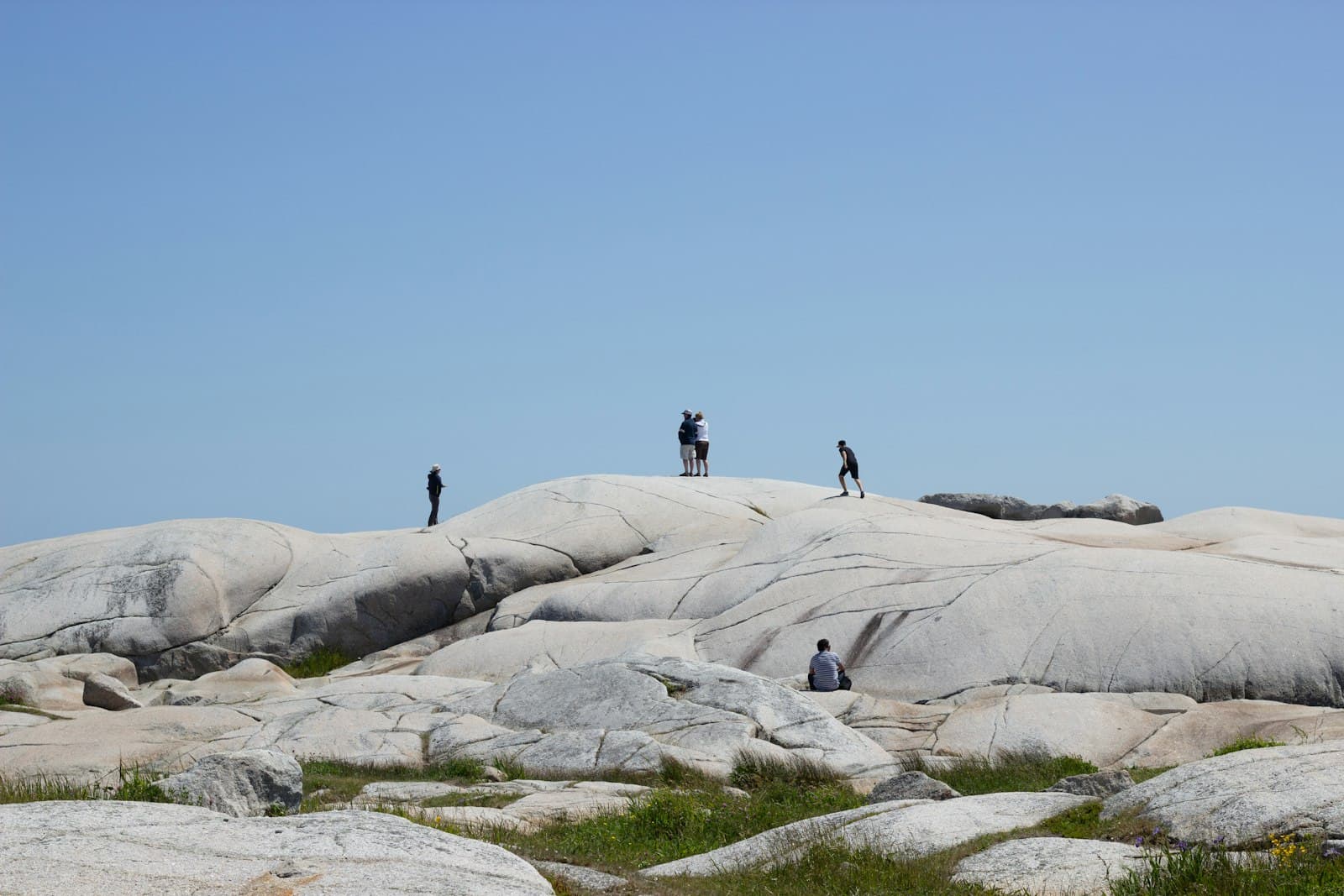
About 20,000 years ago, massive glaciers moved across Nova Scotia, carving and polishing the granite landscape and depositing large boulders, known as glacial erratics, as they receded. These geological forces created the unique, rugged coastline and the sheltered cove that would eventually attract settlers. The first recorded name for the cove was Eastern Point Harbour or Peggs Harbour in 1766. The village itself was founded in 1811 when King George III granted over 800 acres of land to six families of German descent: two Troop brothers, three Isenhauer brothers, and a man named Kayzer.
These early settlers relied on fishing, utilizing the abundant fish populations in St. Margaret's Bay and the protected cove for landing their catches. They also farmed where the thin soil allowed and pastured cattle. By the early 1900s, the population peaked at around 300 residents, supporting a schoolhouse (built in 1839), a church (St. John's Anglican Church, 1850, rebuilt in the 1880s), a general store, and a lobster cannery. As roads improved, tourism began to grow, and after World War II, Peggy's Cove transitioned into the tourist attraction it is today, while still maintaining its identity as an active fishing village. Strict land-use regulations are in place to preserve its rustic appearance and prevent overdevelopment.
The most recognizable landmark is the Peggy's Point Lighthouse, a classic white-and-red octagonal structure built in 1914. It stands approximately 15 meters (49 feet) tall on massive granite rocks and is one of the most photographed lighthouses in Canada. While visitors cannot go inside the lighthouse, an accessible viewing deck offers sweeping views of the coastline.
Beyond the lighthouse, explore the village on foot, meandering past colorful fishing shacks and homes that line the narrow inlet. Observe the working harbor with its lobster boats and traps, a testament to the village's enduring fishing heritage.
For art enthusiasts, the William E. deGarthe Memorial Provincial Park features a granite boulder carved with a 30-meter mural depicting 32 fishermen, their families, Peggy of the Cove, and St. Elmo, the patron saint of sailors. DeGarthe, a Finnish artist who settled in the area, dedicated his work to capturing the lives of fishermen. His former home now serves as a museum, displaying 65 of his paintings. Additionally, the Schoolhouse offers a free, self-guided tour into 19th-century student life, and the Spindrift Gallery showcases fine art by Atlantic Canadian artists.
The ideal time to visit Peggy's Cove is between late spring (May) and early fall (October) when the weather is mildest. Summer months (July and August) offer the longest days and warmest weather, but also the largest crowds. To avoid peak hours and experience a quieter atmosphere, consider visiting in the early mornings (before 9 AM) or late afternoons (after 5 PM). The shoulder seasons of May-June and September-October bring fewer visitors, beautiful light for photography, and the possibility of dramatic fog or rich autumn colors in the surrounding hills.
Peggy's Cove is approximately a 45-minute drive southwest of Halifax via Prospect Road (Highway 333). While public transport does not reach the village, taxis, rideshares, and group tours are available from Halifax. Parking can be limited, especially during peak hours (11 AM to 3 PM), so arriving early or late is recommended. Follow posted parking signs and avoid parking on private property.
Safety is paramount when exploring the rocky coastline. The waves can be unpredictable and powerful, even on calm days. Visitors are strongly advised to stay on dry, light-colored granite and avoid the wet, dark rocks near the water's edge, as rogue waves can sweep people away. Swimming is not recommended. Accessible parking, trails, and viewing decks are available, along with wheelchair-accessible washrooms.
- How did Peggy's Cove get its name?
- There are a few theories. One suggests it's a shortened version of St. Margaret's Bay, with Peggy being a nickname for Margaret. Another popular legend tells of a young woman named Peggy who was the sole survivor of a shipwreck, married a local, and became known as "Peggy of the Cove."
- Is Peggy's Cove Lighthouse still active?
- Yes, Peggy's Point Lighthouse is an active lighthouse, though it was automated in 1958. It guides vessels entering St. Margaret's Bay.
- Can you go inside Peggy's Cove Lighthouse?
- No, visitors are not allowed inside Peggy's Point Lighthouse. However, an accessible viewing deck offers excellent views of the lighthouse and coastline.
- What is the geology of Peggy's Cove?
- The landscape is primarily composed of 375- to 415-million-year-old Devonian granite, part of the Great Nova Scotia batholith. This granite was formed from molten magma and later sculpted by glaciers, which also deposited large boulders known as glacial erratics.
- Is Peggy's Cove dangerous?
- While beautiful, Peggy's Cove can be dangerous due to its rugged coastal environment and unpredictable rogue waves. It is crucial to stay on dry, light-colored rocks and maintain a safe distance from the water's edge. Swimming is not recommended.
- Are there places to eat in Peggy's Cove?
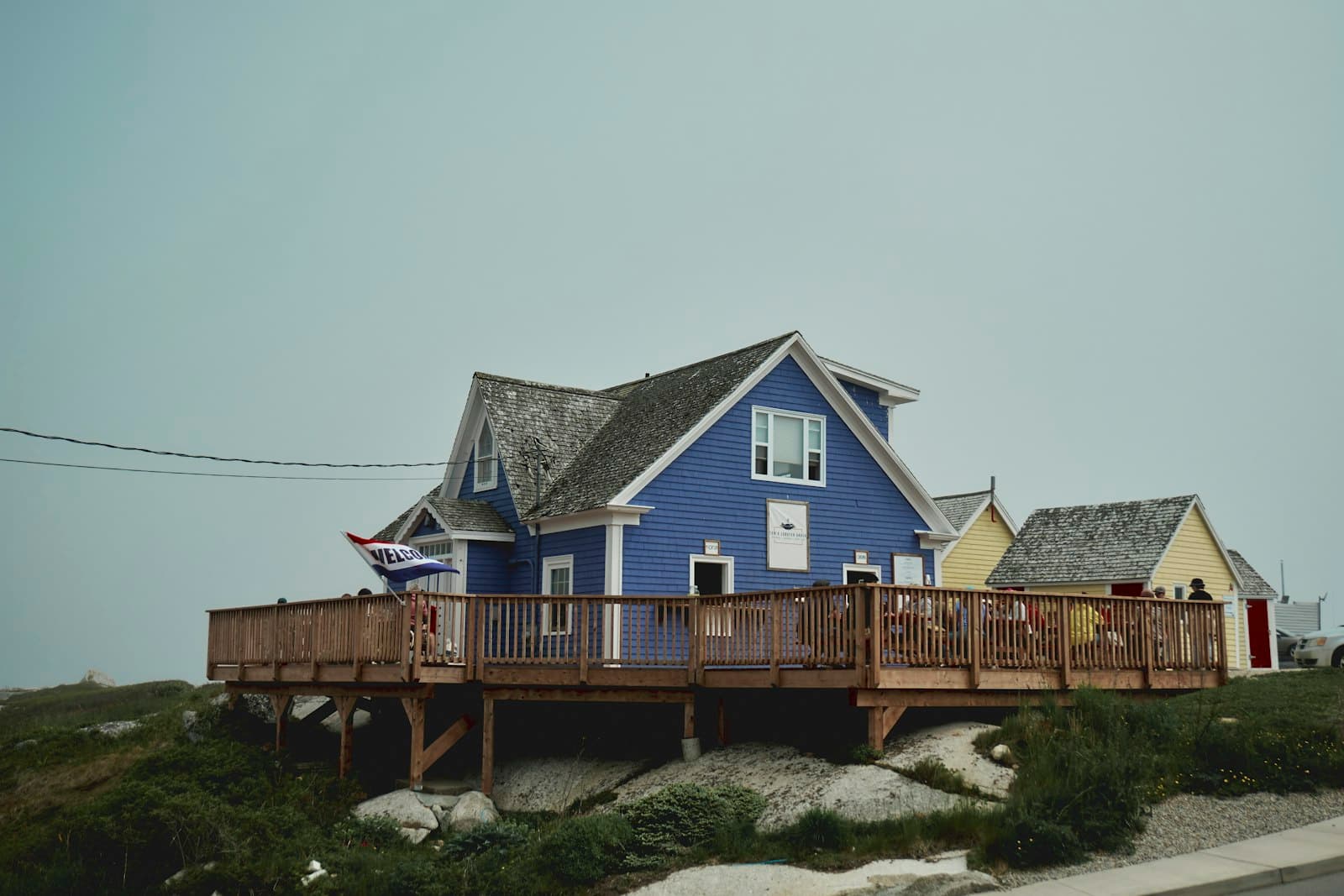
- Yes, there are a few restaurants in the village, offering seafood and casual fare, often with views of the lighthouse or cove. Local shops also sell souvenirs and crafts.