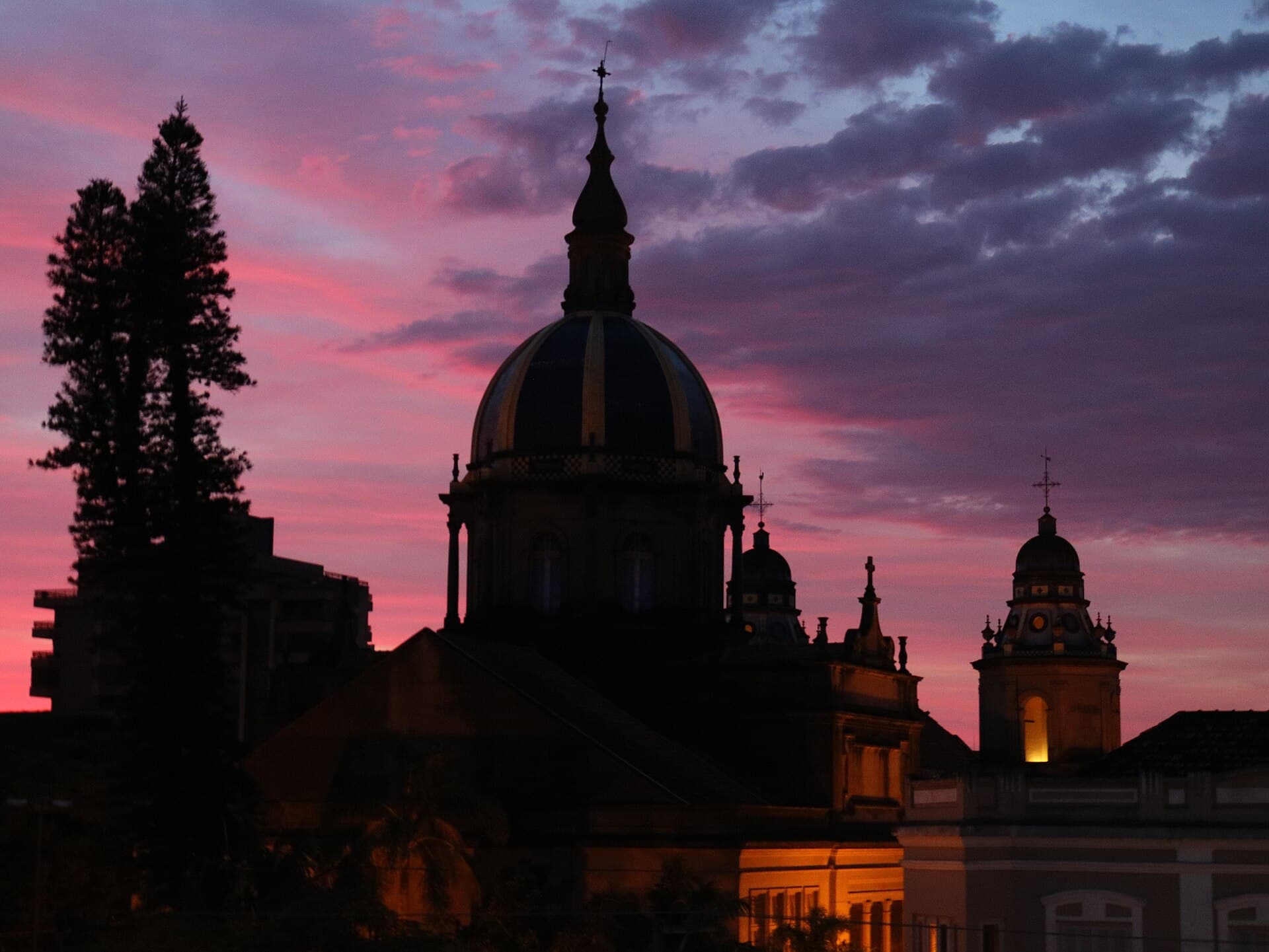
Pelotas, BrazilNoan-manji / CC BY-SA 4.0, via Wikimedia Commons
BR

Pelotas

Where grand history meets a sweet present, a city shaped by ambition and artistry.

The secrets of Pelotas

Pelotas, as no one tells it.

Not the postcards. The stories even locals don't know — whispered in your ear, right where they happened.

3 secrets below. Many more wait inside the tour.
Charqueadas (Dried Meat Farms)

The opulent mansions of Pelotas' 19th-century elite tell a story of immense wealth, but the true source of that fortune often remains in the shadows.

Full story unlocks in the tour
Pelotas' Traditional Sweets

Pelotas is known as Brazil's 'National Capital of Sweets,' a title that emerged from an unexpected shift in the city's economy.

Full story unlocks in the tour
Coronel Pedro Osório Square

This central square, surrounded by impressive architecture, holds a unique political distinction in Brazilian history.

Full story unlocks in the tour
The full tour

Discover every secret of Pelotas

Every address, every reveal in full — in your ear, right where it happened.

Get the key to Pelotas

You pick your stops. You walk. The voice reveals what the others miss.

Choose your time

How long do you have in Pelotas?

No tours available yet. Check back soon — we're preparing them.

About Pelotas

The story of Pelotas

Pelotas, often called the "Princess of the South," is a captivating city in the southern Brazilian state of Rio Grande do Sul. Situated near the Lagoa dos Patos, South America's largest lagoon, it serves as a significant cultural and economic hub. With a population of over 320,000 inhabitants, Pelotas offers a blend of urban energy and a relaxed, welcoming atmosphere, reflecting the hospitality of Gaúcho culture.

The city's distinguished past is beautifully preserved in its architecture and local museums, showcasing a unique blend of European influences. Beyond its historical buildings, Pelotas is celebrated for its exquisite confectionery tradition, earning it the title of "National Capital of Sweets." These traditional desserts are recognized as part of Brazil's intangible cultural heritage. Whether strolling through its inviting streets or enjoying the breeze near the Laranjal beaches, Pelotas promises a memorable experience for those who appreciate history, architecture, and world-class sweets.

History

The Rise of Charque and European Influences

Pelotas' origins are deeply intertwined with the development of the charque (dried and salted meat) industry in southern Brazil. The city's formal founding traces back to the 1780s with the establishment of the first charqueadas, or livestock ranches, by Portuguese entrepreneur José Pinto Martins. This industry quickly turned Pelotas into a powerful economic hub, with charque being a staple food that fed enslaved people on plantations across the country. The city's strategic location on the São Gonçalo navigable channel, connecting the Patos and Mirim lagoons, provided direct access to the Atlantic Ocean, making it a crucial supplier of provisions.

The immense wealth generated by the charque industry created a unique aristocracy known as the 'charqueadores'. These affluent families sent their children to study in Europe, who, upon their return, brought back strong cultural and architectural influences from Paris and Lisbon. This period of prosperity transformed Pelotas into one of Brazil's most flourishing centers in the 19th century, earning it the moniker "Princess of the South" and "The Athens of Rio Grande do Sul." Grand neoclassical mansions and public buildings, still visible today, were constructed during this economic boom.

Shifting Fortunes and Sweet Transitions

The charque industry began its decline with the abolition of slavery in Brazil in 1884, as slave labor was essential to its production. Further expansion of charque production to other cities in Rio Grande do Sul accelerated the decline of Pelotas' charqueadas. However, the city found a new economic and cultural identity. The wives and daughters of the former charque barons began producing and selling traditional sweets from their homes, a practice that eventually led to Pelotas being recognized as the "National Capital of Sweets." These sweets, deeply rooted in Portuguese egg-based recipes, became an integral part of the city's heritage.

Modern Pelotas: Education and Culture

In the early 20th century, the Banco Pelotense, founded in 1906, further stimulated progress in the city. Today, Pelotas continues to be a significant cultural and educational center, home to two major universities: the Federal University of Pelotas and the Catholic University of Pelotas, attracting a substantial student population. The city maintains a dynamic cultural life, blending its historical heritage with modern amenities and a lively community spirit.

What to see

Begin your exploration at Coronel Pedro Osório Square, the city's heart, surrounded by significant historical buildings and a favored gathering spot for locals. Just a short walk away, you'll find the Metropolitan Cathedral of Saint Francis of Paola, an imposing architectural landmark.

Delve into the city's opulent past at the Museu da Baronesa (Baroness Museum), housed in a beautifully preserved mansion that offers a glimpse into the lavish 19th-century lifestyle of Pelotas' elite. To understand the foundation of this wealth, visit a Charqueada museum, such as Charqueada São João, which showcases the historical significance of the dried meat industry and preserves artifacts from that era.

No visit to Pelotas is complete without indulging in its celebrated sweets. Explore the Public Market, a historic and lively meeting place dating back to 1847, where you can find local crafts and fresh produce alongside sweet treats. For a deeper dive into the confectionery tradition, consider the Museum Doce - UFPel. Finally, for a relaxing escape, head to Laranjal Beach on the shores of Lagoa dos Patos, offering opportunities for walking, biking, and enjoying the sun.

When to visit

Pelotas experiences distinct seasons, making different times of year appealing for various activities. The warmer months, from December to February, offer average temperatures around 23°C to 25°C, with daytime highs reaching nearly 29°C in January. This is a lively time for outdoor activities, though be prepared for frequent showers. For warm-weather activities, early March to late April and early October to late December are considered the best times, with late November offering a peak. The winter season, from June to August, brings cooler air, with average temperatures between 13°C and 15°C. Rainfall is fairly consistent year-round, so packing layers and a raincoat is advisable regardless of the season.

Practical

The local currency is the Brazilian Real (BRL). Credit and debit cards are widely accepted in most restaurants and shops, but carrying some cash for small purchases at street markets or for public transport is advisable. Tipping 10% in restaurants is customary.

Pelotas is generally considered safer than Brazil's larger metropolitan areas, but standard precautions apply. It's wise to avoid walking alone in poorly lit areas at night and to keep valuables discreet and secure. For emergencies, the public ambulance service number is 192. The official language is Portuguese, and English is not widely spoken outside of major hotels.

Pelotas Airport (PET) receives scheduled flights and is close to the city center. Alternatively, Salgado Filho International Airport (POA) in Porto Alegre (about 226 km away) offers more flight connections, with intercity buses or rental cars available for the 3-4 hour journey to Pelotas. Within the city, ride-hailing apps like Uber or 99 are widely available, safe, and affordable. Buses generally operate from 6:00 AM until midnight, with reduced frequency on weekends.

Good to know
What is Pelotas known for?
Pelotas is known for its distinguished history, preserved 19th-century architecture, and its exquisite confectionery tradition, earning it the title of "National Capital of Sweets."
How do I get to Pelotas?
You can fly directly to Pelotas Airport (PET) or to Salgado Filho International Airport (POA) in Porto Alegre, which has more flight connections. From Porto Alegre, you can take a bus or rent a car for the 3-4 hour journey.
Is Pelotas safe for visitors?
Pelotas is generally considered safer than larger Brazilian cities, but it's always wise to take standard precautions like avoiding poorly lit areas at night and keeping valuables secure.
What kind of sweets are traditional in Pelotas?
Pelotas' traditional sweets are often egg-based, with Portuguese influences, and include delicacies like *quindim* (a glossy yellow custard), *fios de ovos* (egg threads), and *camafeu* (walnut fondant).
What is the best time of year to visit Pelotas?
For warm-weather activities, the best times to visit are from early March to late April and from early October to late December. The city has distinct seasons, so packing layers is always a good idea.
What is the history behind Pelotas' name?
The city's name, 'Pelotas,' comes from the rustic leather boats, shaped like bowls, that were used by indigenous people and enslaved individuals to cross rivers in the region during the early days of the charqueadas.
Pelotas
From€9.00
No booking · activate anytime · 12h to walk it
Get the key to Pelotas