Monastère de Nikitsky
L'un des tsars les plus redoutables de Russie, Ivan le Terrible, croyait que ce monastère détenait la clé d'un souhait personnel.
L'histoire complète se débloque dans le tour
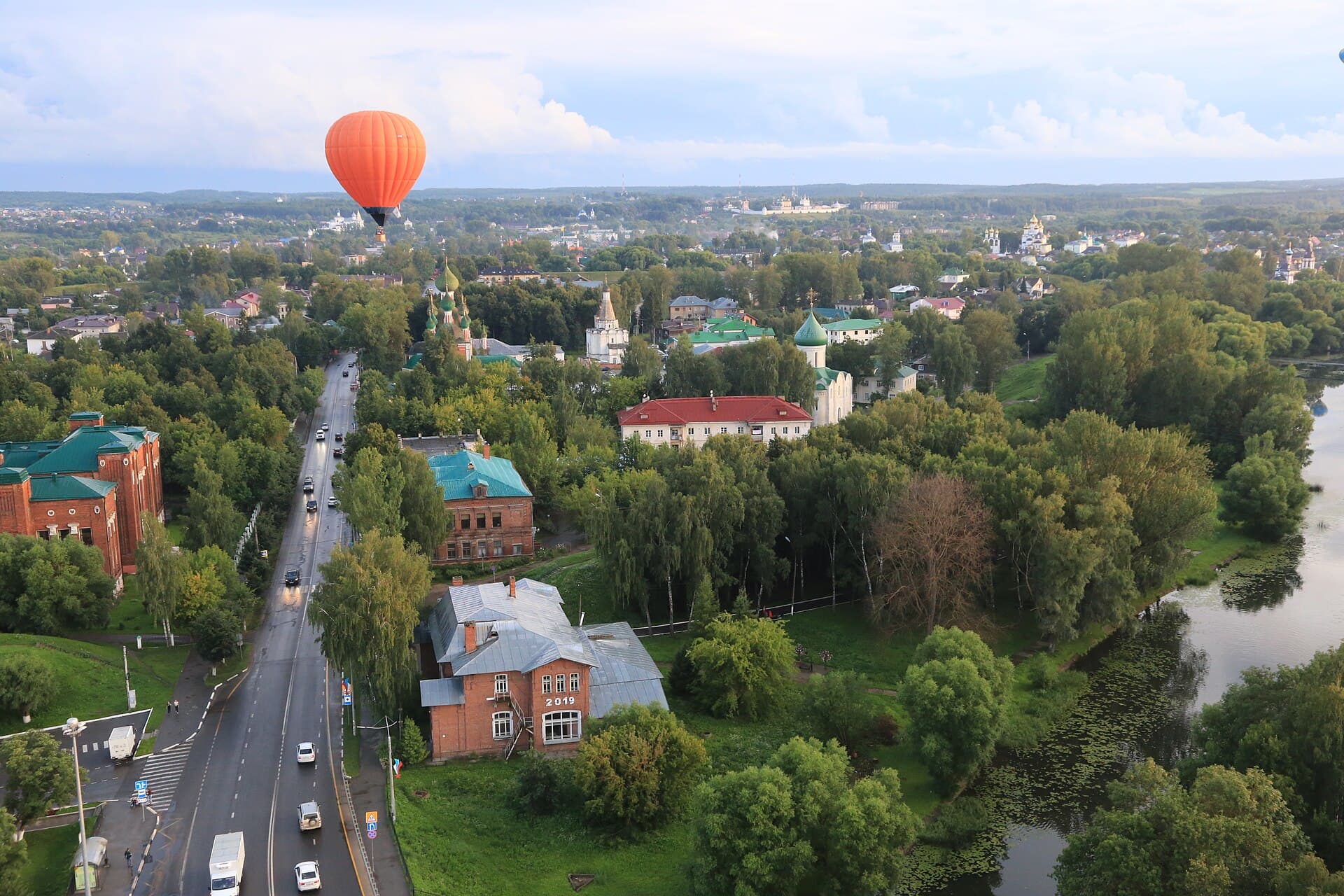 Игорь Шелапутин / CC BY-SA 3.0, via Wikimedia Commons
Visite audio autoguidée de Pereslavl-Zalesski — parcours GPS à pied, lecture hors ligne, narration en 32 langues.
“Là où l'histoire ancienne résonne sur un vaste lac.”
Pas les cartes postales. Les histoires que même les habitants ignorent — soufflées à l'oreille, là où elles se sont passées.
L'un des tsars les plus redoutables de Russie, Ivan le Terrible, croyait que ce monastère détenait la clé d'un souhait personnel.
Avant que la Russie n'ait une marine, son futur empereur construisait une 'flottille amusante' sur ce même lac.
Before Russia had a navy, its future emperor was building a 'fun flotilla' on this very lake.
Découvrez tous les secrets de Pereslavl-Zalesski
Chaque adresse, chaque révélation en entier — dans ton oreille, là où elle s'est passée.
Tu choisis tes lieux. Tu marches. La voix te révèle ce que les autres ignorent.
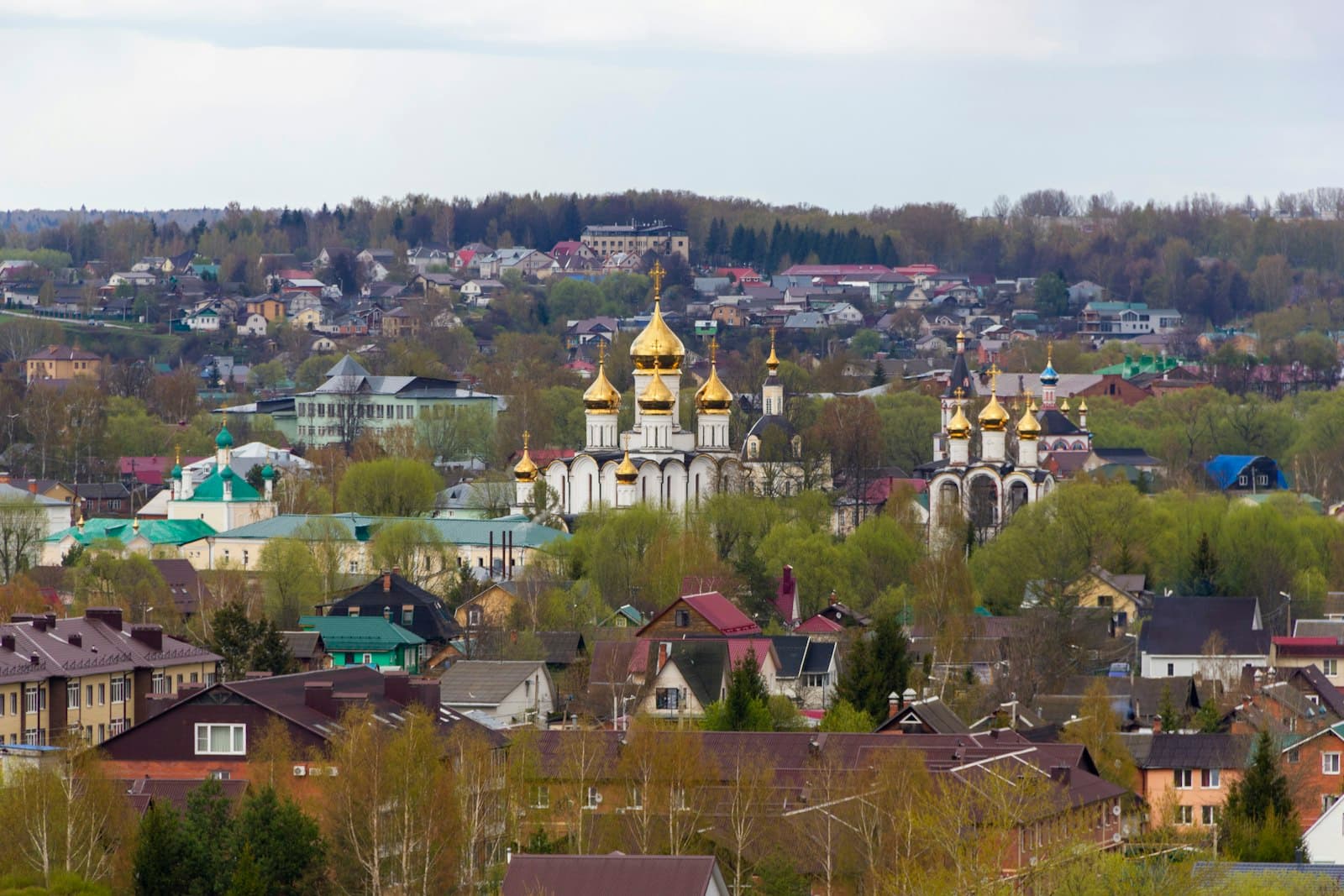
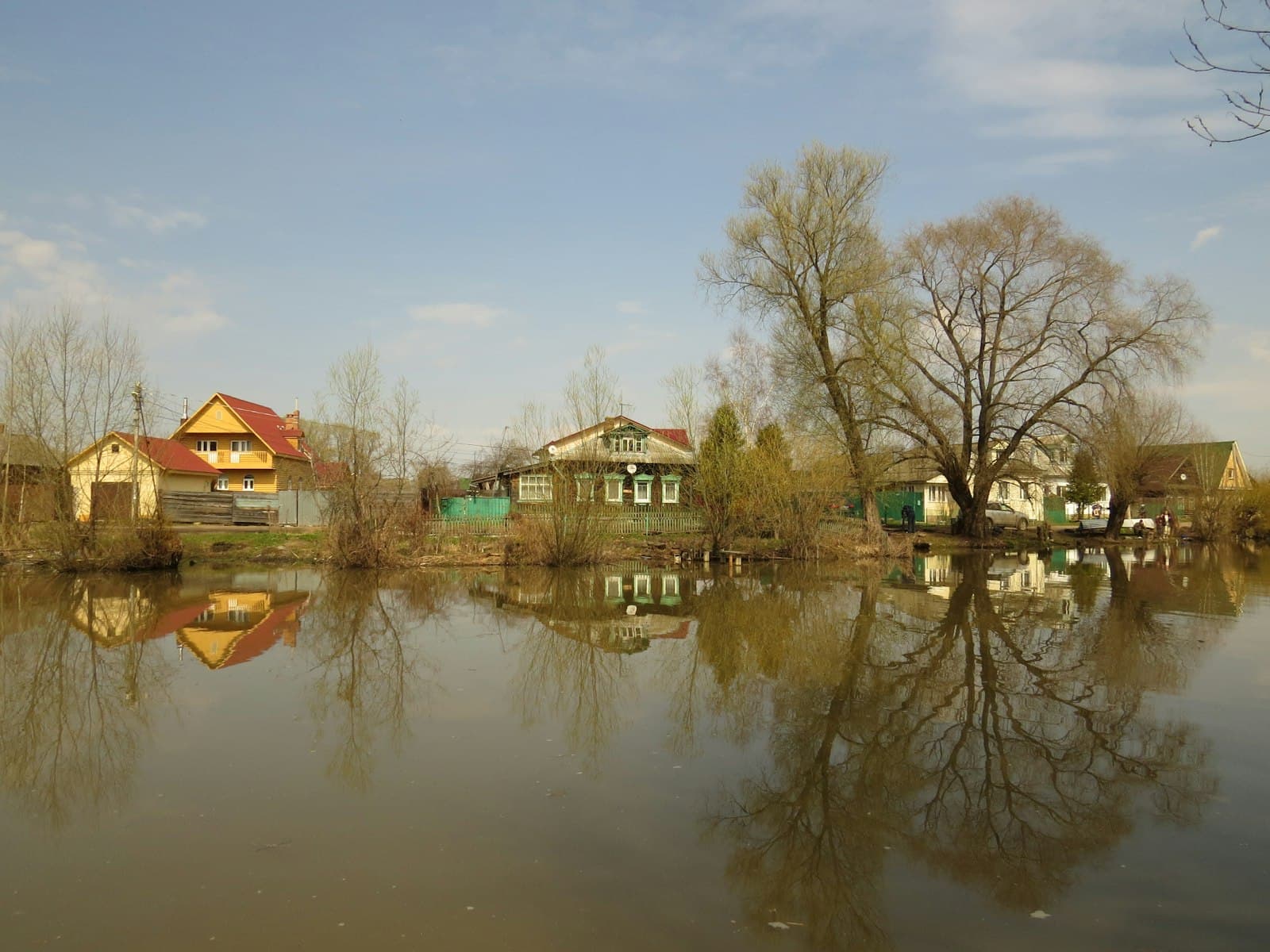
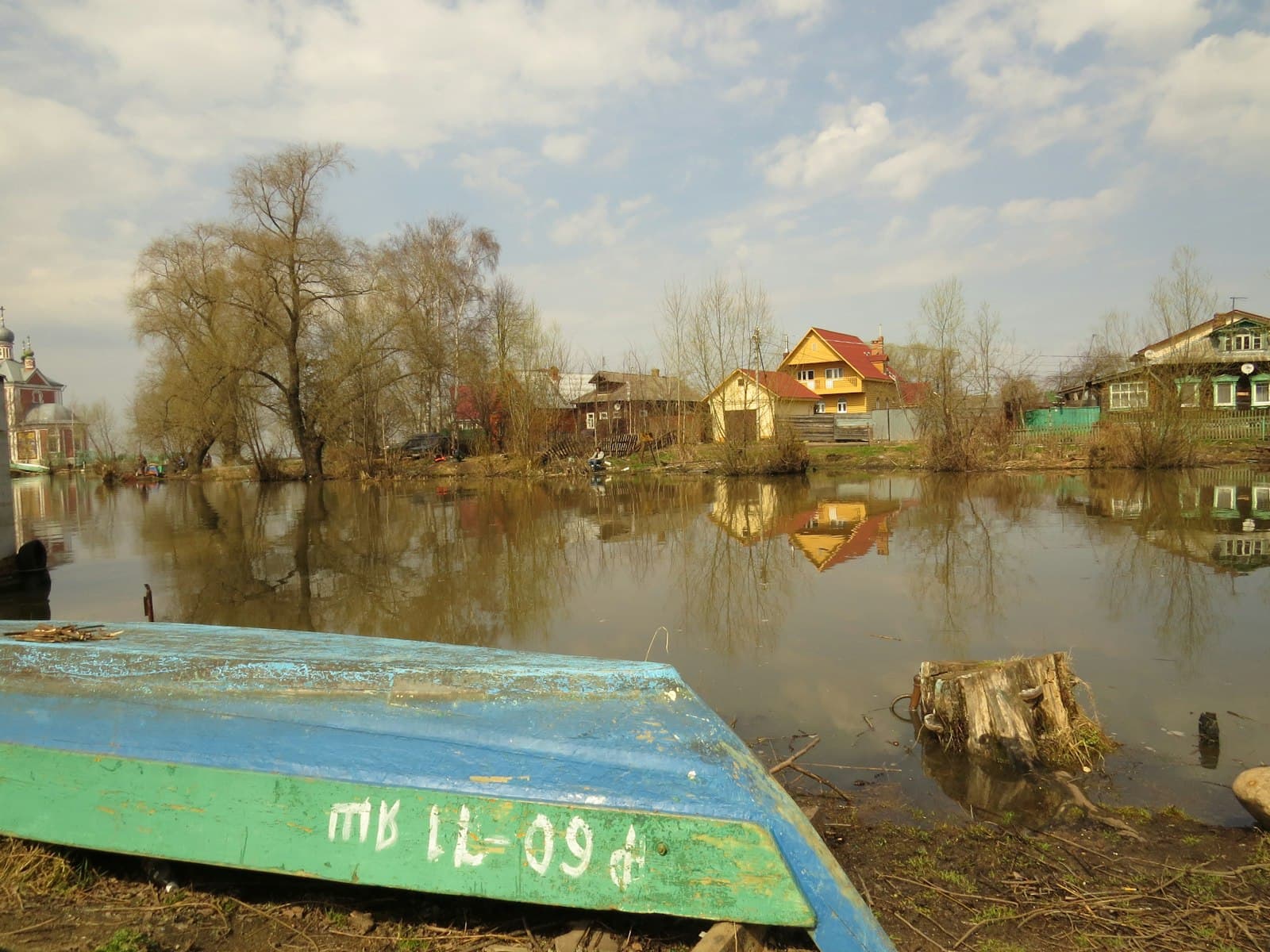
Votre visite audioguidée de Pereslavl-Zalesski vous attend — choisissez vos lieux, votre langue, et lancez-vous dès votre arrivée.
AcheterLume intègre un guide en réalité augmentée. Levez votre téléphone : sa caméra montre la rue devant vous, avec une flèche lumineuse posée sur l'image réelle qui pointe toujours vers votre prochain arrêt — aucune carte à déchiffrer, aucun mauvais virage. Comme tout dans Lume, ça fonctionne entièrement hors-ligne.
Pereslavl-Zalessky, une ville plus ancienne que Moscou, offre un voyage dans l'histoire fondatrice de la Russie. Fondée en 1152 par le prince Youri Dolgorouki, elle est située sur la rive sud-est du lac Pleshcheyevo, où se jette la rivière Troubej. Cette ville, qui fait partie de l'Anneau d'Or de la Russie, fut un temps envisagée comme la capitale de la Rus' ancienne, témoignage de l'ambition de Dolgorouki. Aujourd'hui, elle invite les visiteurs à ralentir, à explorer ses monastères et églises anciens, et à découvrir le charme tranquille d'une vieille ville russe.
Le nom de la ville, initialement Pereyaslavl, fut donné en l'honneur de Pereyaslavl-Russky, une ville importante de la Rus' de Kiev. L'ajout 'Zalessky', signifiant 'au-delà de la forêt', la distinguait et faisait référence à son emplacement dans la région forestière entre les rivières Volga et Oka. Pereslavl-Zalessky n'est pas seulement une collection de sites historiques ; c'est un lieu où la grandeur de l'État russe primitif s'entrelace avec une beauté naturelle sereine, offrant un mélange unique d'immersion culturelle et d'évasion paisible.
L'histoire de Pereslavl-Zalessky commence en 1152 avec le prince Youri Dolgorouki, qui fonda la ville avec la grande vision d'en faire la capitale de la Rus' du Nord-Est. Il investit massivement, construisant une grande colonie et la durable Cathédrale de la Transfiguration du Sauveur, achevée en 1157. La ville gagna rapidement en importance, devenant le centre d'une principauté indépendante au XIIIe siècle. Ce fut également le lieu de naissance de l'une des figures les plus vénérées de Russie, Alexandre Nevski, en 1221.
Malgré ses premières promesses, Pereslavl-Zalessky dut faire face à de nombreux défis. Elle fut à plusieurs reprises dévastée par les invasions mongoles entre le milieu du XIIIe et le début du XVe siècle. En 1302, elle fut héritée par le prince de Moscou, devenant finalement partie du Grand-Duché de Moscou. La ville subit également une invasion polonaise en 1611-1612.
Un nouveau chapitre s'ouvrit à la fin du XVIIe siècle lorsque Pierre le Grand, entre 1688 et 1693, choisit le lac Pleshcheyevo pour construire sa 'flottille amusante'. Cette collection d'une centaine de navires servit de terrain d'entraînement essentiel et est considérée comme le précurseur de la Marine russe. Bien qu'elle soit finalement devenue partie du gouvernement de Moscou au XVIIIe siècle, l'importance historique de Pereslavl-Zalessky en tant que siège princier et lieu de naissance de la flotte russe demeure.
Pereslavl-Zalessky offre un riche éventail d'attractions historiques et naturelles. La Cathédrale de la Transfiguration du Sauveur, datant de 1152, est la plus ancienne église à dôme unique du nord-est de la Russie et le lieu où Alexandre Nevski fut baptisé. Entourant la ville, d'impressionnants remparts de terre, construits par Youri Dolgorouki au XIIe siècle, sont encore saisissants par leur échelle.
La ville abrite plusieurs monastères importants. Le Monastère de Nikitsky, fondé aux XIe ou XIIe siècles, est le plus ancien de Pereslavl et est connu pour sa beauté austère. Le Monastère de l'Assomption de Goritsky, qui abrite aujourd'hui le Musée de Pereslavl, offre un aperçu du passé avec son impressionnante Tour de la Trinité et sa Cathédrale de l'Assomption. D'autres complexes monastiques notables incluent le Couvent de Feodorovsky et le Monastère de Svyato-Troitsky Danilov.
Le Lac Pleshcheyevo est un élément central, une vaste étendue d'eau qui fait partie d'un parc national. Il est idéal pour les promenades, la détente et offre de magnifiques couchers de soleil. Sur ses rives, vous trouverez la Pierre Bleue, une relique païenne mystique. Pour ceux qui s'intéressent aux entreprises navales de Pierre le Grand, le Musée-Domaine du Bateau de Pierre le Grand dans le village de Veskovo présente l'histoire de sa 'flottille amusante'. La ville présente également un éventail de musées privés uniques, du Musée du Fer au Musée de la Théière, et même un Musée de la Locomotive à Vapeur en dehors de la ville.
La meilleure période pour visiter Pereslavl-Zalessky est la fin du printemps, l'été et le début de l'automne. Ces saisons offrent des températures confortables, allant d'une moyenne de +16°C à +19°C en été, ce qui est idéal pour explorer la vieille ville, le lac Pleshcheyevo et les sites extérieurs. Bien que l'hiver puisse être pittoresque avec la neige, certains sites saisonniers et zones en plein air peuvent avoir un accès limité ou des horaires plus courts en raison de températures moyennes descendant à -5°C à -7°C.
Pereslavl-Zalessky est située à environ 100-155 kilomètres (60-96 miles) de Moscou. Il n'y a pas de service de train direct pour Pereslavl-Zalessky ; l'accès se fait par la route. Des bus partent quotidiennement de la gare routière de Shchelkovskoe à Moscou, avec un temps de trajet de 2-3 heures. Si vous venez du nord, envisagez de prendre un bus à Yaroslavl ou Rostov Veliky.
Pour une visite complète incluant le centre historique, le lac Pleshcheyevo et plusieurs musées, un séjour d'une nuit est recommandé. La ville offre diverses options d'hébergement, y compris des hôtels et des maisons d'hôtes. Habillez-vous en couches, surtout pendant les saisons intermédiaires, et apportez des chaussures confortables pour la marche. En hiver, des vêtements d'extérieur chauds, un chapeau, des gants et des chaussures imperméables sont essentiels. De nombreux musées à Pereslavl-Zalessky sont petits et gérés par des particuliers, offrant des expériences uniques.
Pereslavl-Zalesski en coréen, en chinois ou en hébreu — et dans 29 autres langues, chaque étape narrée par une voix native. La plus large gamme de langues de tous les audioguides autoguidés.
Disponible en :