De Onega-promenade
Een verzameling sculpturen siert de waterkant van Petrozavodsk, maar één in het bijzonder nodigt stilzwijgend uit voor degenen die een wens willen doen.
Volledig verhaal ontgrendeld in de tour
 Semenov.m7 / CC BY-SA 4.0, via Wikimedia Commons
Zelfgeleide audiowandeling door Petrozavodsk — GPS-route, offline afspelen, meeslepende vertelling in 32 talen.
“Waar de industriële visie van Peter de Grote de Karelische wildernis en hedendaagse kunst ontmoet.”
Niet de ansichtkaarten. De verhalen die zelfs locals niet kennen — gefluisterd in je oor, precies waar ze gebeurden.
Een verzameling sculpturen siert de waterkant van Petrozavodsk, maar één in het bijzonder nodigt stilzwijgend uit voor degenen die een wens willen doen.
Lokale verhalen suggereren dat een industriële innovatie voor Rusland werd gepionierd in deze historische fabriek, lang voordat dergelijke technologie wijdverbreid werd.
In 1977 observeerden duizenden mensen in de regio een ongebruikelijk hemels fenomeen, aanvankelijk beschreven als een 'grote heldere ster' die transformeerde in iets buitenaards.
Ontdek elk geheim van Petrozavodsk
Elk adres, elke onthulling volledig — in je oor, precies waar het gebeurde.
Jij kiest je stops. Jij wandelt. De stem onthult wat de anderen missen.
Je zelfgeleide audiotour van Petrozavodsk is klaar — kies je bezienswaardigheden, kies je taal en start zodra je aankomt.
KopenLume heeft een ingebouwde augmented-reality-gids. Houd je telefoon omhoog: de camera toont de straat voor je, met een oplichtende pijl over het echte beeld die altijd naar je volgende stop wijst — geen kaart om uit te puzzelen, geen verkeerde afslagen. Zoals alles in Lume werkt het volledig offline.
Petrozavodsk, de hoofdstad van de Republiek Karelië, ligt aan de westelijke oever van het Onegameer, een van de grootste meren van Europa. Opgericht in 1703 door Peter de Grote, zijn de oorsprongen van de stad diep geworteld in haar industriële verleden, met name als ijzergieterij die munitie leverde voor de Grote Noordse Oorlog. Vandaag de dag, met een bevolking van ongeveer 280.000, verweeft Petrozavodsk zijn historische erfgoed met een levendig cultureel en administratief heden.
De stad fungeert als een belangrijk transportknooppunt en een toegangspoort tot het verkennen van de natuurlijke pracht van de bredere Karelische regio, bekend om zijn dichte bossen en vele meren. De specifieke locatie biedt zowel culturele verkenning als mogelijkheden voor buitenactiviteiten, waardoor het een onderscheidende bestemming is in het noordwesten van Rusland.
## Van Smelterij tot Hoofdstad Het verhaal van Petrozavodsk begon in 1703, niet als een typische nederzetting, maar als een fabrieksstad opgericht door Peter de Grote. Zijn decreet leidde tot de oprichting van een gieterij aan de monding van de Lososinka-rivier, aanvankelijk Petrovsky genaamd. Deze fabriek was essentieel voor de productie van kanonnen, kanonskogels, geweren, pistolen en andere munitie voor de Noordse Oorlog tegen Zweden. De omliggende nederzetting, Petrovskaya Sloboda, groeide snel en werd in 1717 de grootste in Karelië met ongeveer 3.500 inwoners, compleet met een houten fort en residenties voor de Tsaar en Mensjikov.
Na de dood van Peter de Grote en de Russische overwinning in de Noordse Oorlog, kwamen de Petrovsky-fabrieken in verval en werden uiteindelijk in 1734 gesloten toen de wapenproductie elders werd gevestigd. De stad kende echter bijna een halve eeuw later een heropleving onder Catharina II. Vanwege voortdurende conflicten werd de productie van kanonnen hervat en in 1774 werd de nieuwe Alexandrovsky-fabriek opgericht. Een vooraanstaande Britse industrieel, Charles Gascoigne, beheerde de fabriek en introduceerde geavanceerde technologieën die de wapenproductie aanzienlijk verbeterden.
Op 21 maart 1777 verleende Catharina II de nederzetting officieel stadsrechten en hernoemde deze tot Petrozavodsk. In deze periode werd een nieuw Neoclassicistisch stadscentrum gebouwd, met het Ronde Plein (nu Plein van Lenin) als middelpunt, met gebouwen zoals het Gouverneurshuis en het Regeringsgebouw. Tegen 1784 was Petrozavodsk voldoende gegroeid om het administratieve centrum van de provincie Olonets te worden. De stad bleef zich ontwikkelen, met de spoorlijn Murmansk in 1916 die de groei verder stimuleerde. Tijdens de Tweede Wereldoorlog werd het van 1941 tot 1944 bezet door Finse troepen, toen het bekend stond als Äänislinna. Na de bevrijding herbouwde en breidde Petrozavodsk zich uit, werd het een centrum voor onderwijs en cultuur, en is het vandaag de dag de hoofdstad van de Republiek Karelië.
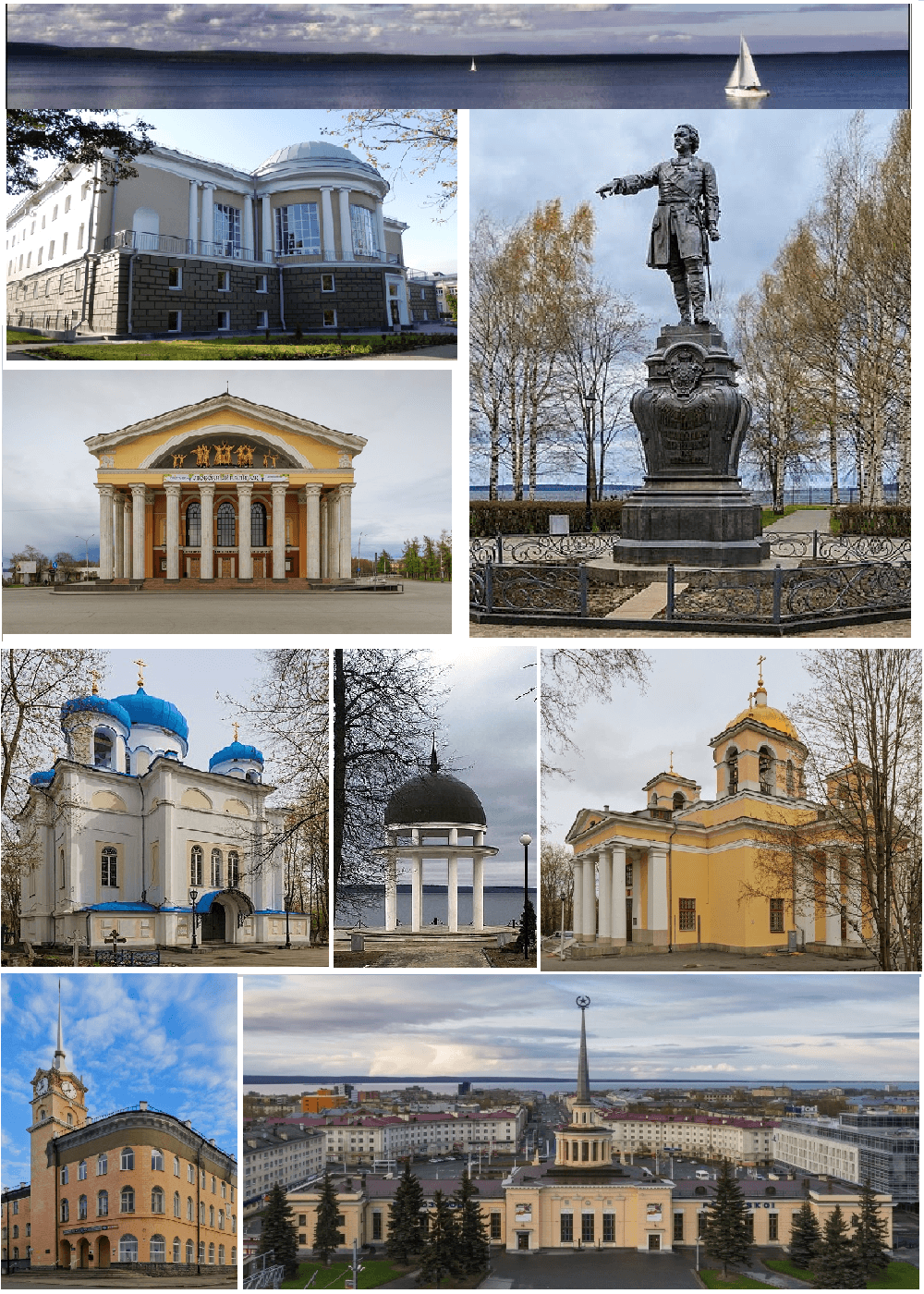
Begin uw verkenning bij de Onega-promenade, een 1,5 kilometer lange strook langs het Onegameer. Het fungeert als een openluchtmuseum en toont sculpturen die geschonken zijn door zustersteden van Petrozavodsk van over de hele wereld. Opvallende stukken zijn het 'Vissersmonument' uit Duluth, Minnesota, en de 'Wensboom' uit Zweden. De promenade is ook een favoriete plek om te wandelen, fietsen en te genieten van het uitzicht op het meer.
Duik in het verleden van de stad op het Plein van Lenin (Rond Plein), een architectonisch ensemble gebouwd in Russische classicistische stijl in 1775. Het plein herbergt enkele van de oudste gebouwen van Petrozavodsk, waaronder het voormalige Gouverneurshuis, waar nu het Nationaal Museum van de Republiek Karelië is gevestigd. Dit museum biedt uitgebreide inzichten in het natuurlijke, archeologische, historische en etnografische erfgoed van de regio. In de buurt toont het Museum voor Schone Kunsten van de Republiek Karelië een diverse collectie, waaronder iconen uit de 15e-19e eeuw en Karelische volkskunst.
Voor een glimp van het traditionele Karelische leven, bezoek de Historische Wijk (Fedosova Straat), die 19e-eeuwse houten gebouwen bewaart. Dagtochten worden sterk aanbevolen naar Kizhi-eiland, een UNESCO-werelderfgoedsite die wordt geprezen om zijn houten architectuur, waaronder de Transfiguratiekerk met 22 koepels. U kunt het in de zomer bereiken met een draagvleugelboot. Een ander natuurlijk wonder in de buurt is de Kivach-waterval, de op één na grootste laaglandwaterval van Europa, gelegen in een reservaat ongeveer 80 km van de stad.
De meest aangename tijd om Petrozavodsk te bezoeken is tijdens de zomermaanden, van juni tot augustus. Gedurende deze periode zijn de temperaturen mild, met een gemiddelde tussen 19°C en 22°C, wat ideaal is voor buitenactiviteiten en het verkennen van de attracties van de stad. Juli is doorgaans de warmste maand, met gemiddelde maximale dagtemperaturen die 22°C bereiken. Hoewel de zomer aangenaam weer brengt, wees voorbereid op enige regenval. Lente en herfst zijn overgangsseizoenen met wisselende temperaturen, en winters zijn lang en koud, met gemiddelde temperaturen in januari en februari rond -7°C.
Petrozavodsk is goed verbonden, met de belangrijkste federale snelweg R21 'Kola' die erdoorheen loopt en Sint-Petersburg met Moermansk verbindt. De stad ligt ongeveer 412 km ten noordoosten van Sint-Petersburg en ongeveer 1010 km van Moskou. Het station Petrozavodsk-Passazhirsky ligt op 1,3 km van het stadscentrum en biedt regelmatige treindiensten vanuit de belangrijkste Russische steden. Besovets (PES) International Airport ligt op ongeveer 16,2 km van het stadscentrum, met taxi- of autovervoer dat ongeveer 45 minuten duurt.
Navigeren door de stad is goed te doen, met een trolleybusnetwerk dat vijf routes exploiteert en een betrouwbaar netwerk van bussen en taxi's. Hoewel Russisch de primaire taal is, worden ook Karelisch en Fins in de regio gesproken. De lokale valuta is de Russische Roebel (RUB ₽). Voor degenen die van plan zijn de omliggende natuurgebieden te verkennen, met name bossen of Kizhi-eiland, wordt hoogwaardige muggenspray aanbevolen.
Petrozavodsk — Koreaans, Chinees, Hebreeuws en nog 29 talen, elke stop verteld door een moedertaalspreker. Het grootste taalaanbod van alle zelfgeleide audiotours.
Beschikbaar in: