Ko Panyi
Imagine an entire village floating on the water, a testament to human ingenuity and a singular way of life.
Full story unlocks in the tour
 NordNordWest / CC BY 3.0, via Wikimedia Commons
Self-guided audio walking tour of Phang Nga — GPS route, offline playback, story-driven narration in 32 languages.
“Where emerald waters cradle ancient limestone, and secrets whisper from secluded lagoons.”
Not the postcards. The stories even locals don't know — whispered in your ear, right where they happened.
Imagine an entire village floating on the water, a testament to human ingenuity and a singular way of life.
Beyond the soaring karsts, some islands conceal open-air lagoons, accessible only through narrow, tidal caves.
This iconic limestone pinnacle, celebrated from a 007 film, holds a lesser-known geological secret concerning its formation.
Discover every secret of Phang Nga
Every address, every reveal in full — in your ear, right where it happened.
You pick your stops. You walk. The voice reveals what the others miss.
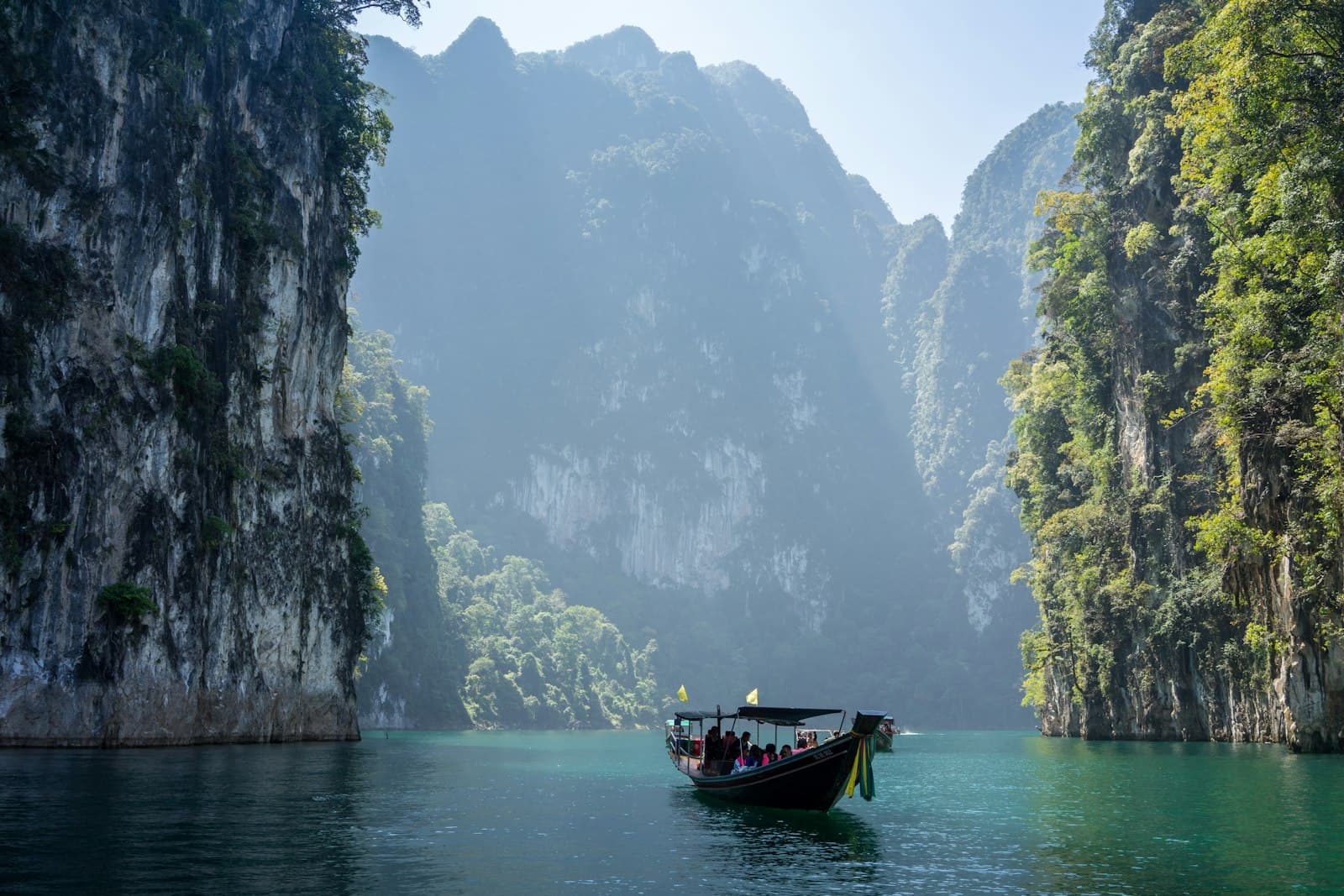
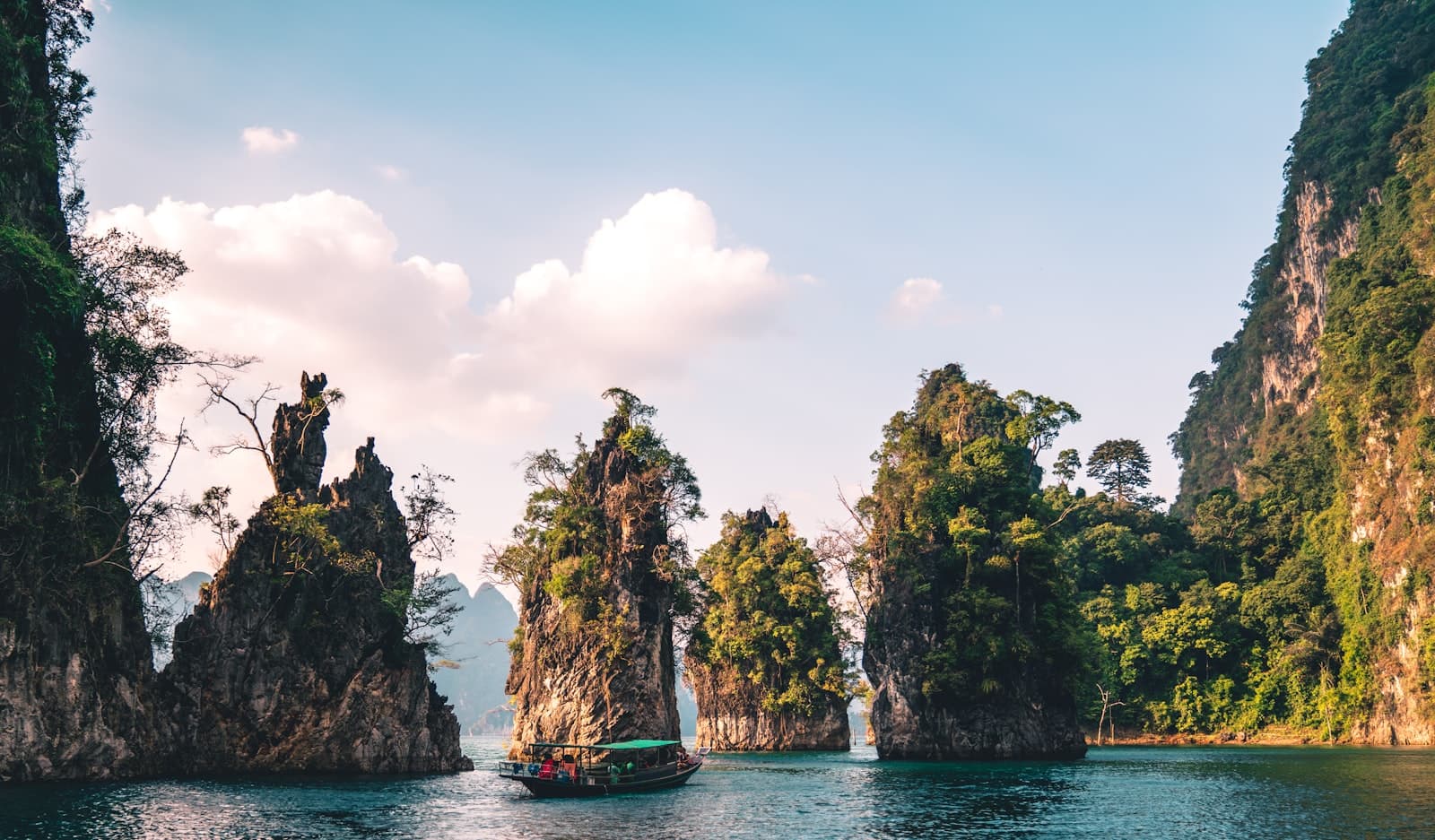
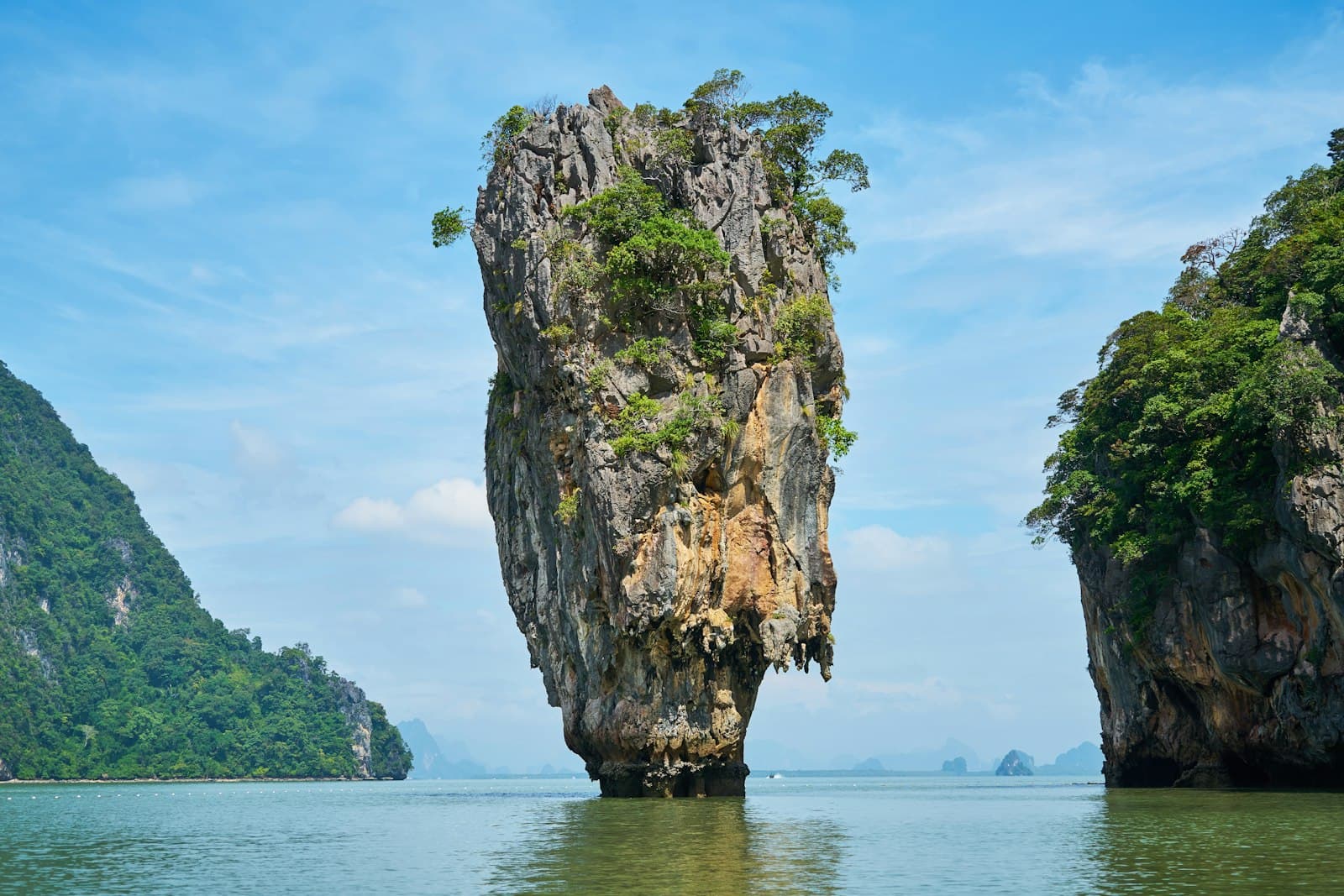
Your self-guided audio tour of Phang Nga is ready — pick your landmarks, choose your language, and start the moment you arrive.
BuyLume has a built-in augmented-reality guide. Hold your phone up and its camera shows the street ahead of you, with a glowing arrow laid over the real view that always points to your next stop — no map to puzzle over, no wrong turns. Like everything in Lume, it works fully offline.
Phang Nga, a province in southern Thailand, is a realm where dramatic limestone karsts ascend vertically from emerald-green waters, creating a landscape that feels both ancient and otherworldly. This captivating region, situated on the Andaman Sea, offers a quieter alternative to its bustling neighbors like Phuket. It is a place where nature takes center stage, with an abundance of islands, intricate cave systems, and lush mangrove forests awaiting exploration.
The allure of Phang Nga extends beyond its iconic bay. Inland, the province reveals a collection of untouched jungle, cascading waterfalls, and serene rivers. The pace of life here is noticeably slower, inviting visitors to immerse themselves in local culture and discover a side of Thailand that prioritizes natural beauty and tranquility. Whether you are navigating secluded lagoons by kayak or witnessing a sunset over the bay, Phang Nga offers a profound connection to the natural world.
Phang Nga Bay, a significant portion of which is protected as Ao Phang Nga National Park, stands as a testament to millions of years of geological processes. The bay's unique karst topography, characterized by towering limestone formations, sea caves, and secluded 'hongs' (lagoons), makes it a globally recognized site of ecological and scientific importance. This natural wonder, once a vital resource for local fishing communities, now balances its role as a major tourist destination with ongoing conservation efforts to preserve its delicate ecosystems.
The geological narrative of Phang Nga Bay stretches back approximately 280 million years to the Permian Period, when the region was submerged beneath the Tethys Sea. This warm, tropical ocean fostered abundant marine life, whose calcium carbonate shells and skeletons accumulated over millennia to form the massive limestone deposits that define the area today. Subsequent tectonic movements uplifted these submarine formations, initiating their transformation into the dramatic karst landscape visible across Phang Nga.
Over the last five million years to the present, continuous erosion has sculpted the most resistant limestone into the isolated, vertical towers that are synonymous with Phang Nga Bay. Dramatic fluctuations in sea levels during Earth's ice ages further exposed these formations to varied erosional processes, contributing to the complex vertical zonation of the towers. It is believed that when sea levels were significantly lower, around 10,000 years ago, it was possible to walk from what is now Phuket to Krabi, with Phang Nga Bay likely appearing as a vast valley dotted with these limestone pinnacles.
The human history of Phang Nga dates to the late 18th and early 19th centuries, during the Rattanakosin era. Originally known as 'Kra Phu Nga,' the settlement gained prominence around 1809 when Burmese invasions in southern Thailand led many inhabitants from nearby areas like Takua Pa, Takua Thung, and Thalang (present-day Phuket) to seek refuge in its cliff-protected valley. Following the expulsion of Burmese forces, King Rama III officially established the town in its current location around 1840, renaming it Phang Nga.
The city's strategic location, surrounded by high limestone cliffs, offered natural protection from both external threats and monsoons, while its proximity to Phang Nga Bay and navigable waterways facilitated trade. The late 19th century marked a significant period of growth with the tin mining industry, which attracted capital, merchants, and migrants, particularly from China. This influx led to a blend of Thai, Chinese, and Malay customs, evident in the local architecture, such as the Sino-Portuguese shophouses, and the region's culinary traditions. Phang Nga was elevated to provincial status in 1933.
In more recent history, Phang Nga Bay gained international recognition after being featured in the 1974 James Bond film The Man with the Golden Gun, which showcased the iconic Ko Tapu (James Bond Island) and Khao Phing Kan. This cinematic exposure significantly boosted tourism, transforming the region into a major destination. In 1981, a substantial portion of the bay was designated as Ao Phang Nga National Park to protect its unique geological formations and diverse ecosystems. The park was further recognized as a Ramsar site of international ecological significance in 2002.
The province also faced a tragic event in December 2004 when the Andaman Sea coastline was severely impacted by a tsunami, resulting in extensive loss of life and damage to coastal ecosystems. Today, Phang Nga continues to evolve, balancing its thriving tourism industry with crucial conservation efforts aimed at preserving its natural wonders and supporting sustainable practices within its local communities.
Phang Nga offers an array of experiences, from iconic natural landmarks to cultural insights. A boat tour of Phang Nga Bay is essential, revealing the sheer limestone karsts that define the landscape. Many tours include stops at famous sites like James Bond Island (Ko Tapu and Khao Phing Kan), known for its distinctive needle-shaped rock and the setting of a classic spy film. You can also explore the unique Ko Panyi, a village built on stilts where you can enjoy a meal and observe a traditional way of life.
Kayaking is an excellent way to delve deeper into the bay's wonders, allowing access to secluded lagoons, locally known as 'hongs,' and sea caves. Islands like Panak Island and Hong Island are particularly renowned for these experiences, with caves such as Bat Cave and Diamond Cave offering glimpses of unique geological formations and diverse wildlife. For sweeping views of the bay, including its countless limestone karsts, the Samet Nangshe Viewpoint provides a memorable vista, especially at sunrise.
Beyond the bay, Phang Nga province offers more to explore. The Similan Islands and Surin Islands, accessible from Khao Lak, are world-class destinations for diving and snorkeling, featuring abundant marine life and coral reefs. For those interested in conservation, the Sea Turtle Conservation Center provides an opportunity to learn about efforts to protect these vulnerable creatures. Inland, you can discover waterfalls like Lampi Waterfall, or explore the rich biodiversity of national parks such as Ao Phang Nga, Si Phang Nga, and Khao Lak-Lam Ru.
The optimal time to visit Phang Nga is during the dry season, from November to April. During these months, the weather is typically clear, sunny, and less humid, with calm seas ideal for boat tours, kayaking, snorkeling, and beach activities. December and January offer particularly pleasant conditions with cooler breezes, though they are also the busiest and most expensive months due to peak tourist season.
The monsoon season, from May to October, brings higher humidity and more frequent rainfall. While there are fewer crowds and more affordable accommodations, some activities might be affected by the weather. However, this 'green season' also transforms the landscape into a lush environment, making it suitable for exploring national parks and waterfalls, and for those seeking a quieter experience.
Getting to Phang Nga is relatively straightforward. Most international travelers fly into Phuket International Airport (HKT), which is approximately 20 minutes from the Sarasin Bridge, the main gateway connecting Phuket Island to Phang Nga mainland. From there, you can arrange transfers by taxi, minivan, or bus to your accommodation in Phang Nga town or other areas like Khao Lak. Good road access also connects Phang Nga to neighboring provinces like Krabi and Surat Thani.
Within Phang Nga, renting a motorbike or car offers flexibility for exploring the province's diverse attractions at your own pace. Alternatively, numerous local tour agencies provide organized day trips and multi-day excursions to popular sites like Phang Nga Bay, the Similan Islands, and various national parks. These tours often include transportation, guides, and activities like kayaking and snorkeling. When booking tours, consider eco-friendly operators who prioritize sustainable tourism practices to help preserve the region's natural beauty.
Accommodation options range from beachfront resorts in Khao Lak to more secluded eco-lodges and guesthouses throughout the province. Booking in advance, especially during the peak season (December-January), is advisable. While the local communities have a relaxed pace, it is always respectful to be mindful of local customs and traditions.
Phang Nga in Korean, in Chinese or in Hebrew — and 29 more languages, every stop narrated by a native voice. The widest language range of any self-guided audio tour.
Available in: