Palazzo Piccolomini
De zomerresidentie van de Paus in Pienza draagt een geheim in zijn ontwerp, een subtiele afwijking van architectonische normen om een zeer persoonlijke reden.
Volledig verhaal ontgrendeld in de tour
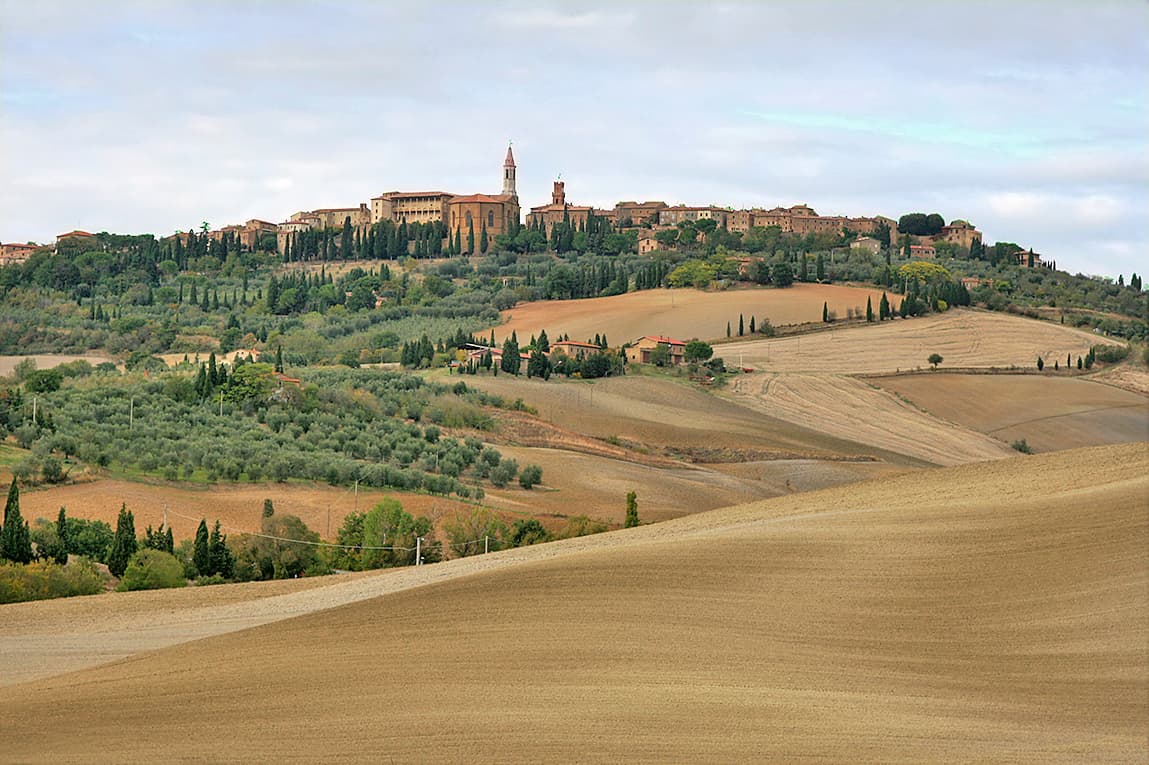 https://www.flickr.com/people/sherseydc/ / cc by-sa 2.0, via Wikimedia Commons
Zelfgeleide audiowandeling door Pienza — GPS-route, offline afspelen, meeslepende vertelling in 32 talen.
“Waar renaissance-idealen de zachte glooiingen van Toscane ontmoeten.”
Niet de ansichtkaarten. De verhalen die zelfs locals niet kennen — gefluisterd in je oor, precies waar ze gebeurden.
De zomerresidentie van de Paus in Pienza draagt een geheim in zijn ontwerp, een subtiele afwijking van architectonische normen om een zeer persoonlijke reden.
Observeer de funderingen van de grote kathedraal van Pienza nauwkeurig, en u zult een aanhoudende imperfectie ontdekken die het al eeuwenlang plaagt.
De onderscheidende smaak van Pienza's befaamde Pecorino-kaas is niet alleen te danken aan de schapen of het kaasmaakproces.
Ontdek elk geheim van Pienza
Elk adres, elke onthulling volledig — in je oor, precies waar het gebeurde.
Jij kiest je stops. Jij wandelt. De stem onthult wat de anderen missen.


Je zelfgeleide audiotour van Pienza is klaar — kies je bezienswaardigheden, kies je taal en start zodra je aankomt.
KopenLume heeft een ingebouwde augmented-reality-gids. Houd je telefoon omhoog: de camera toont de straat voor je, met een oplichtende pijl over het echte beeld die altijd naar je volgende stop wijst — geen kaart om uit te puzzelen, geen verkeerde afslagen. Zoals alles in Lume werkt het volledig offline.
Pienza, een klein stadje in de Val d'Orcia-regio van Zuid-Toscane, is een testament aan Renaissance stadsplanning. Oorspronkelijk bekend als Corsignano, werd het in de 15e eeuw door Paus Pius II, geboren Enea Silvio Piccolomini, getransformeerd tot zijn visie van een "ideale stad". Deze UNESCO Werelderfgoedsite wordt geprezen om zijn harmonieuze architectuur, sfeervolle straten en weidse uitzichten over het omliggende Toscaanse platteland.
Het historische centrum van de stad, een compact gebied dat gemakkelijk te voet te verkennen is, draait om Piazza Pio II, een trapeziumvormig plein dat het middelpunt vormt van het Renaissance-ontwerp. Pienza biedt een langzamer ritme, nodigt bezoekers uit om door de steegjes te dwalen, de befaamde Pecorino-kaas te proeven en de sfeer op te snuiven van een stad die zorgvuldig is gecreëerd om humanistische idealen te belichamen.
Naast zijn architectonische betekenis is Pienza nauw verbonden met het agrarische landschap van de Val d'Orcia, zelf een UNESCO Wereldcultuurlandschap. De culinaire tradities van de stad, met name de Pecorino-kaas van schapenmelk, zijn een directe weerspiegeling van deze overvloedige natuurlijke omgeving.
Het verhaal van Pienza begint in de middeleeuwen als het bescheiden dorp Corsignano, voor het eerst gedocumenteerd in de 9e eeuw. Het lot veranderde dramatisch met de geboorte van Enea Silvio Piccolomini in 1405, die later Paus Pius II zou worden. Na zijn verkiezing tot het pontificaat in 1458 begon Paus Pius II aan een ambitieus project om zijn geboorteplaats te transformeren tot een "ideale stad" van de Renaissance, en hernoemde het Pienza, wat "stad van Pius" betekent.
De Paus gaf de gerenommeerde architect Bernardo Rossellino, een leerling van Leon Battista Alberti, de opdracht om zijn visie uit te voeren. Tussen 1459 en 1462 werd Corsignano opnieuw vormgegeven volgens de Renaissanceprincipes van harmonie, proportie en orde. Deze transformatie omvatte de bouw van belangrijke gebouwen rond het centrale Piazza Pio II, waaronder de Kathedraal, Palazzo Piccolomini (de residentie van de Paus), Palazzo Borgia (Episcopaal Paleis) en het Palazzo Comunale (Stadhuis).
Pienza is een van de vroegste voorbeelden van humanistische stadsplanning, een model dat stadsontwerp in heel Italië en daarbuiten beïnvloedde. Het project, hoewel gestopt door de voortijdige dood van Paus Pius II in 1464, liet een aanzienlijk deel van de ideale stad voltooid achter, waardoor het 15e-eeuwse karakter grotendeels intact bleef. In 1996 werd het historische centrum van Pienza erkend als UNESCO Werelderfgoedsite, als erkenning van zijn uitzonderlijke universele waarde als de eerste toepassing van Renaissance humanistische stadsontwerp. In 2004 werd de hele Val d'Orcia, met zijn gecultiveerde landschap dat idealen van goed bestuur en esthetische schoonheid weerspiegelt, ook ingeschreven op de UNESCO lijst van Wereldcultuurlandschappen.
Begin uw verkenning op Piazza Pio II, het hart van Pienza's Renaissance-ontwerp. Dit trapeziumvormige plein wordt geflankeerd door de belangrijkste gebouwen van de stad. De Kathedraal van Pienza (Duomo di Santa Maria Assunta), ingewijd door Paus Pius II in 1462, heeft een Renaissance-façade met gotische elementen in het interieur, en herbergt 15e-eeuwse Sienese schilderijen. Naast de kathedraal ligt Palazzo Piccolomini, de voormalige zomerresidentie van de Paus, opmerkelijk vanwege zijn elegante binnenplaats en een loggia met een weids uitzicht over de Val d'Orcia. Het Palazzo Borgia, ook aan het plein, herbergt het Diocesaan Museum met religieuze artefacten en lokale textielkunst. Het Palazzo Comunale, of Stadhuis, completeert het architectonische ensemble van het plein.
Naast het hoofdplein, dwaal langs Corso il Rossellino, de centrale straat van de stad, bekleed met uitnodigende winkels en trattoria's. Verken de smalle, met planten gevulde steegjes, zoals Via Dogali, en ontdek straten met sfeervolle namen als Via dell'Amore (Straat van de Liefde) en Via del Bacio (Straat van de Kus). Een wandeling langs de panoramische stadsmuren, met name nabij Via del Casello of onder Via Gozzante, biedt ononderbroken vergezichten over de Val d'Orcia. Mis de kans niet om Pienza's befaamde Pecorino-kaas te proeven in de lokale winkels.
De schouderseizoenen, van april tot juni en september tot oktober, zijn ideaal voor een bezoek aan Pienza. Gedurende deze maanden is het Toscaanse platteland op zijn levendigst, met wilde bloemen in de lente en gouden oogstkleuren in de herfst. Het weer is mild en de drukte is over het algemeen kleiner dan in de zomermaanden. Vroege ochtenden en late namiddagen zijn bijzonder magisch, met zachter licht en rustigere straten. Hoewel de zomer (juli-augustus) warm weer biedt, brengt het ook grotere tourgroepen met zich mee, en sommige bedrijven kunnen 's middags sluiten voor een siësta.
Pienza is het best bereikbaar met de auto, aangezien het geen eigen treinstation heeft. Het dichtstbijzijnde grote treinknooppunt is Chiusi-Chianciano Terme, op ongeveer 45 minuten rijden. Betaalde parkeergelegenheid is beschikbaar net buiten de stadsmuren, met opties zoals Parcheggio di Pienza nabij Porta al Prato. Eenmaal in de stad is Pienza zeer goed te voet te verkennen, maar comfortabele schoenen worden aanbevolen voor de stenen straten.
Veel winkels en bedrijven in Pienza houden een middagsluiting, meestal rond 14:00 uur, dus plan uw activiteiten dienovereenkomstig. Hoewel de meeste plaatsen kaarten accepteren, is het raadzaam om wat contant geld bij u te hebben voor kleinere winkels, cafés en parkeerplaatsen. Overweeg een overnachting om de vredige sfeer van de stad te ervaren nadat de dagjesmensen vertrokken zijn. Pienza dient ook als een uitstekende uitvalsbasis voor het verkennen van andere dorpen in de Val d'Orcia, zoals Montepulciano en Montalcino.
Pienza — Koreaans, Chinees, Hebreeuws en nog 29 talen, elke stop verteld door een moedertaalspreker. Het grootste taalaanbod van alle zelfgeleide audiotours.
Beschikbaar in: