Tartini-Platz
Pirans zentraler Treffpunkt spürte einst den Gezeitenwechsel.
Die ganze Geschichte wird in der Tour freigeschaltet
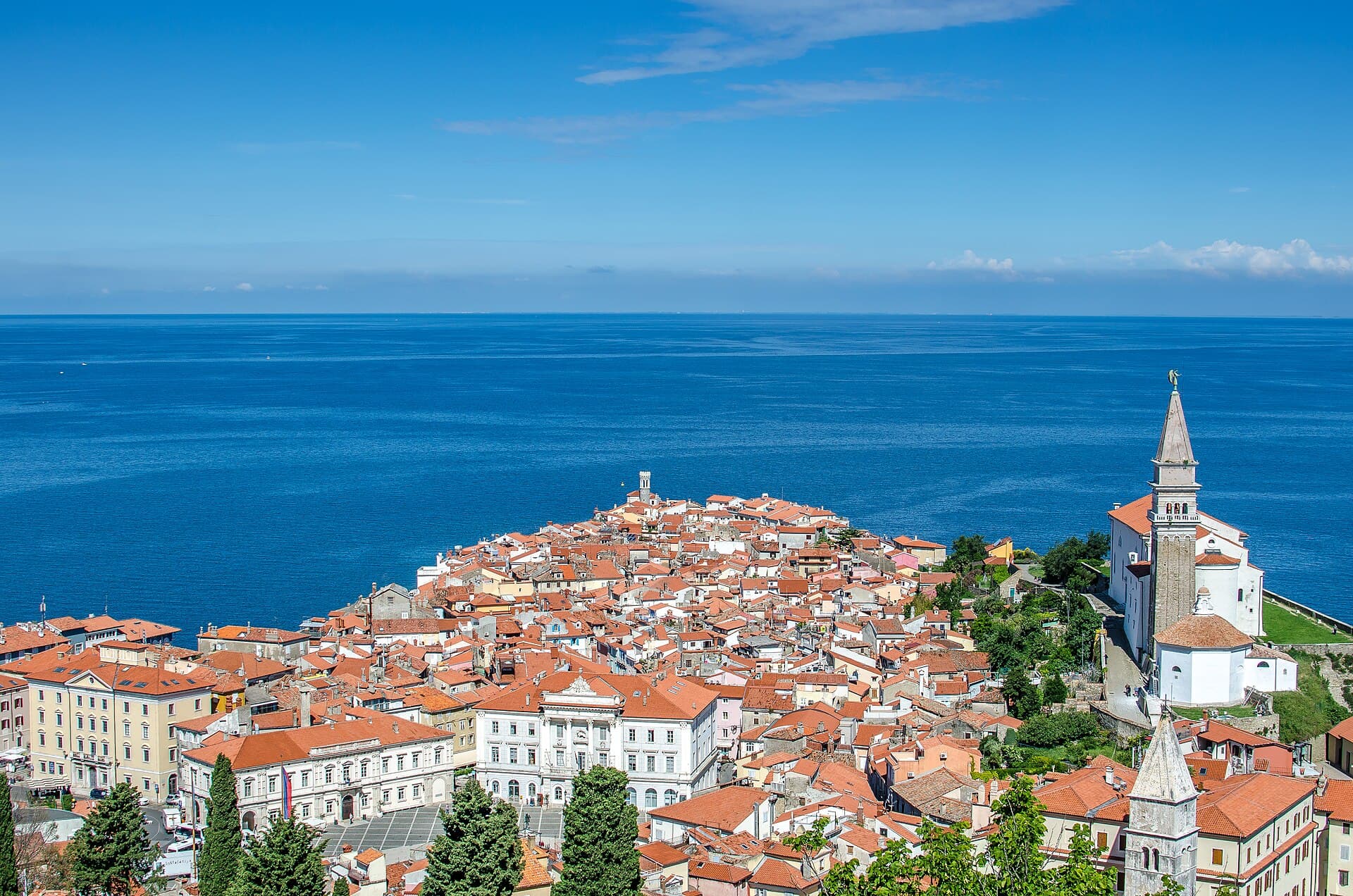 Etienne O. Dallaire / CC BY 4.0, via Wikimedia Commons
Selbstgeführte Audio-Walking-Tour durch Piran — GPS-Route, Offline-Wiedergabe, erzählerische Narration in 32 Sprachen.
“Wo der Atem der Adria auf alten Stein trifft.”
Nicht die Postkarten. Die Geschichten, die selbst Einheimische nicht kennen – dir ins Ohr geflüstert, genau dort, wo sie geschahen.
Pirans zentraler Treffpunkt spürte einst den Gezeitenwechsel.
Pirans Glockenturm, ein venezianisches Echo, ist nun älter als seine berühmte Inspiration.
Das begehrte weiße Salz von Piran verdankt seine Klarheit einem einzigartigen, jahrhundertealten Naturfilter.
Entdecke jedes Geheimnis von Piran
Jede Adresse, jede Enthüllung vollständig – in deinem Ohr, genau dort, wo es geschah.
Du wählst deine Stationen. Du gehst. Die Stimme enthüllt, was andere übersehen.


Deine selbstgeführte Audio-Tour durch Piran ist bereit – wähle deine Sehenswürdigkeiten, deine Sprache und starte, sobald du ankommst.
KaufenLume enthält einen integrierten Augmented-Reality-Guide. Halten Sie Ihr Handy hoch: Die Kamera zeigt die Straße vor Ihnen, mit einem leuchtenden Pfeil über dem echten Bild, der immer auf Ihren nächsten Stopp zeigt — keine Karte zum Rätseln, keine falschen Abzweigungen. Wie alles bei Lume funktioniert es komplett offline.
Piran, eine Stadt an Sloweniens schmaler Adriaküste, bietet eine fesselnde Mischung aus beständiger Geschichte und Küstenschönheit. An der Spitze einer schmalen Halbinsel auf der istrischen Halbinsel gelegen, gilt es als eine der eindrücklichsten Städte Sloweniens. Seine gut erhaltene venezianische Gotik-Architektur und sein mittelalterliches Layout mit schmalen Gassen und kompakten Häusern lassen einen in eine andere Zeit eintauchen. Die Stadt ist zweisprachig, wobei sowohl Slowenisch als auch Italienisch von ihren Bewohnern gesprochen werden, ein Beweis für ihre langen historischen Verbindungen zu Italien.
Piran's Anziehungskraft geht über seinen visuellen Charakter hinaus. Die Stadt fördert ein entspanntes Tempo und lädt Besucher ein, ihre autofreien Straßen zu erkunden, ihre Plätze zu entdecken und die Aussicht auf die Adria zu genießen. Vom lebhaften Hauptplatz bis zur ruhigen Promenade bietet Piran eine Kulisse für sowohl gemächliche Erkundungen als auch stille Kontemplation. Es ist ein Reiseziel, das trotz seiner bescheidenen Größe einen bleibenden Eindruck hinterlässt.
Die Vergangenheit der Stadt ist tief mit dem Meer und der Salzgewinnung verbunden, was seit Jahrhunderten ihre Wirtschaft und kulturelle Identität geprägt hat. Pirans strategische Lage am Golf von Triest hat es im Laufe seiner Existenz zu einem bedeutenden Hafen gemacht und seine Architektur, Sprache und Traditionen beeinflusst.
Die Ursprünge von Piran reichen bis zu den illyrischen Histri-Stämmen zurück, die Bauern, Jäger und Fischer waren. Die Römer eroberten die istrische Halbinsel im 2. Jahrhundert v. Chr., obwohl eine nennenswerte Besiedlung in Piran selbst später, nach dem Zusammenbruch des Römischen Reiches im späten 5. Jahrhundert, erfolgte. In den folgenden zwei Jahrhunderten entwickelte sich Piran zu einem befestigten 'Castrum', das von einer Mauer geschützt wurde, mit dem Alten Platz (Trg 1. maja) im Zentrum.
Bis zum Ende des 12. Jahrhunderts stand Piran unter direkter venezianischer Herrschaft, eine Allianz, die seine Entwicklung über 500 Jahre, von 1283 bis 1797, maßgeblich prägte. Diese Periode sah eine bedeutende Expansion, mit dem Bau einer neuen Mauer zum Schutz der wachsenden Stadt, während die Bucht in einen Hafen umgewandelt wurde. Piran florierte als Markt- und Kurort, dessen Wirtschaft stark von den Salinen abhing. Historische Quellen deuten darauf hin, dass Piran Venedig einen erheblichen Teil seiner Salzreserven lieferte.
Nach dem Fall der Republik Venedig im Jahr 1797 wechselte die Herrschaft über Piran wiederholt und ging zwischen österreichischen, französischen und italienischen Verwaltungen über. Die österreichisch-ungarische Monarchie übernahm beispielsweise im 18. Jahrhundert die Salinen und beendete Produktionsbeschränkungen sowie erhöhte den Verkaufspreis von Salz, was die Industrie wiederbelebte. Anfang des 20. Jahrhunderts wurde 1909 in Piran die erste Oberleitungsbuslinie des Balkans eingeführt, die später durch eine Straßenbahn ersetzt wurde, die bis 1953 in Betrieb war.
Nach dem Ersten Weltkrieg wurde Piran zusammen mit Triest und dem Rest Istriens an Italien abgetreten. Anschließend wurde es 1954 Teil Jugoslawiens und schließlich, mit der Unabhängigkeit Sloweniens im Jahr 1991, wurde Piran Teil der neu gegründeten Nation. Heute ist die beständige Geschichte der Stadt in ihrer Architektur sichtbar, wobei der venezianische Einfluss besonders in Gebäuden wie dem Venezianischen Haus am Tartini-Platz und dem Design der St.-Georgs-Kirche deutlich wird.
Piran's bescheidene Größe macht es ideal für Erkundungen zu Fuß, wobei viele wichtige Sehenswürdigkeiten leicht erreichbar sind. Das Herz der Stadt ist der Tartini-Platz (Tartinijev trg), eine ovale Piazza, benannt nach dem berühmten Geiger und Komponisten Giuseppe Tartini, dessen Bronzestatue in seiner Mitte steht. Der Platz ist von bunten Gebäuden umgeben, darunter das venezianische Haus im gotischen Stil und das Rathaus.
Gehen Sie den Hügel hinter dem Tartini-Platz hinauf, um die St.-Georgs-Pfarrkirche zu erreichen, Pirans größte Kirche, die einen weiten Blick über die Stadt, die Adria und an klaren Tagen sogar über Italien und Kroatien bietet. Die Kirche mit ihrem barocken Inneren und dem venezianisch beeinflussten Design verfügt über einen freistehenden Glockenturm, der eine kleinere Nachbildung des Markuslöwenkampanile in Venedig ist. Für einen noch höheren Aussichtspunkt erklimmen Sie die 146 Stufen des Glockenturms.
Erkunden Sie jenseits der Kirche die mittelalterlichen Mauern von Piran, die im 7. bis 15. Jahrhundert zum Schutz der Stadt in Etappen erbaut wurden. Ein Abschnitt dieser Mauern ist für Besucher geöffnet und bietet von verschiedenen Wachtürmen aus einzigartige Ausblicke. Schlendern Sie durch die engen, autofreien Gassen der Altstadt, die ein italienisches Flair versprühen. Verpassen Sie nicht den Alten Platz (Trg 1. maja), das ursprüngliche Zentrum der Stadt seit dem 13. Jahrhundert, mit einem Brunnen aus dem 18. Jahrhundert. Für einen Spaziergang am Meer folgen Sie der Promenade (Prešernovo nabrežje) rund um die Halbinsel, gesäumt von Restaurants und mit Blick auf die Adria.
Die beste Zeit für einen Besuch in Piran sind die Übergungsmonate Mai, Juni, September und Oktober. In diesen Perioden ist das Wetter angenehm, mit Durchschnittstemperaturen im Mai um 22°C und Wassertemperaturen, die warm genug zum Schwimmen sind, typischerweise zwischen 20°C und 24°C. Die Menschenmengen sind auch kleiner als in den Hauptsommermonaten Juli und August. Während Juli und August warmes, sonniges Wetter mit durchschnittlichen Höchstwerten von 28°C und 11 Sonnenstunden täglich bieten, kann es recht voll werden. Der Herbst, insbesondere der September, wird von Einheimischen bevorzugt, da das Meer warm bleibt und die intensive Sommerhitze nachlässt.
Die Altstadt von Piran ist eine autofreie Zone, daher müssen Besucher, die mit dem Auto anreisen, auf ausgewiesenen Parkplätzen außerhalb des Zentrums parken. Die einfachste Option ist die mehrstöckige Garage Fornače am Ortseingang. Von hier aus fährt ein kostenloser Shuttlebus alle 10-15 Minuten zum Tartini-Platz. Eine weitere Option ist die Garage Arze, die etwas günstiger ist, aber keinen Shuttle anbietet. Wenn Sie über Nacht bleiben, sollten Sie eine Reisetasche packen, da Sie Ihr Gepäck vom Shuttle-Haltepunkt tragen müssen.
Piran ist gut mit dem Bus an andere slowenische Städte wie Ljubljana und Koper sowie an Triest in Italien angebunden. Die Busse fahren häufig, die Fahrt von Ljubljana dauert etwa 2,5 bis 3 Stunden. Saisonale Fähren verbinden Piran auch mit Venedig, Italien. Die lokale Währung ist der Euro (€) und Slowenisch ist die dominierende Sprache, obwohl aufgrund des zweisprachigen Status und der historischen Verbindungen der Stadt auch Italienisch weit verbreitet ist.
Piran — Koreanisch, Chinesisch, Hebräisch und 29 weitere Sprachen, jede Station von einer muttersprachlichen Stimme erzählt. Die größte Sprachauswahl aller selbstgeführten Audiotouren.
Verfügbar auf: