El Gueto Judío
Pitigliano es llamada 'Pequeña Jerusalén' por una razón convincente, pero la supervivencia de la comunidad aquí no siempre estuvo asegurada.
La historia completa se desbloquea en el tour
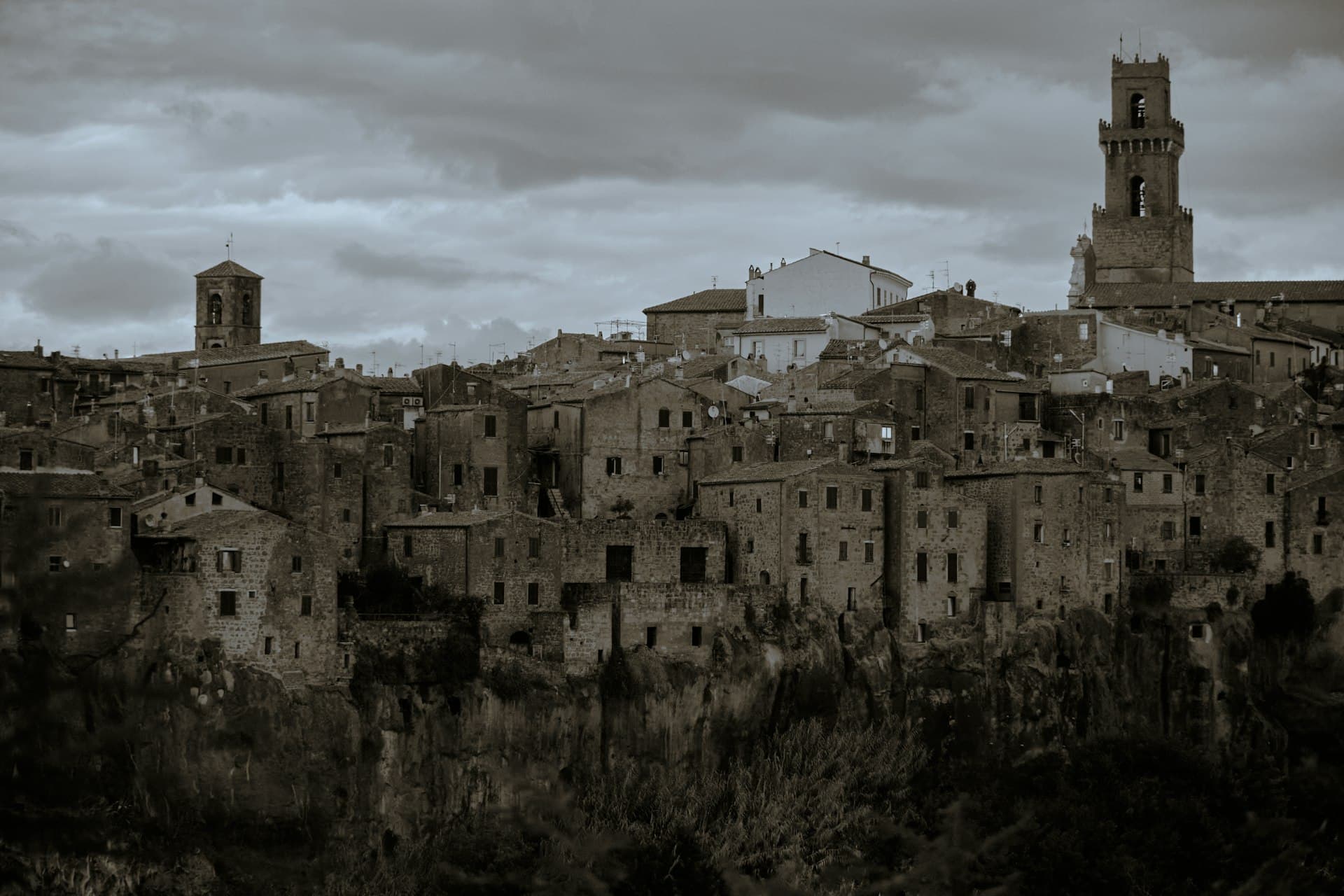 Photo: Adrian Schledorn / Unsplash
Tour de audio autoguiado de Pitigliano — ruta GPS a pie, reproducción offline, narración en 32 idiomas.
“Donde las piedras milenarias relatan sagas de refugio y fortaleza.”
No las postales. Las historias que ni los locales conocen — al oído, justo donde ocurrieron.
Pitigliano es llamada 'Pequeña Jerusalén' por una razón convincente, pero la supervivencia de la comunidad aquí no siempre estuvo asegurada.
Estos antiguos caminos etruscos, tallados profundamente en la roca de toba, pudieron haber servido para propósitos más allá del simple tránsito.
Esta formidable fortaleza, ahora un museo, esconde un origen inesperado entre sus muros.
Descubre todos los secretos de Pitigliano
Cada dirección, cada revelación al completo — a tu oído, justo donde ocurrió.
Eliges tus paradas. Caminas. La voz te revela lo que los demás ignoran.


Tu tour de audioguía por Pitigliano te espera — elige tus lugares, tu idioma y empieza al llegar.
ComprarLume incluye una guía de realidad aumentada. Levanta el móvil y su cámara muestra la calle que tienes delante, con una flecha luminosa sobre la imagen real que siempre apunta a tu próxima parada — sin mapas que descifrar, sin giros equivocados. Como todo en Lume, funciona completamente sin conexión.
Pitigliano se alza dramáticamente desde una cresta de toba en el sur de la Toscana, con sus edificios antiguos que parecen crecer orgánicamente de la propia roca volcánica. Esta cautivadora ciudad italiana, a menudo conocida como "Pequeña Jerusalén" debido a su profunda herencia judía, presenta una fusión singular de historia etrusca, romana y medieval. Su distintivo horizonte, marcado por viviendas esculpidas directamente en los acantilados de toba, crea una primera impresión inolvidable, particularmente cuando se observa desde los amplios miradores fuera de la ciudad.
Más allá de su llamativa fachada, Pitigliano invita a los visitantes a explorar sus estrechas y sinuosas calles, plazas históricas y un cautivador reino subterráneo de cuevas y túneles. La posición estratégica de la ciudad, cerca de la frontera de la Toscana y el Lacio, ha moldeado su diverso tejido cultural y la ha establecido como un cruce histórico significativo. Pitigliano ha sido galardonada con la Bandera Naranja por el Touring Club Italiano y es reconocida como uno de los pueblos más bellos de Italia.
Los viajeros a Pitigliano descubrirán un lugar donde la historia no solo se conserva, sino que está profundamente grabada en el paisaje, desde sus antiguos orígenes etruscos hasta su perdurable herencia judía. La ciudad ofrece un encuentro fascinante para aquellos que buscan una visión auténtica del pasado de Italia, lejos de los caminos turísticos más frecuentados.
Los orígenes de Pitigliano se extienden a épocas prehistóricas, con evidencia de asentamientos del período Eneolítico (mediados del IV al principios del III milenio a.C.). Los etruscos fueron los primeros en influir profundamente en la zona, estableciendo una presencia significativa alrededor del 800 a.C. Esculpieron viviendas y elaboradas necrópolis en la suave roca de toba, dejando atrás una red de enigmáticos caminos hundidos conocidos como vie cave. Pitigliano se convirtió en un importante centro etrusco en el valle del río Fiora, debido a su posición estratégica sobre una impresionante roca de toba y la construcción de muros defensivos en el siglo VI a.C.
Después de los etruscos, los romanos dejaron su huella, y se cree que el nombre de la ciudad deriva de los nombres romanos Petilio y Celiano. A principios del siglo XIII, Pitigliano quedó bajo el dominio de la familia Aldobrandeschi, que la utilizó como fortaleza. En 1293, el condado pasó a la familia Orsini, que estableció Pitigliano como su capital y supervisó un período de conflictos intermitentes con Siena. La familia Orsini también encargó notables obras arquitectónicas, incluido el acueducto y el Palazzo Orsini.
En 1562, Pitigliano pasó a formar parte del Gran Ducado de Toscana. Fue durante el siglo XVI cuando Pitigliano comenzó su duradera conexión con una floreciente comunidad judía. Huyendo de la persecución y el establecimiento de guetos en Roma y otros Estados Pontificios, las familias judías encontraron refugio en Pitigliano, entonces un condado independiente bajo la familia Orsini. La comunidad se expandió, construyendo una sinagoga en 1598. A pesar de la posterior imposición de un gueto por los Medici a principios del siglo XVII, la comunidad judía en Pitigliano prosperó, disfrutando de mayores derechos y libertades que en muchas otras partes del centro de Italia. Esta historia particular le valió a Pitigliano el cariñoso apodo de "Pequeña Jerusalén". A mediados del siglo XIX, los judíos representaban aproximadamente el 20% de la población de Pitigliano, una proporción notablemente alta para una ciudad italiana.
Aunque la población judía disminuyó significativamente después de la unificación italiana en 1861, ya que muchos se trasladaron a ciudades más grandes en busca de nuevas oportunidades, los fuertes lazos entre las comunidades cristiana y judía perduraron. Durante la Segunda Guerra Mundial, los residentes católicos locales protegieron valientemente a los ciudadanos judíos restantes de la persecución nazi y fascista. Hoy en día, la rica y estratificada historia de Pitigliano es evidente en su arquitectura, sus costumbres culturales y su continua dedicación a preservar el legado de su diverso pasado.
Comience su exploración en el mirador panorámico de la Chiesa della Madonna delle Grazie, que ofrece una vista impresionante del espectacular horizonte de Pitigliano. Pasee por el centro histórico, un laberinto de calles estrechas y empedradas y plazas íntimas. El formidable Palazzo Orsini, una fortaleza del siglo XIII, ahora alberga el Museo Diocesano y el Museo Arqueológico Cívico, que exhiben arte y artefactos etruscos. Junto al palacio, descubrirá la Fontana delle Sette Cannelle (Fuente de los Siete Caños), una icónica fuente del siglo XVI que alguna vez fue parte del Acueducto Mediceo.
Ninguna visita a Pitigliano está completa sin explorar el Gueto Judío, también conocido como "Pequeña Jerusalén". Aquí, puede visitar la Sinagoga restaurada de 1598, junto con habitaciones subterráneas talladas en la roca de toba que alguna vez sirvieron como carnicería kosher, un baño ritual (mikve) y un horno para pan sin levadura. Para una excursión a la historia antigua, explore las vie cave, profundos caminos etruscos hundidos esculpidos en la toba. El Museo Arqueológico Alberto Manzi es un sitio al aire libre que le permite sumergirse en estos caminos únicos y en las necrópolis etruscas.
Además, considere una visita a la Catedral de los Santos Pedro y Pablo, una iglesia medieval con una fachada barroca, y la más antigua Iglesia de Santa María y San Rocco, que data del siglo XII.
La época más favorable para visitar Pitigliano con buen tiempo se extiende de abril a octubre. Durante estos meses, las temperaturas son moderadas y hay menos turistas que en pleno verano. Para actividades de clima cálido, de principios de julio a mediados de agosto ofrece las temperaturas más altas, siendo julio el mes más despejado. Sin embargo, si prefiere un clima más fresco y menos multitudes, finales de septiembre y octubre brindan una hermosa experiencia otoñal con paisajes dorados. La estación más húmeda suele abarcar de septiembre a junio, siendo noviembre el mes con mayor precipitación.
Pitigliano está situada en el sur de la Toscana, dentro de la provincia de Grosseto, cerca de la frontera con el Lacio. La forma más conveniente de llegar a la ciudad es en coche, con tiempos de conducción de aproximadamente 2.5 horas desde Pisa y 2 horas desde Roma. Aunque el transporte público es una opción, a menudo implica múltiples transbordos de autobús y tren, lo que hace que el alquiler de un coche o una excursión organizada sea una opción más sencilla.
Una vez en Pitigliano, el centro histórico está cerrado a los coches, pero hay aparcamiento disponible justo fuera de la ciudad a lo largo de la carretera principal. Recuerde llevar monedas para los parquímetros, ya que las multas pueden ser sustanciales. La ciudad es transitable a pie, con sus estrechas calles y callejones que se exploran mejor a pie. Considere llevar zapatos cómodos para navegar por las superficies irregulares y las posibles pendientes. Pitigliano se puede visitar como una excursión de un día, pero alojarse cerca permite una experiencia más inmersiva y la oportunidad de explorar pueblos vecinos como Sovana y Sorano, o las termas de Saturnia.
Pitigliano en coreano, en chino o en hebreo — y 29 idiomas más, cada parada narrada por una voz nativa. La mayor variedad de idiomas de cualquier audioguía autoguiada.
Disponible en: