Catacaos
Além de seu celebrado artesanato, Catacaos abriga um segredo culinário.
História completa desbloqueada no tour
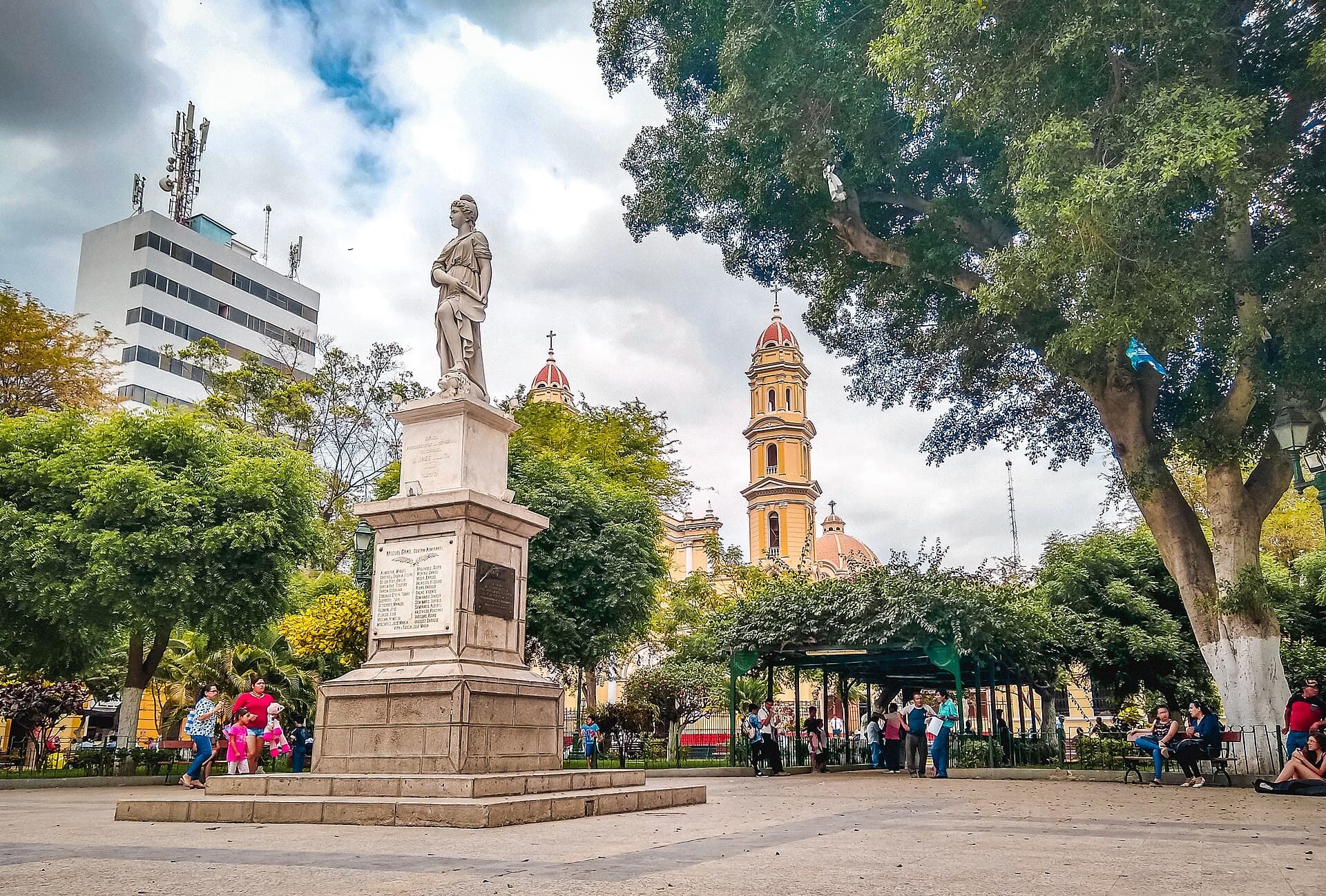 Edward Josué Quevedo Macalupú / CC BY-SA 4.0, via Wikimedia Commons
Tour de áudio autoguiado por Piura — rota GPS a pé, reprodução offline, narração envolvente em 32 idiomas.
“Onde o deserto abraça o Pacífico e a história respira no ar quente.”
Não os postais. As histórias que nem os locais conhecem — sussurradas ao seu ouvido, exatamente onde aconteceram.
Além de seu celebrado artesanato, Catacaos abriga um segredo culinário.
Este porto histórico, outrora um centro movimentado, compartilha uma conexão tranquila com um libertador sul-americano.
O calmo rio Piura, muitas vezes uma presença gentil, esconde um passado dramático que remodelou a cidade.
Descubra cada segredo de Piura
Cada endereço, cada revelação na íntegra — no seu ouvido, exatamente onde aconteceu.
Você escolhe as suas paragens. Você caminha. A voz revela o que os outros perdem.


O seu tour áudio autoguiado de Piura está pronto — escolha os seus pontos de interesse, selecione o seu idioma e comece no momento em que chegar.
ComprarA Lume inclui um guia de realidade aumentada. Levante o telemóvel: a câmara mostra a rua à sua frente, com uma seta luminosa sobreposta à imagem real que aponta sempre para a sua próxima paragem — sem mapa para decifrar, sem voltas erradas. Como tudo na Lume, funciona totalmente offline.
Piura, frequentemente chamada de "A Cidade do Calor Eterno", é uma cidade do norte do Peru reconhecida por seu clima quente e uma mistura distinta de paisagens costeiras, desérticas e de floresta tropical seca. Situada perto da fronteira com o Equador, funciona como um vital centro comercial e administrativo para a região. A identidade da cidade é moldada por sua localização onde a fria Corrente de Humboldt e a quente Corrente de El Niño convergem, promovendo um ambiente diverso que suporta tudo, desde planícies áridas até florestas de mangue.
A paisagem cultural de Piura é um rico tecido tecido de origens indígenas Tallán e Vicús, influências coloniais espanholas e contribuições posteriores de comunidades africanas, chinesas e ciganas. Essa mistura é aparente em sua culinária, música e artesanato. Como a primeira cidade espanhola estabelecida no Peru e a terceira na América do Sul por Francisco Pizarro em 1532, Piura ocupa uma posição fundamental na narrativa colonial do continente. Sua importância estratégica como porta de entrada para expedições e comércio contribuiu para seu crescimento inicial e caráter duradouro.
A região de Piura foi inicialmente povoada por grupos indígenas conhecidos como Tallanes e Yungas, que viviam em comunidades descentralizadas. Com o tempo, a cultura Muchik ganhou proeminência, levando ao desenvolvimento da cultura Vicús, celebrada por sua cerâmica e intrincado trabalho em ouro. Séculos depois, o Império Inca, sob Tupac Inca Yupanqui, estendeu seu domínio sobre Piura por aproximadamente 40 anos antes da chegada dos espanhóis.
Em 1532, o conquistador espanhol Francisco Pizarro fundou San Miguel de la Nueva Castilla, a primeira cidade espanhola no Peru e a terceira na América do Sul, dentro do assentamento Tallán de Tangarará. A data exata de fundação é debatida, mas 15 de julho é oficialmente reconhecida. A localização da cidade mudou várias vezes devido a desafiadoras condições climáticas e em busca de um ambiente mais saudável, eventualmente se estabelecendo em seu local atual no vale do rio Piura até 1588.
Durante a era colonial, Piura tornou-se um centro administrativo e militar essencial, simbolizando a autoridade espanhola e servindo como um centro comercial conectando o porto de Paita com as regiões interiores. Este período testemunhou o surgimento de uma cultura mestiça única, misturando tradições espanholas da Andaluzia e Extremadura com herança indígena. Mais tarde, influências de escravos africanos, coolies chineses e ciganos enriqueceram ainda mais o tecido cultural de Piura. A economia da cidade dependia da agricultura, particularmente do cultivo de algodão de alta qualidade, conhecido como "ouro branco", que experimentou um surto econômico no final do século XIX.
Piura foi uma das primeiras a defender a independência, declarando sua liberdade da Espanha em 4 de janeiro de 1821, vários meses antes da independência nacional do Peru em 28 de julho de 1821. Em 1861, Piura tornou-se oficialmente a capital departamental, solidificando seu papel administrativo e político na região. Hoje, Piura continua a ser um importante centro econômico e cultural no norte do Peru, conhecida por seu calor duradouro e tradições vibrantes.
Comece sua exploração na Plaza de Armas, o ponto de encontro central de Piura, adornado com generosas árvores sombreadas e cercado por arquitetura colonial. A Basílica Catedral de Piura (Basílica Catedral San Miguel Arcángel), datada de 1588, domina a praça, seu altar coberto de folha de ouro e apresentando uma pintura do artista local Ignacio Merino. Uma curta caminhada leva à Casa Grau, o local de nascimento do Almirante Miguel Grau, um herói da Guerra do Pacífico, agora um museu naval.
Para uma compreensão mais profunda da história pré-colombiana, visite o Museu Arqueológico Municipal Vicus, que abriga uma coleção de trabalhos em ouro e artefatos da cultura Vicús. Logo fora da cidade, explore Huaca Narihualá, um antigo templo deixado pelo povo Tallán. A vila vizinha de Catacaos, a aproximadamente 12 km a sudoeste, é celebrada por seu movimentado mercado de artesanato, oferecendo chapéus Panamá, artigos de couro, cerâmica, esculturas em madeira e delicada filigrana de prata. Catacaos também é um excelente lugar para saborear a culinária tradicional de Piura em suas picanterías locais.
Aqueles que apreciam a natureza podem aventurar-se ao Parque Nacional Cerros de Amotape, um ecossistema de floresta tropical seca repleto de vida selvagem diversificada e trilhas para caminhada. Para experiências costeiras, as praias de Máncora, Colán e Lobitos são favorecidas para surf e relaxamento.
Piura é conhecida como "A Cidade do Calor Eterno" e oferece clima quente durante todo o ano. A época mais agradável para visitar para um clima agradável e atividades ao ar livre, especialmente para desfrutar das praias, é de maio a outubro. Durante esta estação seca, as temperaturas são quentes, mas não excessivamente altas, com menor chance de chuva. Enquanto a estação mais quente se estende de janeiro a abril, com temperaturas médias diárias frequentemente excedendo 30°C (86°F), este período também traz a maior probabilidade de precipitação, embora a chuva permaneça mínima.
Piura é acessível por via aérea através do Aeroporto Capitán FAP Guillermo Concha Iberico (PIU), com voos diretos de Lima. Ônibus noturnos de Lima oferecem uma opção mais econômica, embora mais longa. Dentro da cidade, táxis de motocicleta (motos) e táxis regulares fornecem transporte acessível. Para se aventurar além da cidade, aluguel de carros está disponível no aeroporto.
As opções de acomodação em Piura variam de hotéis de luxo a albergues econômicos, com muitas opções no centro da cidade e resorts à beira-mar em áreas como Máncora. A culinária local é um destaque, com pratos como seco de chabelo, ceviche de conchas negras (ceviche de mexilhão preto) e doces de natilla. Piura é geralmente considerada segura para viajantes, e interagir com os locais e participar de eventos tradicionais oferece uma experiência cultural mais profunda.
Piura — coreano, chinês, hebraico e mais 29 idiomas, cada parada narrada por uma voz nativa. A maior variedade de idiomas entre os passeios de áudio autoguiados.
Disponível em: