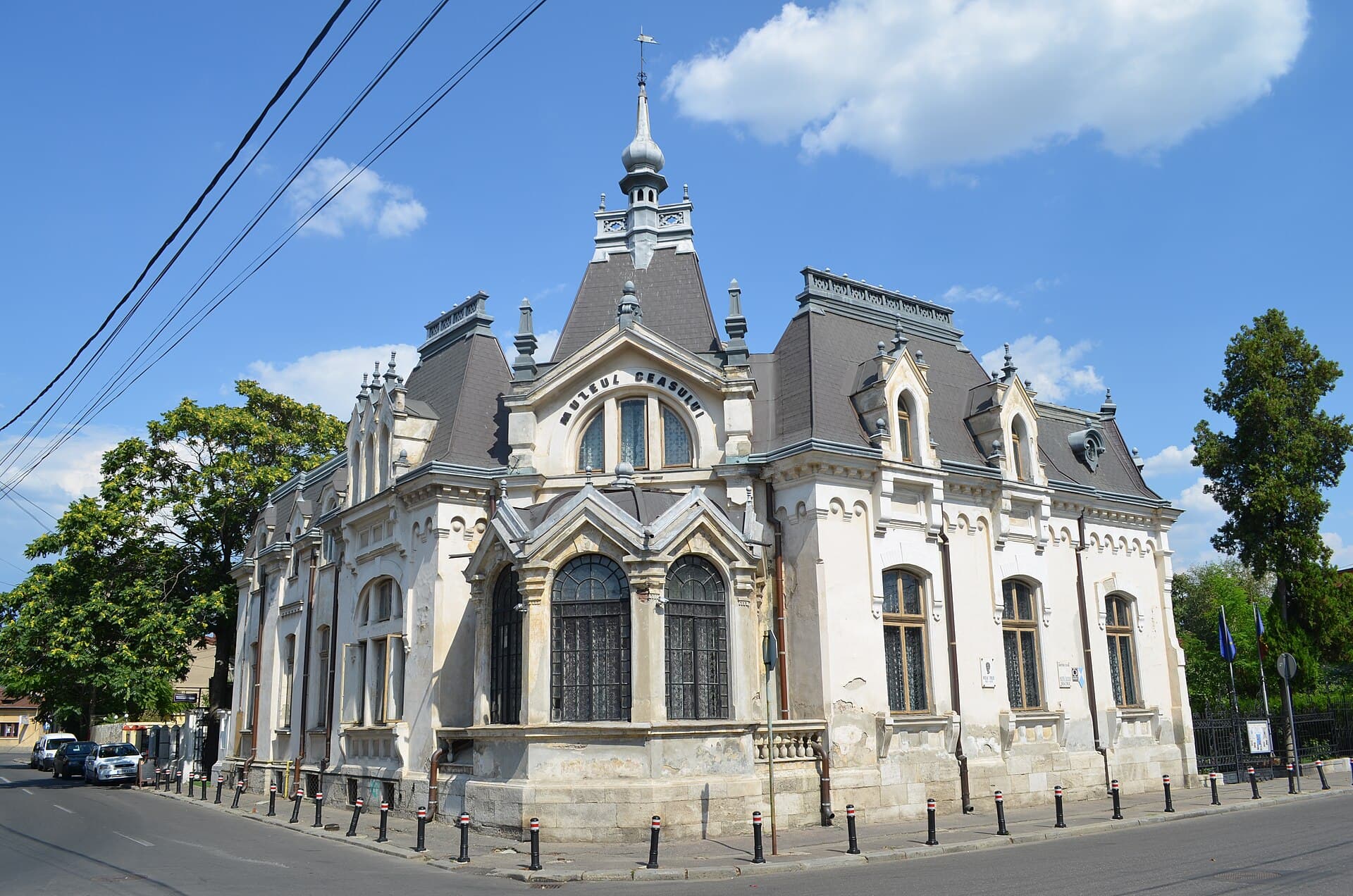
Beyond the intricate gears and elegant faces, one exhibit at the Clock Museum connects timekeeping to the very earth beneath Ploiești.
Razvan Socol / CC BY-SA 3.0 ro, via Wikimedia CommonsPloiești
“Ploiești: Where industrial might meets cultural whispers.”
Ploiești, as no one tells it.
Not the postcards. The stories even locals don't know — whispered in your ear, right where they happened.
The skies over Ploiești once witnessed a daring World War II mission, but the true story of its execution reveals a surprising vulnerability on the Allied side.
This grand promenade, a symbol of Ploiești's inter-war elegance, holds a secret about the city's spirited past that might surprise you.
Discover every secret of Ploiești
Every address, every reveal in full — in your ear, right where it happened.
You pick your stops. You walk. The voice reveals what the others miss.
How long do you have in Ploiești?
No tours available yet. Check back soon — we're preparing them.
The story of Ploiești
Ploiești, a city in the historical region of Muntenia, Romania, lies approximately 60 kilometers north of Bucharest. Often referred to as the "Capital of Black Gold," Ploiești's identity is deeply intertwined with the petroleum industry, pioneering the world's first large-scale oil refinery in 1857. Yet, beyond its industrial heart, Ploiești offers a compelling blend of history, culture, and architecture, reflecting its journey from a modest 16th-century village to a significant urban center.
Today, Ploiești serves as a crucial transport and logistics hub, connecting Bucharest with Transylvania and Moldavia, and acting as a gateway to the scenic Prahova Valley. The city presents a unique experience for visitors, where the old and new, tradition and modernity, industry and culture coexist in a dynamic urban rhythm. Its attractive core features 19th-century mansions, distinctive museums, and a rich cultural calendar, inviting travelers to explore its layered past and contemporary energy.
From its pivotal role in the global oil industry to its resilient spirit through wartime challenges and communist-era industrialization, Ploiești tells a story of constant transformation. It's a city that inspires curiosity, offering a glimpse into Romania's industrial heritage while revealing unexpected cultural treasures.
From Market Town to Oil Capital
Ploiești's origins trace back to 1503, initially mentioned as a modest village. Its strategic importance grew in 1597 when Michael the Brave, Prince of Wallachia, designated it a formal market town. Positioned along key trade routes connecting Transylvania with the Danube basin, Ploiești flourished as a regional hub for commerce and handicrafts throughout the 17th and 18th centuries. Large fairs were regularly held, attracting merchants and fostering economic growth.
The mid-19th century marked a profound shift with the establishment of the world's first large-scale oil refinery in 1856-1857 by the Mehedințeanu brothers. This pioneering industrial leap earned Ploiești the moniker "Capital of Black Gold" and spurred rapid urban development, attracting significant foreign investment. Infrastructure expanded rapidly, with a road link to Brașov opening in 1864 and a railway connection to Bucharest in 1872, solidifying its role as a primary logistics node.
Wartime Challenges and Industrial Peaks
Ploiești faced significant hardships during both World Wars. During World War I, the city was occupied by German troops seeking control over its vital oil fields. The Second World War brought even greater devastation, as Romania became Europe's largest oil producer, with Ploiești's refineries supplying a substantial portion of Nazi Germany's oil needs. This strategic importance made the city a primary target for Allied bombing raids, most notably Operation Tidal Wave in August 1943, which aimed to cripple the oil industry. The city's architecture suffered heavily during these raids and subsequent communist rule, which saw the replacement of many older buildings with brutalist structures.
During the communist period, industrialization reached its peak, further solidifying Ploiești's role as an industrial center. After the fall of the regime in 1989, the city underwent significant economic restructuring and began a process of cultural revitalization. Today, Ploiești continues to be a diversified industrial and service center, while also embracing its cultural and artistic heritage.
Ploiești offers a collection of unique museums and architectural highlights. A visit to the Nicolae Simache Clock Museum, the only one of its kind in Romania, will reveal an impressive chronological collection of timepieces spanning over 500 years, including sundials, sand clocks, and intricate mechanical clocks. The Oil Museum (Muzeul Național al Petrolului), inaugurated in 1961, showcases over 8,000 exhibits illustrating the history of oil drilling equipment, geological maps, and a model of the world's first refinery.
For a glimpse into traditional Romanian merchant architecture, visit the "Casa Târgoveț" Museum, housed in the city's oldest building, with exhibits and decor from the 18th and 19th centuries. The Palace of Culture (Palatul Culturii), originally built as the Palace of Justice between 1906 and 1933, is a monumental building in the French neoclassical style, now hosting several cultural institutions, including the Prahova County Museum of Natural Sciences. Do not overlook the Cathedral of St. John the Baptist, a Romanian-Orthodox cathedral built in Neo-Brâncoveanu style between 1923 and 1937, and the Central Market Halls, an interwar landmark with a Neo-Romanian façade. Strolling along Independence Boulevard (The Boulevard of Chestnuts) offers a chance to admire a mix of historic buildings and civic landmarks.
Ploiești experiences warm summers, with temperatures often reaching up to 30°C (86°F), and chilly winters, frequently accompanied by snow, with average temperatures around -3°C (27°F). The shoulder seasons of spring (April-May) and early autumn (September-October) generally offer pleasant weather for exploring the city's outdoor attractions and walking its boulevards. These periods avoid the peak summer heat and the colder winter months, providing comfortable conditions for sightseeing.
Ploiești is approximately 60 km (37 miles) north of Bucharest, making it easily accessible. The closest airport is Henri Coandă International Airport (OTP) in Bucharest, about 41 km away, with a taxi or bus ride taking around 1 hour and 20 minutes. Ploiești is a significant railway hub, with numerous daily train connections to major Romanian cities, including over 60 trains daily from Bucharest. A train journey from Bucharest typically takes between 35 and 70 minutes.
Within the city, public transport is managed by Transport Călători Express (TCE) Ploiești, offering an integrated system of buses, trolleybuses, and trams. For those driving, Ploiești is connected to Bucharest by the A3 motorway. Ample parking is available in the city center, including multi-story car parks, with an approximate cost of 2.5 lei per hour.
- What is Ploiești known for?
- Ploiești is primarily known as the "Capital of Black Gold" due to its pioneering role in the global oil refining industry, housing the world's first large-scale oil refinery in 1857.
- Are there any unique museums in Ploiești?
- Yes, Ploiești is home to the Nicolae Simache Clock Museum, which is the only one of its kind in Romania, showcasing a vast collection of timepieces. The city also has a dedicated Oil Museum.
- How far is Ploiești from Bucharest?
- Ploiești is approximately 60 kilometers (37 miles) north of Bucharest.
- What is the best way to travel to Ploiești?
- The fastest way to reach Ploiești from Bucharest is by train, with journeys taking between 35 and 70 minutes. The city is also accessible by car via the A3 motorway.
- Did Ploiești play a significant role in World War II?
- Yes, Ploiești's oil refineries were crucial for supplying Nazi Germany during World War II, making the city a primary target for Allied bombing raids, including Operation Tidal Wave.
- What kind of architecture can be seen in Ploiești?
- Ploiești features an eclectic blend of architectural styles, including 19th-century mansions, neoclassical buildings like the Palace of Culture, and examples of Neo-Romanian style, such as the Cathedral of St. John the Baptist.