Sir Francis Drake's legendary game of bowls before the Spanish Armada is a well-known tale, but there's a curious detail often overlooked about the very ground he played upon.
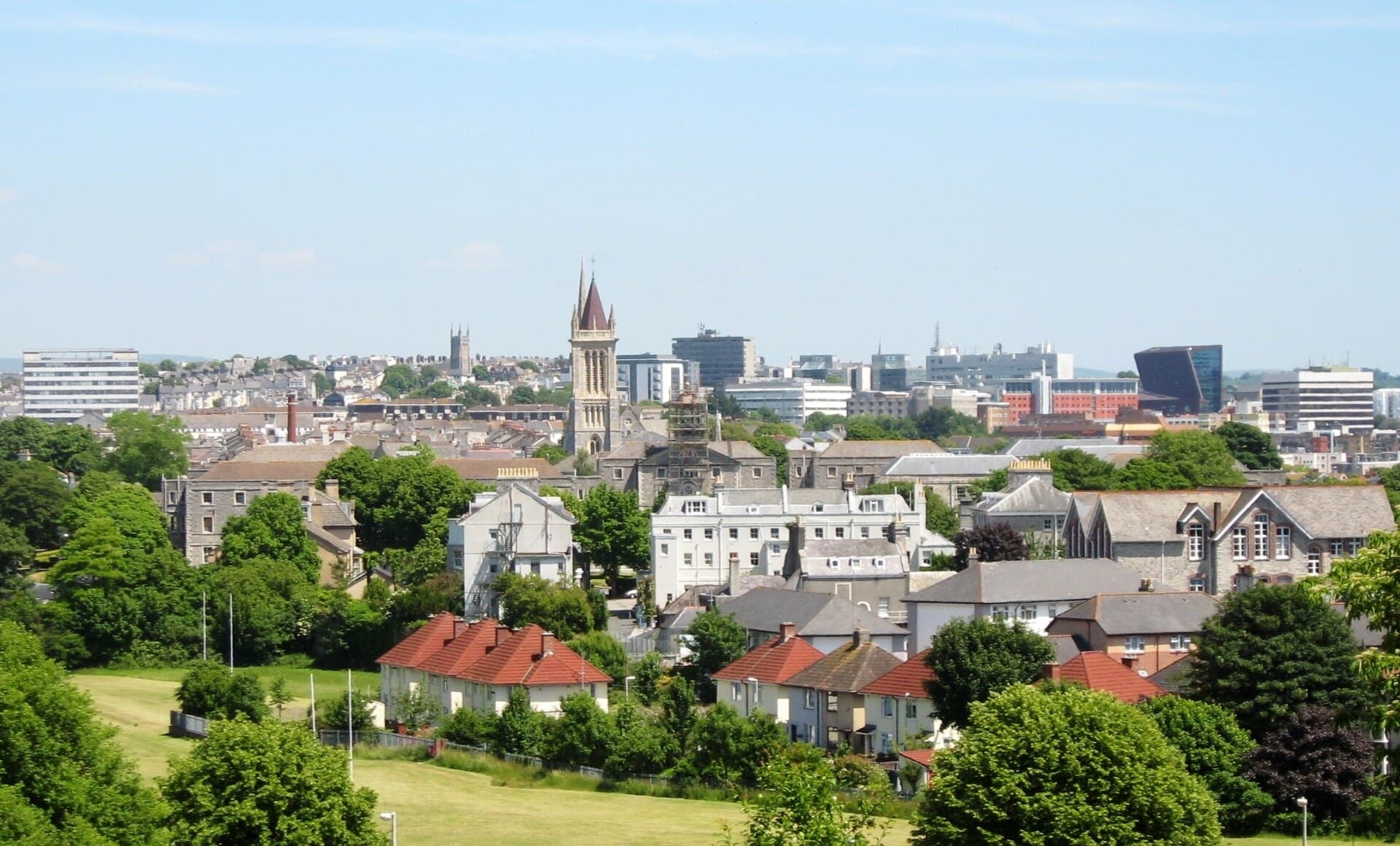
Jabarney / CC BY-SA 3.0, via Wikimedia CommonsPlymouth
Self-guided audio walking tour of Plymouth — GPS route, offline playback, story-driven narration in 32 languages.
“Where the ocean charts a course through centuries of exploration.”
Plymouth, as no one tells it.
Not the postcards. The stories even locals don't know — whispered in your ear, right where they happened.
The Black Friars Distillery, home to Plymouth Gin since 1793, is England's oldest working gin distillery, yet its history stretches back much further and includes some unexpected past inhabitants.
Legends persist of secret passages connecting Drake's Island to the mainland, a tantalizing prospect for those who enjoy uncovering concealed routes.
Discover every secret of Plymouth
Every address, every reveal in full — in your ear, right where it happened.
You pick your stops. You walk. The voice reveals what the others miss.


How long do you have in Plymouth?
Your self-guided audio tour of Plymouth is ready — pick your landmarks, choose your language, and start the moment you arrive.
BuyThe story of Plymouth
Plymouth, a historic port city on Devon's south coast, sits at the confluence of the Rivers Plym and Tamar, opening onto the expansive natural harbour of Plymouth Sound. Known as 'Britain's Ocean City,' its identity is inextricably linked to the sea, a legacy evident in its maritime heritage and waterfront attractions. The city offers a unique blend of historical significance, engaging culture, and scenic coastal beauty, serving as a gateway to both the rugged landscapes of Dartmoor National Park and the picturesque coastlines of the South Hams.
From the ancient thoroughfares of the Barbican to the expansive green of Plymouth Hoe, the city invites exploration. Visitors can delve into centuries of seafaring history, from famous voyages of discovery to its ongoing role as a vital naval base. Despite extensive damage during World War II, Plymouth has been rebuilt and revitalized, with modern attractions complementing its enduring historical sites. It welcomes over 5 million visitors annually, drawn by its cultural offerings, outdoor activities, and the allure of its deep connection to the ocean.
From Ancient Origins to Maritime Powerhouse
Plymouth's history stretches back to the Bronze Age, beginning as a trading post at Mount Batten. It evolved into the market town of Sutton, formally renamed Plymouth in 1439 when it became a borough. Its strategic coastal position quickly established it as a hub for both trade and military operations.
The city played a central role in English history, notably in 1588 when an English fleet based here confronted and defeated the Spanish Armada. Plymouth is also etched into global history as the departure point for the Pilgrim Fathers aboard the Mayflower in 1620, who set sail for the New World and established the second English colony in America. Other renowned explorers, including Captain James Cook and Robert Falcon Scott, also embarked on their famous voyages from Plymouth.
Plymouth's military importance solidified with the construction of the Royal Citadel on Plymouth Hoe in the late 1660s. This massive star-shaped fortress was designed to defend against potential attacks and, some suggest, to keep an eye on the local population after the English Civil War, during which Plymouth supported the Parliamentarians. By 1690, the first Royal Dockyard was established on the River Tamar, further transforming Plymouth into a key naval base. The city's naval expansion was crucial during the Napoleonic Wars, and the dockyard remains the most extensive naval base in Western Europe today.
During World War II, Plymouth suffered extensive damage in the Plymouth Blitz, enduring 59 Luftwaffe raids that devastated large parts of the city center and dockyards. Post-war rebuilding significantly shaped its modern appearance. Plymouth was granted city status in 1928 and has continued to evolve, transitioning from an economy rooted in shipbuilding and seafaring to a service-based economy since the 1990s.
Begin your exploration at Plymouth Hoe, a large public space offering expansive views of Plymouth Sound, Drake's Island, and the distant Cornish coast. Here, you'll find Smeaton's Tower, the iconic red and white lighthouse that once stood on the Eddystone Reef and was painstakingly rebuilt on the Hoe. Climb its 93 steps for panoramic vistas.
Just below the Hoe lies the historic Barbican quarter, with its ancient thoroughfares and Tudor and Jacobean buildings. This is where the Mayflower Steps are located, marking the departure point of the Pilgrim Fathers in 1620. Nearby, the Mayflower Museum offers a deeper dive into their story. While in the Barbican, consider a tour of the Plymouth Gin Distillery, England's oldest working gin distillery, which has been producing gin since 1793.
For an immersive marine experience, visit the National Marine Aquarium, the UK's largest aquarium, where you can walk through glass tunnels surrounded by sharks and other sea creatures. Another notable architectural piece is Tinside Lido, an art-deco style saltwater swimming pool open during the warmer months. Do not miss the Royal Citadel, a 17th-century fortress still in military use, which offers guided tours.
The best time to visit Plymouth for warm-weather activities is from late June to early September. During these summer months, temperatures are generally warm and sunny, with average highs ranging from 18-22°C (64-72°F). This period is ideal for enjoying outdoor activities, beaches, and the city's lively atmosphere. The shoulder seasons of spring (April-May) and autumn (September-October) also offer pleasant weather with fewer crowds and potentially more affordable prices. While winters are milder than inland areas, they can be wet and cool, with more facilities operating on reduced hours.
Plymouth is well-connected and accessible by road, rail, and sea. Major routes include the M5 and A38, and direct train services link Plymouth to London (approximately 3 hours), Exeter, and Bristol. Although Plymouth Airport closed in 2011, Exeter Airport is about an hour's drive away. Ferry services from Plymouth's port connect to France and Spain, making it a gateway to mainland Europe. Central Plymouth, including the Barbican and Plymouth Hoe, is easily explored on foot. For wider exploration, local buses, regional trains, and taxi boats are available. Car rental is recommended for greater freedom to explore the surrounding coastline and Dartmoor National Park. The city offers a range of accommodation options and eateries, from pubs to restaurants.
- What is Plymouth best known for?
- Plymouth is renowned for its maritime heritage, including being the departure point for the Mayflower Pilgrims in 1620 and home to Devonport Dockyard, Western Europe's largest naval dock.
- Is Plymouth worth visiting?
- Yes, Plymouth is considered one of the UK's top coastal destinations, attracting over 5 million visitors annually with its blend of maritime history, cultural attractions, and natural beauty.
- How do I get to Plymouth?
- You can reach Plymouth by road via the M5 and A38, by rail with direct services from London, Exeter, and Bristol, or by ferry from France and Spain.
- What are the top attractions in Plymouth?
- Key attractions include Smeaton's Tower, the Mayflower Steps, Tinside Lido, Plymouth Hoe, The Box museum, the National Marine Aquarium, and the Royal Citadel.
- When are the best times to visit Plymouth?
- The best time for warm-weather activities is from late June to early September. Spring (April-May) and autumn (September-October) offer pleasant weather with fewer crowds.
- Is Plymouth an expensive city to visit?
- Plymouth is considered one of the least expensive student cities in the UK, and while general visitor costs vary, it can be a more affordable option compared to other major UK cities.
Plymouth in your own language — all 32· 32
Plymouth in Korean, in Chinese or in Hebrew — and 29 more languages, every stop narrated by a native voice. The widest language range of any self-guided audio tour.
Available in:
- English
- FrenchFrançais
- SpanishEspañol
- GermanDeutsch
- ItalianItaliano
- PortuguesePortuguês
- DutchNederlands
- PolishPolski
- SwedishSvenska
- DanishDansk
- NorwegianNorsk
- FinnishSuomi
- RussianРусский
- UkrainianУкраїнська
- TurkishTürkçe
- CzechČeština
- HungarianMagyar
- RomanianRomână
- BulgarianБългарски
- GreekΕλληνικά
- Japanese日本語
- Korean한국어
- Chinese中文
- Arabicالعربية
- Hebrewעברית
- Hindiहिन्दी
- Thaiไทย
- VietnameseTiếng Việt
- IndonesianBahasa Indonesia
- MalayBahasa Melayu
- CatalanCatalà
- BasqueEuskara