Imagine a roller coaster you can traverse on foot, a colossal steel artwork spiraling towards the sky.
Jordi Sanchez Teruel / CC BY-SA 2.0, via Wikimedia CommonsPohang
“Where the strength of industry meets the solace of the shore.”
Pohang, as no one tells it.
Not the postcards. The stories even locals don't know — whispered in your ear, right where they happened.
At the Korean Peninsula's easternmost reach, two immense hands emerge—one on land, one from the sea.
Beyond the fresh seafood, the market holds a key to truly experiencing Pohang's culinary soul.
Discover every secret of Pohang
Every address, every reveal in full — in your ear, right where it happened.
You pick your stops. You walk. The voice reveals what the others miss.
How long do you have in Pohang?
No tours available yet. Check back soon — we're preparing them.
The story of Pohang
Pohang, a dynamic port city on South Korea's eastern coast, presents a compelling fusion of industrial prowess and natural splendor. While globally recognized as the headquarters of POSCO, a preeminent steel manufacturer, the city surprises visitors with its inviting beaches, lively markets, and rich cultural encounters. With a population nearing 500,000, Pohang functions as a significant economic engine within the Gyeongsangbuk-do province.
The city's geography is shaped by its expansive coastline along the East Sea, offering sweeping ocean vistas and a temperate climate that appeals to travelers year-round. Beyond its contemporary skyline, Pohang's narrative unfolds a transformation from a modest fishing village into a pivotal industrial center, a story that lends depth to any exploration. From distinctive art installations to animated seafood markets, Pohang provides a singular and memorable travel experience.
From Ancient Settlements to Industrial Giant
The history of Pohang traces a trajectory from ancient communities to its present standing as a modern industrial powerhouse. Archaeological findings, including dolmens and artifacts from the Mumun period (1500–300 BC), indicate human presence in the area as far back as 3,500 years ago. During the Three Kingdoms period (6th–7th centuries), the region became integrated into the formidable Silla Kingdom, contributing to its cultural and societal evolution.
For many centuries, the local economy relied primarily on fishing and agriculture, with residents' lives deeply intertwined with the sea. The initial steps toward developing Pohang into a more prominent location commenced in 1930 with the construction of a modern harbor. This development spurred rapid expansion, leading to the settlement's designation as a township (eup) in 1931 and official city status (si) in 1949.
Pohang's strategic position and port rendered it a crucial site during the Korean War, with the city enduring intense conflict in August 1950. A defining moment in Pohang's history arrived in 1968 with the establishment of the Pohang Iron and Steel Company (POSCO). The commencement of operations at the POSCO metallurgical complex in 1972 transformed Pohang from a modest coastal town into South Korea's largest steel industry center and a major seaport on the east coast. This swift transition from an agrarian-fishing existence to an industrial titan is a hallmark of Pohang's historical trajectory, molding its distinctive character. In recent years, urban development has also focused on creating public spaces, such as the Pohang Canal, completed in 2014, and architectural landmarks like the Space Walk in Hwanho Park and the Yeongildae Pavilion.
Pohang presents a varied array of attractions, blending coastal scenery with distinctive cultural and industrial sites. The Homigot Sunrise Square, the Korean Peninsula's easternmost point, is notable for its 'Hands of Harmony' sculpture emerging from the sea. It serves as an excellent location to witness the country's inaugural sunrise. Another unique sight is the Hwanho Park Space Walk, a substantial, walkable steel art installation resembling a roller coaster, offering expansive views of the city and ocean.
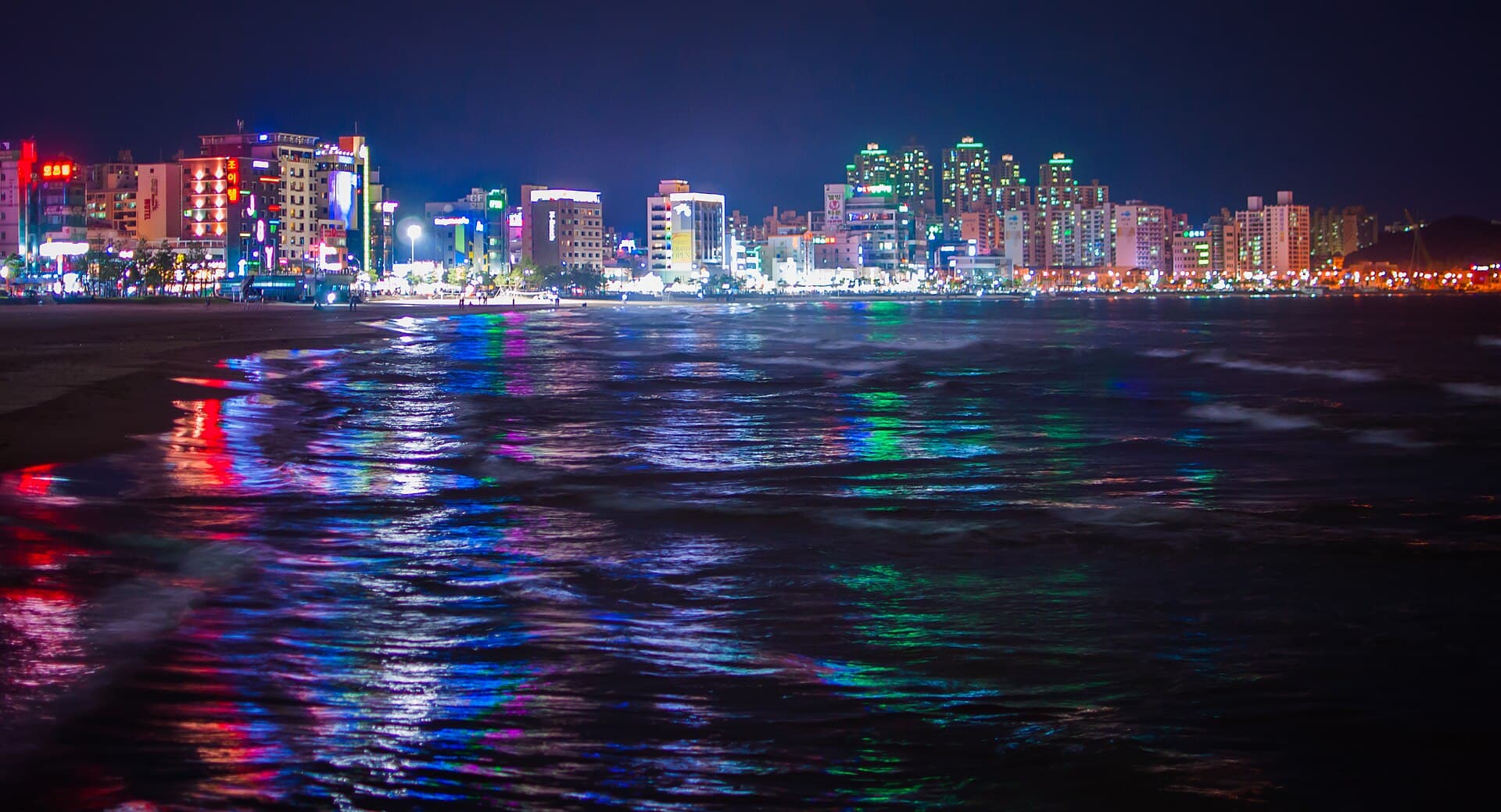
For an immersion into local life, Jukdo Fish Market stands as South Korea's largest seafood market, bustling with vendors and offering fresh catches and regional delicacies. Yeongildae Beach provides a pleasant space for relaxation, featuring the Yeongildae Pavilion, Korea's first traditional-style pavilion constructed over the sea, which glows beautifully at night. The Pohang Canal, a more recent addition, allows for a pleasant stroll along its banks or a tranquil cruise. For a glimpse into the past, explore Guryongpo Japanese House Street, a preserved district that once housed Japanese fishermen in the early 20th century. Those who appreciate nature can explore Naeyeonsan Mountain for its 12 waterfalls and verdant forests, or the Gyeongsangbuk-do Arboretum.
The most agreeable times to visit Pohang for pleasant weather and outdoor pursuits are spring (late May to late June) and autumn (late August to early October). During these periods, temperatures are mild, ranging from 21°C to 25°C (70°F to 77°F), accompanied by comfortable breezes and less rainfall. Spring, particularly early March, offers a more serene experience before the busiest tourist season. Summers (July and August) are warm and humid, with average temperatures around 25-26°C (77-79°F), but also bring the most rainfall due to the summer monsoon. Winters (December to February) are cool and relatively dry, with average temperatures around 1-3°C (34-37°F) and potential night frosts, necessitating warm clothing.
Reaching Pohang is straightforward, primarily by KTX train from Seoul or Busan, or by intercity bus from major cities such as Busan, Daegu, and Ulsan. Pohang Station is situated north of the city center, and taxis are readily available upon arrival. While Pohang does have a domestic airport (Pohang Gyeongju Airport) with flights to Jeju Island and Gimpo International Airport, flying into Busan or Daegu and then using ground transport is also a common approach.
Within Pohang, the primary method of transportation is the extensive bus network, encompassing both general (blue and orange) and seat (green and gray) buses. Taxis are also accessible and reasonably priced for travel within city limits. While some central areas are walkable, a combination of buses and taxis is often necessary to reach various points of interest. Bicycle rentals are available, especially near parks.
Communication can occasionally be challenging as English proficiency, particularly in service roles, may be limited. It is advisable to have a translation application or basic Korean phrases prepared. South Korea uses the Korean Won (KRW), and electricity is 220V with two-round-pin plugs (Type C and F).
- Is Pohang worth visiting?
- Yes, Pohang offers a distinctive blend of coastal scenery, fresh seafood, and unique attractions like the Space Walk and Homigot Sunrise Square, making it a rewarding destination.
- How many days do I need in Pohang?
- One to two days is generally sufficient to explore Pohang's main points of interest, including the sunrise at Homigot, the seafood market, and the Space Walk.
- What kind of food is Pohang known for?
- Pohang is celebrated for its fresh seafood, particularly dishes like sashimi (*hoe*), grilled fish, *hagfish*, and *gwamegi* (dried fish).
- Can you swim in the sea at Pohang?
- Yes, Pohang features several beaches, including Yeongildae, Wolpo, and Pohang Songdo, where visitors can enjoy the sea.
- What is the Space Walk?
- The Space Walk in Hwanho Park is a large, walkable steel art installation that resembles a roller coaster, offering unique views of Pohang's coast.
- How do I get around Pohang?
- The most effective way to navigate Pohang is by utilizing the local bus network or by taxi. There is no subway system within the city.