Place de la Liberté
Une réplique plus petite de la Statue de la Liberté se dresse à Poitiers, mais son origine n'a rien à voir avec l'Amérique.
L'histoire complète se débloque dans le tour
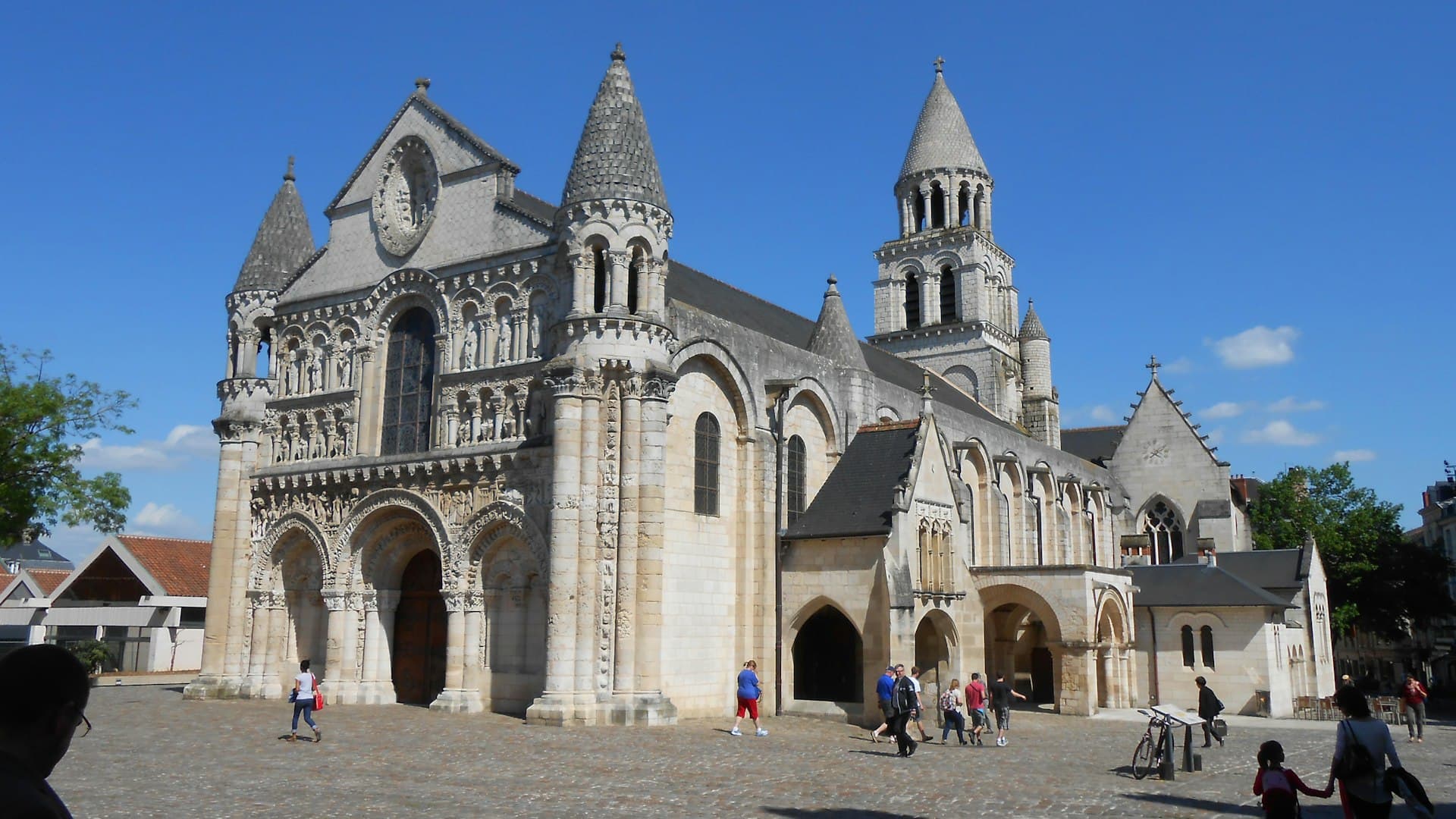 Photo: Phil Lev / Unsplash
Visite audio autoguidée de Poitiers — parcours GPS à pied, lecture hors ligne, narration en 32 langues.
“Poitiers : Là où les échos anciens rencontrent un dynamisme jeune et énergique.”
Pas les cartes postales. Les histoires que même les habitants ignorent — soufflées à l'oreille, là où elles se sont passées.
Une réplique plus petite de la Statue de la Liberté se dresse à Poitiers, mais son origine n'a rien à voir avec l'Amérique.
Poitiers a servi de capitale temporaire à un pays européen pendant la Seconde Guerre mondiale.
Parmi les artefacts historiques du principal musée de Poitiers, vous pouvez trouver une pierre au surnom plutôt particulier.
Découvrez tous les secrets de Poitiers
Chaque adresse, chaque révélation en entier — dans ton oreille, là où elle s'est passée.
Tu choisis tes lieux. Tu marches. La voix te révèle ce que les autres ignorent.


Votre visite audioguidée de Poitiers vous attend — choisissez vos lieux, votre langue, et lancez-vous dès votre arrivée.
AcheterLume intègre un guide en réalité augmentée. Levez votre téléphone : sa caméra montre la rue devant vous, avec une flèche lumineuse posée sur l'image réelle qui pointe toujours vers votre prochain arrêt — aucune carte à déchiffrer, aucun mauvais virage. Comme tout dans Lume, ça fonctionne entièrement hors-ligne.
Poitiers, ville du centre-ouest de la France, offre un mélange captivant d'histoire ancienne et d'énergie juvénile. Souvent appelée « la ville aux cent clochers », sa silhouette est ponctuée de nombreuses tours d'église, témoignage de son profond héritage religieux et architectural. Située sur un promontoire rocheux entre le Clain et la Boivre, Poitiers est un carrefour stratégique depuis plus de deux millénaires, reliant le bassin aquitain au sud au bassin parisien au nord.
Au-delà de sa grandeur architecturale, Poitiers est une ville universitaire dynamique, affichant l'un des ratios étudiants-habitants les plus élevés de France. Cette présence académique insuffle à la ville une atmosphère animée, évidente dans son centre piétonnier animé, ses nombreux cafés et ses événements culturels. Que vous soyez attiré par son art roman, ses rues médiévales ou son pouls contemporain, Poitiers offre une expérience française authentique loin des destinations touristiques plus fréquentées.
Les origines de Poitiers remontent à la tribu celtique des Pictons, qui fonda l'oppidum de Lemonum au IIe siècle av. J.-C. Après la conquête romaine en 51 av. J.-C., la colonie, alors connue sous le nom de Pictavium, prospéra en tant que centre administratif et commercial important, stratégiquement positionnée le long de la voie romaine reliant Lyon à Saintes. Au IVe siècle, Poitiers était devenue un centre chrétien crucial en Gaule, marqué par la construction des premières églises, dont le remarquable Baptistère Saint-Jean, considéré comme l'un des plus anciens édifices chrétiens de France.
Le Haut Moyen Âge vit Poitiers capitaliser sur son emplacement défensif, devenant le siège d'un évêché et la capitale du comté de Poitou. Cette période fut ponctuée d'événements pivots, notamment la bataille de Poitiers en 732, où le souverain franc Charles Martel défit de manière décisive les Sarrasins, stoppant leur avancée en France. La proéminence de la ville s'accrut encore sous l'influence de figures puissantes comme Aliénor d'Aquitaine. Après son mariage avec Henri II Plantagenêt en 1152, Poitiers devint une partie importante des possessions Plantagenêt, et Aliénor y résida fréquemment, embellissant et fortifiant la ville. Elle commanda la construction de la cathédrale gothique Saint-Pierre au XIIe siècle, témoignage de son héritage durable.
Poitiers fut officiellement incorporée au domaine royal français après un traité de paix entre la France et l'Angleterre en 1259. Cependant, son importance stratégique fit qu'elle resta un site disputé. Pendant la Guerre de Cent Ans, la ville fut à nouveau le théâtre d'une bataille majeure en 1356, où les Anglais défirent les Français, capturant le roi Jean le Bon. Malgré des périodes de conflit, la ville connut la prospérité au XVIe siècle, bien que son économie ait ensuite décliné jusqu'au XIXe siècle. L'Université de Poitiers, fondée en 1431, consolida davantage la position intellectuelle de la ville, attirant des penseurs de renom tels que René Descartes.
Dans l'histoire plus récente, Poitiers subit l'occupation par les troupes allemandes et les bombardements alliés pendant la Seconde Guerre mondiale, étant libérée le 5 septembre 1944. La seconde moitié du XXe siècle apporta une reprise économique, avec l'établissement de plusieurs grandes entreprises dans les années 1970 et 1980. Aujourd'hui, Poitiers est le cœur historique, culturel, économique et spirituel de l'ouest de la France, continuant d'attirer les visiteurs avec son passé riche et son présent dynamique.
Commencez votre exploration à l'Église Notre-Dame-la-Grande, un chef-d'œuvre roman des XIe et XIIe siècles. Sa façade finement sculptée, représentant des scènes bibliques, est particulièrement frappante, surtout lorsqu'elle est illuminée les soirs d'été par le spectacle lumineux des « Polychromies ». À quelques pas de là, la Cathédrale Saint-Pierre offre une expérience architecturale différente avec son majestueux design gothique, commandé par Aliénor d'Aquitaine et Henri II. Cherchez ses rares vitraux du XIIe siècle et ses impressionnantes peintures murales.
Remontez plus loin dans le temps au Baptistère Saint-Jean, considéré comme le plus ancien édifice chrétien de France, datant du IVe siècle. Cette ancienne structure, aujourd'hui un musée archéologique, présente des fonts baptismaux octogonaux et des peintures murales primitives. Le Palais des Comtes de Poitou-Ducs d'Aquitaine, ancien palais royal, présente une architecture gothique angevine exceptionnelle et fut une résidence importante pour des figures comme Aliénor d'Aquitaine et Richard Cœur de Lion. Pour une compréhension plus large du passé de la région, le Musée Sainte-Croix abrite de vastes collections allant des outils préhistoriques à l'art moderne, avec un accent notable sur les artefacts romains.
Pour un moment de tranquillité, visitez le Parc de Blossac, un grand jardin du XVIIIe siècle offrant des paysages diversifiés, des parterres à la française à un jardin anglais. Cherchez le point de vue panoramique à Notre-Dame-des-Dunes pour une vue étendue sur les nombreuses flèches de la ville.
La période la plus agréable pour visiter Poitiers s'étend de mai à octobre, lorsque le temps est généralement chaud et propice aux activités de plein air et aux flâneries dans les rues historiques de la ville. Juin et septembre sont particulièrement agréables, offrant des températures douces avec potentiellement moins de foules et une variété d'événements locaux. Bien que juillet et août soient les mois les plus chauds, les températures peuvent parfois être assez élevées, donc une veste légère ou un pull pour les soirées plus fraîches pourrait être utile. Le printemps apporte une verdure fraîche et des marchés animés, tandis que l'automne offre une atmosphère détendue avec un charme doré.
Poitiers est très agréable à parcourir à pied, son centre historique étant en grande partie piétonnier, ce qui rend des chaussures confortables indispensables pour naviguer dans ses rues anciennes et ses quelques collines. La ville est facilement accessible par TGV depuis Paris, avec un temps de trajet d'environ 1 heure 30 minutes à 2 heures. L'aéroport de Poitiers-Biard (PIS) dessert également la ville avec des liaisons vers des destinations comme Londres. Bien qu'il n'y ait pas de navette aéroport, des taxis sont disponibles, ou le réseau de bus de la ville peut vous emmener au-delà de la distance de marche.
Les options d'hébergement vont des hôtels du centre-ville aux charmantes maisons historiques et chambres d'hôtes. Pour ceux qui privilégient une visite au parc à thème Futuroscope voisin, les hôtels proches du parc proposent souvent des forfaits. La plupart des magasins sont fermés le dimanche, mais le marché couvert des Halles du Marché Notre-Dame est ouvert plusieurs matins par semaine, proposant des produits locaux et des spécialités. Bien que de nombreux sites touristiques et restaurants aient du personnel anglophone, quelques phrases de base en français sont toujours appréciées.
Poitiers en coréen, en chinois ou en hébreu — et dans 29 autres langues, chaque étape narrée par une voix native. La plus large gamme de langues de tous les audioguides autoguidés.
Disponible en :