El Lupanar (Burdel)
Más allá de los frescos explícitos, las paredes del burdel más grande de Pompeya guardan un tipo diferente de historia.
La historia completa se desbloquea en el tour
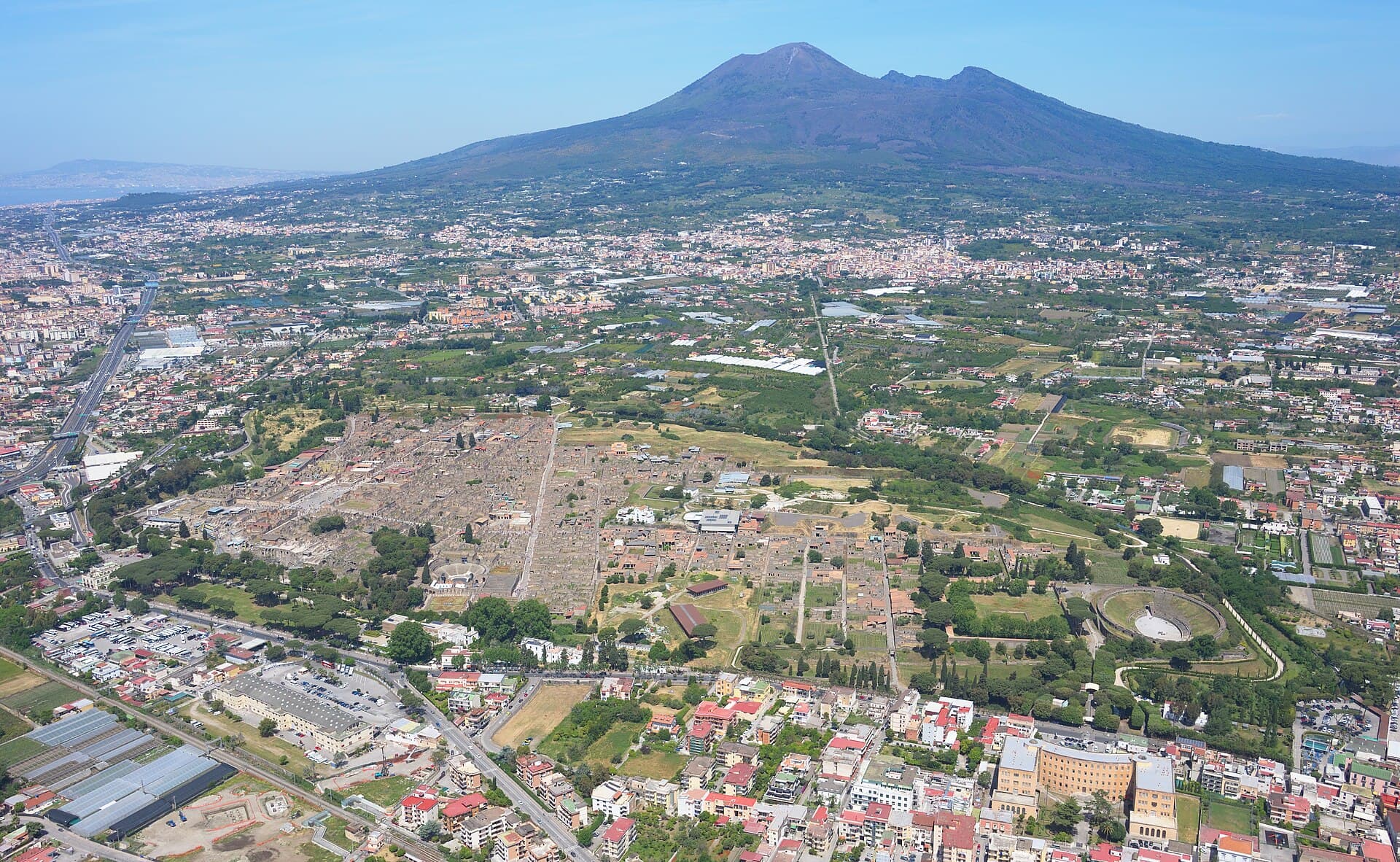 Carsten Steger / CC BY-SA 4.0, via Wikimedia Commons
Tour de audio autoguiado de Pompeya — ruta GPS a pie, reproducción offline, narración en 32 idiomas.
“Pasea por una ciudad congelada en el tiempo, donde los ecos de la vida antigua perduran en cada piedra.”
No las postales. Las historias que ni los locales conocen — al oído, justo donde ocurrieron.
Más allá de los frescos explícitos, las paredes del burdel más grande de Pompeya guardan un tipo diferente de historia.
Un conmovedor molde de yeso de cuatro individuos bajo una escalera derrumbada en esta lujosa villa contó durante mucho tiempo una tragedia familiar específica.
Las calles de la antigua ciudad romana no eran solo para caminar; algunas eran sorprendentemente avanzadas para su época.
Descubre todos los secretos de Pompeya
Cada dirección, cada revelación al completo — a tu oído, justo donde ocurrió.
Eliges tus paradas. Caminas. La voz te revela lo que los demás ignoran.
Lume incluye una guía de realidad aumentada. Levanta el móvil y su cámara muestra la calle que tienes delante, con una flecha luminosa sobre la imagen real que siempre apunta a tu próxima parada — sin mapas que descifrar, sin giros equivocados. Como todo en Lume, funciona completamente sin conexión.
Pompeya, una antigua ciudad romana cerca de la actual Nápoles, Italia, ofrece una ventana incomparable a la vida cotidiana de hace casi 2.000 años. Sepultada bajo un manto de ceniza volcánica y piedra pómez cuando el Monte Vesubio entró en erupción en el año 79 d.C., la ciudad se conservó notablemente, esencialmente congelada en el tiempo. Este sitio declarado Patrimonio de la Humanidad por la UNESCO permite a los visitantes caminar por calles intactas, explorar casas, tiendas, templos y espacios públicos, proporcionando una vívida sensación de la sociedad romana antes del evento catastrófico.
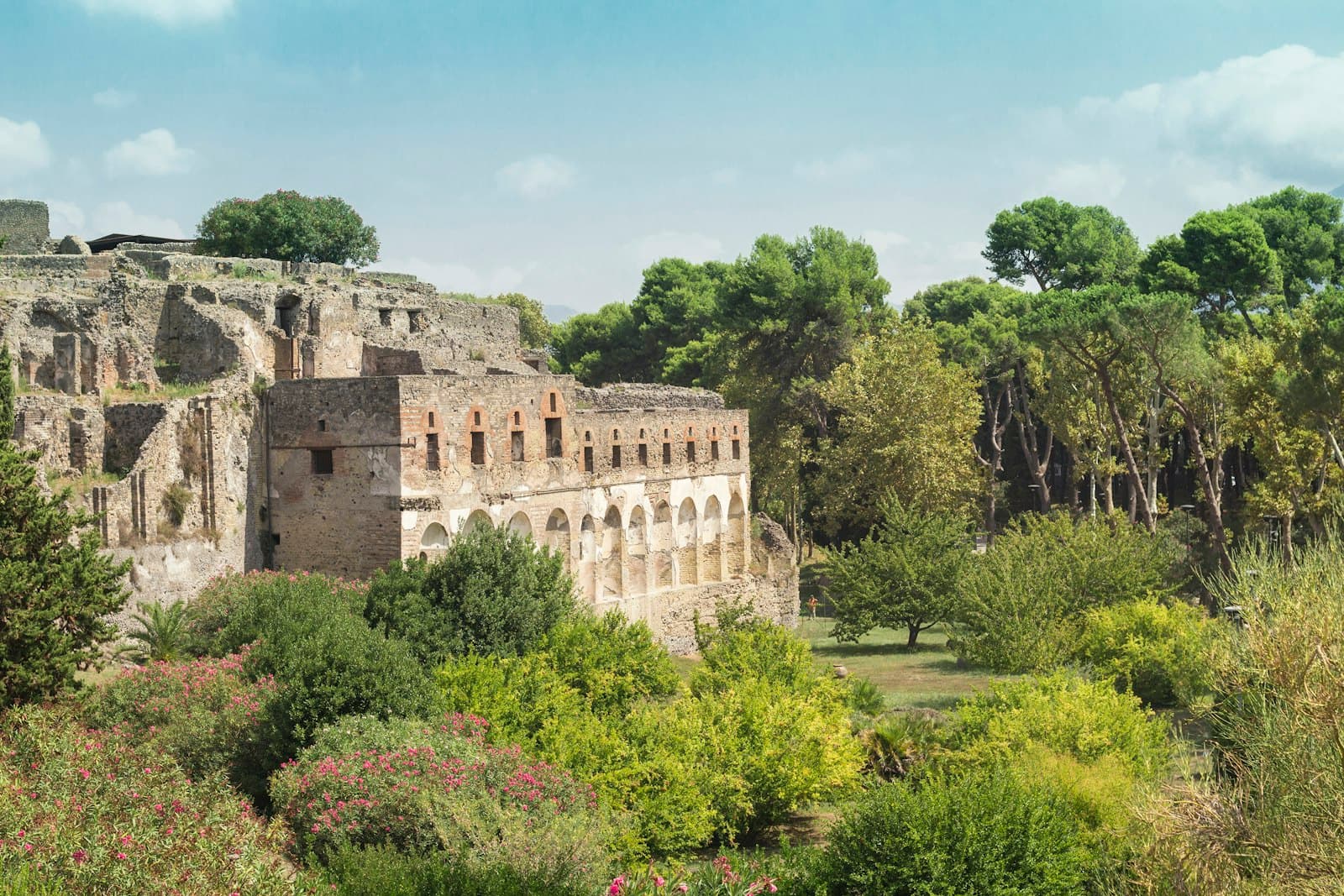
La magnitud de Pompeya es impresionante, cubriendo un área de 66 hectáreas, con aproximadamente dos tercios excavados. El trabajo arqueológico en curso continúa desenterrando nuevos descubrimientos, enriqueciendo constantemente nuestra comprensión de esta ciudad portuaria que alguna vez fue próspera. Desde los grandes edificios públicos hasta los detalles íntimos de las residencias privadas, Pompeya se erige como un poderoso testimonio de las rutinas diarias, las expresiones artísticas y la tragedia final de sus habitantes.
El área donde se encuentra Pompeya fue colonizada por primera vez por los oscos, un antiguo pueblo itálico, alrededor del siglo VIII a.C. La ubicación estratégica de la ciudad cerca de la desembocadura del río Sarno la convirtió en un puerto importante, atrayendo lazos tempranos con las civilizaciones griega y etrusca. La evidencia de la influencia griega se puede observar en estructuras como el Templo Dórico, ubicado en lo que se convertiría en el Foro Triangular.
Para el siglo IV a.C., Pompeya cayó bajo el dominio samnita, un período durante el cual la ciudad continuó prosperando, beneficiándose particularmente del fértil suelo volcánico para la agricultura. Sin embargo, en el 89 a.C., el general romano Sila asedió y conquistó Pompeya, convirtiéndola oficialmente en una colonia romana en el 80 a.C., conocida como Colonia Cornelia Veneria Pompei.
Bajo el dominio romano, Pompeya floreció, convirtiéndose en una ciudad bulliciosa y rica con una población estimada de 10.000 a 20.000 habitantes. Se transformó en una popular ciudad de recreo y veraneo para la aristocracia romana, con muchas familias adineradas mudándose allí. La ciudad estaba bien desarrollada, con una sofisticada planificación urbana, que incluía calles de sentido único y pasos elevados para peatones. Pompeya ofrecía numerosas comodidades públicas, como más de 40 panaderías, 130 bares y varios baños públicos, que servían como importantes centros sociales.
En el 62 d.C., un poderoso terremoto dañó significativamente Pompeya, junto con otras ciudades de la región de Campania. La ciudad comenzó inmediatamente un largo proceso de reconstrucción. Sin embargo, esta reconstrucción fue trágicamente interrumpida el 24 de agosto del 79 d.C., cuando el Monte Vesubio entró en erupción catastróficamente. La erupción, descrita por Plinio el Joven, sepultó Pompeya bajo capas de ceniza volcánica y piedra pómez, alcanzando profundidades de hasta 6-7 metros en algunos lugares. El rápido entierro preservó la ciudad y su contenido, ofreciendo una instantánea sin precedentes de la vida romana.
Pompeya permaneció enterrada y en gran parte olvidada durante más de 1.500 años. Su ubicación siguió siendo un misterio, en parte porque la erupción había alterado la costa, haciendo que la ciudad pareciera tierra adentro. Las ruinas fueron redescubiertas accidentalmente en 1592 durante la excavación de un acueducto subterráneo, pero no fue hasta 1748 que comenzaron las excavaciones sistemáticas. Estas excavaciones, que aún continúan, marcaron el comienzo de la arqueología moderna. Hoy, Pompeya es un sitio declarado Patrimonio de la Humanidad por la UNESCO, que atrae a millones de visitantes anualmente.
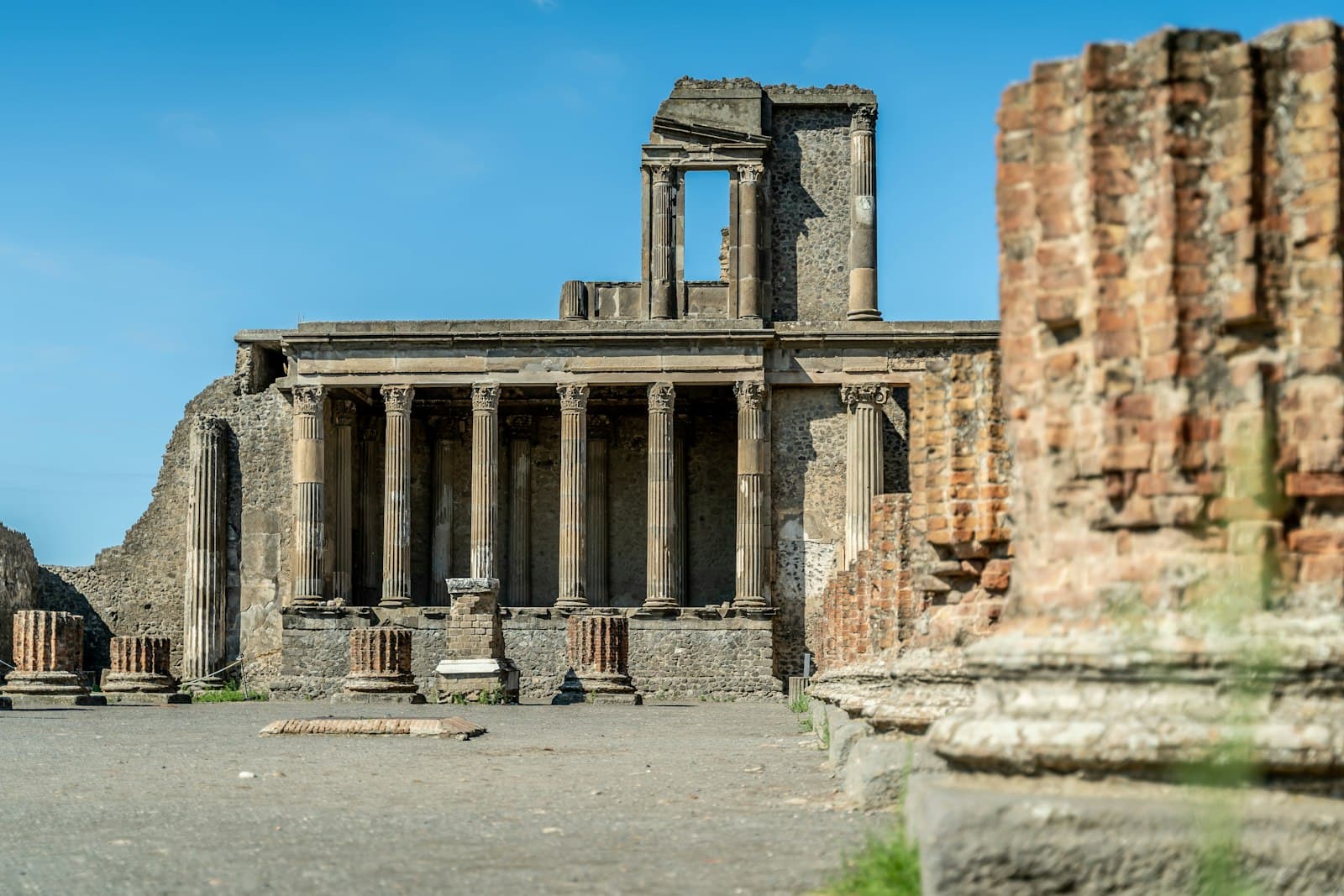
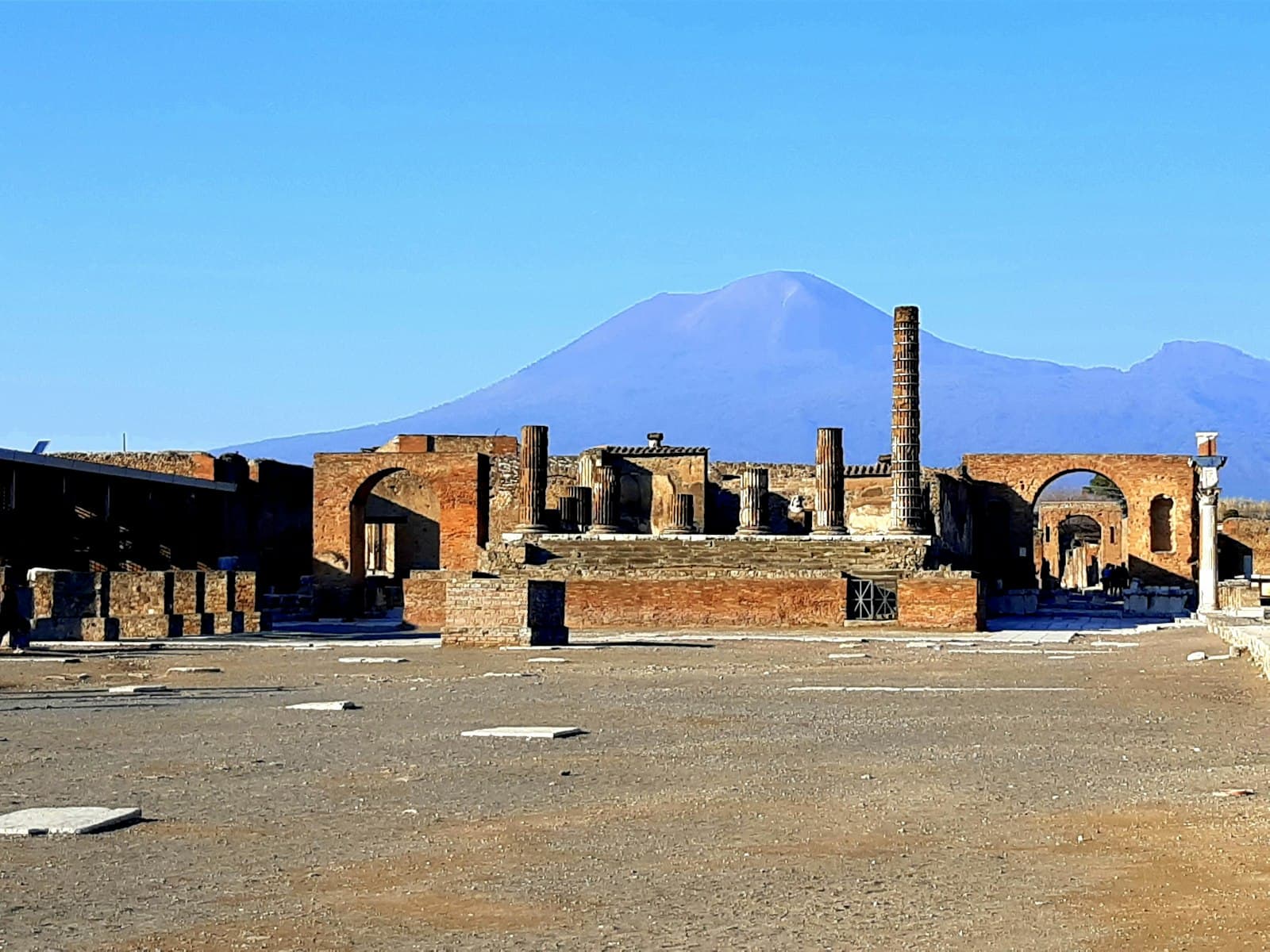
Explorar Pompeya es como adentrarse en un museo viviente, con innumerables detalles de la vida romana esperando ser descubiertos. El Foro era el corazón de Pompeya, sirviendo como centro de la vida política, religiosa y comercial. Aquí, encontrarás imponentes columnas de templos, incluidos el Templo de Apolo y el Templo de Júpiter, enmarcados por la presencia imponente del Monte Vesubio.
Las Termas Estabianas son los baños públicos más antiguos y grandes de Pompeya, ofreciendo una visión de los rituales de baño romanos con su frigidarium (sala fría), tepidarium (sala templada) y caldarium (sala caliente). No te pierdas el Anfiteatro, construido en el 70 a.C., es el anfiteatro romano de piedra más antiguo conocido y podía albergar a unos 20.000 espectadores.
Para una visión de la vida doméstica, visita la Casa del Fauno, una de las residencias privadas más grandes y lujosas, conocida por sus intrincados mosaicos. La Villa de los Misterios, ubicada fuera de las murallas principales de la ciudad, es famosa por sus frescos notablemente conservados que representan ritos dionisíacos. El Lupanar (burdel) ofrece una mirada fascinante, aunque explícita, a un aspecto diferente de la sociedad romana, con sus frescos eróticos y grafitis antiguos.
Otros sitios notables incluyen el Jardín de los Fugitivos, donde se exhiben moldes de yeso de las víctimas en sus últimos momentos, y varios thermopolia (puestos de comida rápida) y panaderías, algunos con panes carbonizados aún en sus hornos.
Las mejores épocas para visitar Pompeya son durante la primavera (abril a principios de junio) y el otoño (septiembre a octubre). Durante estos meses, el clima es agradable con temperaturas suaves, lo que lo hace cómodo para caminar extensamente por el sitio, en gran parte sin sombra. Las multitudes también son más manejables en comparación con los meses pico de verano de julio y agosto, cuando las temperaturas pueden ser muy altas y el sitio está más concurrido. Se recomienda encarecidamente llegar temprano por la mañana, idealmente a la hora de apertura, para disfrutar de temperaturas más frescas y menos visitantes, especialmente durante las temporadas más concurridas.
Pompeya es de fácil acceso, ubicada a unos 25 km de Nápoles. La forma más conveniente de llegar al parque arqueológico es tomando el tren Circumvesuviana desde Nápoles Centrale (estación Garibaldi) hasta la parada 'Pompei Scavi – Villa dei Misteri', que está a poca distancia a pie de la entrada de Porta Marina. El viaje dura aproximadamente 35-40 minutos.
Las entradas se pueden comprar en línea con anticipación a través del sitio web oficial del parque, lo cual es muy recomendable, especialmente durante la temporada alta, para evitar largas colas. La entrada estándar para adultos cuesta entre 18 y 21 €, con tarifas reducidas para ciudadanos de la UE de 18 a 25 años y entrada gratuita para menores de 18 años. El sitio está abierto todos los días, generalmente a partir de las 9:00 AM, con horarios de cierre que varían según la temporada (7:30 PM de abril a octubre; 5:00 PM de noviembre a marzo). Planifica al menos 3-4 horas para ver los puntos destacados principales, aunque se recomienda un día completo para una exploración más profunda.
Usa zapatos cómodos para caminar, ya que las calles antiguas son irregulares, y lleva mucha agua y protección solar, ya que la sombra es limitada. Hay visitas guiadas disponibles que pueden mejorar significativamente tu comprensión del sitio. Hay una pequeña cafetería cerca del Foro, pero las opciones son limitadas, así que considera llevar algunos bocadillos.
Pompeya en coreano, en chino o en hebreo — y 29 idiomas más, cada parada narrada por una voz nativa. La mayor variedad de idiomas de cualquier audioguía autoguiada.
Disponible en: