Pont d'Adam et Ève
Le pont enjambant la rivière Noncello est orné de statues nommées Adam et Ève, pourtant un examen plus attentif révèle une interprétation classique.
L'histoire complète se débloque dans le tour
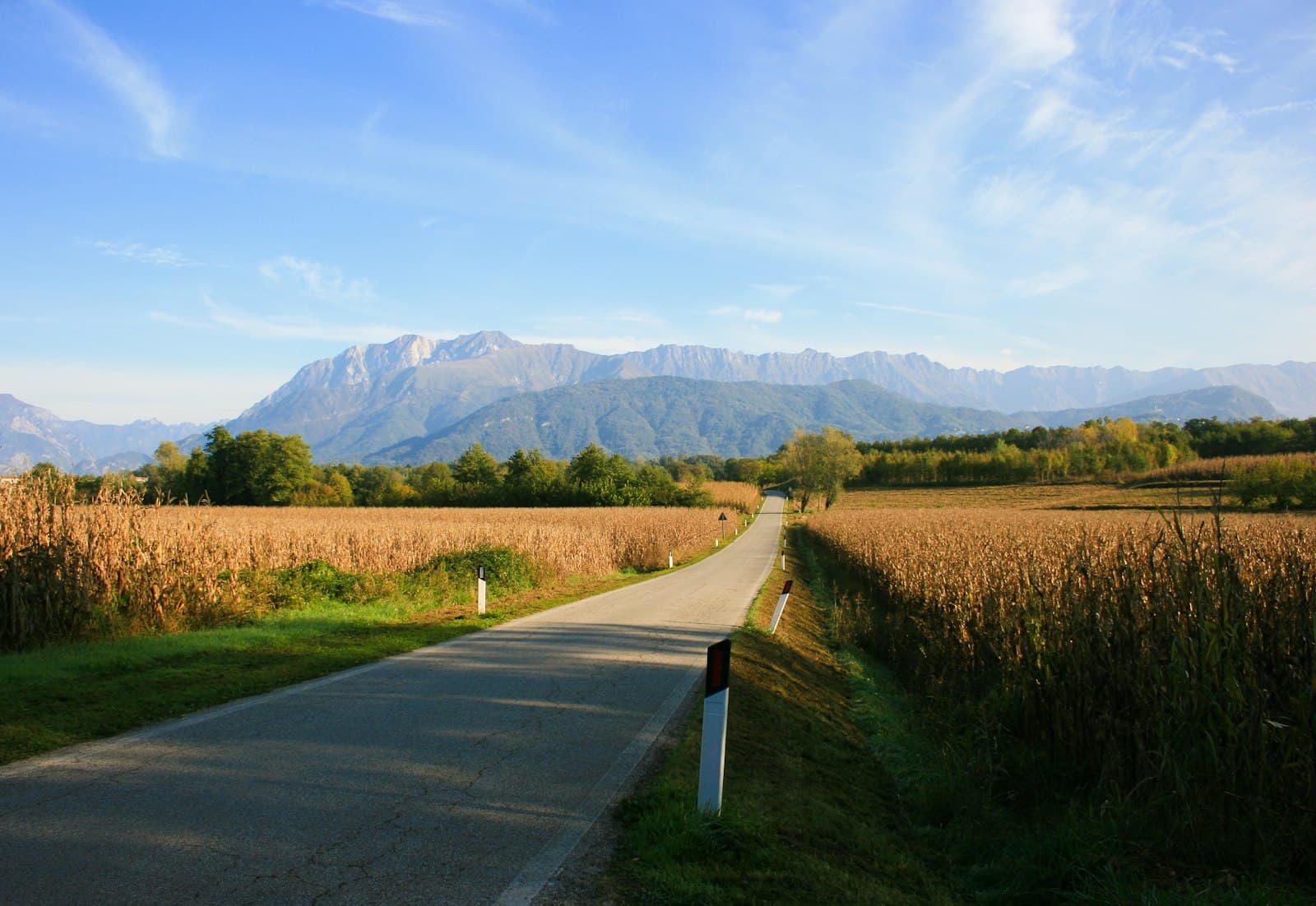 Photo: Tommaso Urli / Unsplash
Visite audio autoguidée de Pordenone — parcours GPS à pied, lecture hors ligne, narration en 32 langues.
“Pordenone : Là où l'élégance vénitienne rencontre le pragmatisme frioulan.”
Pas les cartes postales. Les histoires que même les habitants ignorent — soufflées à l'oreille, là où elles se sont passées.
Le pont enjambant la rivière Noncello est orné de statues nommées Adam et Ève, pourtant un examen plus attentif révèle une interprétation classique.
Ce château médiéval, aujourd'hui un musée archéologique, protège un secret concernant ses fondations.
Pordenone accueille un célèbre festival littéraire, et une édition récente a exploré un sujet de pointe qui redéfinit notre interaction avec l'information.
Découvrez tous les secrets de Pordenone
Chaque adresse, chaque révélation en entier — dans ton oreille, là où elle s'est passée.
Tu choisis tes lieux. Tu marches. La voix te révèle ce que les autres ignorent.
Votre visite audioguidée de Pordenone vous attend — choisissez vos lieux, votre langue, et lancez-vous dès votre arrivée.
AcheterLume intègre un guide en réalité augmentée. Levez votre téléphone : sa caméra montre la rue devant vous, avec une flèche lumineuse posée sur l'image réelle qui pointe toujours vers votre prochain arrêt — aucune carte à déchiffrer, aucun mauvais virage. Comme tout dans Lume, ça fonctionne entièrement hors-ligne.
Pordenone, ville de la région Frioul-Vénétie Julienne, dans le nord-est de l'Italie, offre une fusion de profondeur historique et de vie contemporaine. Son nom, dérivé du latin Portus Naonis, évoque ses origines en tant que port fluvial sur la rivière Noncello, un rôle qui a façonné son expansion économique précoce. Le centre historique compact et piétonnier de la ville invite à la découverte, révélant des rues à arcades et des palais qui racontent son passé varié.
Bien que peut-être moins largement reconnue que certaines des destinations touristiques plus importantes d'Italie, Pordenone offre une expérience italienne authentique, à l'abri des foules accablantes. Elle fonctionne comme un carrefour culturel, accueillant des événements significatifs tels que le festival littéraire Pordenonelegge et le Festival du Film Muet, qui attirent l'attention internationale. Entourée par les plaines de la vallée Po-Vénitienne et proche des Préalpes vénitiennes et des Dolomites frioulanes, la ville offre également un accès à des paysages naturels et à des activités de plein air.
La situation stratégique de Pordenone en a fait, tout au long de l'histoire, un point de rencontre des cultures latines, slaves et germaniques, influençant son identité singulière. Son architecture reflète ces influences, affichant une gamme de styles du médiéval au vénitien, du gothique à la Renaissance.
Le récit de Pordenone commence au début du Moyen Âge sous le nom de Portus Naonis, un port fluvial crucial sur la rivière Noncello. Cependant, des preuves indiquent l'existence de villas romaines et de colonies agricoles dans la région, notamment près de la ville de Torre, encore plus tôt. Cette première colonie était stratégiquement positionnée près d'un gué sur une route alternative à la Via Postumia. À mesure que les voies navigables gagnaient en importance, le centre urbain s'est déplacé en aval pour accueillir de plus grands navires.
Tout au long du XIIIe siècle, Pordenone est devenue un territoire contesté. Entre 1257 et 1270, Ottokar II de Bohême a conquis la ville, pour être vaincu en 1277, restituant Pordenone au Saint Empire romain germanique sous Rodolphe Ier de Habsbourg. En 1278, la ville fut confiée à la famille des Habsbourg, établissant une possession autrichienne au sein de l'État patriarcal du Frioul. Le XIVe siècle a connu une croissance substantielle grâce à un commerce fluvial florissant, culminant avec l'obtention du statut de ville par Pordenone en décembre 1314.
En 1508, après l'invasion infructueuse de la République de Venise par l'empereur Maximilien, Pordenone fut saisie par Venise. Malgré une occupation autrichienne temporaire pendant la guerre de la Ligue de Cambrai (1509-1516), la souveraineté vénitienne fut affirmée en 1516. Sous le gouvernement vénitien, un nouveau port fut construit et la fabrication connut des améliorations. Jusqu'en 1537, la famille d'Alviano, récompensée pour le service militaire de Bartolomeo d'Alviano, géra la ville.
Après la période napoléonienne, Pordenone fut intégrée aux possessions autrichiennes en Italie, faisant partie du Royaume de Lombardie-Vénétie. Le milieu du XIXe siècle apporta des transformations significatives avec la construction de la liaison ferroviaire (1855) et de la route Pontebbana. Si ces développements entraînèrent le déclin du port fluvial, ils stimulèrent une expansion industrielle substantielle, en particulier dans la fabrication du coton. Pordenone fut finalement rattachée à l'Italie en 1866.
Le secteur du coton rencontra des difficultés après la Première Guerre mondiale et s'effondra entièrement après la crise de 1929. Cependant, après la Seconde Guerre mondiale, la firme locale Zanussi devint un leader mondial des appareils ménagers, revigorant l'économie. En 1968, Pordenone devint la capitale de sa propre province, englobant un territoire appartenant auparavant à Udine. L'après-guerre a également vu une forte présence militaire dans le Frioul-Vénétie Julienne, y compris à Pordenone, pour dissuader une éventuelle incursion yougoslave, stimulant davantage l'économie locale. Aujourd'hui, Pordenone est reconnue pour son dynamisme culturel, accueillant des événements internationaux et maintenant un lien fort avec ses racines artistiques et historiques.
Le centre historique compact de Pordenone est idéal pour des promenades tranquilles, affichant un mélange de styles architecturaux du médiéval à la Renaissance, souvent ornés de fresques. Commencez par le Duomo di San Marco, la co-cathédrale de la ville. Bien que son extérieur reste inachevé, l'intérieur révèle des œuvres d'art de la Renaissance, y compris des reproductions d'œuvres du peintre le plus célèbre de la ville, Giovanni Antonio de Sacchis, connu sous le nom de "Il Pordenone". Adjacent à la cathédrale se dresse l'imposant clocher de 72 mètres de haut, un emblème proéminent de la ville.
Une courte marche mène à la Loggia Municipale, un bâtiment en brique de style gothique du XIIIe siècle, doté d'une loggia à trois arches et d'une horloge astronomique-lunaire du XVIe siècle. L'artère principale, le Corso Vittorio Emanuele II, autrefois connue sous le nom de Contrada Grande, est maintenant entièrement piétonne. Bordée d'arcades et de palais de styles variés, c'est un quartier agréable pour se promener et faire du shopping. Le Palazzo Ricchieri, une maison-tour du XIIIe siècle, abrite aujourd'hui le Musée d'Art Civique, exposant des sculptures en bois et des œuvres originales d'Il Pordenone.
Traversez le Pont d'Adam et Ève sur la rivière Noncello, une construction en pierre datant de 1550, offrant des vues pittoresques. Pour une exploration plus approfondie du passé de la région, visitez le Musée Archéologique du Frioul Occidental, situé dans l'ancien Castello di Torre. Le musée expose des découvertes archéologiques de la province, y compris celles du site du patrimoine mondial de l'UNESCO de Palù di Livenza.
Les périodes les plus agréables pour découvrir Pordenone sont le printemps et le début de l'été, plus précisément de la mi-avril à la mi-juin, ainsi qu'en septembre. Pendant ces mois, le temps est généralement doux, avec des températures moyennes allant de 18°C à 29°C (64°F à 84°F), ce qui est idéal pour explorer la ville à pied. Bien que quelques jours de pluie puissent survenir, les conditions générales sont favorables. Les étés peuvent être chauds à très chauds, juillet étant le mois le plus chaud, avec des maximales moyennes de 29°C (84°F). Des orages soudains l'après-midi ou le soir sont possibles en été, et parfois en mai. La ville connaît ses ciels les plus clairs en juillet et ses ciels les plus nuageux en novembre.
Pordenone est facilement accessible en voiture, en train ou en avion, avec Venise, Trieste et Padoue toutes à moins de deux heures de trajet. L'aéroport le plus proche est l'aéroport Antonio Canova près de Treviso, à environ 56 kilomètres. De là, un bus relie la gare de Treviso Centrale, suivi d'un train pour Pordenone. Le centre historique de la ville est compact et se découvre mieux à pied.
Les transports en commun sont disponibles pour se déplacer dans la ville et ses environs. Pour ceux qui conduisent, un petit parking gratuit est disponible près de l'église de la Sainte-Trinité, relié au vieux centre-ville par un pont piétonnier. L'italien est la langue principale, mais l'anglais est également parlé. La monnaie locale est l'euro (€). Pordenone offre un éventail d'options d'hébergement, souvent à un bon rapport qualité-prix. Consulter le calendrier local des événements culturels et des festivals peut enrichir une visite, car la ville accueille de nombreux événements tout au long de l'année.
Pordenone en coréen, en chinois ou en hébreu — et dans 29 autres langues, chaque étape narrée par une voix native. La plus large gamme de langues de tous les audioguides autoguidés.
Disponible en :