Iririki Island Resort & Spa
Un petit complexe hôtelier insulaire à Port Vila a joué un rôle surprenant dans le développement touristique du Vanuatu, bien avant de devenir une luxueuse évasion.
L'histoire complète se débloque dans le tour
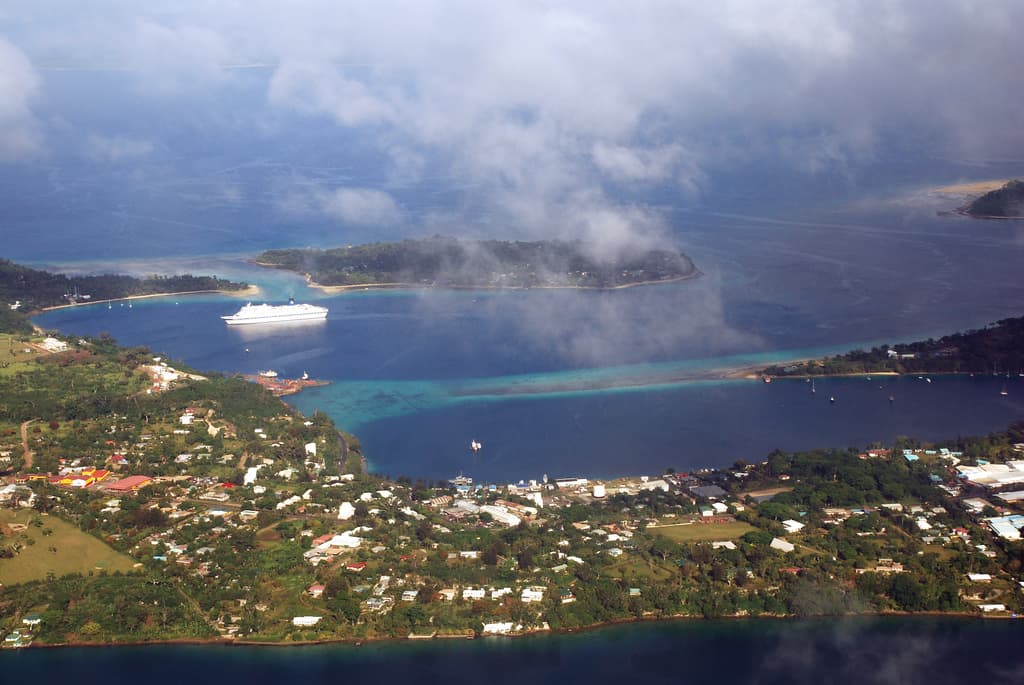 Phillip Capper from Wellington, New Zealand / CC BY 2.0, via Wikimedia Commons
Visite audio autoguidée de Port-Vila — parcours GPS à pied, lecture hors ligne, narration en 32 langues.
“Là où les eaux cristallines du Pacifique rencontrent une culture façonnée par des rythmes ancestraux et des échos coloniaux.”
Pas les cartes postales. Les histoires que même les habitants ignorent — soufflées à l'oreille, là où elles se sont passées.
Un petit complexe hôtelier insulaire à Port Vila a joué un rôle surprenant dans le développement touristique du Vanuatu, bien avant de devenir une luxueuse évasion.
Le marché coloré de Port Vila offre plus que des produits ; c'est un cœur social où les femmes des îles extérieures maintiennent une tradition unique et ancienne.
Bien que Port Vila soit connue pour son mélange culturel, une zone spécifique révèle une influence française plus profonde que la seule langue.
Découvrez tous les secrets de Port-Vila
Chaque adresse, chaque révélation en entier — dans ton oreille, là où elle s'est passée.
Tu choisis tes lieux. Tu marches. La voix te révèle ce que les autres ignorent.
Lume intègre un guide en réalité augmentée. Levez votre téléphone : sa caméra montre la rue devant vous, avec une flèche lumineuse posée sur l'image réelle qui pointe toujours vers votre prochain arrêt — aucune carte à déchiffrer, aucun mauvais virage. Comme tout dans Lume, ça fonctionne entièrement hors-ligne.
Port Vila, la capitale du Vanuatu, s'étend le long des rives incurvées de la baie de Mele sur l'île d'Efate. C'est une ville qui vibre au rythme doux de l'existence insulaire, tout en pulsant de l'énergie d'une nation qui s'établit dans le monde moderne. Ici, des marchés animés regorgeant de produits tropicaux et d'artisanat côtoient des bâtiments de l'époque coloniale et des complexes hôteliers contemporains. L'air est parfumé au frangipanier et au son lointain des vagues, tandis que les sourires authentiques du peuple ni-Vanuatu offrent un accueil chaleureux.
C'est un lieu où diverses cultures convergent. Vous entendrez le bislama, l'anglais et le français parlés indifféremment, un témoignage de son passé unique de Condominium anglo-français. Au-delà du front de mer immédiat, la ville cède rapidement la place à des collines verdoyantes et au turquoise clair du Pacifique. Port Vila est à la fois une porte d'entrée vers les îles extérieures du Vanuatu et une destination captivante à part entière, offrant un mélange d'aventure, de détente et une immersion profonde dans la culture mélanésienne.
L'histoire de Port Vila, comme une grande partie du Vanuatu, s'étend sur des milliers d'années jusqu'à l'arrivée des premiers navigateurs mélanésiens. Des preuves suggèrent que l'établissement humain sur Efate remonte à au moins 1300 av. J.-C., avec des découvertes archéologiques révélant une poterie sophistiquée et des réseaux commerciaux. Ces premiers habitants ont développé des structures sociales complexes et des pratiques culturelles uniques qui continuent d'influencer la société ni-Vanuatu contemporaine.
Le contact européen a commencé à la fin du XVIIIe siècle avec l'arrivée d'explorateurs comme le capitaine James Cook, qui a cartographié de nombreuses îles. Cependant, le XIXe siècle a apporté une influence étrangère significative, avec des missionnaires, des commerçants et des marchands de bois de santal établissant une présence. Port Vila, alors un petit village, a commencé à s'étendre en tant que poste de commerce.
La période la plus marquante de l'histoire de Port Vila fut peut-être le Condominium anglo-français, établi en 1906. Cette administration conjointe inhabituelle signifiait que le Vanuatu, alors connu sous le nom de Nouvelles-Hébrides, était gouverné par deux puissances coloniales distinctes. Les Français et les Britanniques maintenaient chacun leurs propres lois, forces de police et même monnaies, ce qui a conduit à une bureaucratie complexe et souvent amusante que les habitants appelaient le 'Pandémonium'. Port Vila est devenue le centre administratif des deux puissances, ce qui a entraîné un mélange unique de styles architecturaux et d'influences culturelles françaises et britanniques qui restent visibles aujourd'hui.
Pendant la Seconde Guerre mondiale, Port Vila a joué un rôle stratégique en tant que base militaire alliée, en particulier pour les forces américaines. L'afflux de troupes et de ressources a profondément affecté l'infrastructure et l'économie de la ville, laissant derrière elle des routes, des aérodromes et une présence américaine durable. Après la guerre, le mouvement pour l'indépendance s'est développé, culminant avec l'accession du Vanuatu à sa souveraineté en 1980. Port Vila a été officiellement déclarée capitale de la République du Vanuatu nouvellement indépendante, entamant un nouveau chapitre en tant que nation souveraine.
Le chemin vers l'indépendance a été confronté à des défis, y compris un bref mouvement sécessionniste. Cependant, l'esprit d'« unité dans la diversité » a finalement prévalu, et Port Vila est devenue le symbole de cette nouvelle nation. Aujourd'hui, la ville continue d'évoluer, équilibrant son héritage culturel durable avec les exigences du développement moderne et une industrie touristique croissante. Son histoire témoigne de la résilience du peuple ni-Vanuatu et de sa capacité à s'adapter tout en préservant son identité unique.
Commencez votre exploration au Marché de Port Vila, un centre animé où les femmes locales vendent des produits frais, des fruits de mer et des articles faits à la main. C'est un excellent endroit pour observer la vie quotidienne et déguster des plats locaux. À quelques pas de là se trouve le Centre Culturel du Vanuatu, offrant une immersion profonde dans les diverses coutumes, l'art traditionnel et les artefacts historiques de la nation.
Pour un aperçu de la beauté naturelle qui entoure la ville, faites un voyage aux Cascades de Mele. Ces cascades à plusieurs niveaux vous invitent à nager dans des piscines claires et fraîches au sein d'une forêt tropicale luxuriante. Ensuite, envisagez une visite au Sanctuaire Marin de Hideaway Island à proximité, où vous pourrez faire de la plongée avec tuba ou de la plongée sous-marine pour envoyer une carte postale depuis le bureau de poste sous-marin unique.
Explorez le passé colonial de la ville en passant devant le bâtiment de la Cour Suprême, anciennement la Résidence Française, une relique du Condominium anglo-français. Le Parlement, avec son design traditionnel, offre un aperçu de la gouvernance moderne du Vanuatu. Ne manquez pas l'occasion de visiter un nakamal (bar à kava) local le soir pour une expérience traditionnelle du kava, en observant les coutumes locales et la révérence silencieuse associées à cette boisson cérémonielle.
La période idéale pour visiter Port Vila est pendant la saison sèche, de avril à octobre. Pendant ces mois, le temps est généralement ensoleillé avec une humidité plus faible et moins de précipitations, ce qui est parfait pour les activités de plein air et l'exploration des îles. La température moyenne reste autour de 25-28°C (77-82°F). La saison humide, de novembre à mars, apporte une humidité plus élevée, plus de pluie et la possibilité de cyclones, bien que le paysage soit alors à son plus verdoyant.
Le Vatu du Vanuatu (VUV) est la monnaie locale, bien que les dollars australiens soient souvent acceptés dans les zones touristiques. Des distributeurs automatiques de billets sont disponibles à Port Vila, et les cartes de crédit sont acceptées dans la plupart des hôtels et des grands établissements. Le bislama, l'anglais et le français sont les langues officielles. Le pourboire n'est pas coutumier au Vanuatu. Le transport autour de Port Vila se fait principalement par des bus locaux (minivans avec un 'B' sur la plaque d'immatriculation) qui opèrent sur des itinéraires flexibles, et des taxis. Toujours convenir d'un tarif avant de commencer votre trajet avec les taxis. N'oubliez pas de vous habiller respectueusement lors de la visite de villages ou de sites culturels, et demandez toujours la permission avant de prendre des photos de personnes.
Port-Vila en coréen, en chinois ou en hébreu — et dans 29 autres langues, chaque étape narrée par une voix native. La plus large gamme de langues de tous les audioguides autoguidés.
Disponible en :